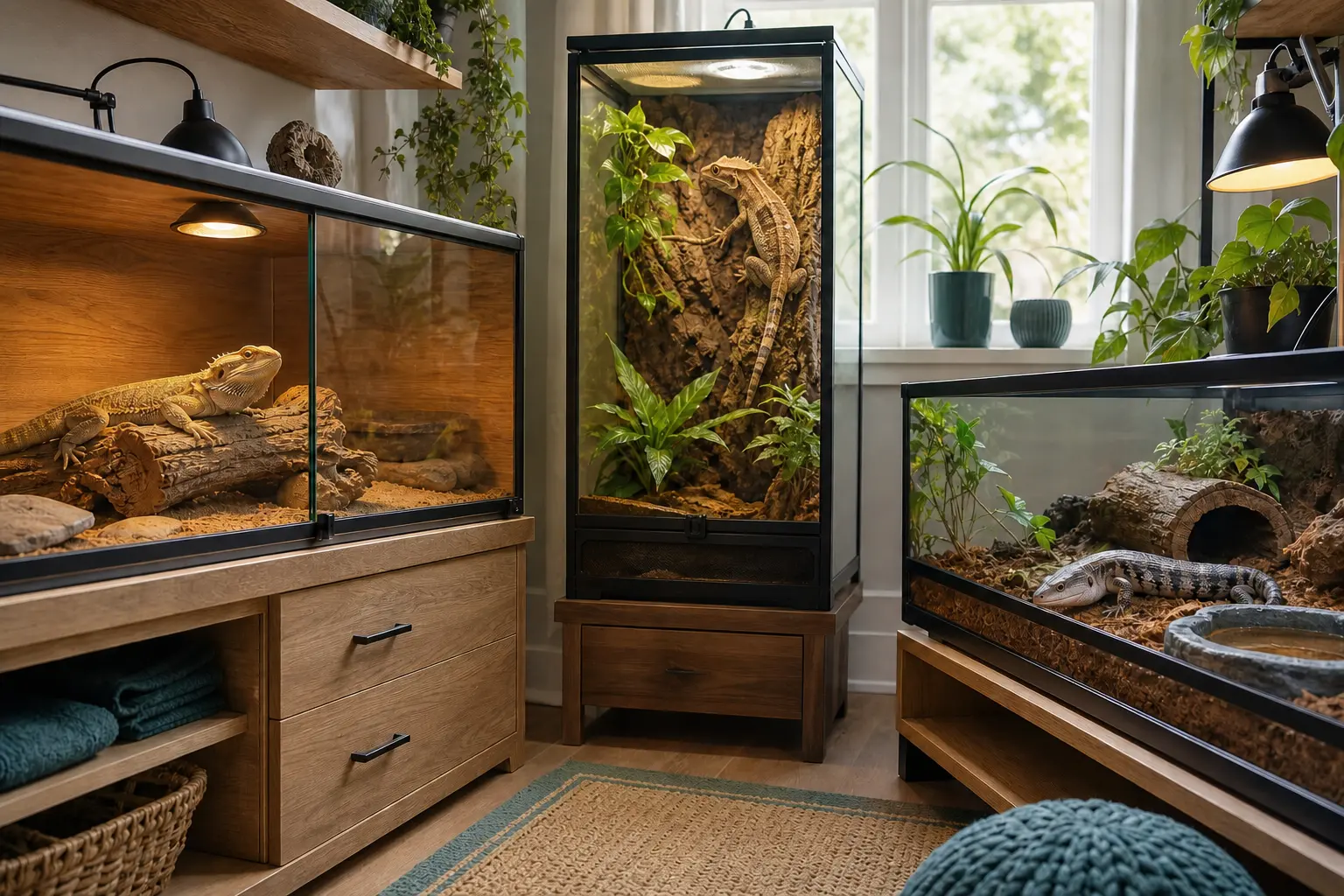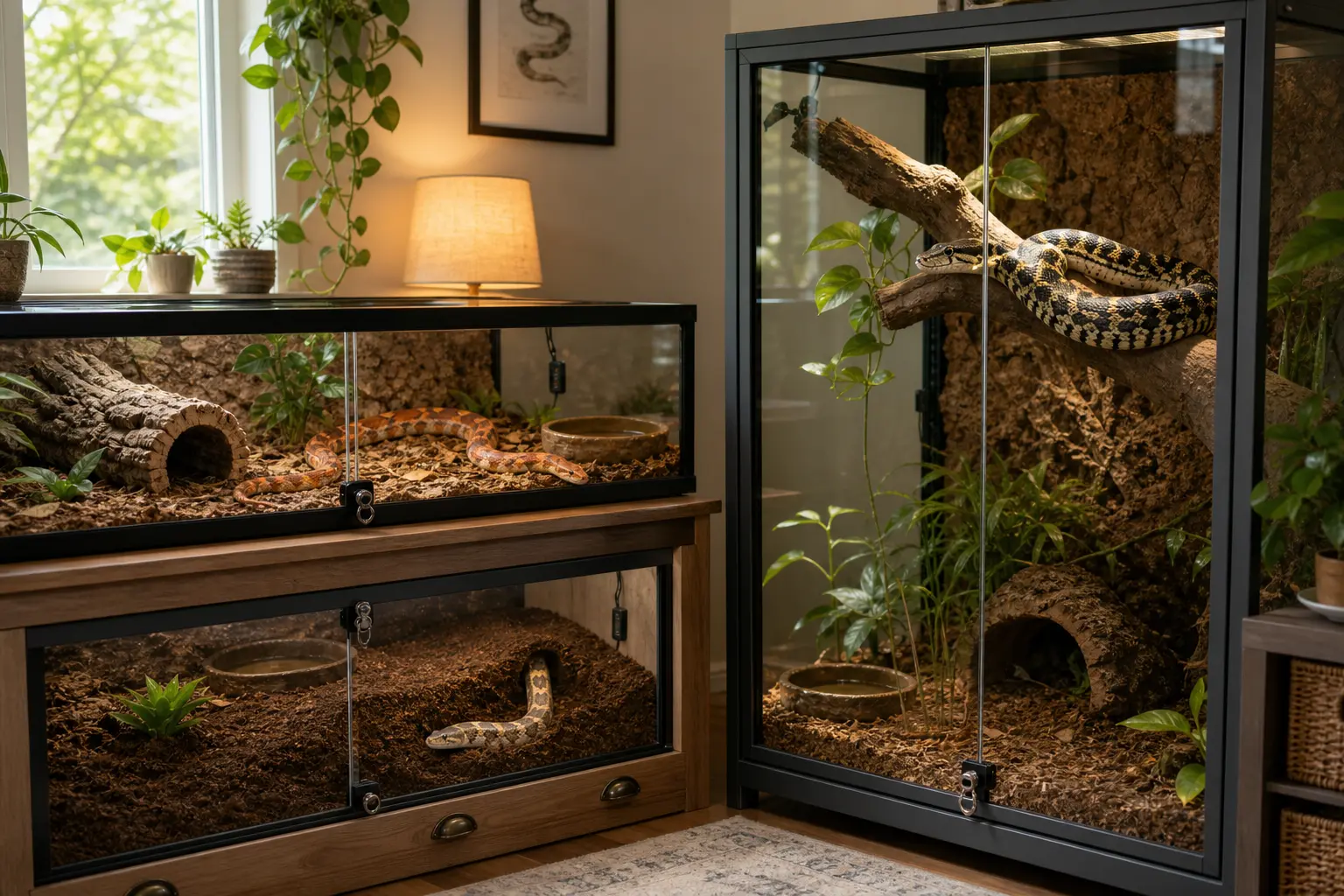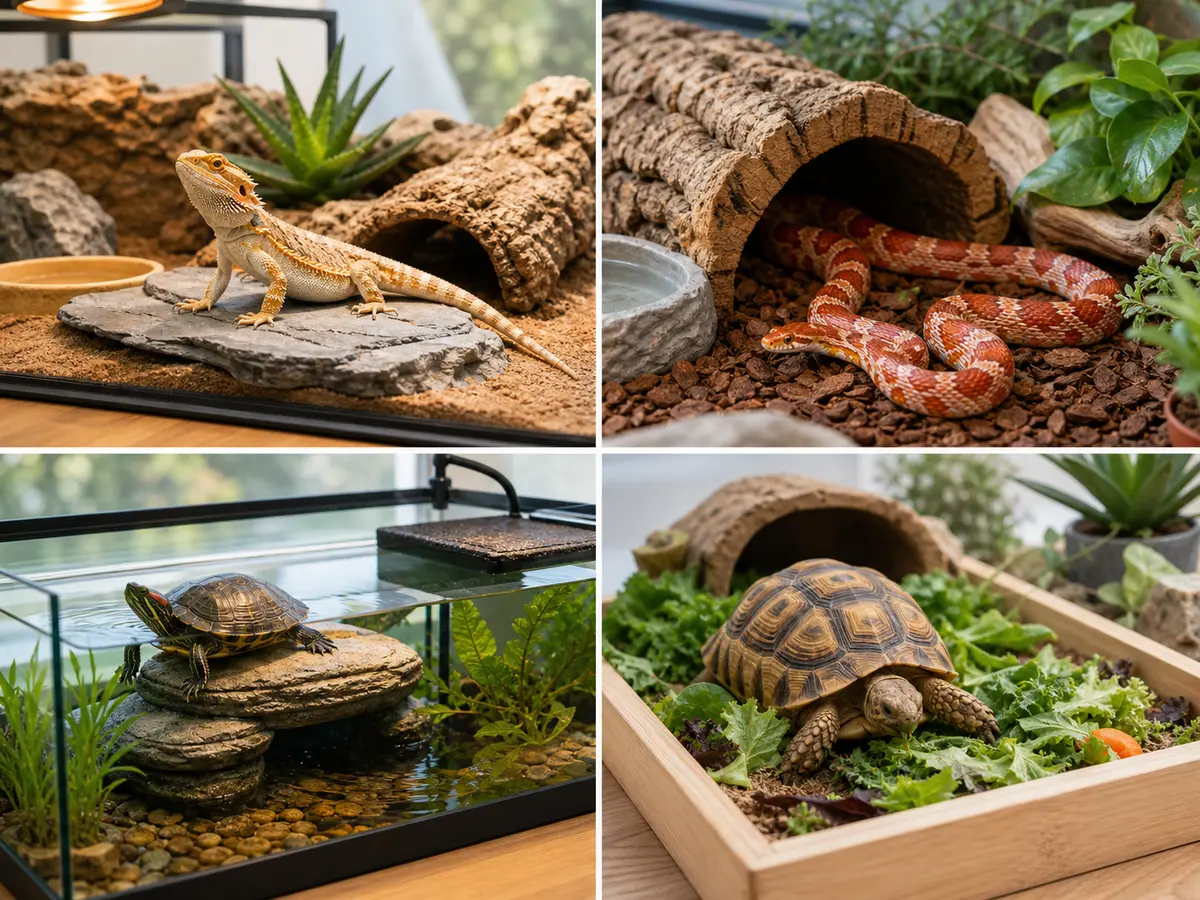
Measure the places the reptile uses
Start with a current, trusted care guide for your reptile's species.
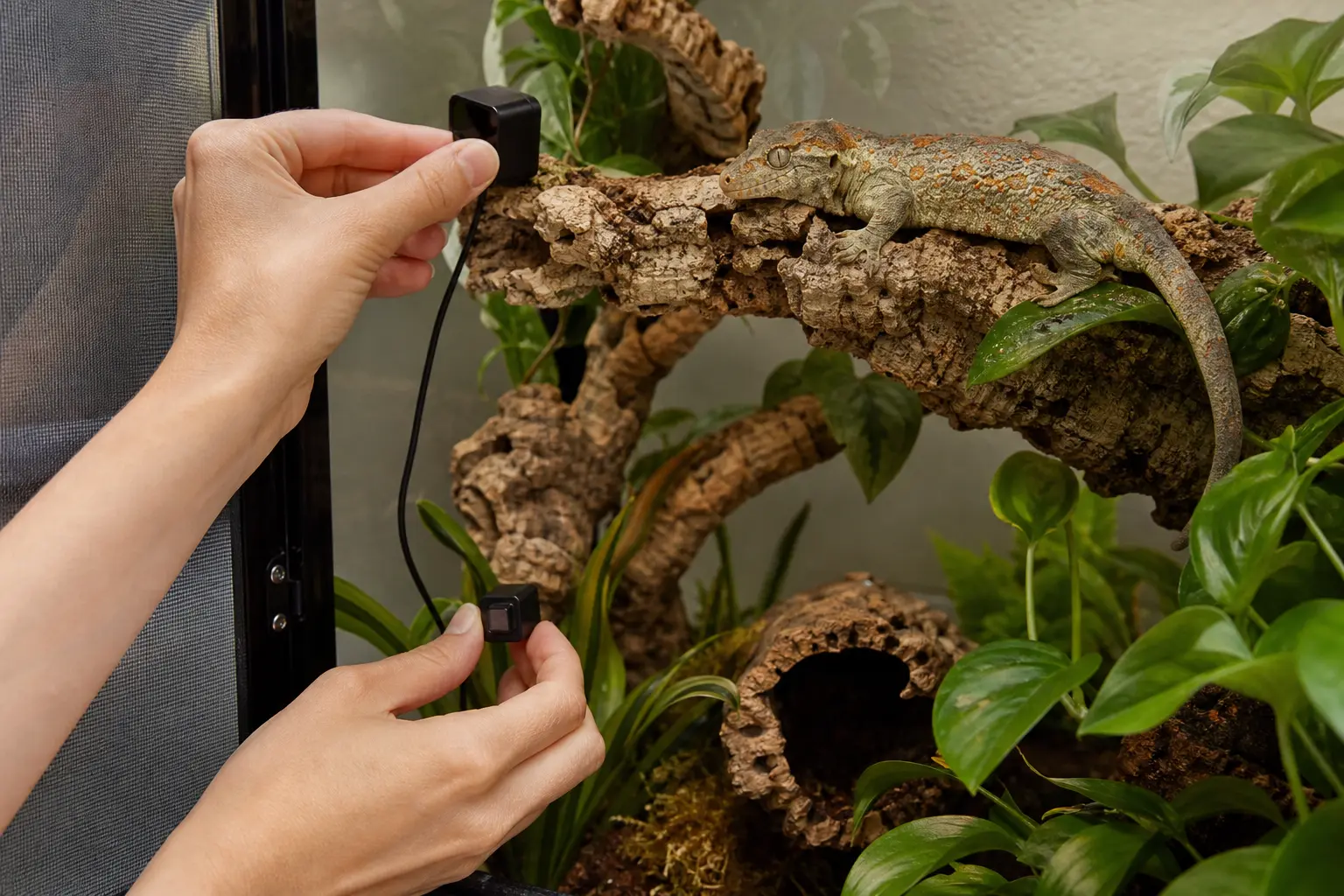
Place reliable hygrometers where your reptile actually spends time.
Note the reading after misting and again as the habitat dries.
Reptile guides
Match the habitat's moisture and airflow to the exact species.
A healthy habitat should never stay wet everywhere.
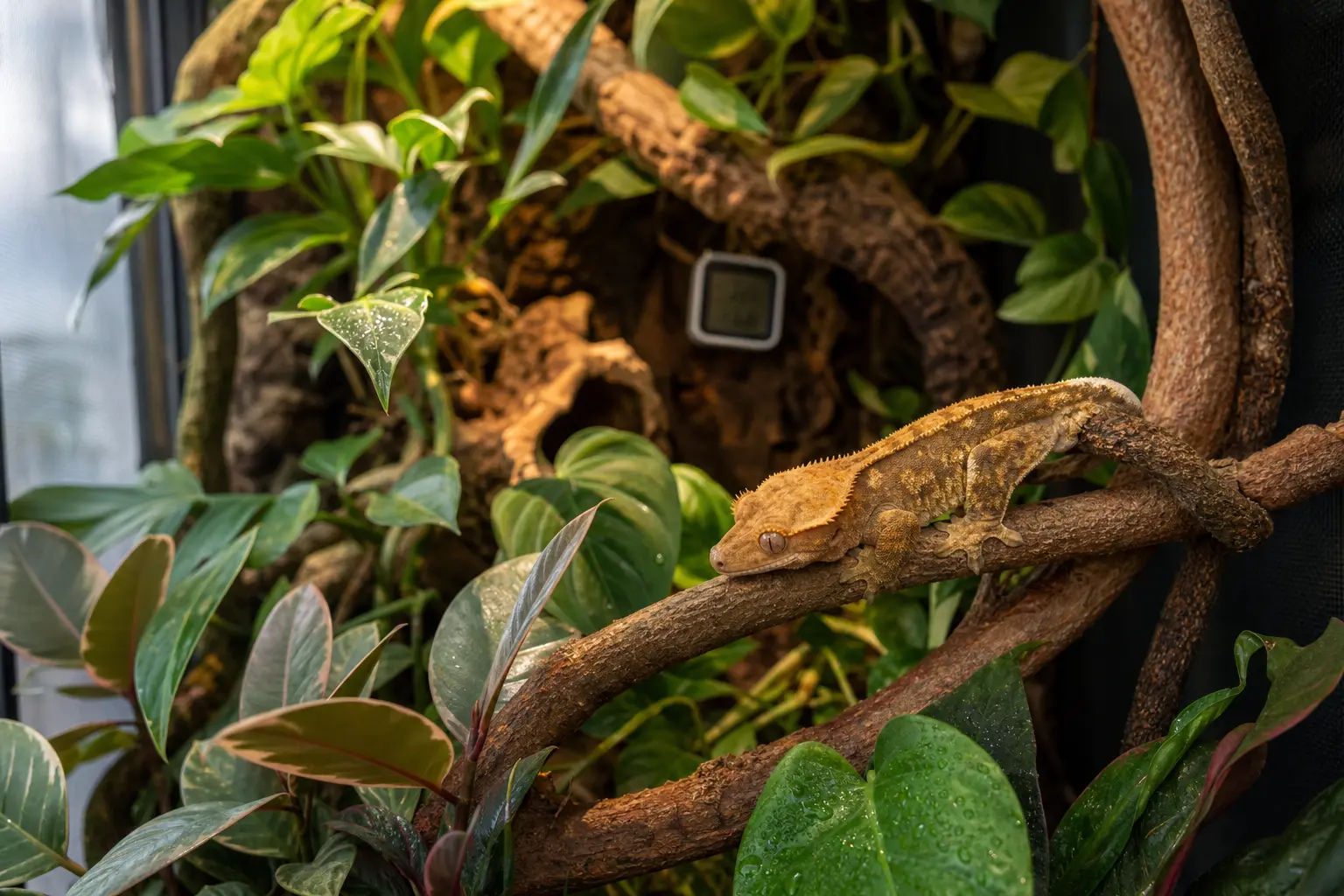
Start with a current, trusted care guide for your reptile's species.
Place reliable hygrometers where your reptile actually spends time.
Note the reading after misting and again as the habitat dries.
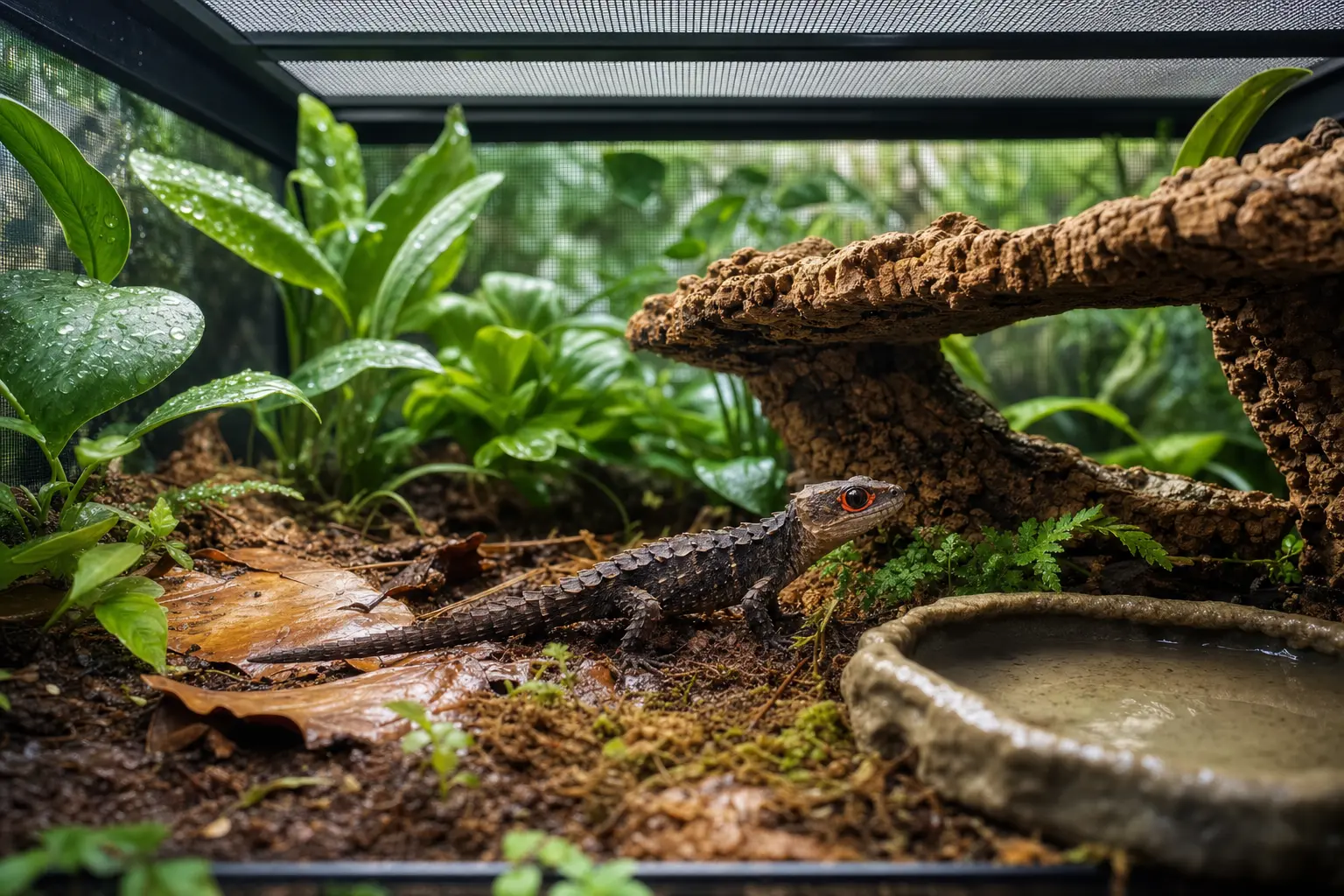
Humidity is water in the air, not a constantly wet floor.
A small humid retreat can support shedding without soaking the entire home.
Never seal vents just to hold a higher reading.
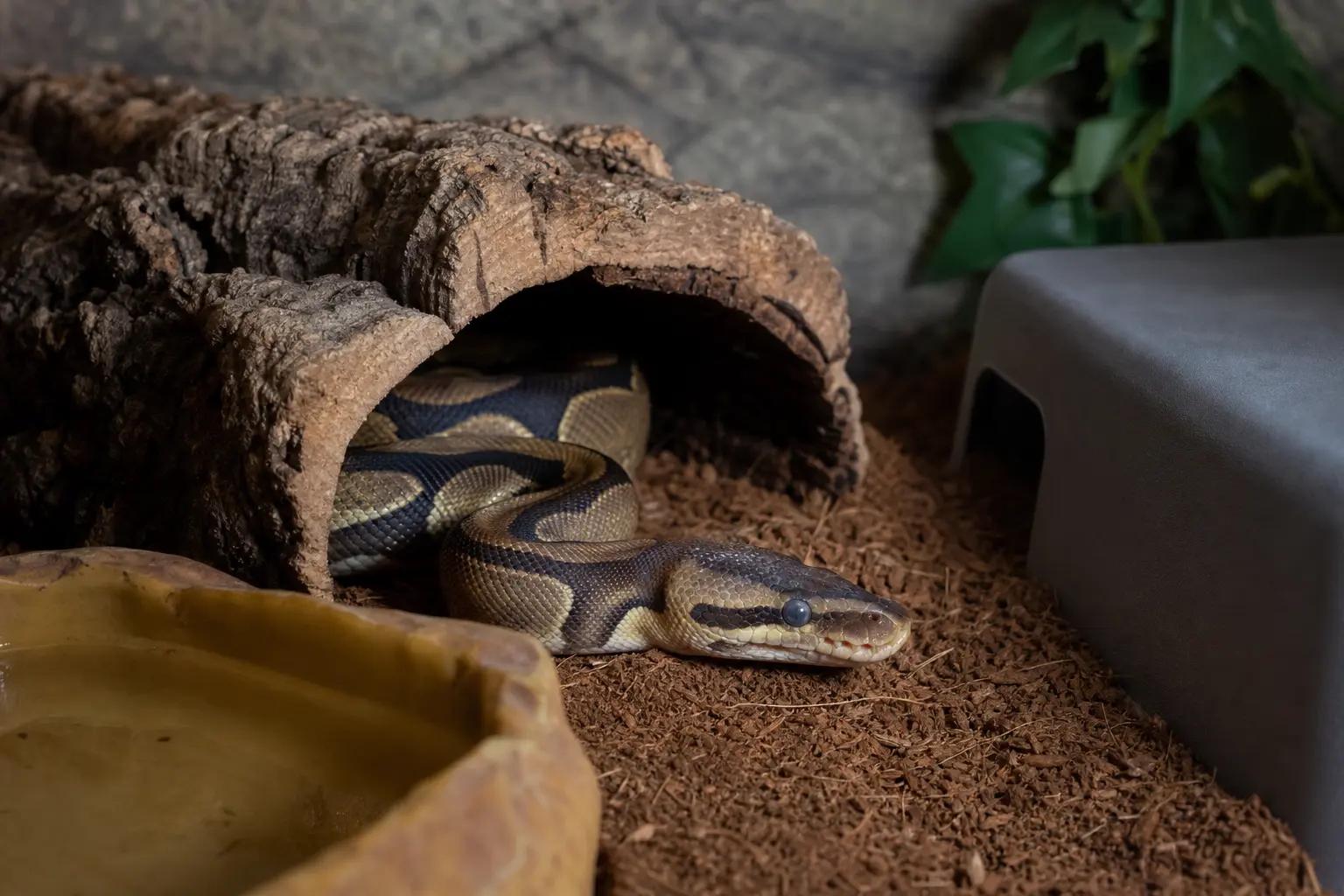
Before a shed, many reptiles become duller or quieter.
Keep water available, reduce unnecessary handling, and leave stable textured surfaces the reptile can rub against.
Afterward, check the animal and the shed.
Small observations tell you whether the habitat is working.
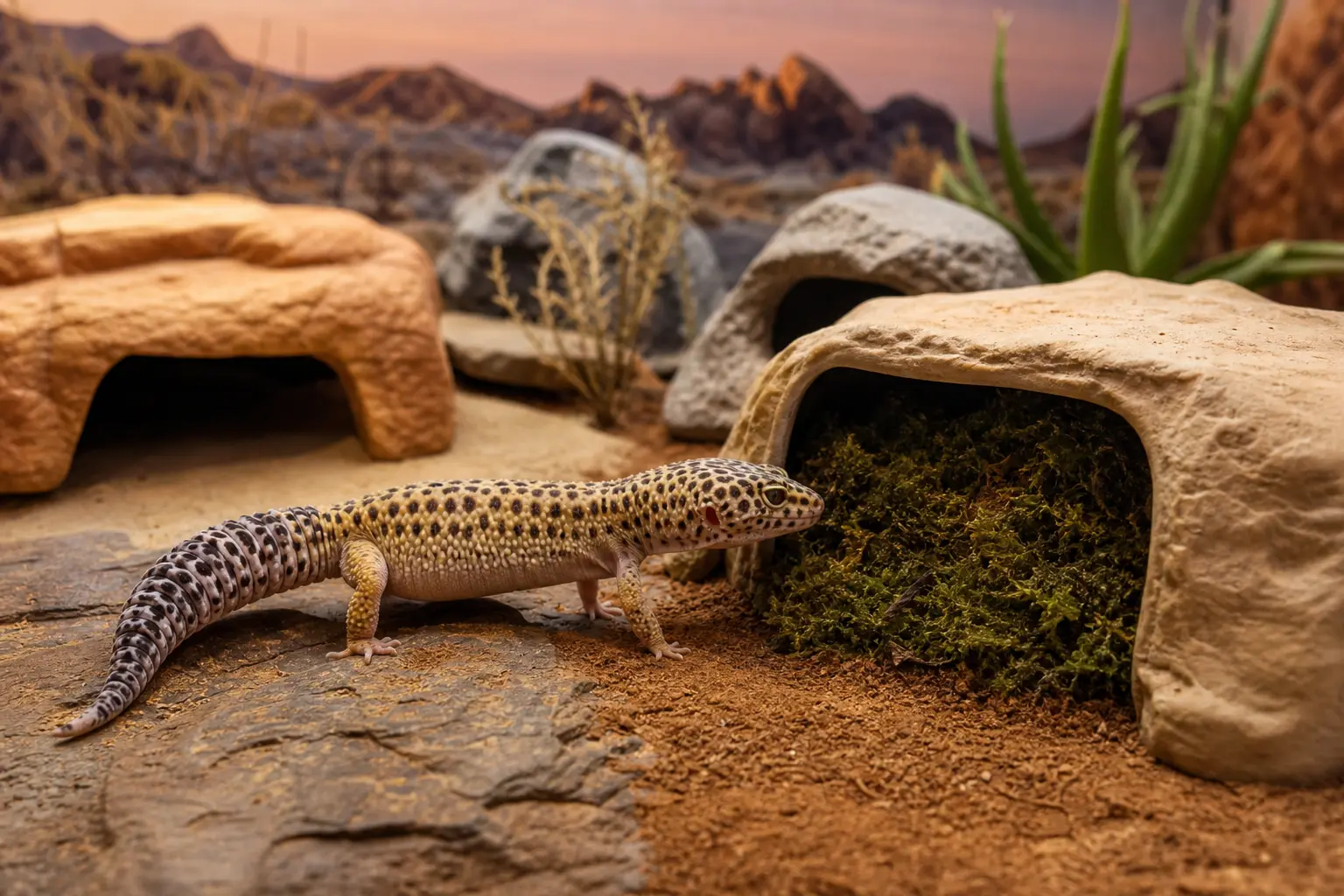 Offer a humid retreat
For species that use one, provide a snug clean hide with damp—not waterlogged—material while preserving a dry choice nearby.
Offer a humid retreat
For species that use one, provide a snug clean hide with damp—not waterlogged—material while preserving a dry choice nearby.
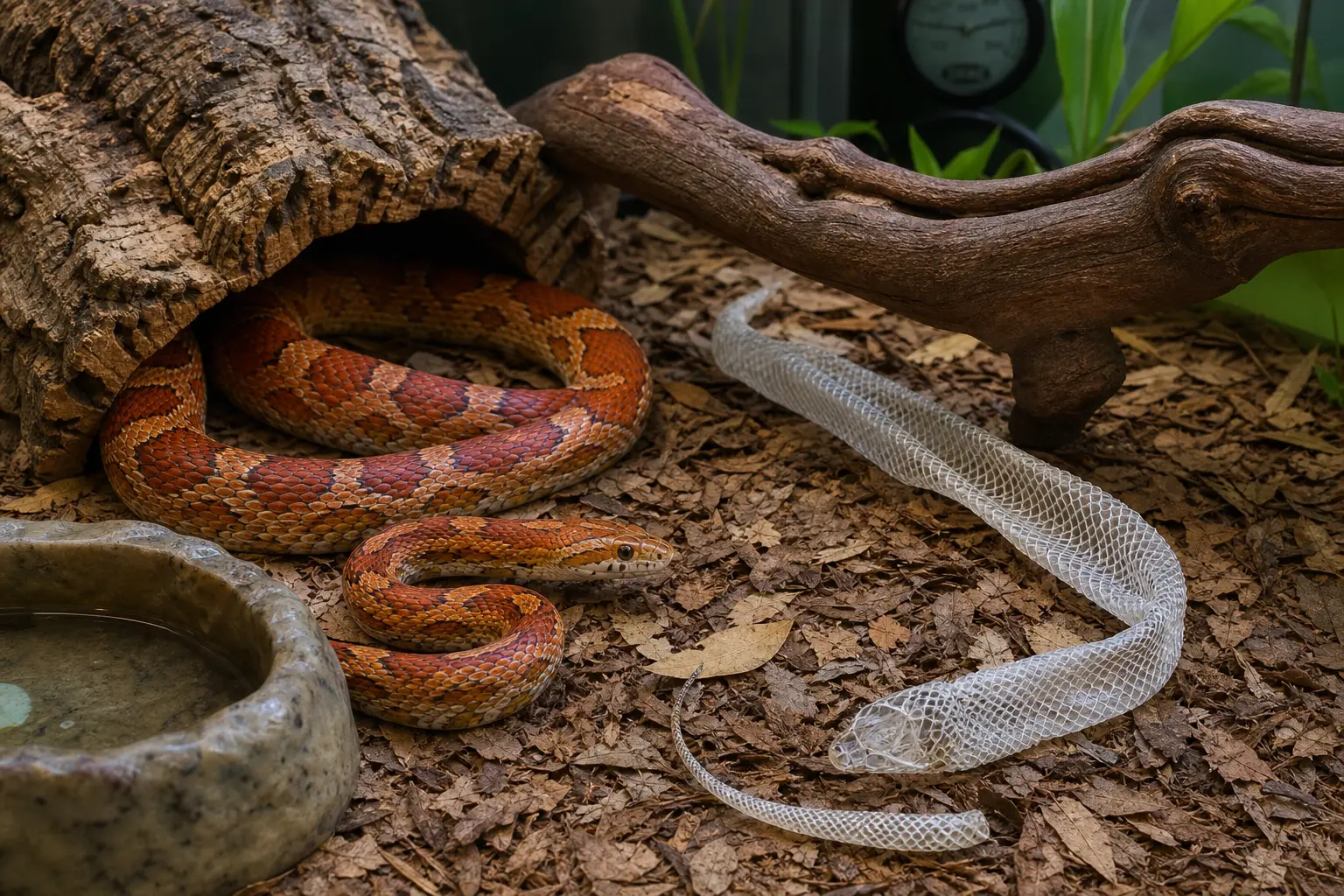 Learn what a complete shed looks like
A snake commonly leaves one inside-out skin.
Learn what a complete shed looks like
A snake commonly leaves one inside-out skin.
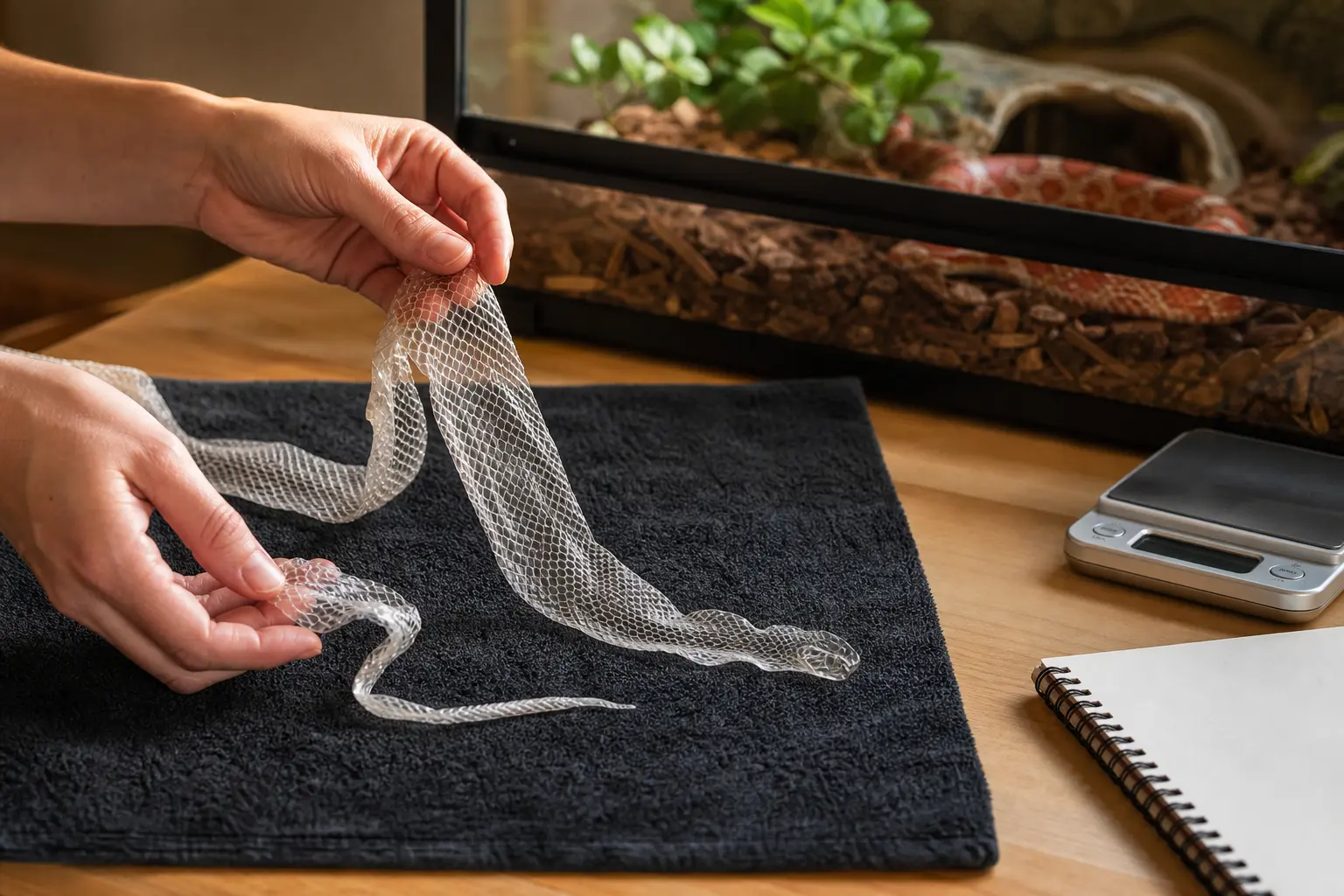 Check gently afterward
Look closely at the eyes, toes, tail tip, and skin folds.
Check gently afterward
Look closely at the eyes, toes, tail tip, and skin folds.
Repeated incomplete sheds deserve more than another misting.
Optional equipment for measuring and managing the enclosure. The target range, ventilation, drainage, and drying cycle remain species-specific.
Affiliate links: Furball Cove may earn from qualifying purchases at no extra cost to you.