Prepare before the forecast
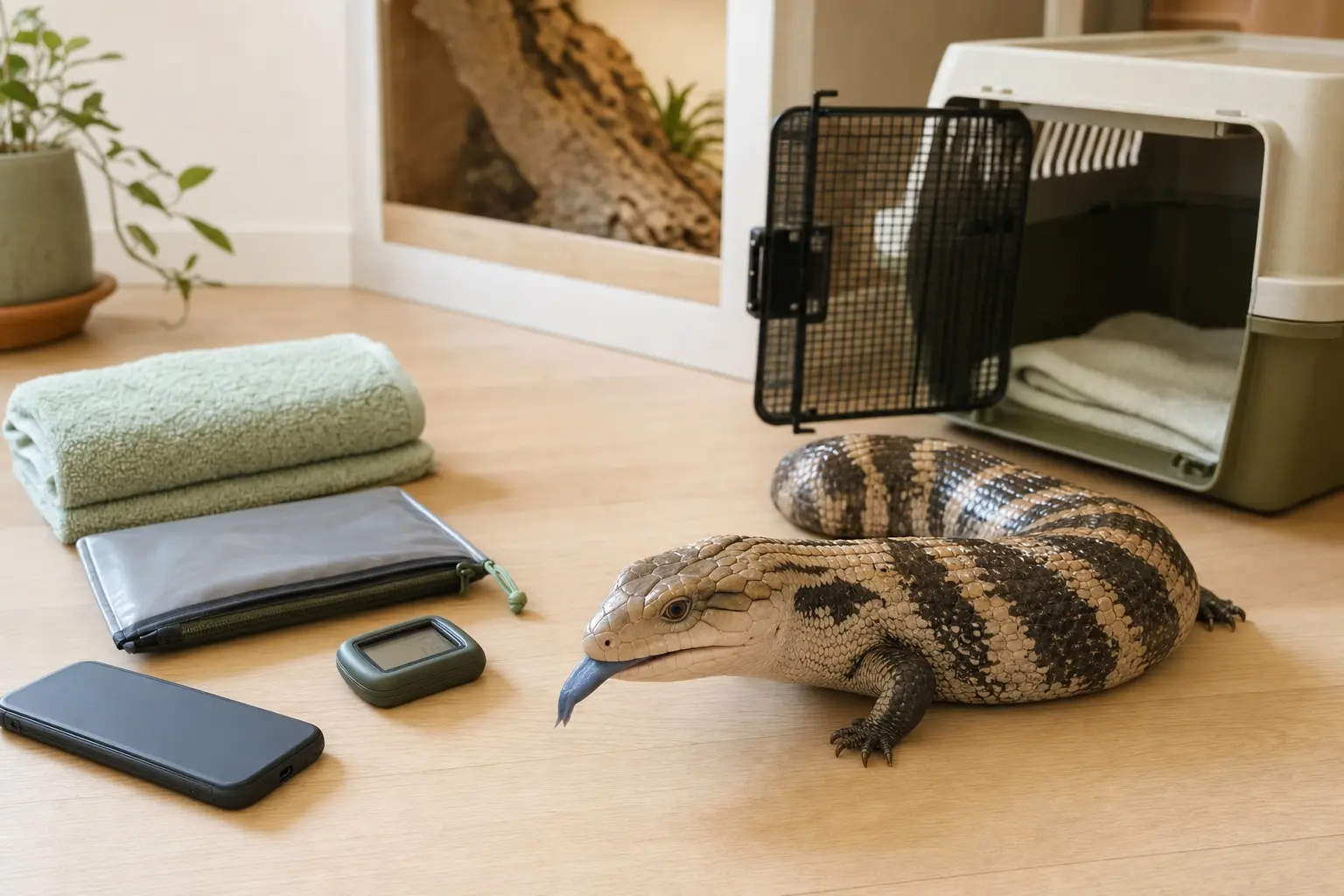
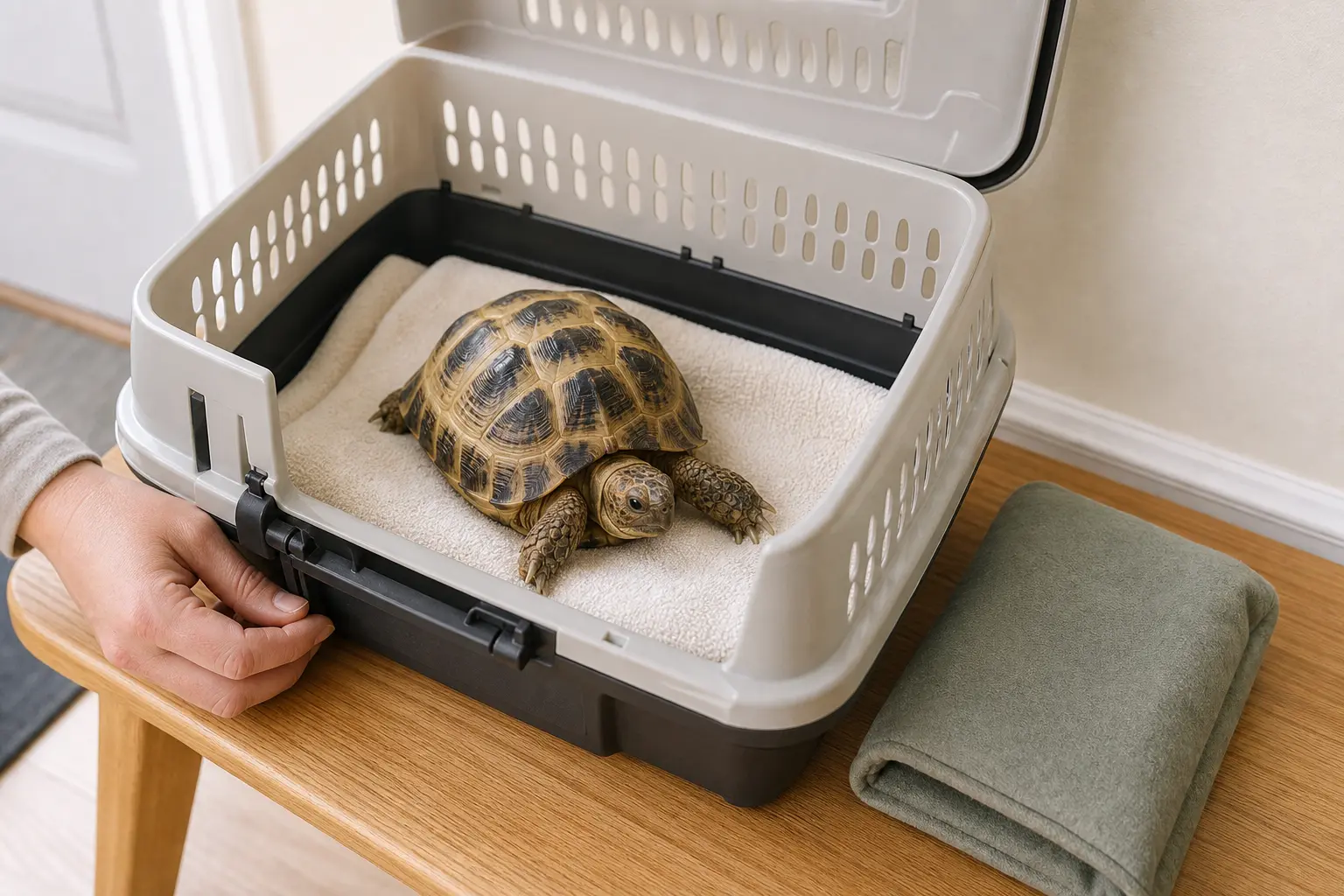
Keep a secure ventilated carrier, digital thermometer, batteries, clinic contacts, transport plan, and written species boundaries together. Know which nearby location can provide stable power and safe temperatures.
Emergency planning
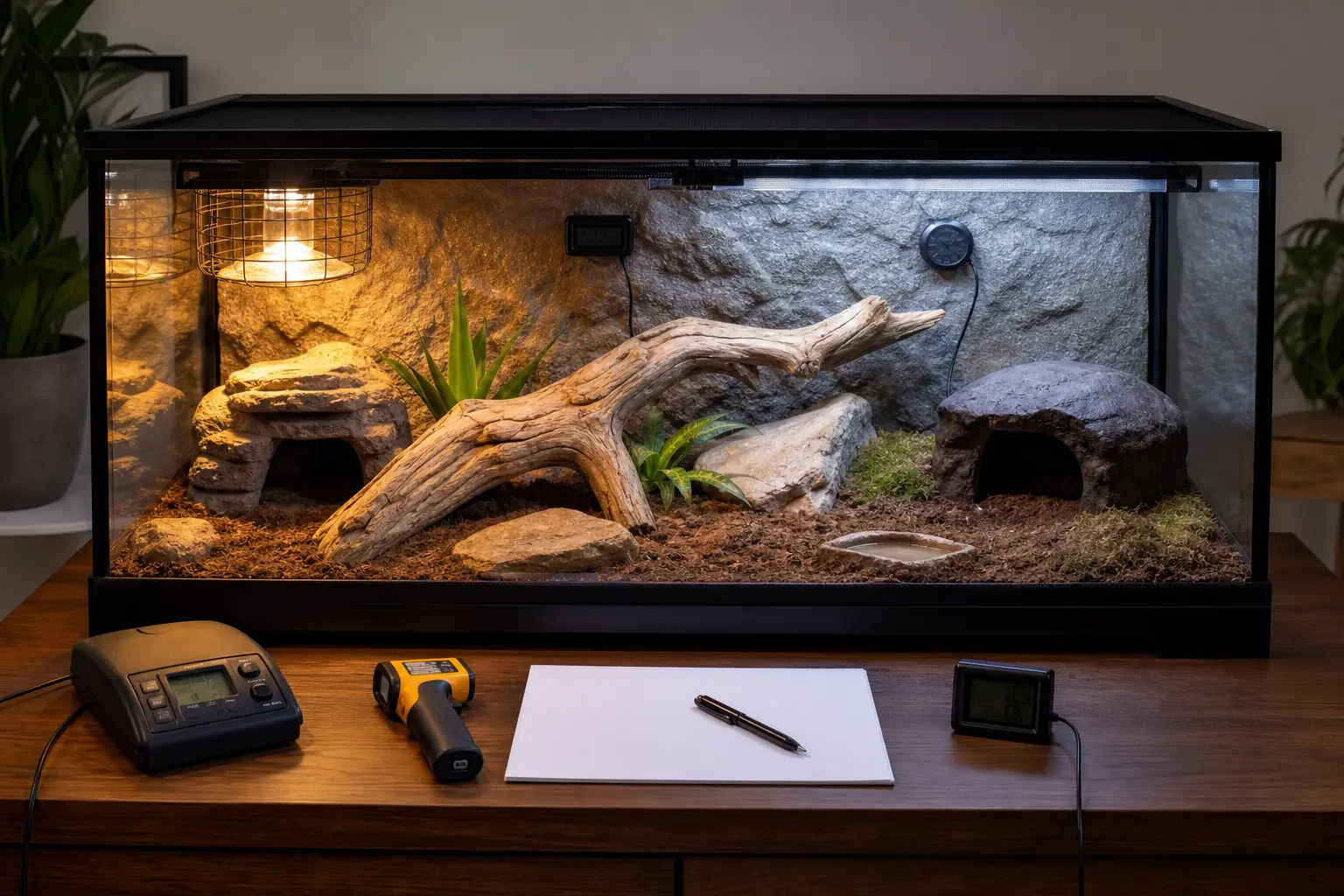
Have a measured backup plan for the habitat's life-support systems before they fail.
The safe response depends on the species.
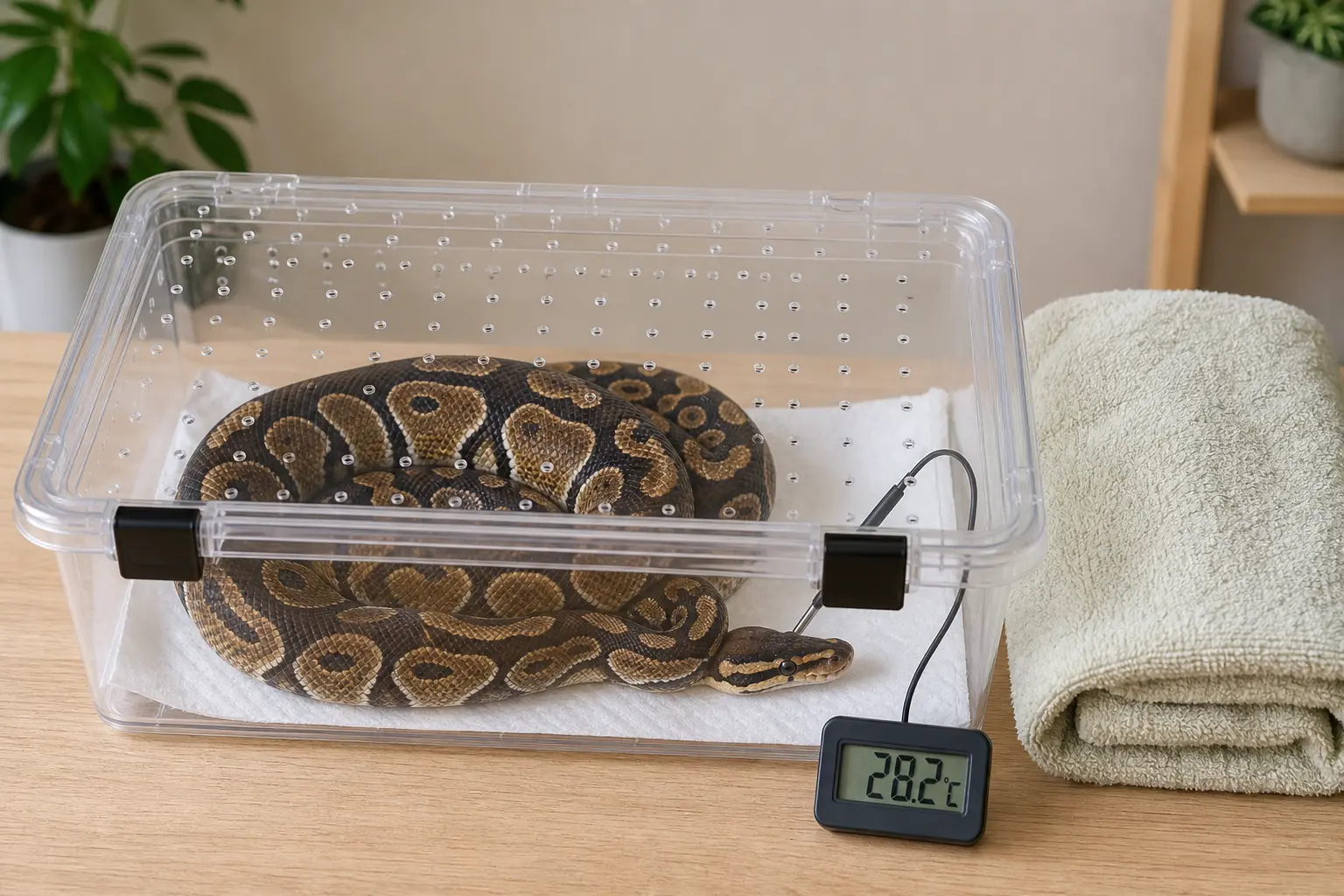
Keep a secure ventilated carrier, digital thermometer, batteries, clinic contacts, transport plan, and written species boundaries together. Know which nearby location can provide stable power and safe temperatures.
Reduce unnecessary door opening and monitor the occupied zone. Never place chemical packs, hot water, ice, lamps, generators, or improvised heaters in contact with the reptile or inside an unventilated container.
Call the reptile veterinarian for species-specific advice when conditions approach unsafe limits or the outage may be prolonged. Relocate before roads, indoor temperatures, filtration, or oxygenation become unmanageable.
Choose the next focused guide for power outages & reptile climate emergencies.
Three optional picks matched to this page. Check adult size, species-specific care targets, and product compatibility before buying.
Affiliate links: Furball Cove may earn from qualifying purchases at no extra cost to you.
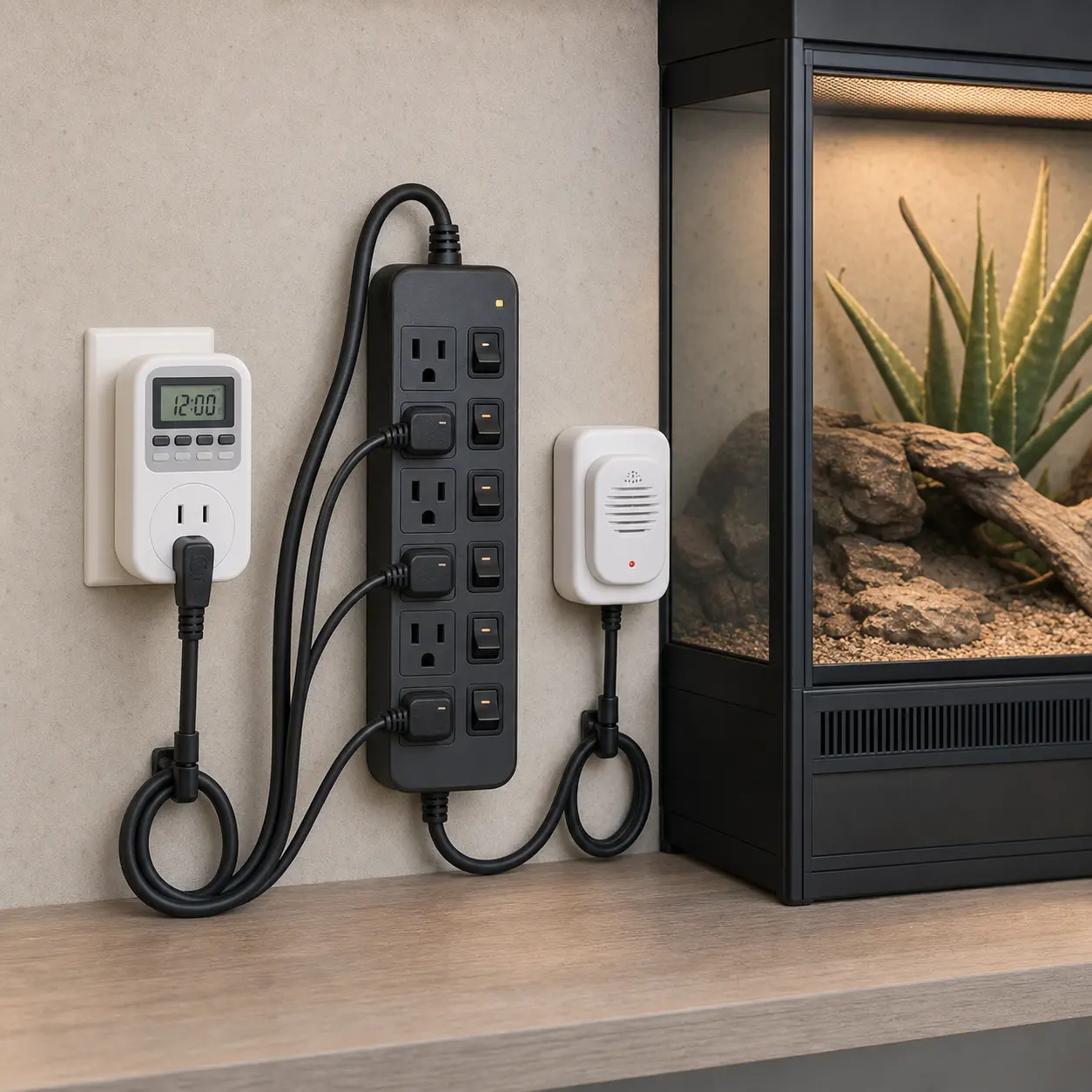
Sounds when mains power is lost so a failed circuit is noticed sooner; keep a species-specific outage plan as well.
Alerts on outage · Plan remains essentialCompare Power-outage alarm options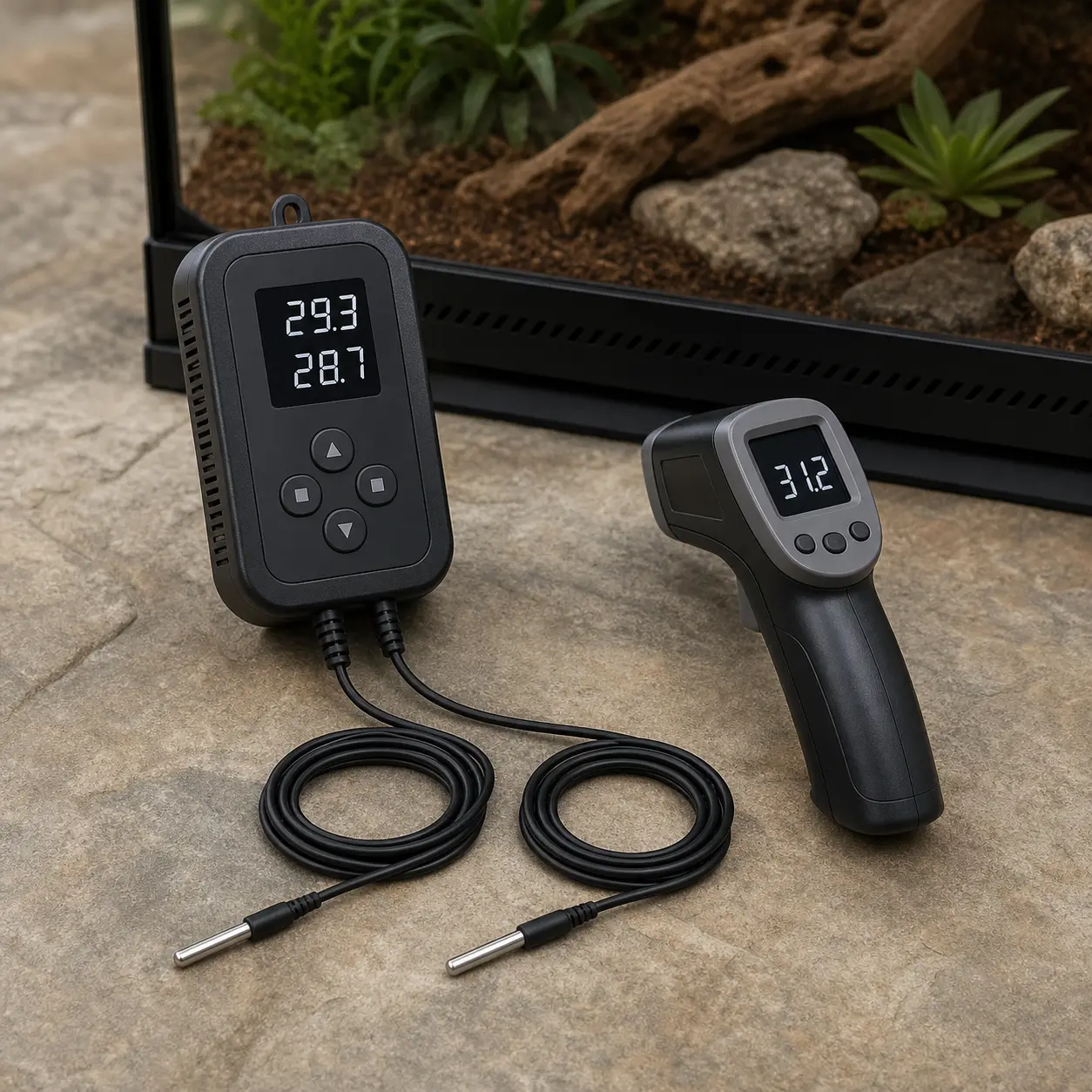
Tracks the warm and cool ends at the same time so the enclosure gradient is easier to verify.
Two-zone readings · Measure before adjustingCompare Dual-probe thermometer options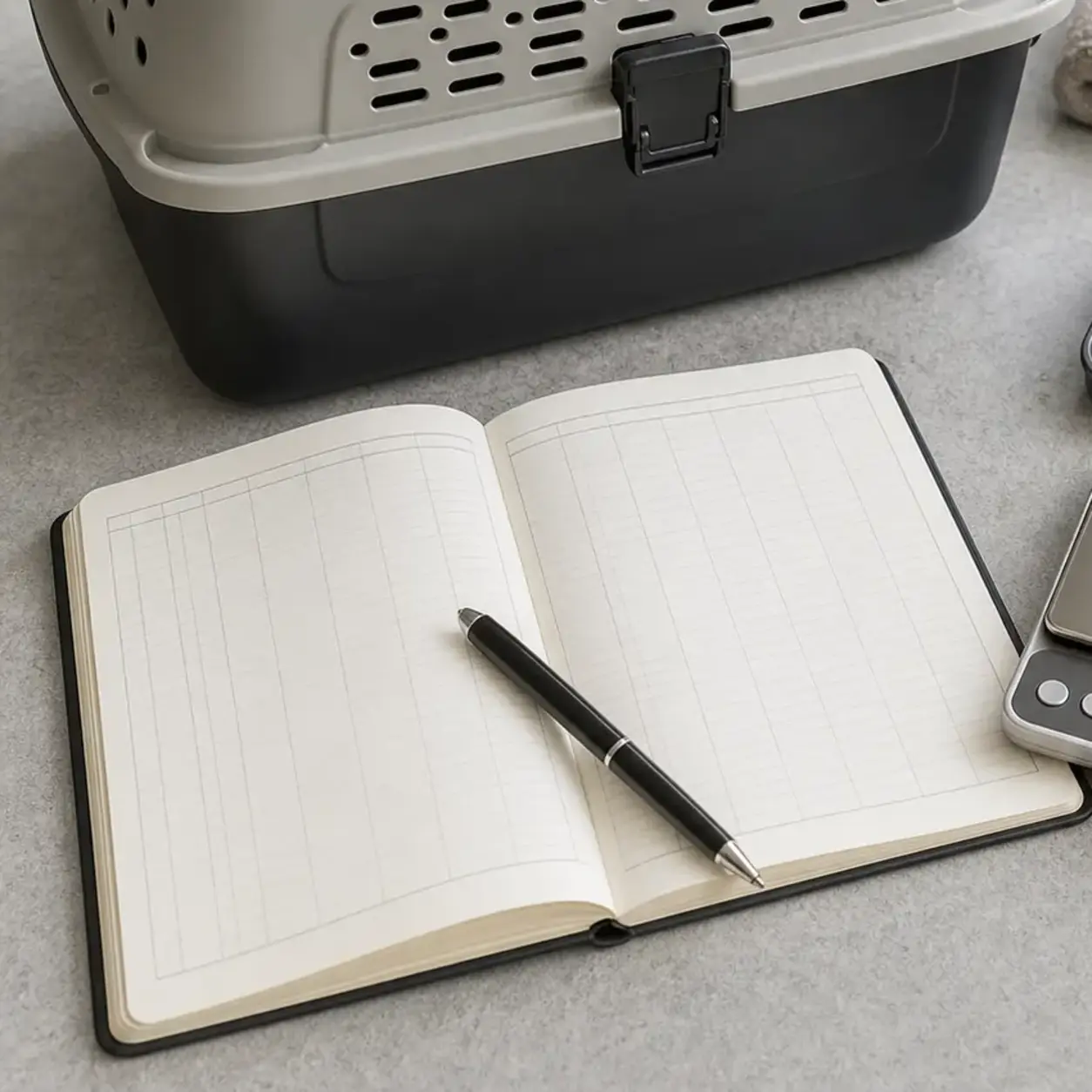
Keeps dates, readings, weight, appetite, shedding, waste, and questions together for clearer veterinary conversations.
Observation record · Not a diagnosisCompare Reptile care log options