Reptile guides

Test the Habitat Before Move-In

Run the empty habitat and measure every place the reptile will use.

Correct unstable conditions before your reptile arrives.
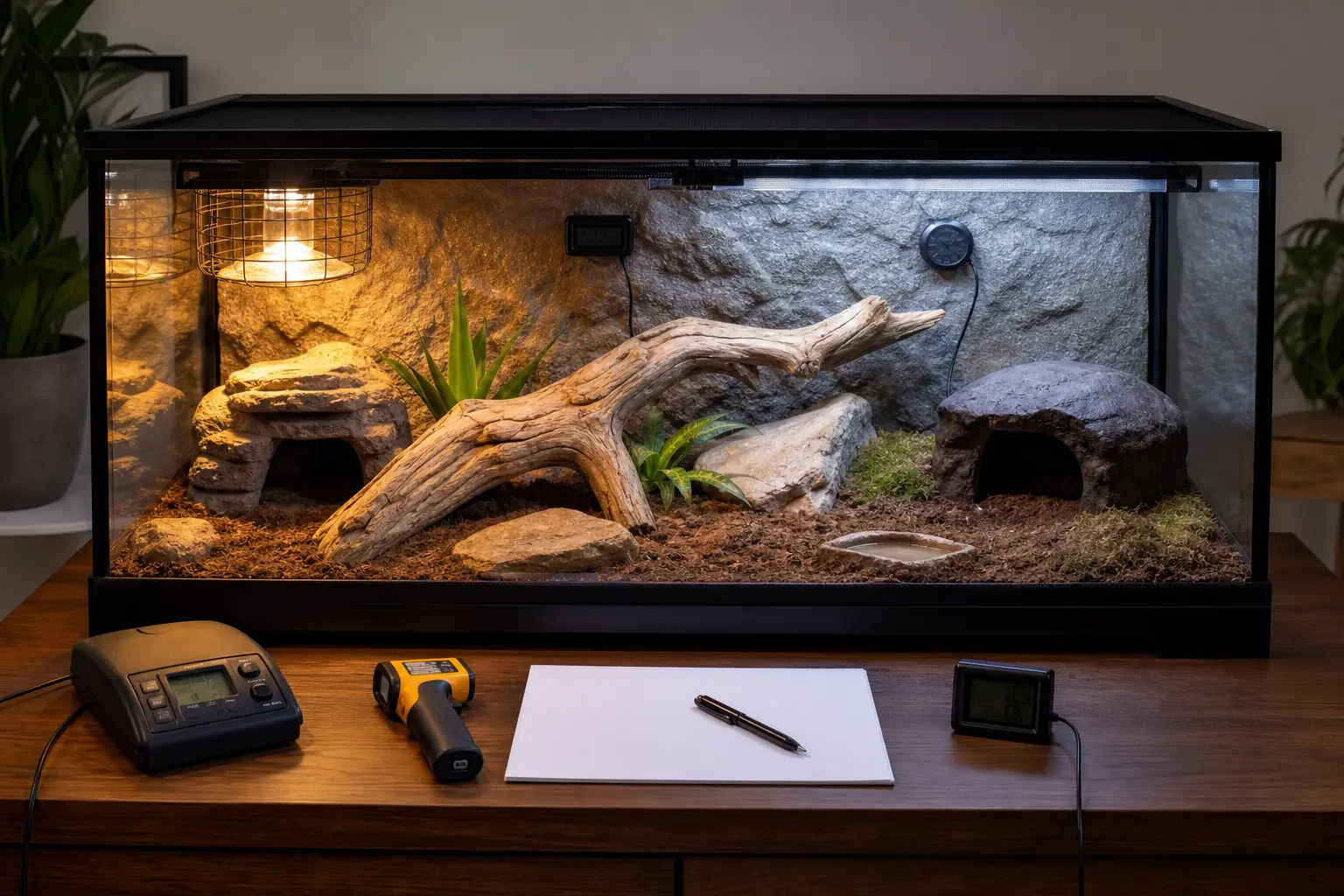
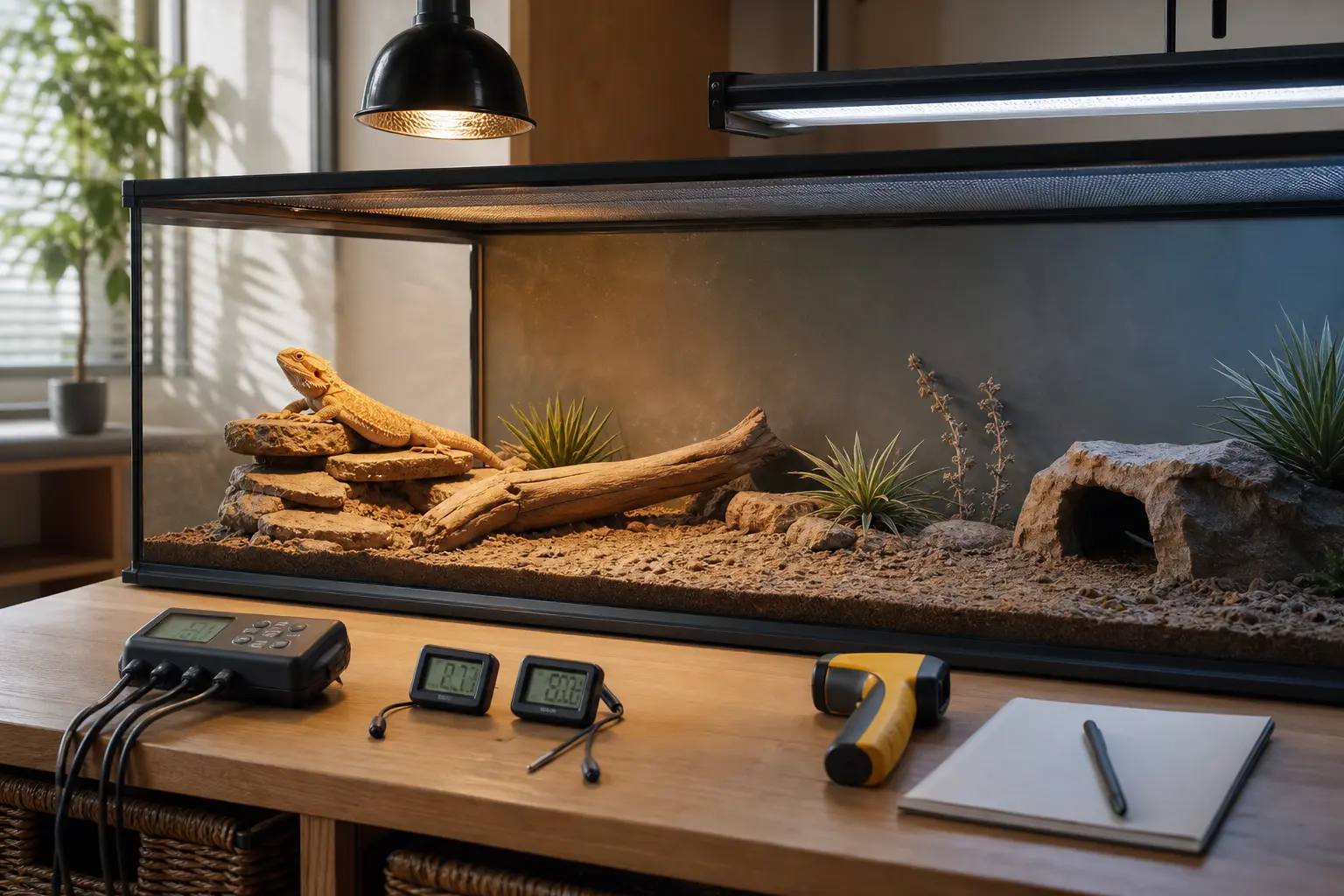
Empty reptile enclosure test-running with guarded heat, linear UVB, warm and cool hides, fixed probes, gauges, and a blank log.

Run the complete empty habitat

Operate the finished enclosure through its normal day, night, misting, filtration, and lighting cycle before move-in.

Measure where the reptile will be

Place fixed probes at the basking area, warm retreat, cool retreat, and any humid or aquatic zone the species will use.

Change one thing at a time

Record the result of each adjustment so you know which change made the habitat more stable.

Check the specialist systems

References

Useful tools for a secure, measurable habitat

Three optional picks matched to this enclosure topic. Start with adult dimensions and species-specific heat, UVB, humidity, and security requirements.

Affiliate links: Furball Cove may earn from qualifying purchases at no extra cost to you.
Unbranded glass terrarium, ventilated PVC enclosure, and low-sided tortoise table

Tortoise table options

Compare usable floor area, wall height, sealed surfaces, lighting support, and how the table fits a larger long-term plan.

Floor area matters · Species-specific wallsCompare Tortoise table options options
Unbranded front-opening terrarium door with lock and screen-cover clip hardware

Screen-cover clips

Adds mechanical hold-down points to a compatible screen lid; check every edge and use enough clips for the enclosure.

Escape prevention · Check compatibilityCompare Screen-cover clips options
Unbranded natural substrate, heavy ceramic water dish, and flat slate basking tile

Reptile substrate options

Compare substrates by humidity, digging, ingestion, cleaning, and veterinary guidance—not by appearance alone.

Species decides · Avoid dusty optionsCompare Reptile substrate options options