Updated
Small mammal food safety
Can Small Mammals Eat Compressed Hay?
Species-specific staple
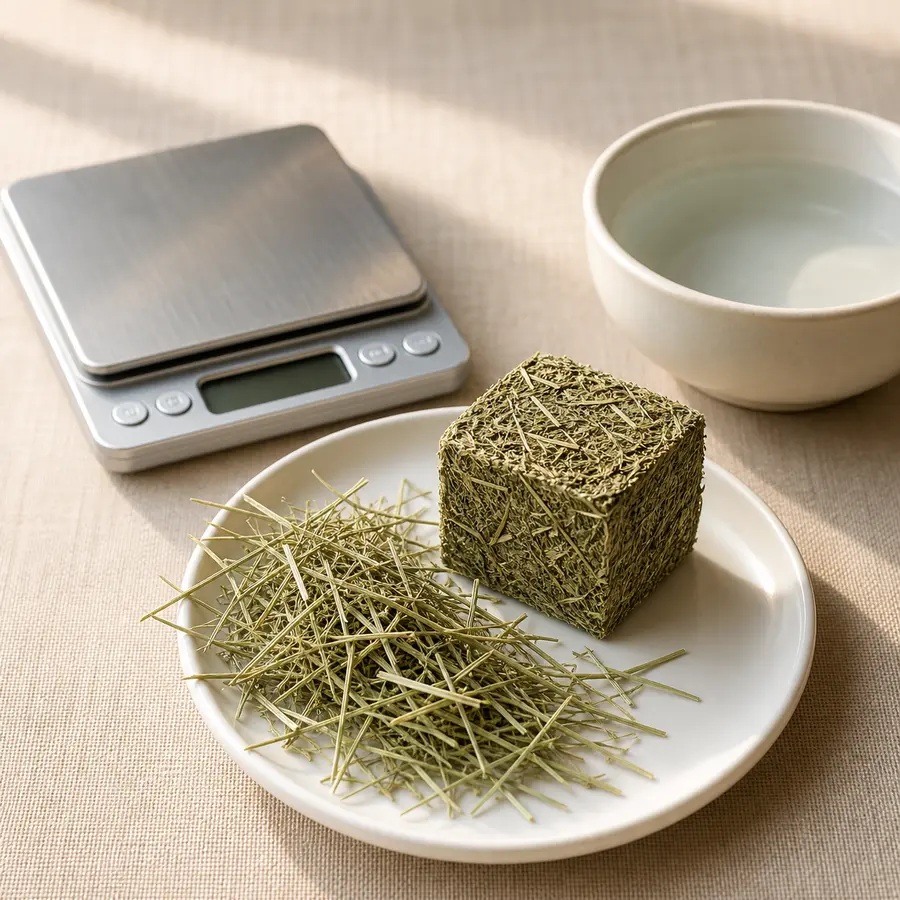
Plain compressed grass hay can fit guinea pigs and chinchillas, but loose hay should still be the daily base. Hamsters, rats, mice, and gerbils may use it as enrichment. Ferrets should skip it.
 Compressed hay
Guinea pigs
Use beside loose hay
A guinea pig may use plain compressed grass hay, but loose hay should still be available all day.
Syrian and dwarf hamsters
Enrichment only
A hamster may chew or forage around a plain hay cube, but it does not replace hamster food.
Rats
Enrichment only
A rat may use a plain hay cube for chewing or foraging, not as a staple.
Mice
Enrichment only
A mouse may investigate a plain hay cube. Keep the normal mouse diet central.
Gerbils
Enrichment only
A gerbil may shred or chew a plain hay cube, but balanced gerbil food stays central.
Chinchillas
Use beside loose hay
A chinchilla may use plain compressed grass hay, but loose grass hay should stay the daily base.
Ferrets
Do not feed
Do not feed compressed hay to ferrets. Ferrets need meat-based food, not hay.
Loose hay still matters
A cube can help with foraging and chewing, but hay-eating species still need easy access to clean loose hay.
Plain means plain
Many hay blocks are treat mixes. Seeds, fruit, sweet binders, mineral chunks, and bright colors change the answer.
Ingredient list first
- Use only a plain compressed grass hay cube or block with no sweet add-ins.
- Offer it beside loose hay for hay-eating species, not as the only fiber source.
- Remove pieces that become wet, dusty, moldy, urine-soaked, or ignored in bedding.
Avoid
- Compressed hay with seeds, dried fruit, honey, molasses, yogurt drops, mineral chunks, dye, strong scent, mold, or heavy dust.
- Replacing loose hay with a hard cube for guinea pigs or chinchillas.
- Feeding hay cubes to ferrets or treating them as a complete diet for hamsters, rats, mice, or gerbils.
Watch
- Reduced hay interest, fewer droppings, weight change, mouth discomfort, or a cube that stays untouched.
- Call an exotic-pet veterinarian promptly if a guinea pig or chinchilla eats less, produces fewer droppings, or seems painful while chewing.
Hay role
Guinea pigs and chinchillas: a plain hay cube can sit beside loose hay. Hamsters, rats, mice, or gerbils: use as chew or forage enrichment. Ferrets: none.
Helpful food-safety supplies
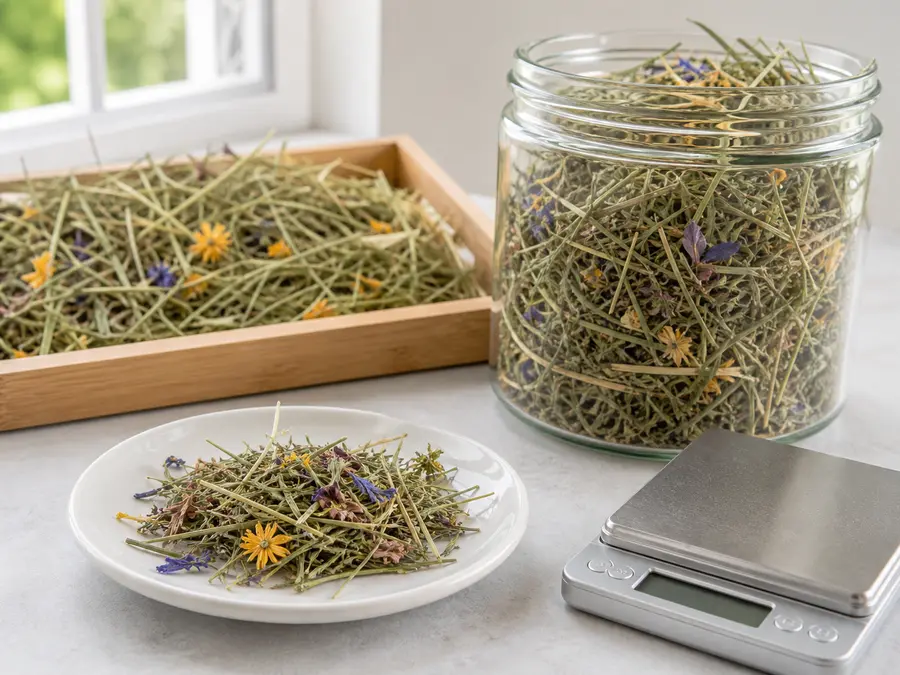
Optional tools for measuring, storing, serving, and cleaning up small portions safely.
Affiliate links: Furball Cove may earn from qualifying purchases at no extra cost to you.