Updated
Small mammal food safety
Can Small Mammals Eat Lawn Clippings?
Avoid
No. Lawn clippings are yard waste, not small-mammal food. They can be damp, fermented, moldy, chemically treated, mixed with weeds, or contaminated by mower residue and animal waste.
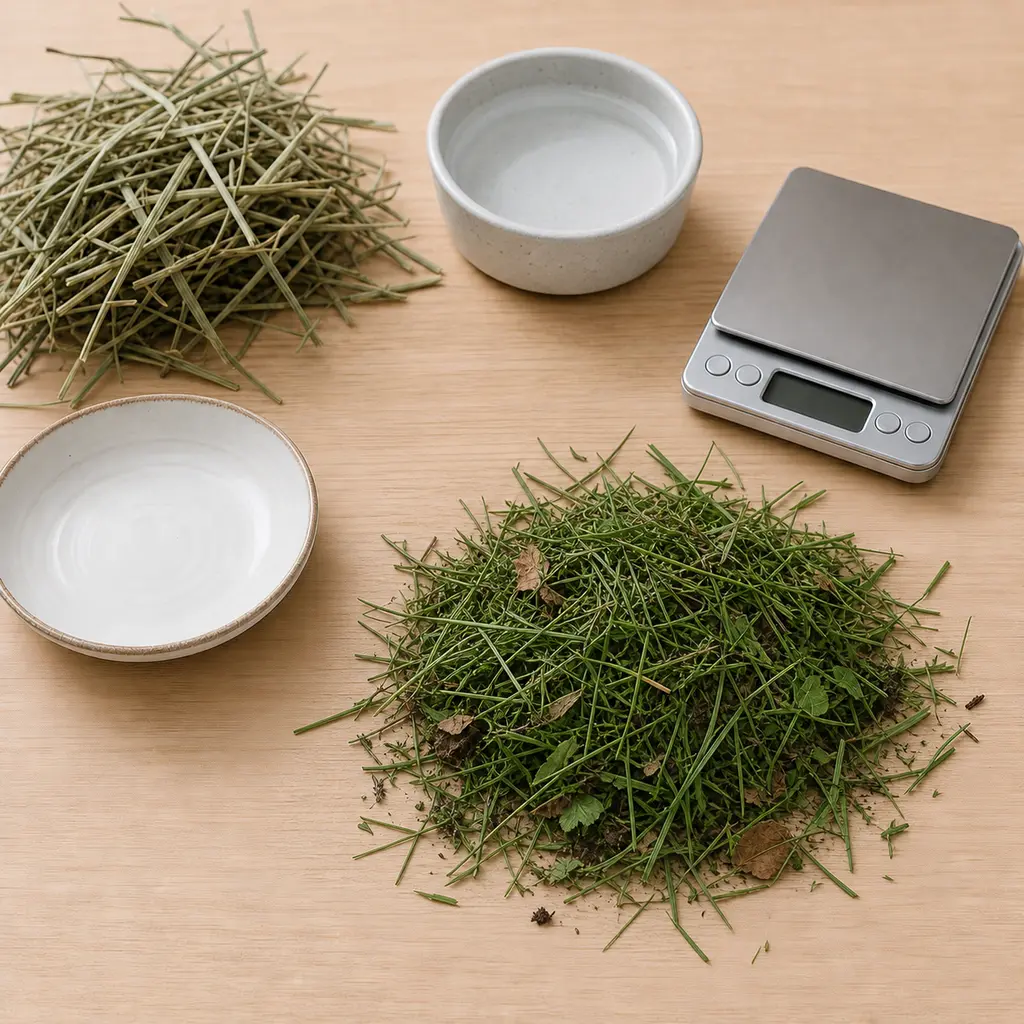 Lawn clippings
Guinea pigs
Skip clippings
Do not feed lawn clippings to guinea pigs. Use clean hay, and handle fresh grass as a separate carefully sourced food.
Syrian and dwarf hamsters
Skip clippings
Do not feed lawn clippings to hamsters. Damp yard waste can spoil or disappear into hoards.
Rats
Skip clippings
Do not feed lawn clippings to rats. Unknown lawn treatments and mower residue are not worth the risk.
Mice
Skip clippings
Do not feed lawn clippings to mice. A tiny body has little margin for contaminated yard waste.
Gerbils
Skip clippings
Do not feed lawn clippings to gerbils. Keep damp lawn waste out of burrows and hoards.
Chinchillas
Skip clippings
Do not feed lawn clippings to chinchillas. Hay should be dry, clean, and controlled.
Ferrets
Do not feed
Do not feed lawn clippings to ferrets. Ferrets need meat-based food, not yard forage.
Yard waste is not forage
Lawn clippings are usually chopped, damp, and mixed with whatever was on the lawn or mower. That is a different risk than clean hand-cut grass.
Chemicals are hard to rule out
If you do not know exactly what was applied to the lawn, remove the clippings and avoid guessing.
Remove yard waste
- Remove lawn clippings from the habitat, play area, carrier, and any hoard.
- Check for fertilizer, herbicide, pesticide, fuel or oil residue, weeds, mold, damp clumps, feces, and compost exposure.
- Return to hay, water, and the normal species diet while you watch for changes.
Avoid
- Fresh mower piles, bagged lawn waste, composted clippings, damp clumps, moldy clippings, treated lawns, weed mixes, roadside grass, and clippings from pet toileting areas.
- Using clippings as forage, bedding, odor control, or a hay replacement.
- Waiting at home after chemical exposure, mold exposure, a large amount, bloating, appetite loss, fewer droppings, diarrhea, or breathing changes.
Watch
- Reduced appetite, fewer droppings, soft stool or diarrhea, bloating, quietness, hunching, drooling, coughing, or breathing changes.
- Call an exotic-pet veterinarian promptly for treated-lawn exposure, mold, a large amount, or abnormal signs.
Helpful food-safety supplies
Optional tools for measuring, storing, serving, and cleaning up small portions safely.
Affiliate links: Furball Cove may earn from qualifying purchases at no extra cost to you.