Updated
Small mammal food safety
Can Small Mammals Eat Marshmallows?
Avoid
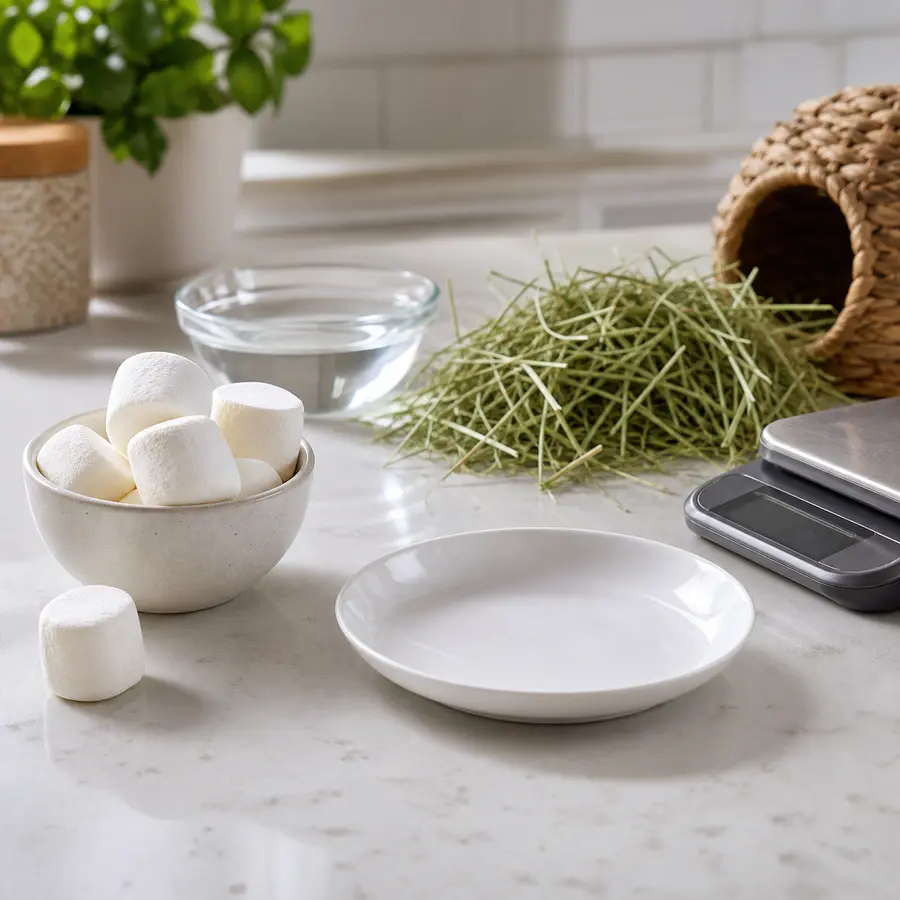
No. Marshmallows are candy, not small-mammal food. Sugar, starch, gelatin, flavors, wrappers, and sticky residue make them a poor fit.
 Marshmallows
Guinea pigs
Skip marshmallows
Do not feed marshmallows to guinea pigs. Hay, vitamin C foods, pellets, and water matter more than candy.
Syrian and dwarf hamsters
Skip marshmallows
Do not use marshmallows as hamster treats. Sticky candy can be hoarded and smeared.
Rats
Skip marshmallows
Do not use marshmallows as rat treats. Balanced rat food and controlled fresh foods are better choices.
Mice
Skip marshmallows
Do not feed marshmallows to mice. A crumb can be a large sweet amount at mouse size.
Gerbils
Skip marshmallows
Do not feed marshmallows to gerbils. Keep the diet dry, balanced, and species-appropriate.
Chinchillas
Do not feed
Do not feed marshmallows to chinchillas. Sugar and sticky starch are poor fits for hay-centered digestion.
Ferrets
Do not feed
Do not feed marshmallows to ferrets. Ferrets need meat-based food, not candy.
Soft candy still counts
Marshmallows can look plain, but they are still sugar, starch, gelatin, and flavoring. They do not become safer because they are soft.
Mixed products matter
Cocoa, chocolate, cereal treats, sugar-free sweeteners, wrappers, and mold change the response. Keep packaging details if exposure happened.
Remove the candy
- Remove marshmallows, crumbs, wrappers, cereal treats, cocoa mix, sticky bedding, and residue on paws, fur, bowls, or toys.
- Check whether the exposure involved chocolate, cocoa, xylitol, sugar-free sweeteners, nuts, cereal, mold, or wrapper pieces.
- Return to the normal diet and offer plain water.
Avoid
- Marshmallows, mini marshmallows, flavored marshmallows, marshmallow cream, cereal treats, cocoa toppings, candy mixes, and sugar-free marshmallows.
- Marshmallows for guinea pigs, chinchillas, ferrets, tiny rodents, or animals with appetite, stool, weight, dental, urinary, or digestive concerns.
- Using marshmallows as training treats, enrichment, medicine coating, or a way to tempt eating.
Watch
- Reduced appetite, fewer droppings, soft stool, diarrhea, bloating, sticky fur, paw chewing, mouth discomfort, quietness, or unusual posture.
- Contact an exotic-pet veterinarian or poison hotline promptly for xylitol, chocolate, cocoa, wrappers, a meaningful amount, a tiny or weak animal, or any abnormal signs.
Helpful food-safety supplies
Optional tools for measuring, storing, serving, and cleaning up small portions safely.
Affiliate links: Furball Cove may earn from qualifying purchases at no extra cost to you.