Updated
Small mammal food safety
Can Small Mammals Eat Wheatgrass?
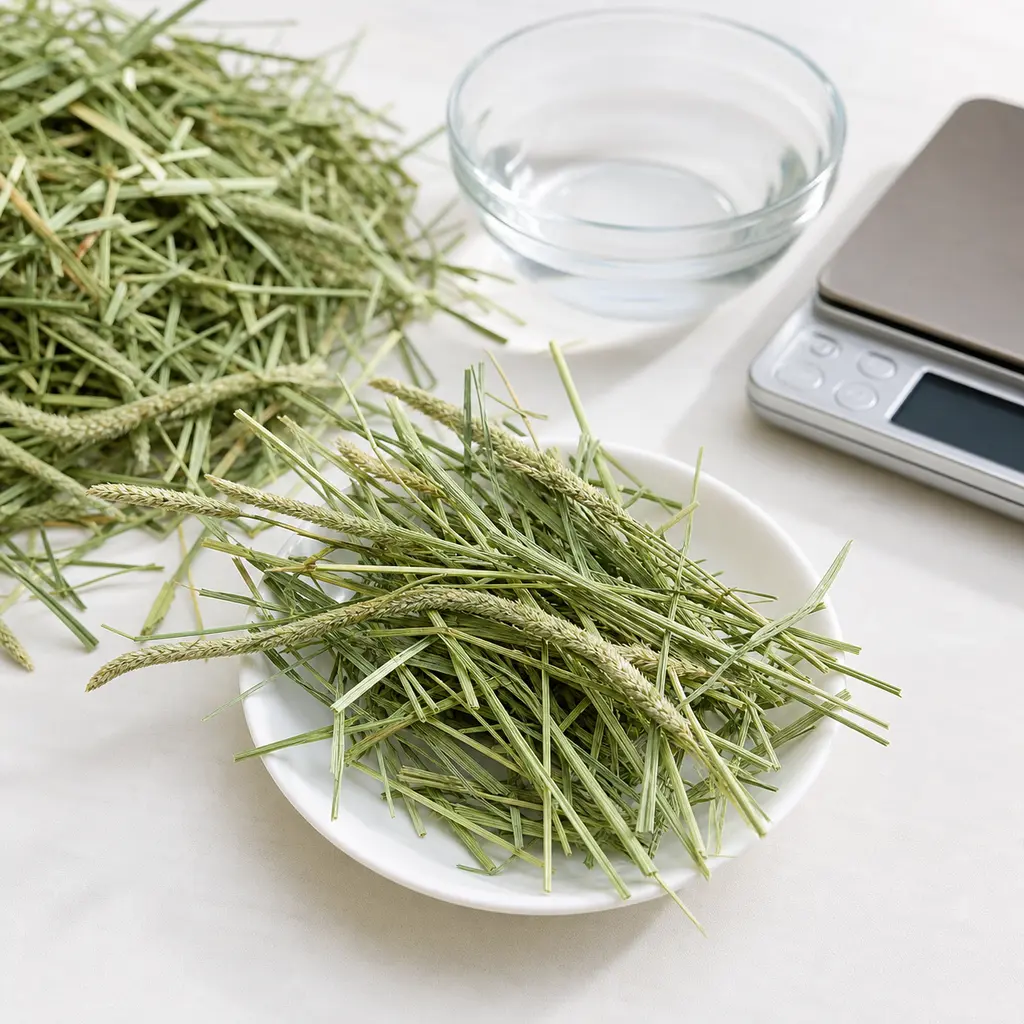
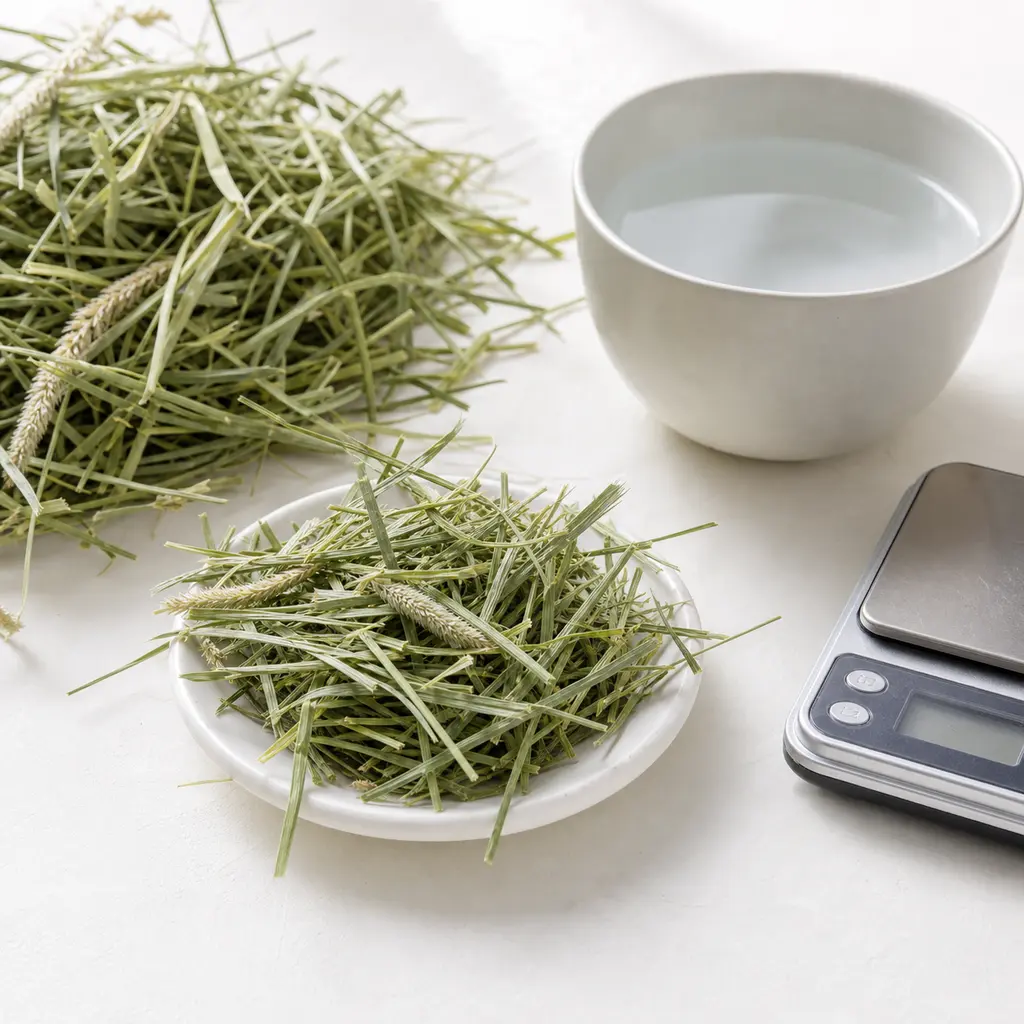
Fresh blades
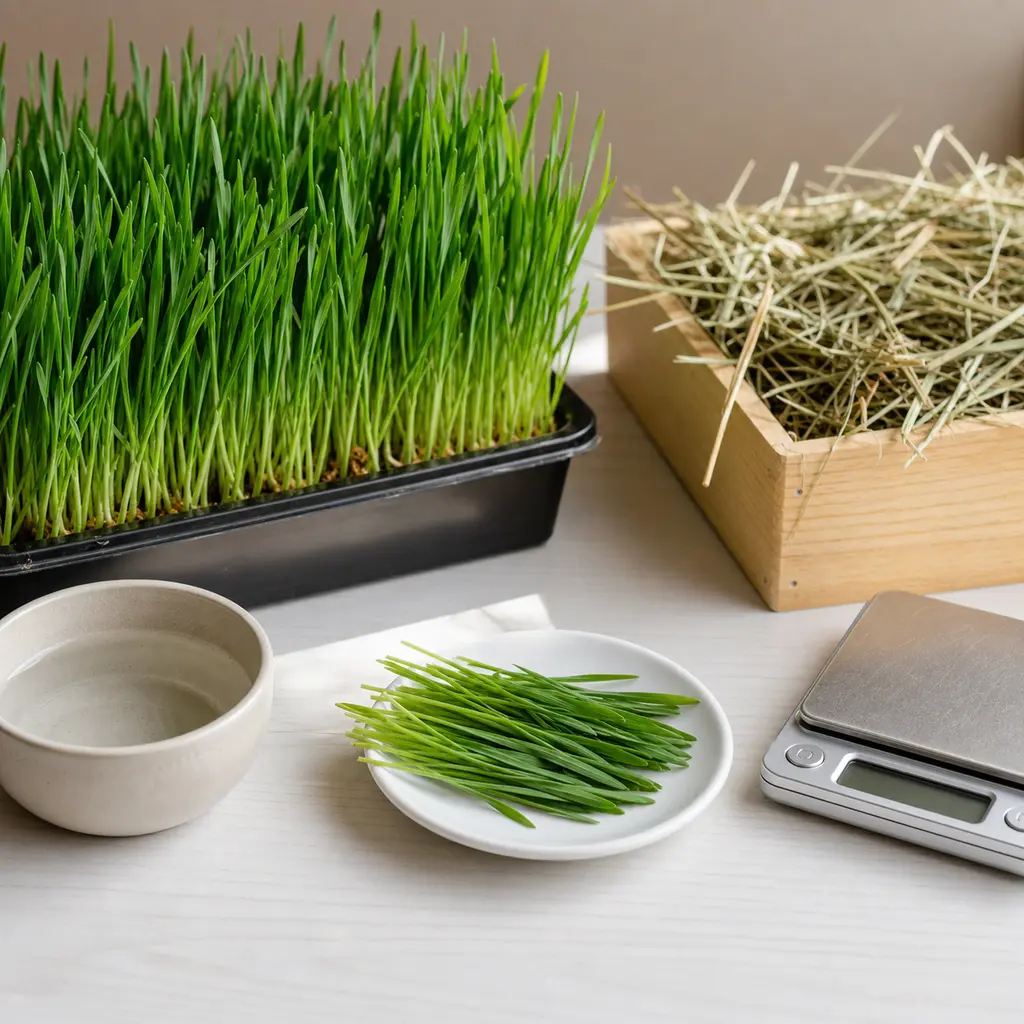
Fresh wheatgrass is a source-sensitive fresh grass, not dry hay. A few clean cut blades may fit some guinea pigs and a few rodents, but it should stay tiny. Chinchillas and ferrets should usually skip it.
 Wheatgrass
Guinea pigs
Few clean blades
A guinea pig may have a few clean wheatgrass blades if the source is known and the normal hay-centered diet stays steady.
Syrian and dwarf hamsters
Tiny piece
A hamster may nibble a tiny clean blade rarely. Check the hoard and remove wet leftovers.
Rats
Tiny piece
A rat may explore a tiny clean blade as enrichment if the normal staple and stool stay steady.
Mice
Very tiny piece
A mouse needs only a very tiny clean blade piece. Remove leftovers before they wilt.
Gerbils
Tiny rare piece
A gerbil may have a tiny clean blade rarely, but damp greens should not sit in deep bedding.
Chinchillas
Use dry hay
Skip fresh wheatgrass for chinchillas unless an exotic-pet veterinarian gives a specific plan. Keep hay dry and clean.
Ferrets
Do not feed
Do not feed wheatgrass to ferrets. Ferrets need meat-based food, not grass.
Fresh grass is not hay
Wheatgrass is wet and perishable. It does not replace dry hay for guinea pigs or chinchillas.
The tray can be the risk
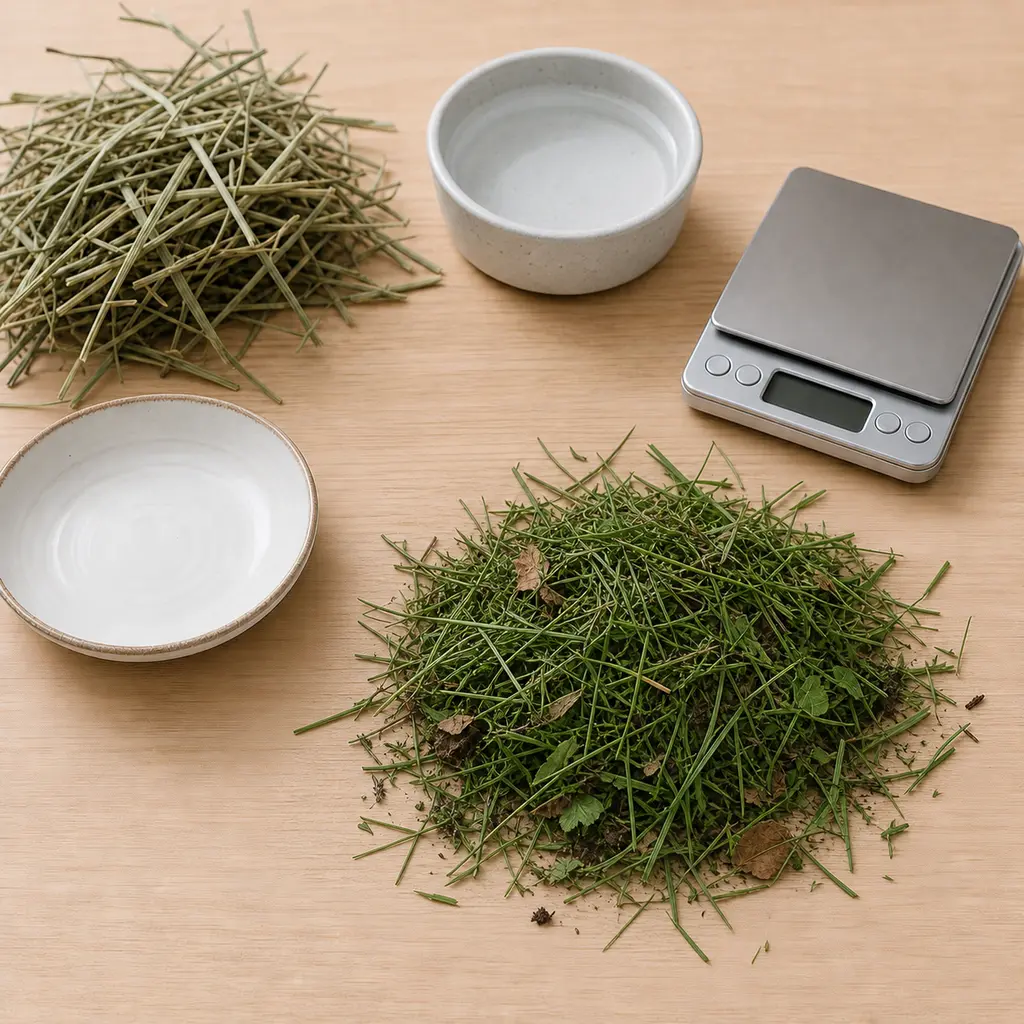
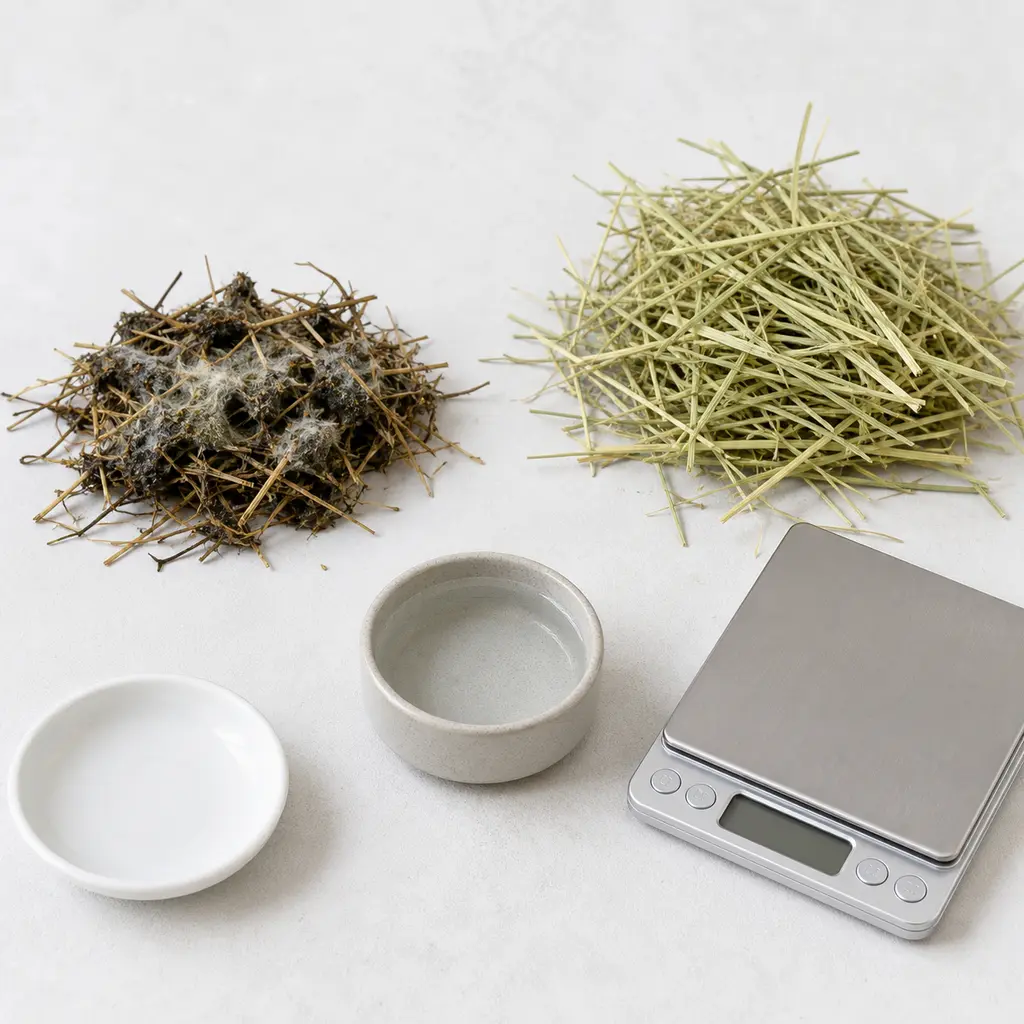
Mold, fertilizer, treated soil, sour trays, and standing water matter more than the blade itself.
Use a clean tray
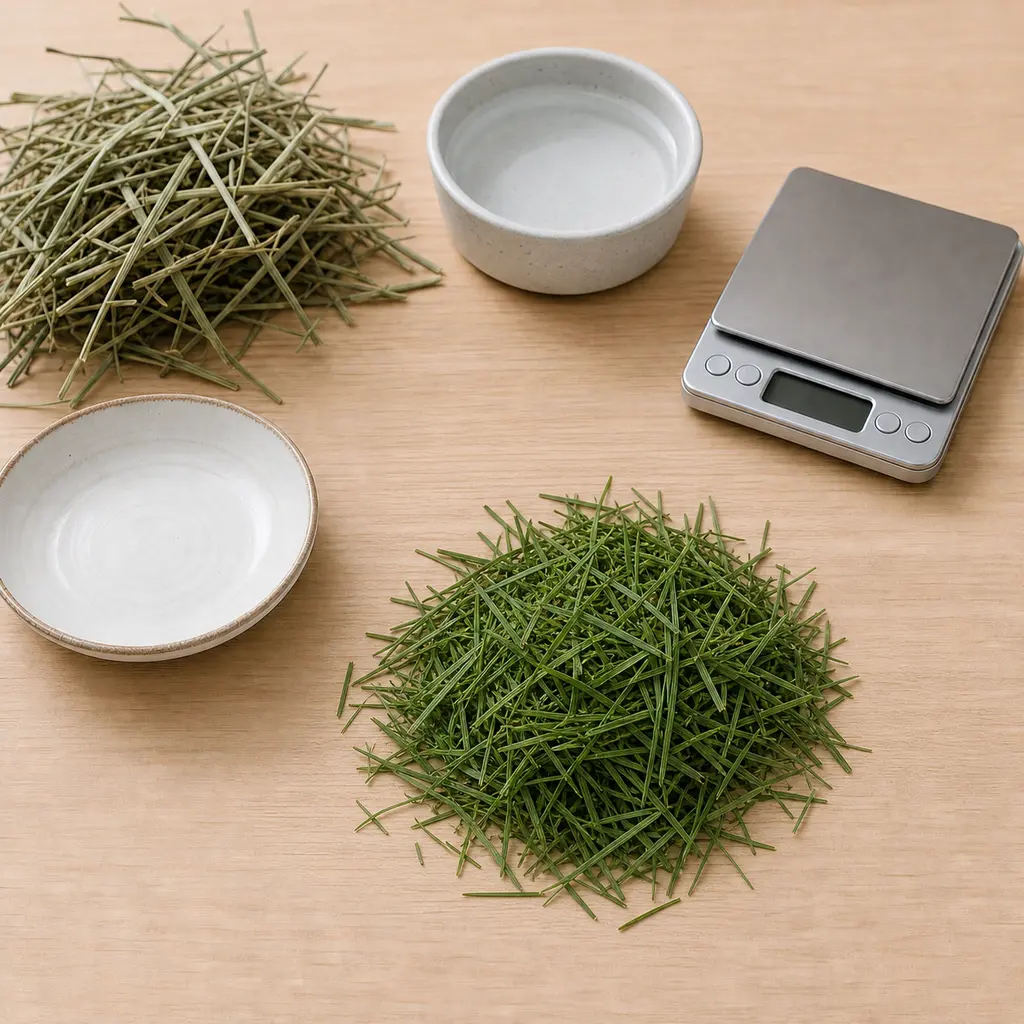
- Use wheatgrass only from a known untreated tray with no mold, fertilizer, pesticide, sour smell, or standing water.
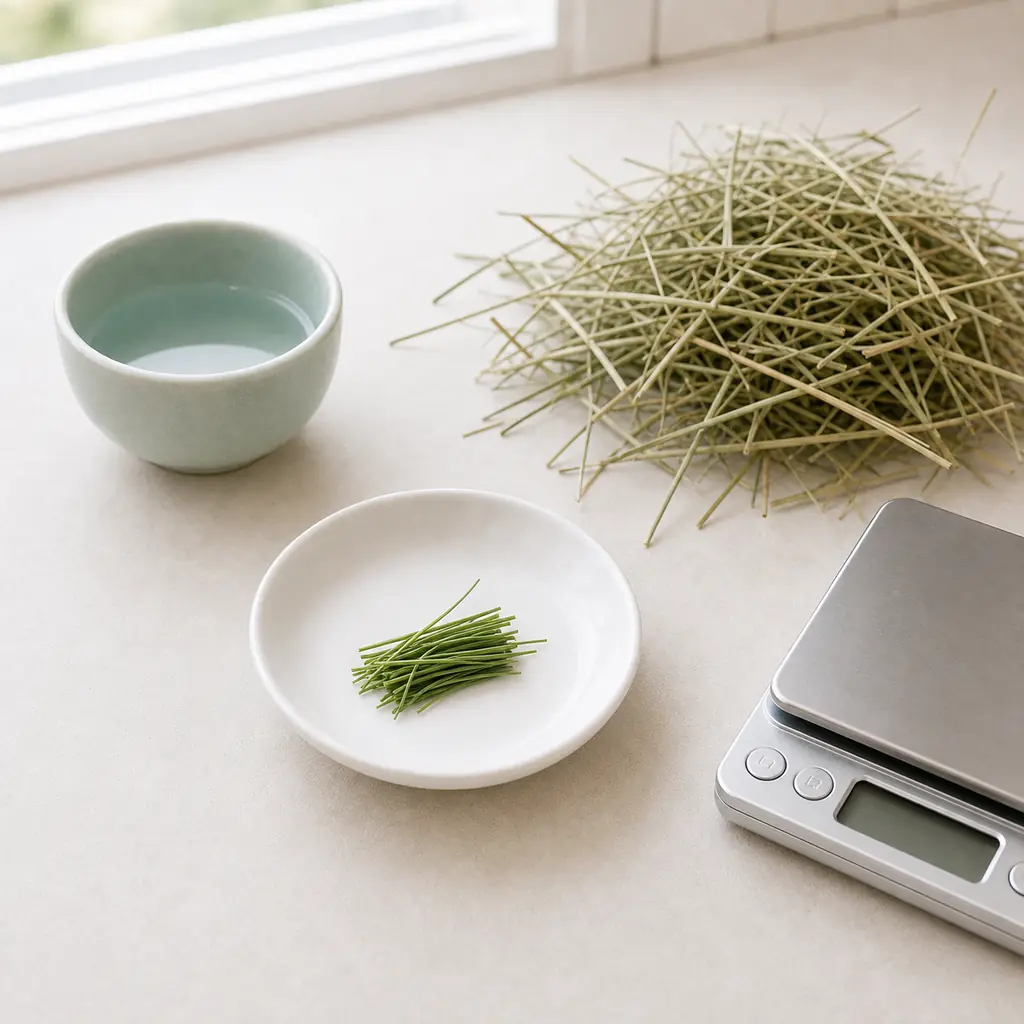
- Cut a few blades, keep soil and roots out, rinse if needed, and pat dry before serving.
- Remove leftovers before they wilt, sour, or get hidden in bedding.
Avoid
- Wheatgrass juice, powders, smoothies, moldy trays, soil, roots, fertilizer, treated trays, pet-store decor of unknown source, lawn clippings, and large wet handfuls.
- Using fresh wheatgrass to replace dry hay for hay-eating animals.
- Fresh grass for animals with abnormal appetite, stool, droppings, bloating, or low energy.
Watch
- Soft stool, bloating, reduced appetite, fewer droppings, wet bedding, wilted leftovers, or quietness after fresh wheatgrass.
- Call an exotic-pet veterinarian promptly if a guinea pig or chinchilla eats less, produces fewer droppings, or any small animal seems unwell.
Portion
Guinea pigs: a few blades. Hamsters, rats, mice, or gerbils: one tiny blade piece rarely. Chinchillas and ferrets: none unless a veterinarian gives a plan.
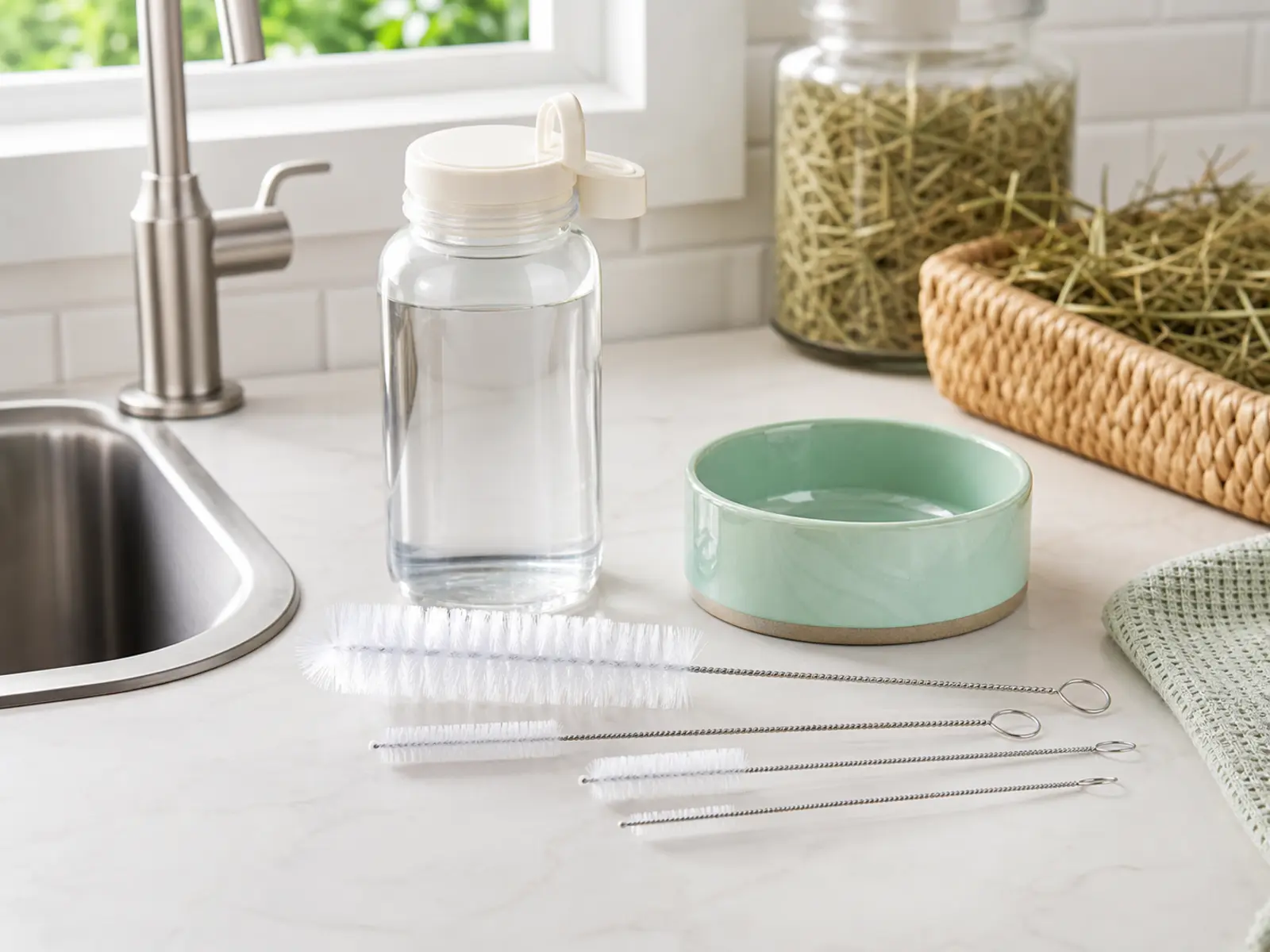
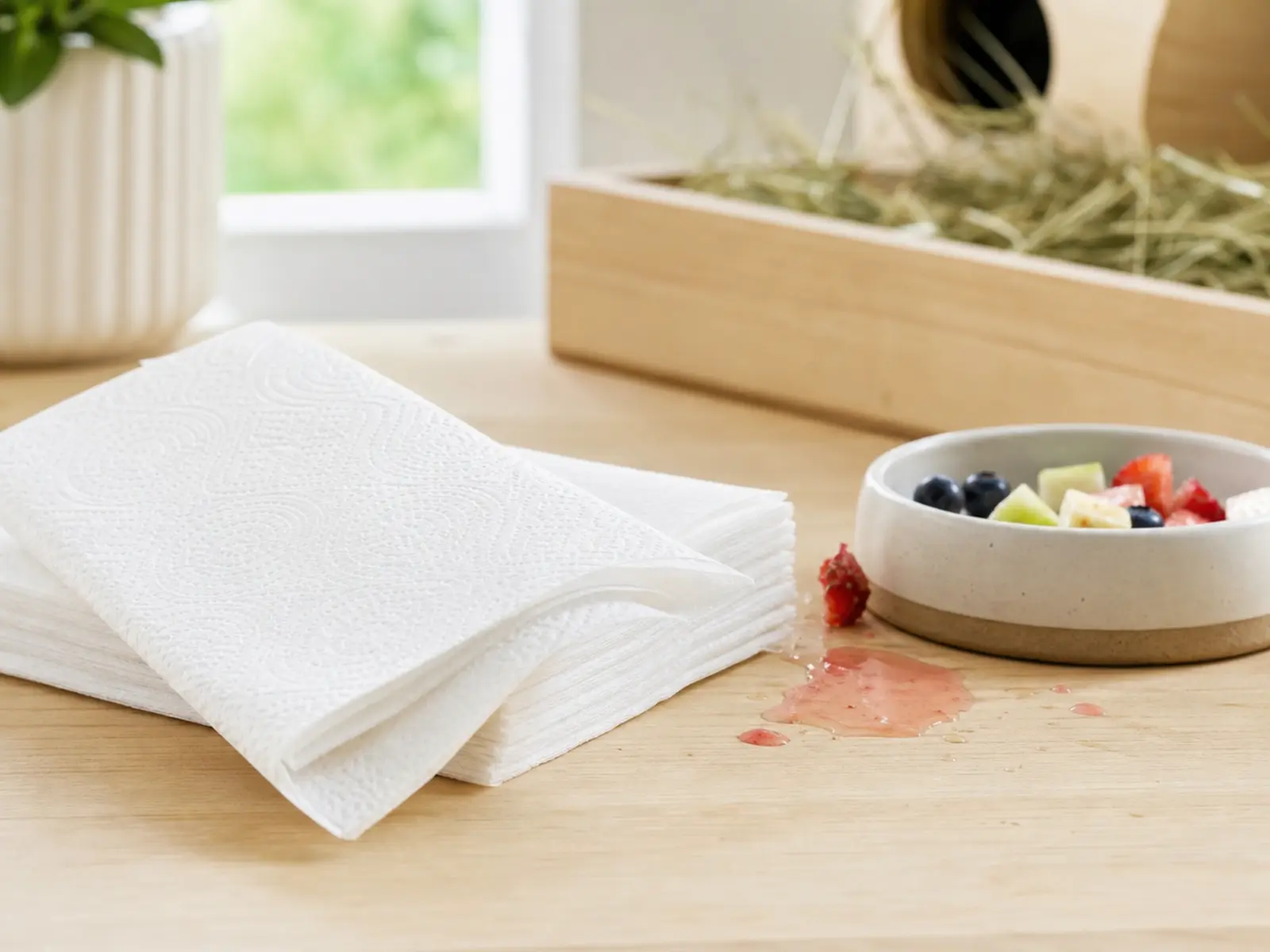
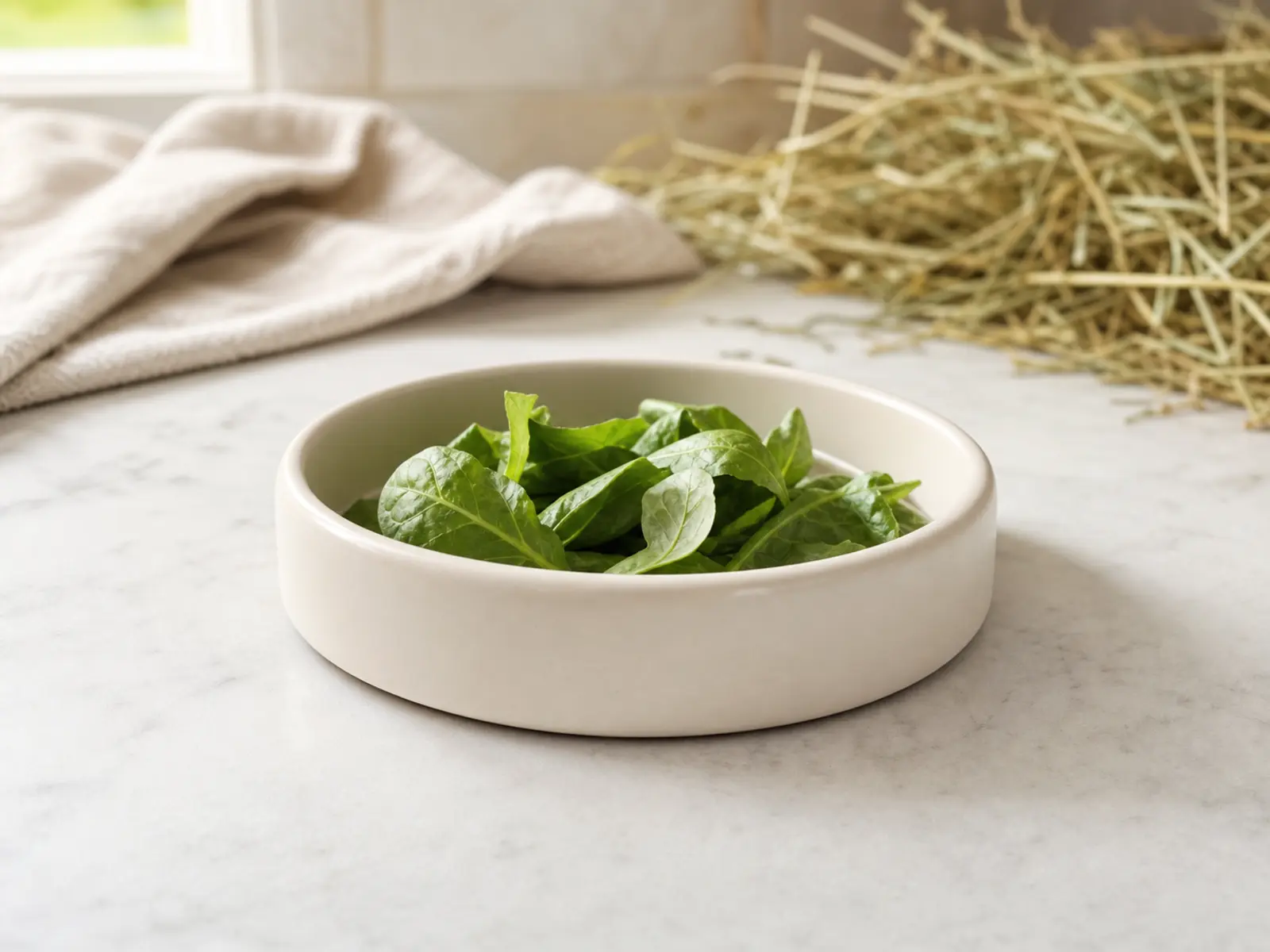
Helpful food-safety supplies
Optional tools for measuring, storing, serving, and cleaning up small portions safely.
Affiliate links: Furball Cove may earn from qualifying purchases at no extra cost to you.