Updated
Small mammal food safety
Can Small Mammals Eat Moldy Hay?
Unsafe
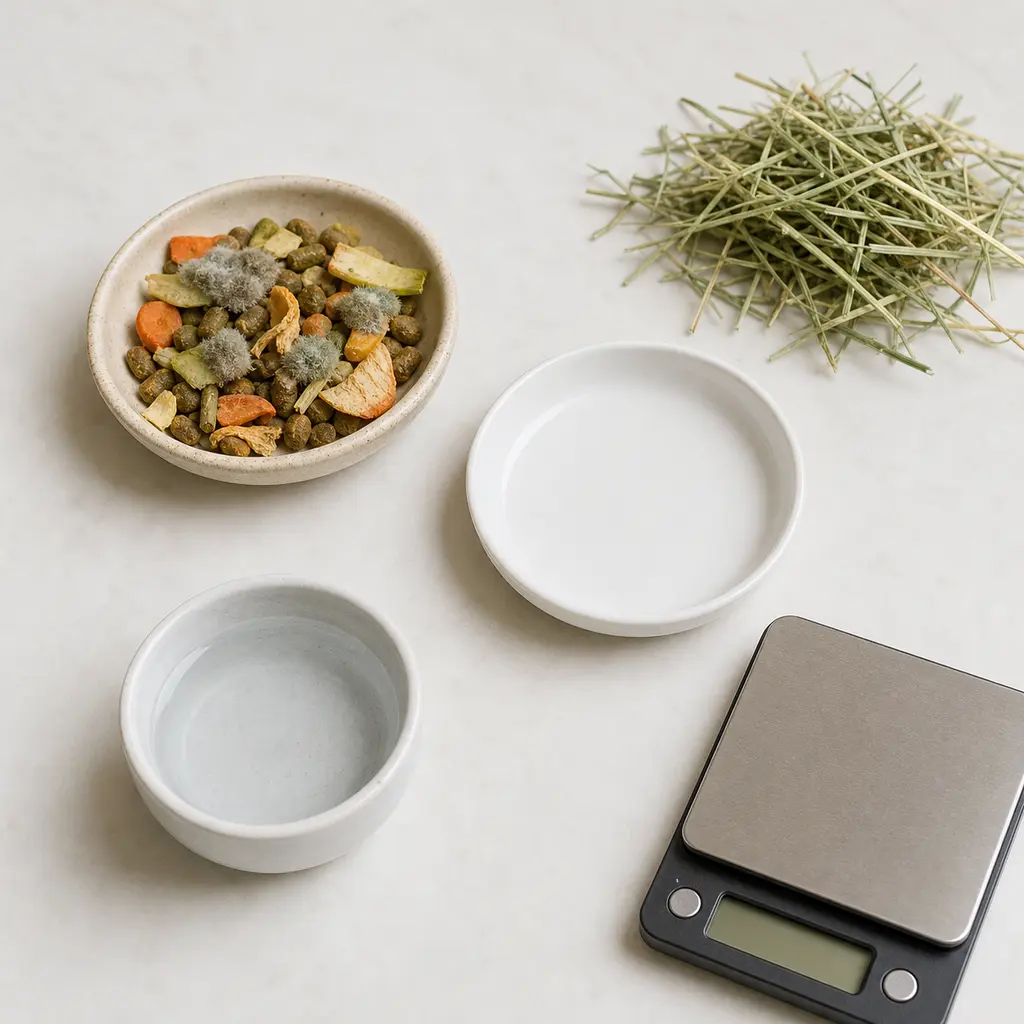
No. Moldy hay is unsafe for small mammals. If hay is damp, dusty, sour-smelling, discolored, or visibly moldy, remove it; if any was eaten or the animal has breathing or appetite changes, call an exotic-pet veterinarian.
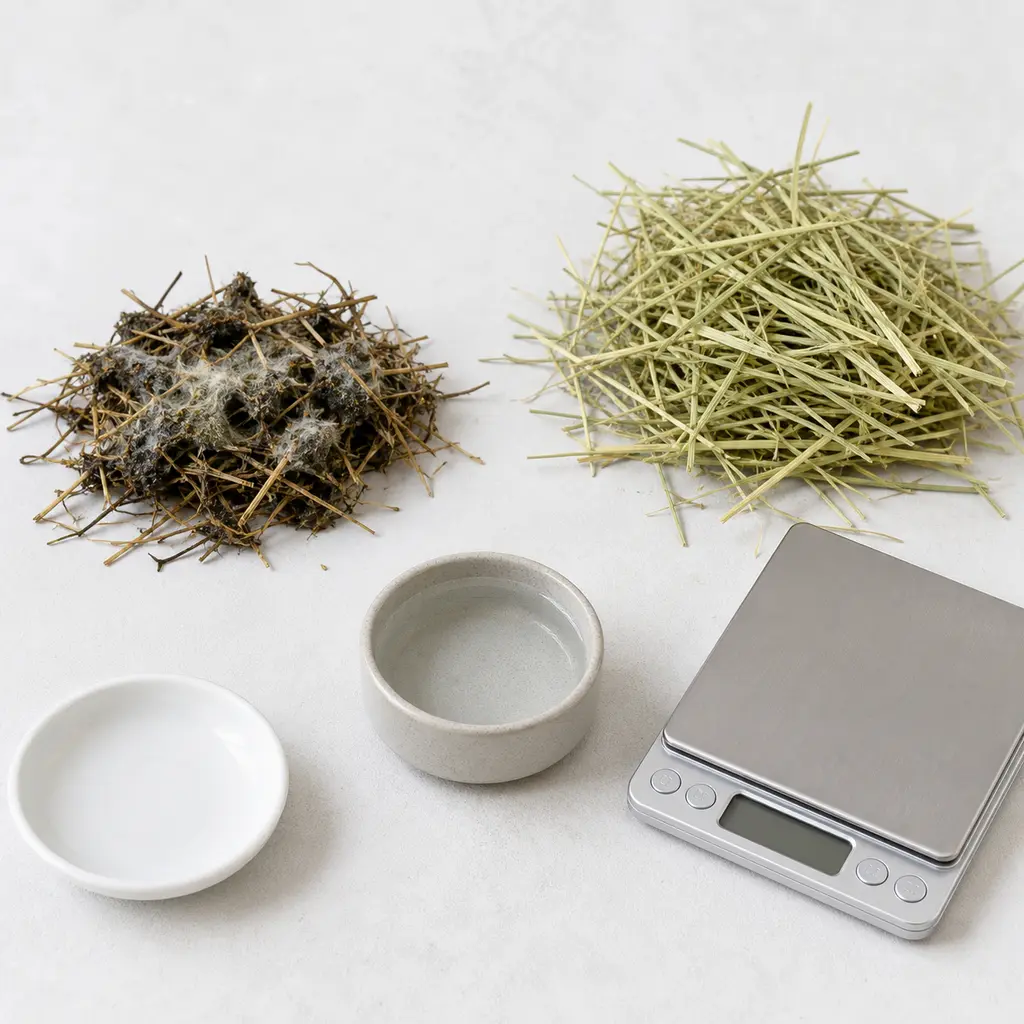 Moldy hay
Call before guessing
If any small mammal ate moldy hay or is coughing, wheezing, sneezing heavily, eating less, or producing fewer droppings after exposure, call an exotic-pet veterinarian with the species, weight, hay condition, amount, time, and symptoms.
Guinea pigs
Call if exposed
Do not feed moldy hay to guinea pigs. If moldy hay was eaten, chewed, nested in, or breathed around, remove access and call with the species, weight, hay condition, amount, time, and symptoms.
Syrian and dwarf hamsters
Call if exposed
Do not feed moldy hay to Syrian and dwarf hamsters. If moldy hay was eaten, chewed, nested in, or breathed around, remove access and call with the species, weight, hay condition, amount, time, and symptoms.
Rats
Call if exposed
Do not feed moldy hay to rats. If moldy hay was eaten, chewed, nested in, or breathed around, remove access and call with the species, weight, hay condition, amount, time, and symptoms.
Mice
Call if exposed
Do not feed moldy hay to mice. If moldy hay was eaten, chewed, nested in, or breathed around, remove access and call with the species, weight, hay condition, amount, time, and symptoms.
Gerbils
Call if exposed
Do not feed moldy hay to gerbils. If moldy hay was eaten, chewed, nested in, or breathed around, remove access and call with the species, weight, hay condition, amount, time, and symptoms.
Chinchillas
Call if exposed
Do not feed moldy hay to chinchillas. If moldy hay was eaten, chewed, nested in, or breathed around, remove access and call with the species, weight, hay condition, amount, time, and symptoms.
Ferrets
Call if exposed
Do not feed moldy hay to ferrets. If moldy hay was eaten, chewed, nested in, or breathed around, remove access and call with the species, weight, hay condition, amount, time, and symptoms.
Smell and moisture count
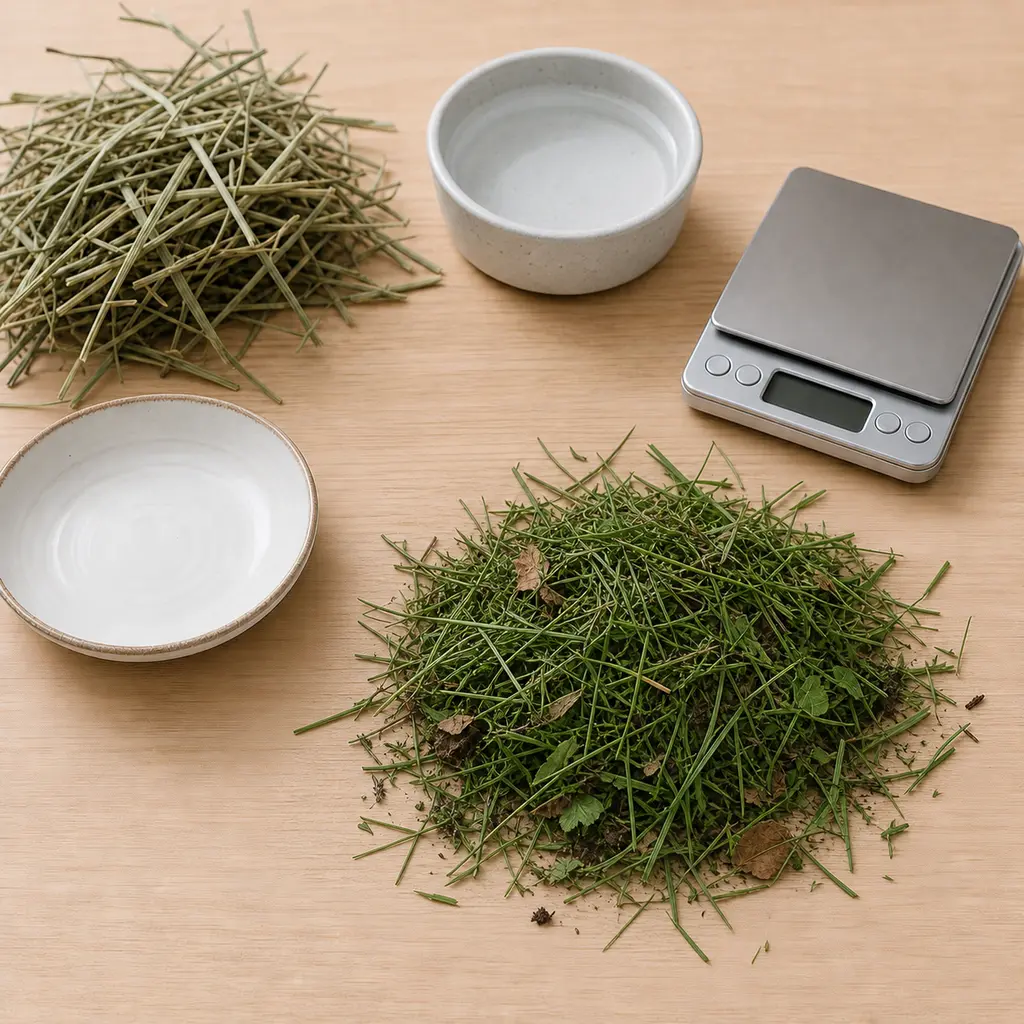
Hay does not need obvious fuzzy mold to be a problem. Dampness, sour odor, heavy dust, and dark spoiled patches are enough reason to discard it.
Respiratory signs matter
Small mammals can be sensitive to dusty or moldy hay. Breathing noise, sneezing fits, low appetite, or fewer droppings should lower the threshold to call.
If exposure happened
- Remove moldy hay, nearby hay, damp bedding, and hay from the same wet or musty batch.
- Replace with clean dry hay only after the habitat is free of dust, dampness, and sour odor.
- Call an exotic-pet veterinarian if any hay was eaten or if breathing, appetite, stool, droppings, or energy changes.
Avoid
- Damp hay, dusty hay, sour-smelling hay, blackened or gray-green hay, hay stored in plastic while wet, and hay from a musty bale or bag.
- Shaking moldy hay out and feeding what looks better.
- Using moldy hay as bedding, nesting material, litter, or forage.
Helpful food-safety supplies
Optional tools for measuring, storing, serving, and cleaning up small portions safely.
Affiliate links: Furball Cove may earn from qualifying purchases at no extra cost to you.