

Carrier
Ready before crisis.
Updated
Bird guides
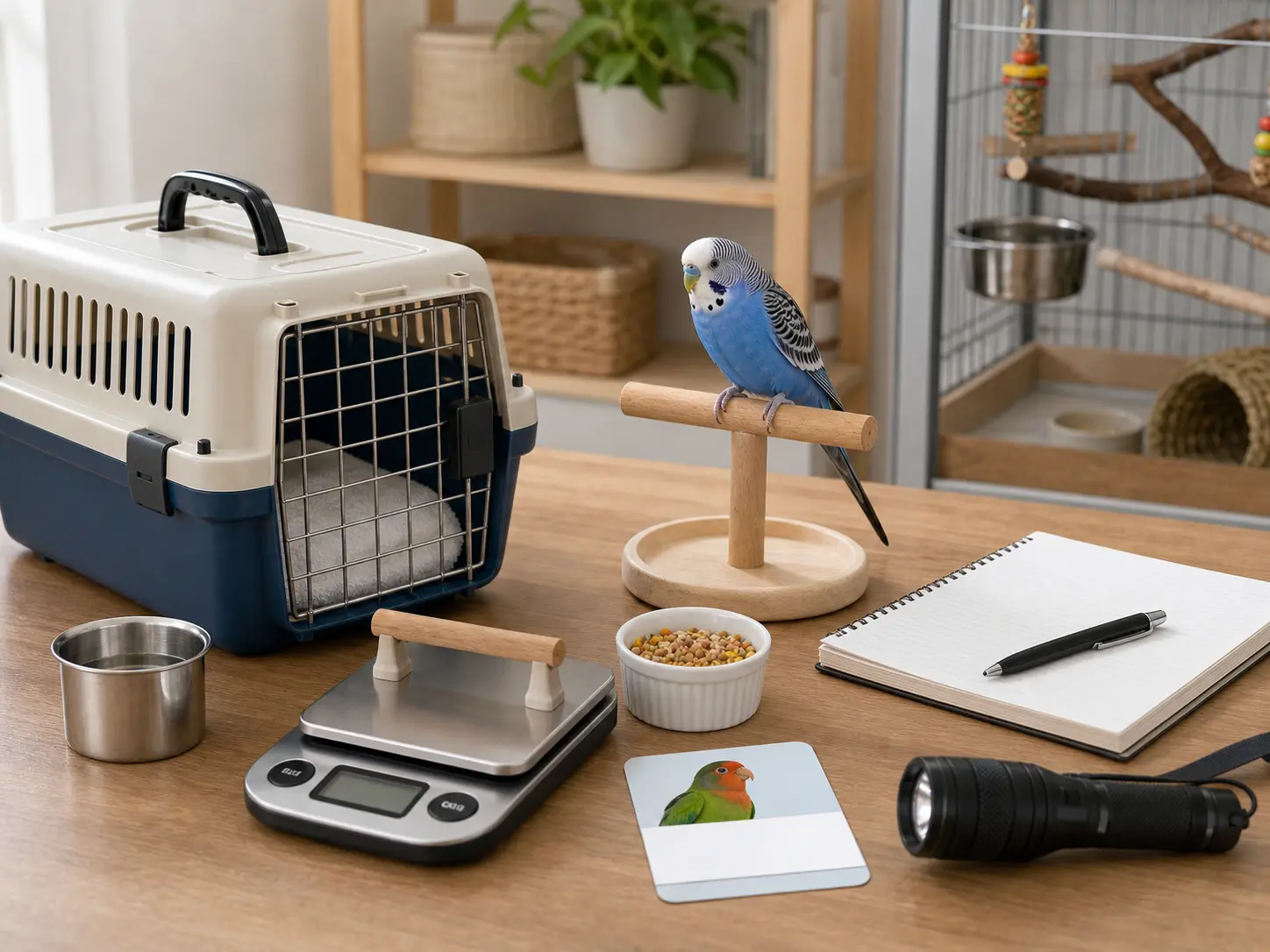
A bird emergency kit should include a hard-sided carrier, plain paper liners, clean towels, a gram scale, care notes, vet contacts, recent diet details, medication list, and basic cleaning supplies. The kit should help you transport and explain, not replace a vet.
The best emergency kit makes the first phone call and transport easier.

Health and Vet Care
A bird emergency kit should include a hard-sided carrier, plain paper liners, clean towels, a gram scale, care notes, vet contacts, recent diet details, medication list, and basic cleaning supplies. The kit should help you transport and explain, not replace a vet.
Use the full emergency-prep checklist.
Use the hub for nearby questions after this answer.
Use supplies after the care plan is clear, not before.
Pick gear that makes the daily routine easier to repeat.
Ready before crisis.
Vet numbers current.
Weight and diet notes help.
Plain safe liner.
Refresh the kit.
Transport aid, not treatment.
Keep the carrier and vet numbers ready before something goes wrong.
Use a secure carrier, towel or paper footing, and simple supplies that will not roll around or trap the bird.
Current weight, diet, droppings photos, medication list, exposure details, and behavior notes help the vet.
Replace old food samples, update phone numbers, and keep the kit where everyone can find it.
The kit is for stabilization and transport planning. It is not a home hospital.
Only medications prescribed for that bird and currently directed by a vet.
Ask your vet how to manage temperature safely. Overheating a weak bird can be dangerous.
It may help nail-tip bleeding, but wounds, broken feathers, and heavy bleeding need vet guidance.
A safe carrier plus current avian-vet contact information.
Use these after the care plan is clear. Match size and materials to the bird you actually keep.
Affiliate links: Furball Cove may earn from qualifying purchases at no extra cost to you.

Keeps transport secure for adoption day, avian-vet visits, and emergencies.

Tracks food, weight, sleep, droppings, behavior, and vet questions in one place.

Makes weight checks easier before small appetite changes become big problems.

Plain paper makes droppings easier to monitor without scented products.