

Location
Cage-only bites tell you something.
Updated
Bird guides
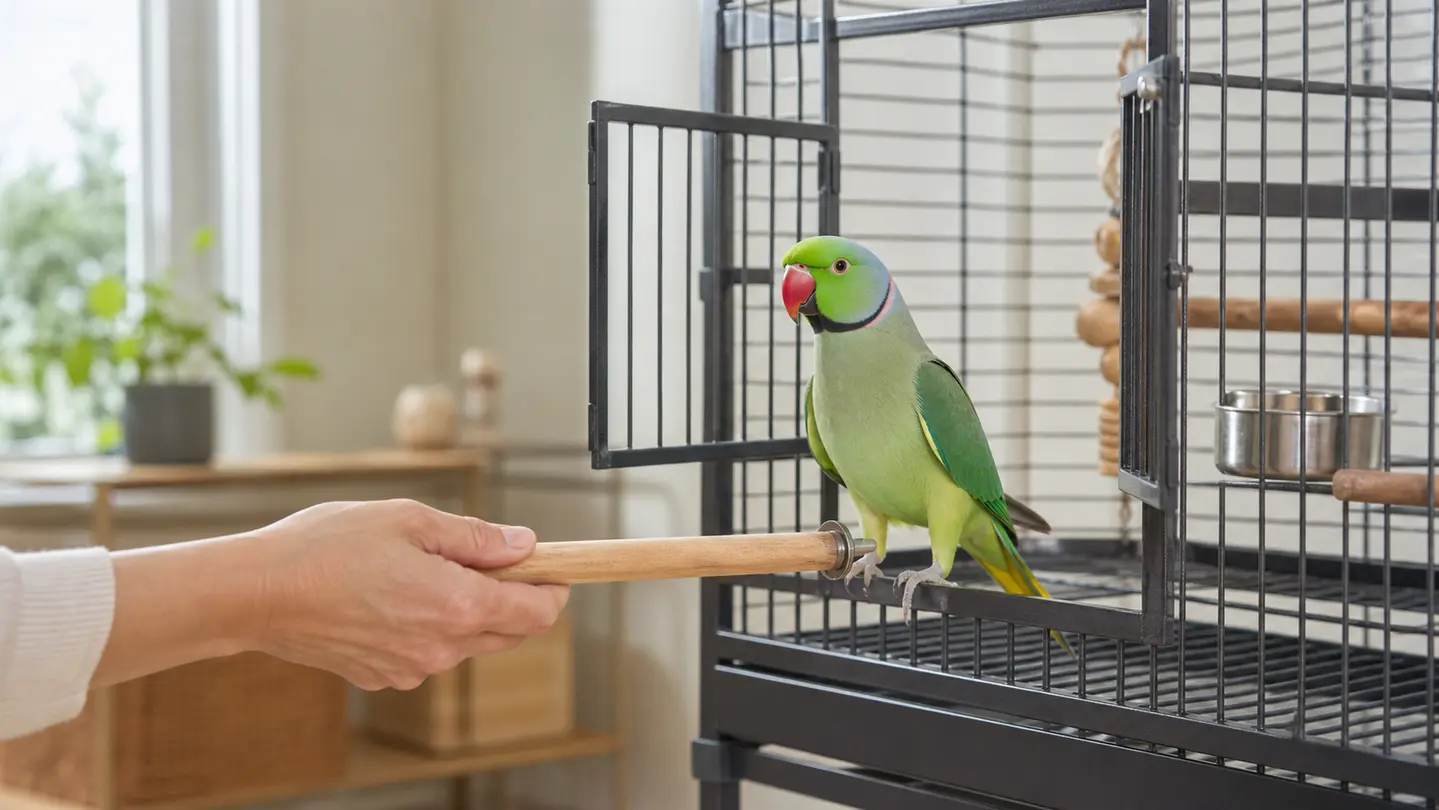
Cage aggression usually means the bird is guarding its safe space, feeling trapped, hormonal, scared, or used to hands invading the cage. Stop reaching in to force contact and teach a calm door, station, and step-up routine.
The cage should feel safe. Training works better when you stop turning that space into a conflict.

Behavior and Noise
Cage aggression usually means the bird is guarding its safe space, feeling trapped, hormonal, scared, or used to hands invading the cage. Stop reaching in to force contact and teach a calm door, station, and step-up routine.
Build calmer door and cage routines.
Use the hub for nearby questions after this answer.
Use supplies after the care plan is clear, not before.
Pick gear that makes the daily routine easier to repeat.
Cage-only bites tell you something.
The cage is the bird's safe space.
Give the bird a place to go.
Fast reaching creates defense.
Nesty setups can trigger guarding.
Sudden aggression deserves review.
Work from outside the cage first. Open the door calmly, reward the bird for moving to a station, and invite it out instead of chasing it inside.
Many birds defend bowls, favorite perches, toys, mirrors, nesty spaces, or the whole cage. Reaching in fast can make the behavior stronger.
A perch near the door or a tabletop stand gives the bird a predictable place to go while you change bowls or start training.
Nesting behavior, guarding, sudden bites, feather changes, or new sensitivity may need changes in sleep, setup, diet, or vet care.
Make cage access predictable enough that the bird does not need to defend it.
Possibly, but fear, forced handling, hormones, and pain can look similar.
No. Forcing the issue usually teaches the bird to bite harder sooner.
Use stationing, a second perch, or out-of-cage time so cleaning does not become a fight.
Often it improves when routines become predictable and hands stop invading the cage.
Use these after the care plan is clear. Match size and materials to the bird you actually keep.
Affiliate links: Furball Cove may earn from qualifying purchases at no extra cost to you.

Gives short trust-building sessions a low, predictable place to happen.

Tracks food, weight, sleep, droppings, behavior, and vet questions in one place.

Varied perch diameters support normal feet better than one smooth dowel.

Turns part of the meal into a simple job instead of a full bowl of boredom.