

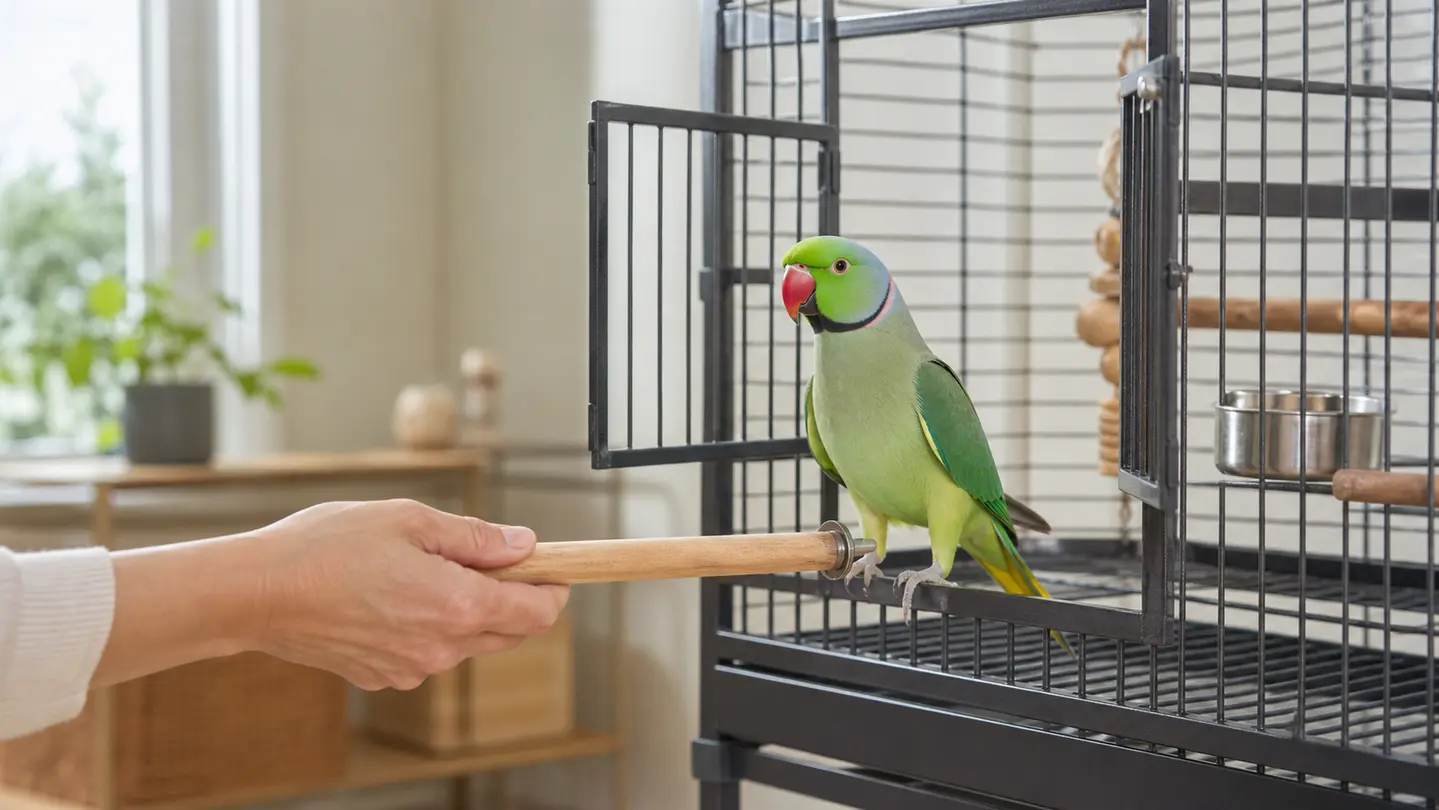
Stop reaching into a guarded cage
Hands entering the cage can feel invasive. Offer a perch at the door, teach stationing, and move slowly enough that the bird can choose to come out.
Updated
Bird behavior
A cage should feel safe, so do not turn the doorway into a daily argument.
Some birds guard the cage, bowls, toys, or favorite perches. The fix starts with respecting the cage as home base and teaching easier ways to move in and out.

Hands entering the cage can feel invasive. Offer a perch at the door, teach stationing, and move slowly enough that the bird can choose to come out.
Reward the bird for staying calm near the open door, stepping to a station, touching a target, or stepping onto a perch. Keep the first sessions short and boring.
Plan cleaning when the bird is on a play stand, eating safely elsewhere, or stationed away from the area you need to change. Do not turn bowl changes into a wrestling match.
Crowded toys, blocked movement, favorite dark corners, poor sleep placement, and awkward doors can make guarding worse. A calmer setup often improves behavior before training starts.
A lunge is useful information. Back up, lower the difficulty, and reward the calm moment before the lunge would usually happen.
Sudden cage aggression can come with pain, hormones, sleep loss, injury, or illness. If the change is new or intense, look beyond training and call an avian vet.
Use supplies as structure, not shortcuts. The goal is to make calm choices easier for the bird.
Affiliate links: Furball Cove may earn from qualifying purchases at no extra cost to you.

Gives short trust-building sessions a low, predictable place to happen.

Varied perch diameters support normal feet better than one smooth dowel.

Plain bird-safe chewing work gives busy beaks something useful to do.

Tracks food, weight, sleep, droppings, behavior, and vet questions in one place.
The cage may feel like the bird's safe space. Respect that and train doorway choices instead of reaching in.
Not if it causes lunging or biting. Start at the doorway with a perch, target, or station.
Sometimes. Better space, doors, layout, sleep, and enrichment can reduce pressure, but training and health checks may still be needed.