

Updated

Bird behavior

Bird Biting

A bite is usually the last message, not the first one.

Birds bite for space, fear, pain, overexcitement, cage guarding, hormones, or because biting has worked before. The goal is to change the moment before the bite.

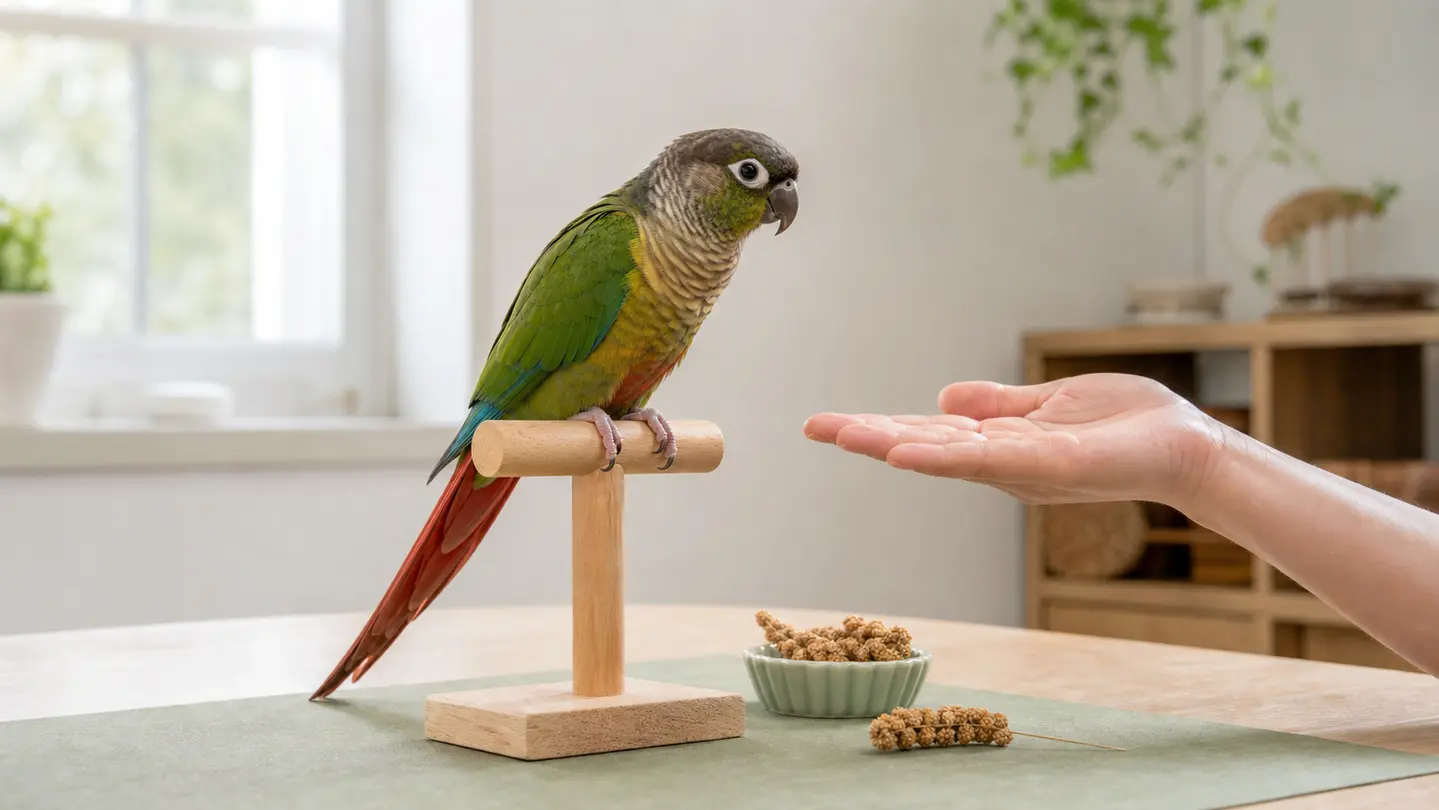
Green-cheeked conure on a low training perch with an open hand paused nearby to give the bird choice.
01

Stop rehearsing the bite

If the bird bites every time you ask for the same thing, the setup is too hard. Use more distance, a perch, a target, a smaller reward step, or a shorter session.

02

Hands should not rush the bird

Fast hands, fingers near the face, reaching over the head, or grabbing from inside the cage can push a nervous bird into biting. Slow down and let the bird approach the hand instead.

03

Cage bites need a different plan

A cage can feel like the bird's safe place. Do not reach in and argue with the bird. Teach stationing, offer a perch at the door, and clean or change bowls when the bird is calmly elsewhere.

04

Watch overexcitement

Some birds nip when play gets too wild, when they are on a shoulder too long, or when favorite-person energy gets intense. Step down, pause, and reward calm behavior before the bird tips over the edge.

05

Do not punish the bite

Yelling, flicking, shaking, or forcing another step-up usually makes trust worse. After a bite, get safe, stay boring, and change the plan so the bird does not need that answer next time.

06

New or sudden biting can be medical

Pain, hormones, sleep loss, illness, egg trouble, or injury can change behavior fast. If the biting is new, intense, or paired with appetite, posture, droppings, or energy changes, call an avian vet.

Before you decide

  • You can name what happened right before the bite.
  • Hands are not chasing, grabbing, or forcing step-up.
  • The bird has a perch or station option away from hands.
  • Sessions end before the bird gets frantic or rough.

Next best moves

  • Reward approach, calm feet, and gentle beak use before trouble starts.
  • Use a target or perch instead of repeating a failed hand request.
  • Keep shoulders off-limits until step-down is reliable.

Simple tools that support this behavior plan

Use supplies as structure, not shortcuts. The goal is to make calm choices easier for the bird.

Affiliate links: Furball Cove may earn from qualifying purchases at no extra cost to you.

Tabletop bird training perch with a cockatiel standing on the perch beside small training treats.

Training perch

Gives short trust-building sessions a low, predictable place to happen.

Bird-safe chew toys made from natural wood, paper, vine, and vegetable-dyed pieces with a lovebird nearby.

Safe chew toys

Plain bird-safe chewing work gives busy beaks something useful to do.

Bird foraging tray with covered cups, pellets, greens, and a curious budgie beside the puzzle.

Foraging toy

Turns part of the meal into a simple job instead of a full bowl of boredom.

Hard-sided bird carrier with towel liner, stainless bowl, and a cockatiel calmly beside the open carrier.

Hard-sided bird carrier

Keeps transport secure for adoption day, avian-vet visits, and emergencies.

Common questions

Should I ignore a bird bite?

Do not make a big dramatic reaction, but do not ignore the information. Get safe, then change the setup that caused the bite.

Will my bird grow out of biting?

Not if biting keeps working. Birds learn from patterns, so the owner has to make the easier behavior pay better.

Is my bird being mean?

Usually no. Biting is communication, fear, overexcitement, guarding, pain, or a learned strategy. Treat it as information.

References