

Updated

Bird guides

What does bird body language mean?

Bird body language means nothing in isolation. Read posture, feathers, eyes, feet, beak, wings, voice, breathing, and context together. A relaxed bird, scared bird, hormonal bird, and sick bird can share one signal but look different as a whole.

The whole bird tells the truth better than one dramatic clue.

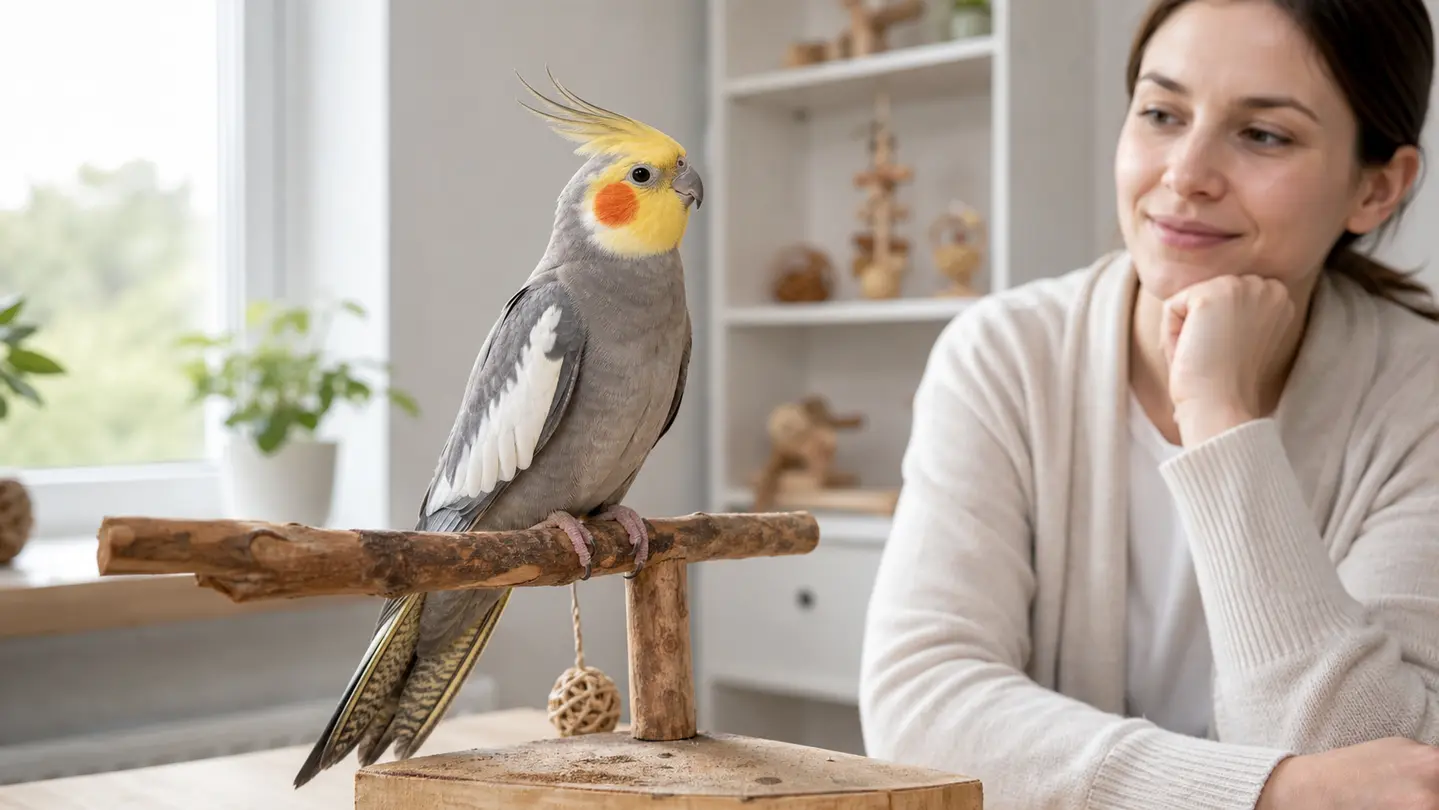
Cockatiel on a tabletop perch with clear relaxed posture while a person calmly observes from nearby.

Behavior and Noise

Answer first

Bird body language means nothing in isolation. Read posture, feathers, eyes, feet, beak, wings, voice, breathing, and context together. A relaxed bird, scared bird, hormonal bird, and sick bird can share one signal but look different as a whole.

What to check before you act

Context

One signal is not enough.

Direction

Toward or away matters.

Feathers

Relaxed, tight, or fluffed tells a story.

Voice

Sounds need context too.

Breathing

Changes can be serious.

Response

Early respect prevents escalation.

01

How to act on this

Ask what changed right before the signal and what the bird does next. Body language is a conversation, not a code chart.

02

Relaxed signals

Soft posture, normal breathing, balanced feet, gentle beak grinding, preening, playing, and choosing to approach usually point toward comfort.

03

Back-off signals

Leaning away, tight feathers, open beak, hissing, lunging, fleeing, crouching, or pinning eyes can mean the bird needs space.

04

Health signals

Fluffed posture that lasts, tail bobbing, heavy sleep, weakness, appetite change, or unusual droppings should be treated as health information.

05

Best habit

Respond early to small signals so the bird does not need to scream, flee, or bite.

Before you decide

  • What happened right before the body language changed?
  • Is the bird moving toward you or away from you?
  • Are feathers relaxed, tight, or persistently fluffed?
  • Is breathing normal?
  • Does the bird return to normal after the trigger ends?

Next best moves

  • Watch patterns across the whole day, not one signal alone.
  • Pause when the bird leans away, freezes, or warns.
  • Treat breathing, appetite, droppings, and weakness as health checks.

Common questions

What does eye pinning mean?

It can mean excitement, focus, fear, or arousal depending on the rest of the bird and the situation.

Is a raised crest always happy?

No. In cockatiels and crested birds, crest position depends on alertness, fear, curiosity, and excitement.

Why does my bird lunge?

Often to create space or guard something. Look at what you did right before the lunge.

Can sick birds hide symptoms?

Yes. That is why subtle posture, appetite, weight, and dropping changes matter.

Useful setup pieces

Use these after the care plan is clear. Match size and materials to the bird you actually keep.

Affiliate links: Furball Cove may earn from qualifying purchases at no extra cost to you.

Open blank bird care notebook with pencil, small supplies, and a cockatiel on a tabletop stand.

Care notebook

Tracks food, weight, sleep, droppings, behavior, and vet questions in one place.

Tabletop bird training perch with a cockatiel standing on the perch beside small training treats.

Training perch

Gives short trust-building sessions a low, predictable place to happen.

Digital gram scale with a budgie standing calmly on the scale beside a care notebook.

Digital gram scale

Makes weight checks easier before small appetite changes become big problems.

Hard-sided bird carrier with towel liner, stainless bowl, and a cockatiel calmly beside the open carrier.

Hard-sided bird carrier

Keeps transport secure for adoption day, avian-vet visits, and emergencies.

References