

Updated

Bird guides

Why is my bird plucking feathers?

Feather plucking should be treated as a health and welfare problem first, not a bad habit. Pain, skin disease, parasites, diet, hormones, stress, boredom, sleep, and household changes can all be involved, so start with an avian-vet exam.

Feather damage needs a careful plan because guessing can waste time.

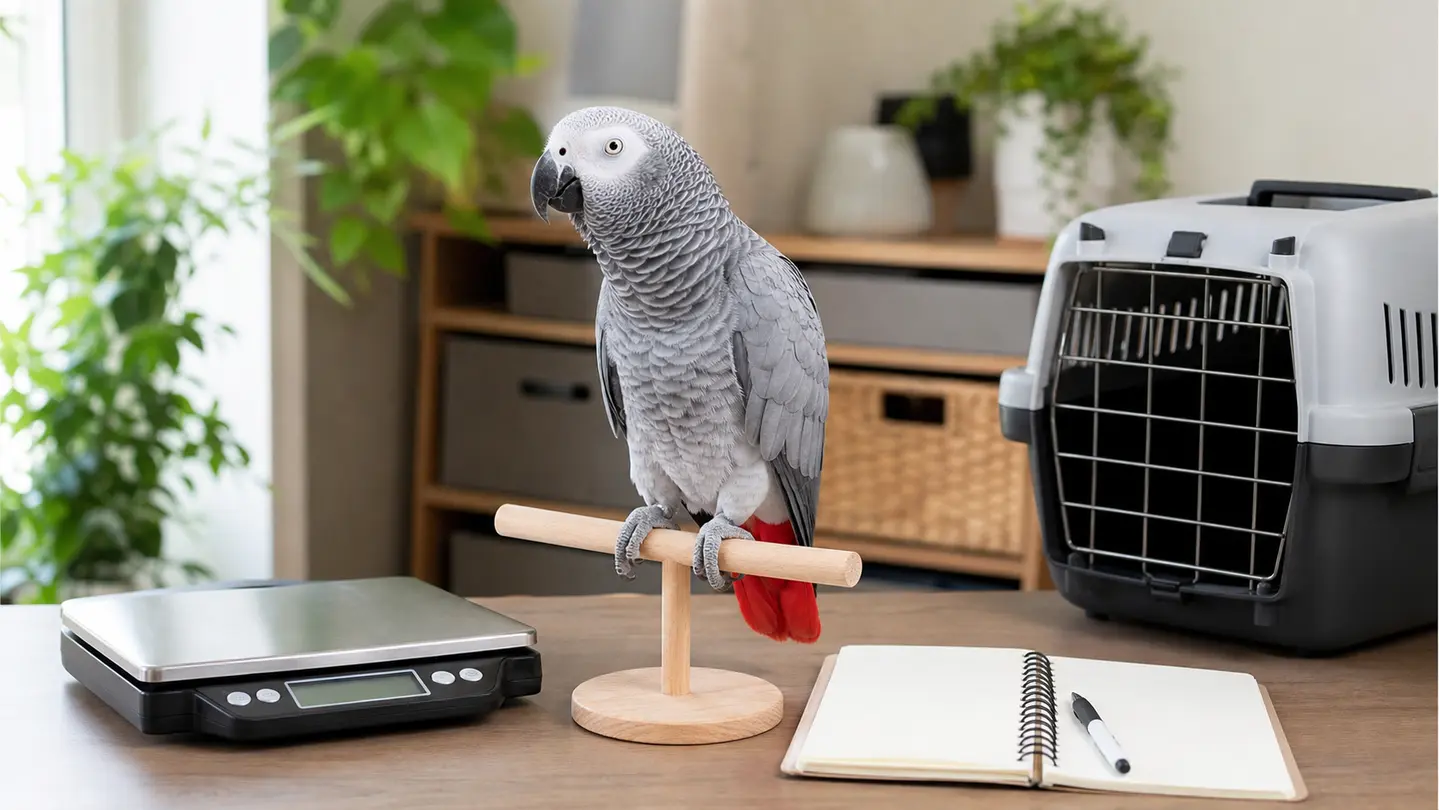
African grey parrot on a low perch beside a gram scale, blank care notebook, and bird carrier.

Behavior and Noise

Answer first

Feather plucking should be treated as a health and welfare problem first, not a bad habit. Pain, skin disease, parasites, diet, hormones, stress, boredom, sleep, and household changes can all be involved, so start with an avian-vet exam.

What to check before you act

Vet first

Medical causes need ruling out.

Skin

Bleeding or wounds are urgent.

Pattern

Location and timing matter.

Routine

Sleep, diet, and enrichment count.

Stress

Household changes can trigger damage.

Patience

Feather recovery is slow.

01

How to act on this

Book an avian-vet visit, document the pattern, and improve daily basics while you wait. Do not punish, shame, or spray the bird for plucking.

02

Look for medical causes

Skin irritation, pain, infection, allergies, parasites, organ disease, reproductive issues, and nutrition problems can all affect feathers.

03

Review the routine

Sleep, diet, humidity, bathing, foraging, chewing, social time, cage placement, and stress all matter once medical causes are being checked.

04

Track without obsessing

Photos, weight, diet notes, molting timing, and trigger notes help the vet. Constant hovering can add stress.

05

Realistic goal

The first win is stopping the cause from getting worse. Perfect feathers may take time, and some feathers may not return.

Before you decide

  • Has an avian vet checked the bird?
  • Is the bird damaging skin or bleeding?
  • Did the pattern start after a move, diet change, loss, or hormone trigger?
  • Is the bird sleeping, eating, bathing, and foraging normally?
  • Are weight and droppings being tracked?

Next best moves

  • Schedule an avian-vet exam before assuming it is boredom.
  • Improve sleep, diet, enrichment, bathing options, and stress control.
  • Use photos and notes to track progress without constantly disturbing the bird.

Common questions

Is feather plucking always stress?

No. Stress can be involved, but medical causes are common enough that a vet check comes first.

Should I use a collar?

Only with avian-vet guidance. Collars can help some cases but can also cause stress or new problems.

Will feathers grow back?

Sometimes, depending on damage, follicles, health, and whether the cause is controlled.

Can boredom cause plucking?

It can contribute, but boredom should not be assumed until health and daily care are reviewed.

Useful setup pieces

Use these after the care plan is clear. Match size and materials to the bird you actually keep.

Affiliate links: Furball Cove may earn from qualifying purchases at no extra cost to you.

Digital gram scale with a budgie standing calmly on the scale beside a care notebook.

Digital gram scale

Makes weight checks easier before small appetite changes become big problems.

Open blank bird care notebook with pencil, small supplies, and a cockatiel on a tabletop stand.

Care notebook

Tracks food, weight, sleep, droppings, behavior, and vet questions in one place.

Bird foraging tray with covered cups, pellets, greens, and a curious budgie beside the puzzle.

Foraging toy

Turns part of the meal into a simple job instead of a full bowl of boredom.

Bird-safe chew toys made from natural wood, paper, vine, and vegetable-dyed pieces with a lovebird nearby.

Safe chew toys

Plain bird-safe chewing work gives busy beaks something useful to do.

References