

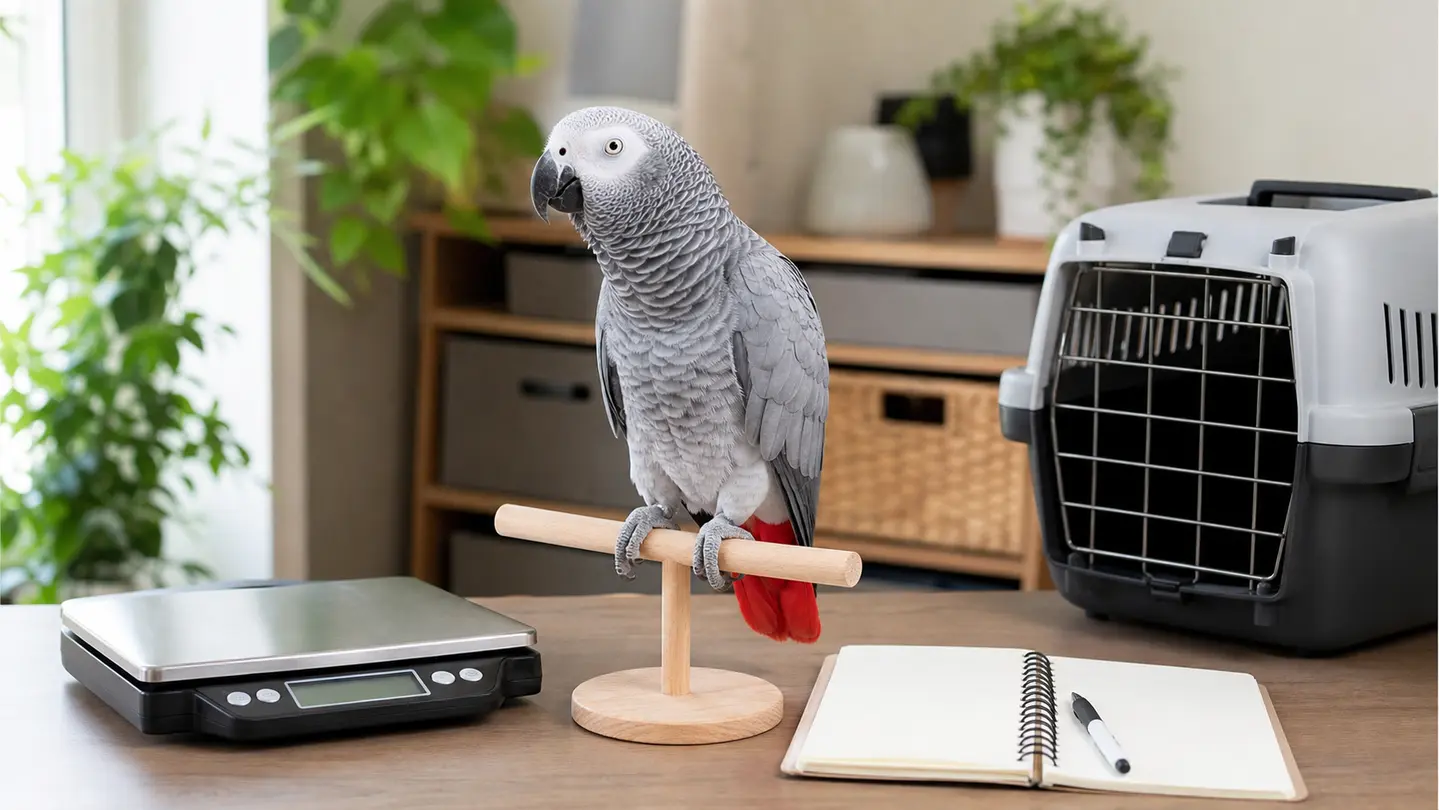
Start with an avian vet, not guesswork
Feather damage can have medical causes. A qualified avian vet can look for pain, skin problems, nutrition issues, parasites, infection, reproductive concerns, and other health factors.
Updated
Bird behavior
Feather damage deserves an avian-vet plan before it becomes a training project.
Plucking, barbering, overpreening, and feather chewing can involve medical issues, pain, skin irritation, hormones, stress, environment, or learned patterns. Do not guess your way through it.

Feather damage can have medical causes. A qualified avian vet can look for pain, skin problems, nutrition issues, parasites, infection, reproductive concerns, and other health factors.
Track when it happens, where feathers are affected, sleep, diet, bathing, humidity, new products, room changes, social changes, and anything that happened before the behavior.
Smoke, aerosols, fragrance, dust, fumes, poor sleep, harsh lighting, unsafe toys, and stress in the room can all matter. Improve the environment while the vet plan is underway.
Foraging, chewing, bathing opportunities, training, and predictable social time can help welfare. Keep changes simple so you can tell what helps.
Scolding, collars without guidance, constant interruption, or dramatic reactions can add stress. Stay calm and work from a plan.
Bleeding, open skin, weakness, fluffed posture, appetite change, breathing change, or rapid feather loss needs prompt avian-vet care.
Use supplies as structure, not shortcuts. The goal is to make calm choices easier for the bird.
Affiliate links: Furball Cove may earn from qualifying purchases at no extra cost to you.

Keeps transport secure for adoption day, avian-vet visits, and emergencies.

Makes weight checks easier before small appetite changes become big problems.

Tracks food, weight, sleep, droppings, behavior, and vet questions in one place.

Turns part of the meal into a simple job instead of a full bowl of boredom.
No. Stress can be involved, but medical, skin, pain, hormone, nutrition, and environmental causes also need to be considered.
Toys alone are not a treatment plan. Enrichment can help welfare, but the bird still needs a vet-informed approach.
Only with avian-vet guidance. A collar can create stress or safety problems if used without a proper plan.