

Updated

Bird guides

Can pet birds fly indoors?

Pet birds can fly indoors only when the room is prepared: closed doors, covered windows, off fans, safe surfaces, no cooking fumes, no predator pets, and supervised flight. Indoor flight is healthy when the environment is ready.

Flight is not the problem. Unprepared rooms are the problem.

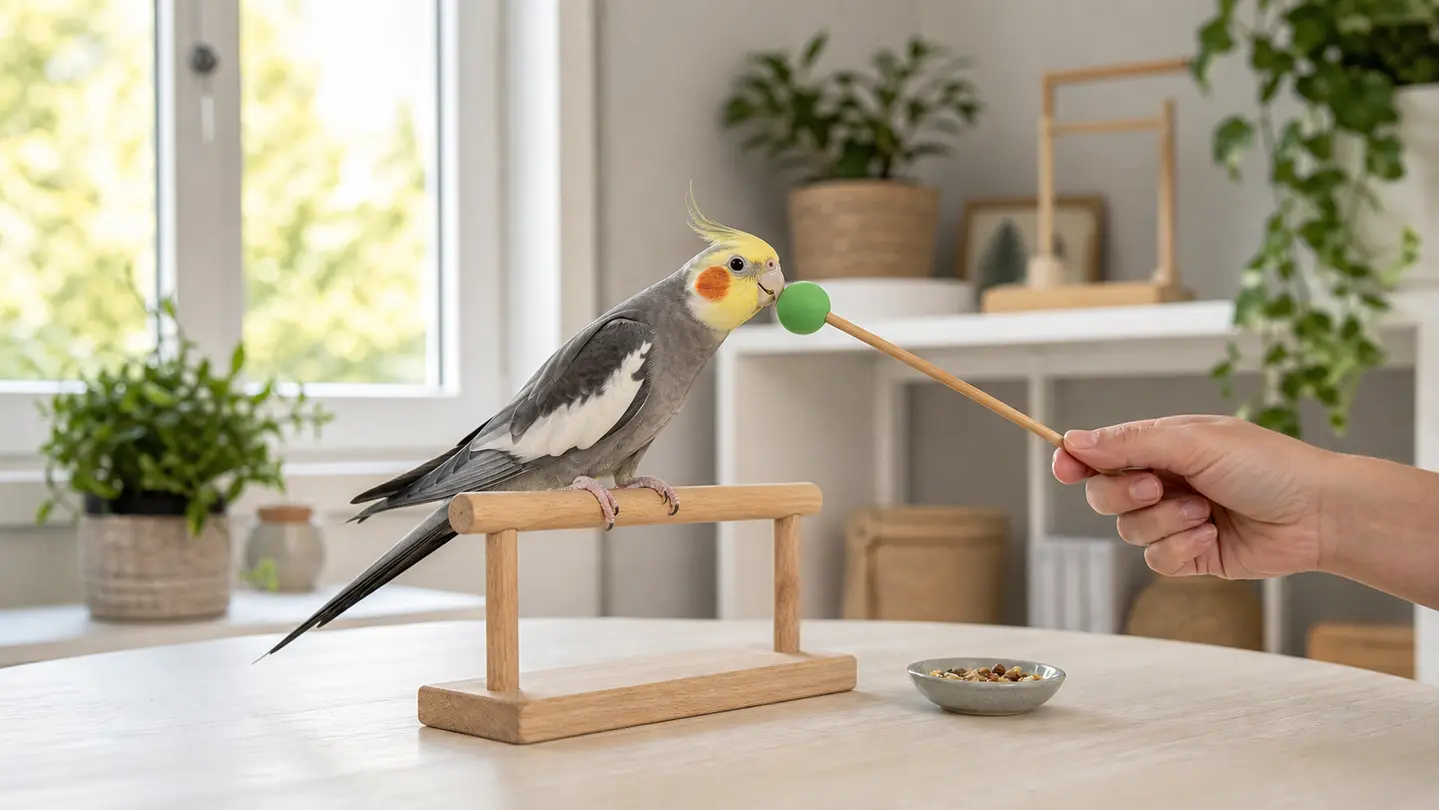
Cockatiel touching a target stick on a tabletop training perch with tiny treats nearby.

Handling and Training

Answer first

Pet birds can fly indoors only when the room is prepared: closed doors, covered windows, off fans, safe surfaces, no cooking fumes, no predator pets, and supervised flight. Indoor flight is healthy when the environment is ready.

What to check before you act

Doors

Escape routes stay closed.

Glass

Windows and mirrors need marking.

Fans

Turn them off.

Pets

Predators stay away.

Landing

Give safe destinations.

Recall

Train returns before distance.

01

How to act on this

Prepare one safe room before letting a bird fly. Control doors, windows, mirrors, fans, toilets, hot surfaces, plants, cords, and other pets.

02

Teach return points

A cage door, play stand, training perch, or recall station gives the bird places to land and return calmly.

03

Start small

Begin with short supervised flights in a familiar room, then build confidence and recall before adding distance.

04

Plan for panic

Sudden noises, visitors, dogs, cats, and uncovered glass can turn a normal flight into a crash or escape risk.

05

Best default

A flighted bird needs room safety and training, not hope.

Before you decide

  • Are doors and windows secured?
  • Are fans off and hazards covered?
  • Are cats, dogs, and children controlled?
  • Does the bird know safe landing spots?
  • Can the bird return to a perch or cage calmly?

Next best moves

  • Make one bird-safe flight room before expanding access.
  • Use recall and station training to build safe returns.
  • Never rely on clipping or luck to prevent escape.

Common questions

Can clipped birds still fly indoors?

Some can glide or burst-fly, often with less control. Room safety still matters.

Should I open windows with screens?

No. Screens can fail or be pushed. Keep windows secured during bird time.

Can birds fly near mirrors?

Mirrors can cause collisions. Cover or mark reflective surfaces during training.

Is indoor flight necessary?

Many birds benefit from safe flight, but the plan must fit the bird, health, and home.

Useful setup pieces

Use these after the care plan is clear. Match size and materials to the bird you actually keep.

Affiliate links: Furball Cove may earn from qualifying purchases at no extra cost to you.

Tabletop bird training perch with a cockatiel standing on the perch beside small training treats.

Training perch

Gives short trust-building sessions a low, predictable place to happen.

Hard-sided bird carrier with towel liner, stainless bowl, and a cockatiel calmly beside the open carrier.

Hard-sided bird carrier

Keeps transport secure for adoption day, avian-vet visits, and emergencies.

Open blank bird care notebook with pencil, small supplies, and a cockatiel on a tabletop stand.

Care notebook

Tracks food, weight, sleep, droppings, behavior, and vet questions in one place.

Natural wood bird perch set with varied diameters and a cockatiel beside the perches on a bright table.

Natural perch set

Varied perch diameters support normal feet better than one smooth dowel.

References