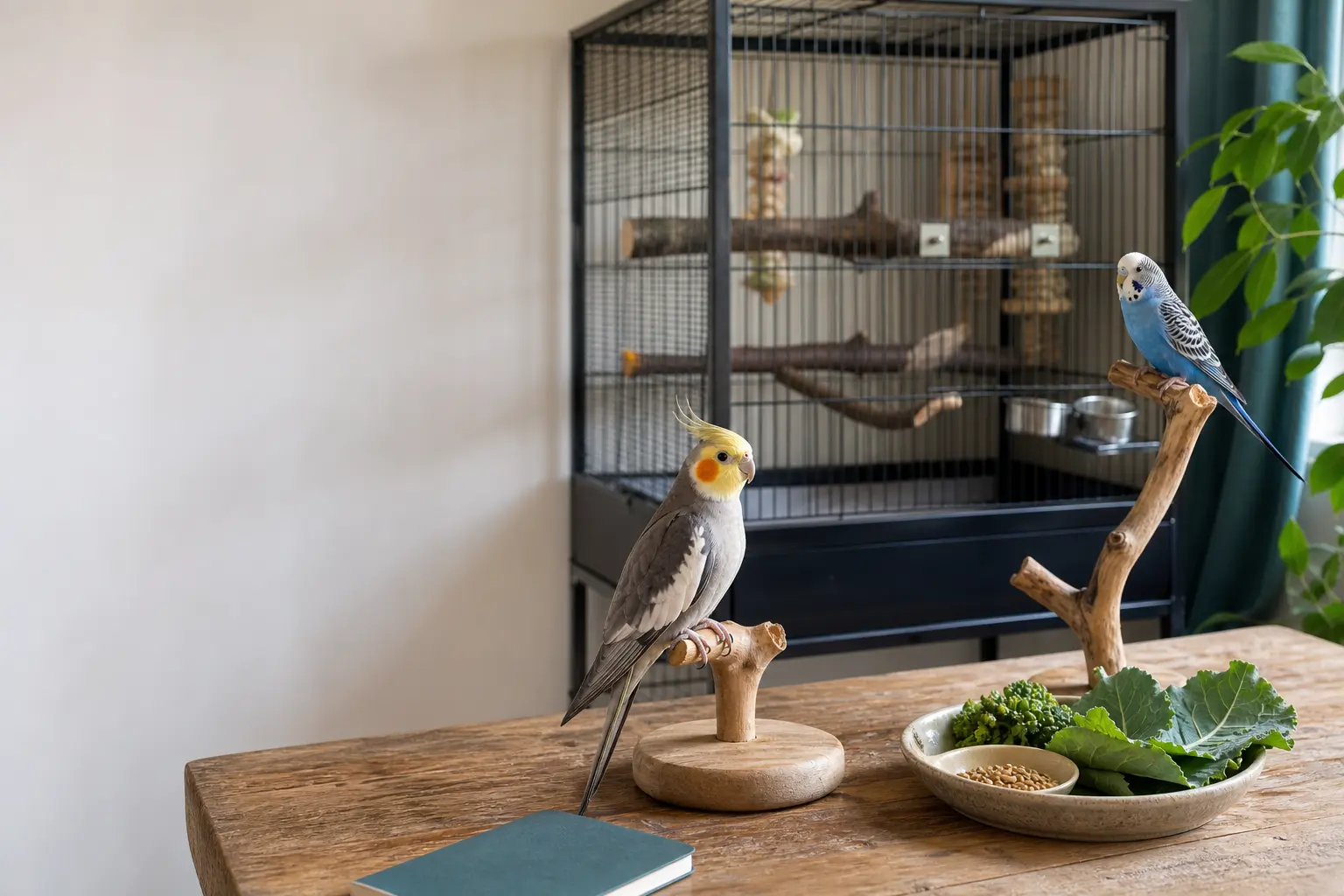
Hear adult birds first
Morning and evening sounds matter more than a quiet visit. Videos help, but in-person sound is better.
Updated
Bird guides
Some birds can work in apartments, but only if the normal sound fits your walls, lease, work schedule, and neighbors. Start with quieter species like canaries, zebra finches, ringneck doves, or Bourke's parakeets. Avoid loud parrots as a first apartment bird.
Do not judge apartment fit from a quiet store visit. Hear adult birds, plan the cage location, and make sure the whole home can stay bird-safe.

Apartment fit
The right apartment bird is not silent. It is a bird whose normal calls, cage space, dust, and daily routine will not create a fight with your home.
A good fit when you want song and beauty without hands-on handling. They still need a roomy cage and quiet sleep.
Good for people who enjoy watching soft, busy birds. Plan for compatible finch company and a wide flight cage.
Often gentle and easier on the ears than parrots, but they still need space, cleaning, and calm handling.
A calmer parakeet option for prepared homes. Still listen to adults and plan safe flight time before deciding.
Morning and evening sounds matter more than a quiet visit. Videos help, but in-person sound is better.
Pet rules, noise clauses, and building ventilation can matter before cage size does.
Birds need a calm night routine. A cage in the middle of late-night traffic often causes problems.
Apartments concentrate fumes. Smoke, aerosols, candles, and overheated nonstick cookware are serious risks.
You can support calm habits, but you cannot train a loud species into a quiet one.
If normal calls would create conflict, choose a different species before the bird comes home.
Shared walls change the decision. A bird can be healthy and still be too loud for your building.
Keep the cage away from kitchen air, drafts, direct windows, late-night traffic, and doors that open to hallways or balconies.
If calls during meetings would cause daily stress, pick a quieter observation bird instead of a social parrot.
Putting a bird in an isolated room can create stress and behavior problems. Choose a species that fits normal life.

For many apartment homes, canaries, zebra finches, ringneck doves, and Bourke's parakeets are better starting points than louder parrots.
Sometimes. Budgies are smaller than many parrots, but they are busy and chirpy. Hear adult budgies before deciding.
Usually not as a first apartment bird. Many conures are louder than people expect.
Sometimes, if the air is clean, sleep is calm, and the cage has enough room. Avoid candles, sprays, smoke, and late-night disruption.
Start with the pieces that make daily care easier and safer. Match final sizes to the species you choose.
Affiliate links: Furball Cove may earn from qualifying purchases at no extra cost to you.

Choose safe bar spacing and enough room for movement, perches, bowls, and toys.

Gives step-up practice and short trust-building sessions a predictable place.

Turns part of the meal into a small job instead of leaving the bird bored.

Keeps transport secure for adoption day, avian-vet visits, and emergencies.