Updated

Bird guides

Is a hand-fed baby bird easier?

A hand-fed baby bird is not automatically easier. It may still grow into normal adult noise, biting, fear, hormones, and strong preferences. For many beginners, a fully weaned young bird or a calm adult with known behavior is safer than choosing only by the phrase hand-fed.

Hand-fed describes part of the bird's early care. It does not guarantee personality, training, health, or lifelong handling.

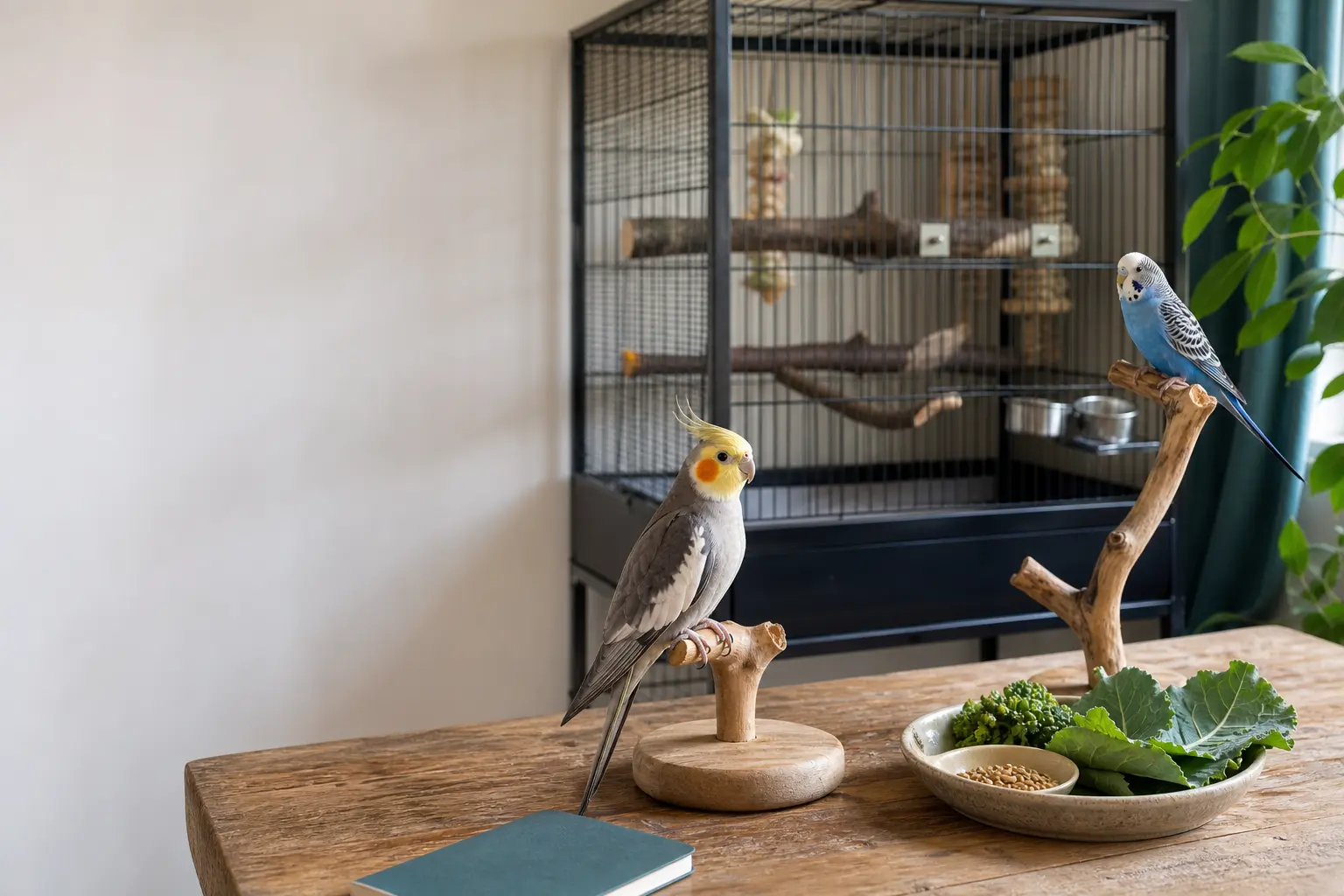
Cockatiel and budgie in separate safe bird care areas with a roomy rectangular cage, bowls, perches, toys, greens, and care notes.

Baby bird reality

What hand-fed really tells you

Hand-fed can mean human contact, but the details matter: weaning, socialization, species, handling, health, and what happens after the bird comes home.

Ask before you believe the label

Is the bird fully weaned?

This is non-negotiable for a beginner home.

What foods does it eat?

Ask for exact foods, portions, and proof the bird eats independently.

How is it socialized?

Handling by one person is not the same as calm confidence in normal home routines.

How does it react to hands?

Watch the bird choose contact instead of being forced into it.

What happens after hormones?

Baby sweetness does not erase adult behavior.

Can you meet adults?

Adult birds of the same species show the voice and care demands better than babies do.

01

Weaned matters more than hand-fed

A beginner should bring home a bird that eats independently and is stable, not a bird who still depends on risky feeding.

02

Baby behavior changes

As birds mature, noise, independence, pair bonding, fear periods, and hormonal behavior can change the relationship.

03

Socialization should be broad and kind

A good young bird has calm exposure to normal care, gentle hands, perches, carriers, food variety, and rest.

04

A known adult can be easier

If you want predictability, a healthy adult with honest history may be a better first bird than a baby.


Before you decide

  • Is the bird fully weaned and eating independently?
  • Can the seller explain diet, weight, age, and behavior clearly?
  • Have you observed the bird choosing contact without force?
  • Do you understand the adult behavior of the species?
  • Would you still want this bird if it becomes less cuddly after maturity?

Next best moves

  • Do not take an unweaned baby as a beginner.
  • Meet adult birds of the species before choosing a baby.
  • Choose the source that teaches care honestly, not the one promising an easy pet.

Common questions

Does hand-fed mean tame?

Not always. It can help, but daily handling, weaning, species, personality, and trust-building matter more over time.

Are hand-fed birds healthier?

Not automatically. Health depends on breeding, weaning, diet, hygiene, vet care, and genetics.

Should I hand-feed a baby bird myself?

No, not as a beginner. Hand-feeding mistakes can cause serious harm.

Is an adult bird harder to bond with?

Not always. Many adults bond well when handled kindly, and their personality is easier to judge.

First-bird setup pieces

Start with the pieces that make daily care easier and safer. Match final sizes to the species you choose.

Affiliate links: Furball Cove may earn from qualifying purchases at no extra cost to you.

Roomy rectangular bird cage with safe perches and clean bowls.

Roomy rectangular cage

Choose safe bar spacing and enough room for movement, perches, bowls, and toys.

Tabletop bird training perch for calm beginner handling sessions.

Training perch

Gives step-up practice and short trust-building sessions a predictable place.

Bird foraging toy for beginner enrichment and meal activity.

Foraging toy

Turns part of the meal into a small job instead of leaving the bird bored.

Hard-sided bird carrier for adoption day and avian-vet trips.

Hard-sided bird carrier

Keeps transport secure for adoption day, avian-vet visits, and emergencies.

References