Updated

Bird guides

Should I adopt or buy a bird?

Adoption or rehoming is often the best first place to look if you can get honest history and support. Buying can be responsible when the breeder is transparent, the bird is fully weaned, and the species fits your home. Avoid impulse sales, unweaned babies, and sellers who dodge care questions.

The source matters less than the bird's welfare, health, history, and whether your home is ready.

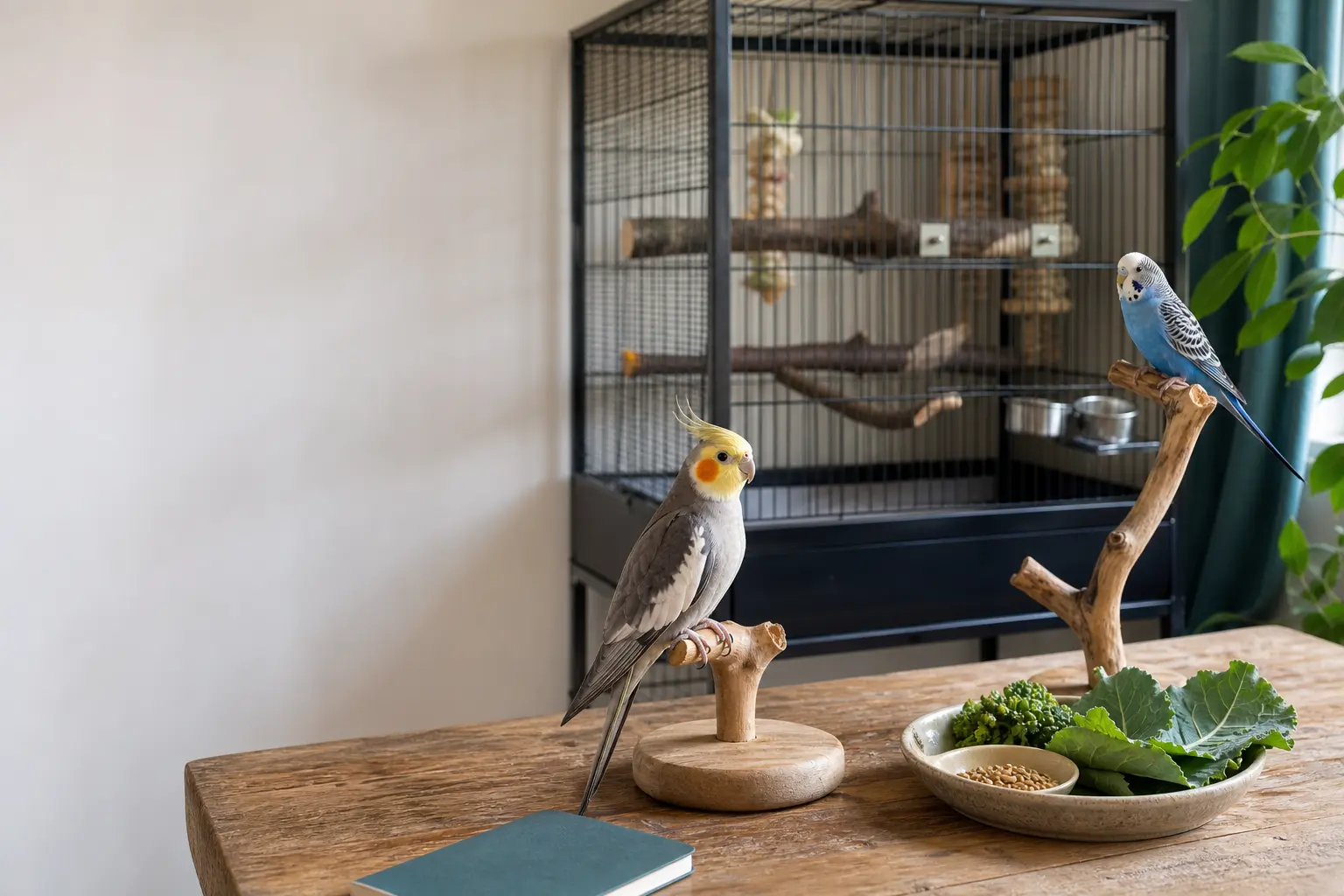
Cockatiel and budgie in separate safe bird care areas with a roomy rectangular cage, bowls, perches, toys, greens, and care notes.

Source check

Choose the safest path

A good source answers hard questions clearly and cares where the bird goes. A bad source rushes you.

Questions to ask any source

Why is the bird available?

A clear answer helps you understand noise, behavior, health, or household fit.

What does the bird eat now?

Ask for exact foods, portions, treats, and what the bird refuses.

Is the bird fully weaned?

A first-time owner should not take an unweaned baby.

What is the handling history?

Ask what the bird likes, avoids, fears, and does when stressed.

What vet care exists?

Ask for records, weights, known issues, and current warning signs.

What support comes after pickup?

Good rescues and breeders want the bird to succeed after the sale or adoption.

01

Adult birds can be a gift

An adult bird's normal voice, confidence, and handling style may be clearer than a baby's future personality.

02

A good breeder is still a care partner

They should welcome questions, show clean housing, explain diet, discuss weaning, and refuse homes that are not ready.

03

Price is not the main safety signal

A cheap bird can become expensive fast. A costly bird can still come from a poor source.

04

Do not take an unweaned baby

Hand-feeding is risky and should not be pushed onto a first-time owner.

Before you decide

  • Can the source explain diet, age, sex if known, health, and behavior honestly?
  • Is the bird fully weaned and eating independently?
  • Can you meet or observe the bird before committing?
  • Does the source avoid pressure, guilt, and same-day impulse decisions?
  • Do you have an avian-vet appointment or contact ready?

Next best moves

  • Start with reputable rescues and ethical breeders, not impulse listings.
  • Ask the same questions no matter where the bird comes from.
  • Walk away from vague health, diet, age, or weaning answers.

Common questions

Is adopting a bird better than buying?

Often, but not always. Adoption is excellent when history, support, and fit are clear. Buying can be responsible with an ethical breeder and a fully ready home.

Should beginners get baby birds?

Not automatically. A calm, well-socialized adult may be easier for a beginner than a baby whose adult personality is unknown.

What is a red flag when buying a bird?

Unweaned babies, dirty cages, pressure to buy today, no diet details, no health history, and sellers who cannot discuss normal adult noise are major red flags.

Can I rescue a bird from a bad seller?

Buying from a bad seller may fund the same problem. Contact reputable rescues or local animal welfare resources when possible.

First-bird setup pieces

Start with the pieces that make daily care easier and safer. Match final sizes to the species you choose.

Affiliate links: Furball Cove may earn from qualifying purchases at no extra cost to you.

Roomy rectangular bird cage with safe perches and clean bowls.

Roomy rectangular cage

Choose safe bar spacing and enough room for movement, perches, bowls, and toys.

Tabletop bird training perch for calm beginner handling sessions.

Training perch

Gives step-up practice and short trust-building sessions a predictable place.

Bird foraging toy for beginner enrichment and meal activity.

Foraging toy

Turns part of the meal into a small job instead of leaving the bird bored.

Hard-sided bird carrier for adoption day and avian-vet trips.

Hard-sided bird carrier

Keeps transport secure for adoption day, avian-vet visits, and emergencies.

References