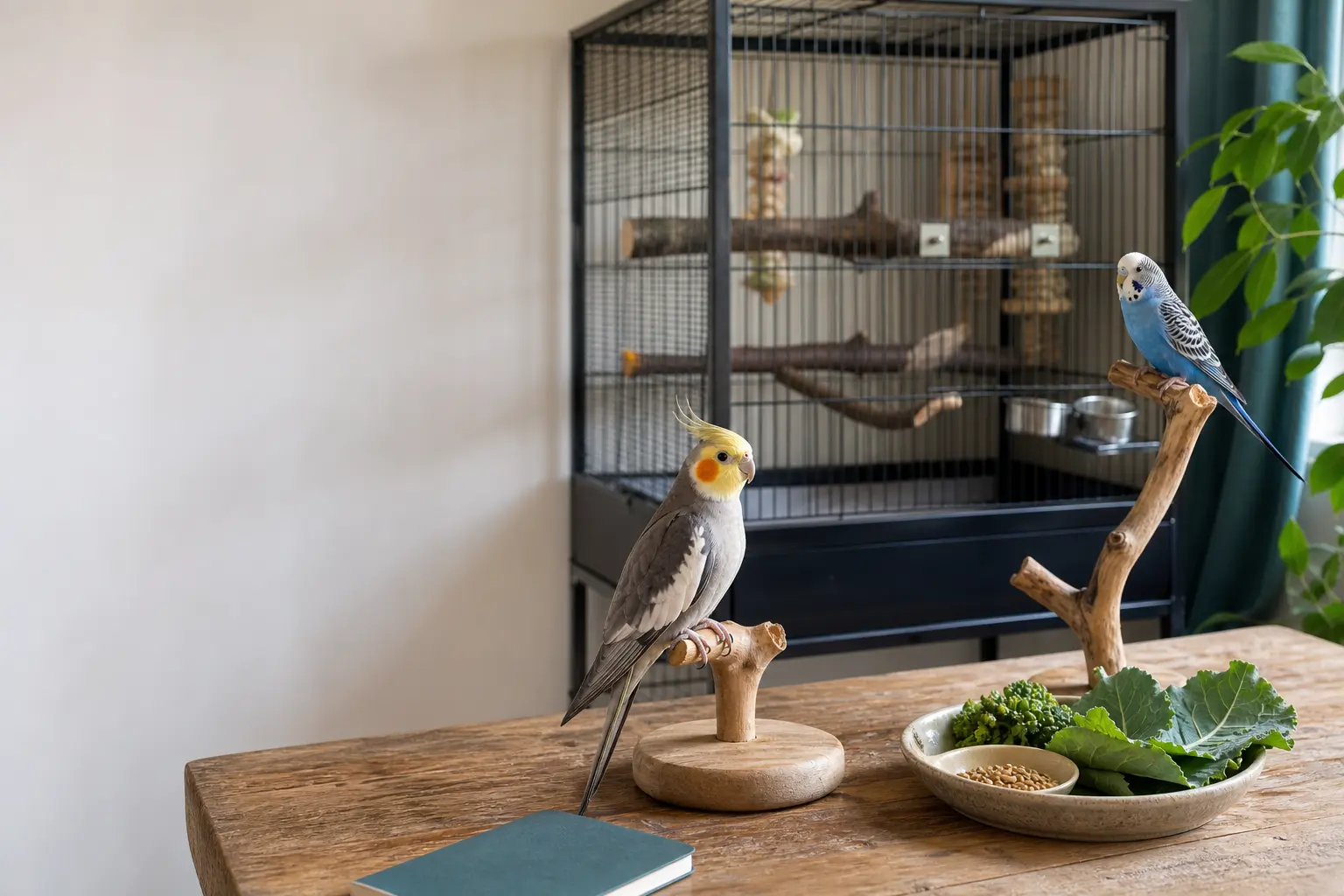
The cage is ready
Perches, bowls, liners, toys, food, and placement should be set before pickup.
Updated
Bird guides
Before bringing a bird home, confirm the species fits your noise tolerance, lifespan, handling hopes, daily schedule, and housing. Set up the cage, carrier, food plan, safe room, cleaning supplies, and avian-vet contact before pickup day.
A bird should not arrive before the home is ready. The first week goes better when the boring pieces are already handled.

Before pickup
Use this as a final stop before money changes hands or an adoption date is set.
Noise, lifespan, handling style, social needs, and diet should match your real home.
The cage should be adult-sized, safe, placed well, and ready before the bird arrives.
Plan for fumes, fans, doors, windows, other pets, kitchens, and sleep before pickup.
Know who you would call for breathing, appetite, injury, egg trouble, or sudden behavior changes.
Perches, bowls, liners, toys, food, and placement should be set before pickup.
Remove smoke, aerosols, candles, unsafe cookware fumes, and strong scents.
Transport should not be improvised in a box or open cage.
Have an avian-vet contact before the first emergency.
Doors, windows, fans, kitchens, kids, and other pets need clear rules.
Diet, age, health, behavior, and weaning answers should be specific.
The right cage, food, carrier, and room plan prevent rushed decisions after the bird is already stressed.
Get diet, age, sex if known, health history, behavior, sleep, and current routine before pickup.
Avoid parties, forced handling, cage rearranging, and too many new foods while the bird is settling in.
Unweaned birds, vague health answers, unsafe cages, strong fumes, and no vet plan are reasons to pause.

Start with a roomy cage, carrier, bowls, perches, paper liners, species-appropriate food, safe toys, cleaning basics, and a gram scale.
Yes, plan an avian-vet wellness check and know where to call if the bird stops eating, breathes oddly, bleeds, or seems weak.
Usually keep handling minimal. Let the bird settle, observe body language, and start trust slowly.
Delay if the bird is unweaned, sick-looking, poorly housed, missing diet details, or your home setup is not ready.
Start with the pieces that make daily care easier and safer. Match final sizes to the species you choose.
Affiliate links: Furball Cove may earn from qualifying purchases at no extra cost to you.

Choose safe bar spacing and enough room for movement, perches, bowls, and toys.

Gives step-up practice and short trust-building sessions a predictable place.

Turns part of the meal into a small job instead of leaving the bird bored.

Keeps transport secure for adoption day, avian-vet visits, and emergencies.