Listen to adults
Baby birds and quiet shop moments do not tell you the adult voice.
Updated
Bird guides
No pet bird is silent. If you need a quieter home, research canaries, zebra finches, ringneck doves, and Bourke's parakeets before parrots. Avoid conures, cockatoos, macaws, Amazons, and other loud parrots if noise would create conflict.
Choose by the loudest normal day, not by the quietest moment.

Noise fit
Quieter usually means softer or less piercing, not silent. You still need to accept daily sound.
Busy and social, but usually easier on shared walls than most parrots.
Males can sing a lot, but the sound is usually easier than parrot screaming.
Often calm and soft-voiced, with space and cleaning needs people underestimate.
A quieter parakeet to research, especially for homes that can offer calm routines and safe flight.
Baby birds and quiet shop moments do not tell you the adult voice.
Many birds are loudest when the household is waking up or winding down.
A smaller bird can still have a sharp sound that bothers some people.
Overtired birds are often noisier and harder to live with.
You can reward calmer habits, but you cannot erase a species' normal voice.
If someone in the home hates bird sound, do not force the match.
A canary song, dove coo, finch chatter, and parrot contact call feel very different in a room.
Missed sleep, boredom, isolation, and inconsistent attention can make normal sounds harder to live with.
The right bird sound should be acceptable on a tired weekday, not just charming for five minutes.
A bird calling like its species is not misbehaving. Choose a different species if the voice is too much.

No bird is silent, but zebra finches, ringneck doves, canaries, and Bourke's parakeets are common lower-noise starting points.
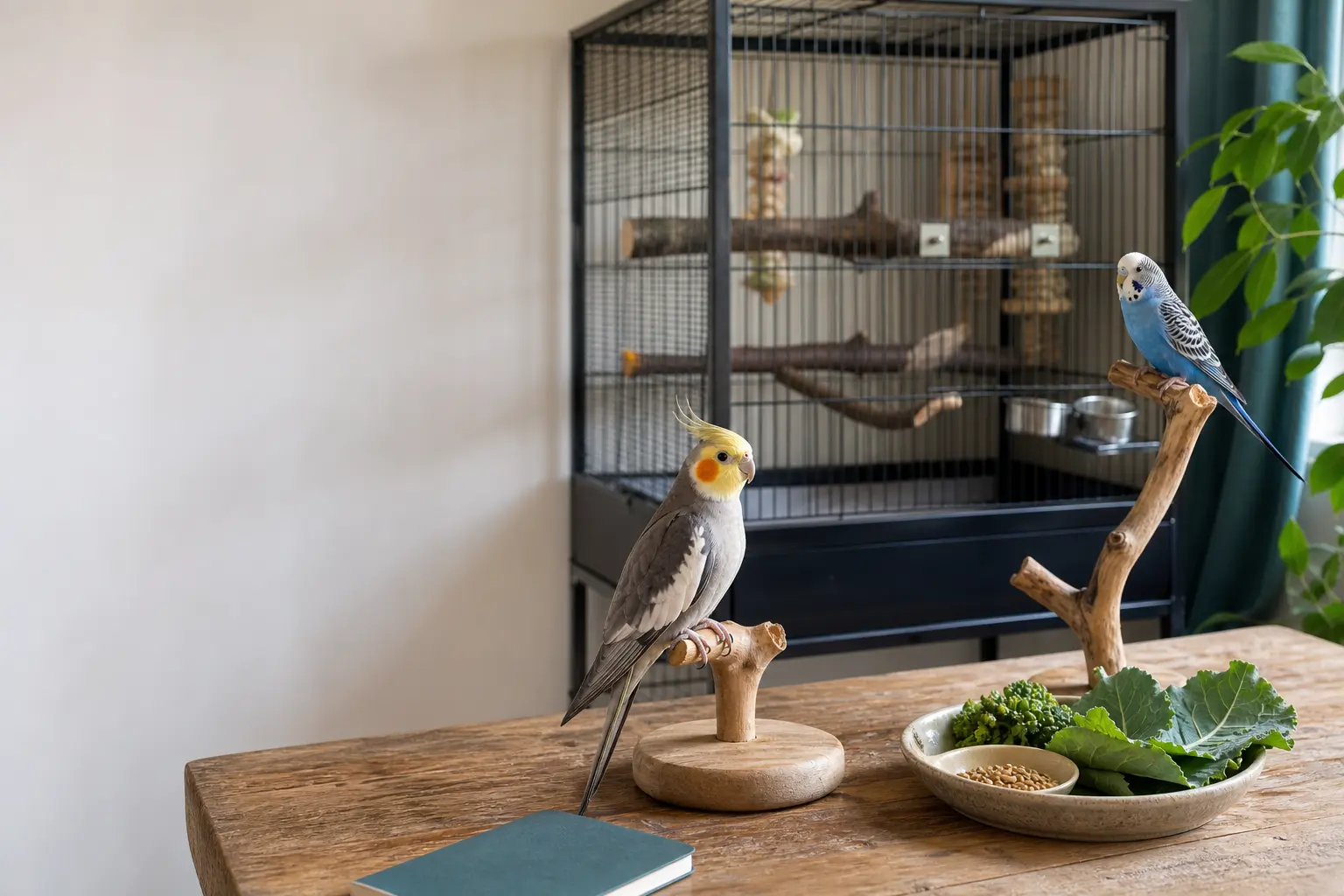
Cockatiels can be calmer than many parrots, but they whistle and contact call. Males can be especially vocal.
Budgies are small, but they can chatter for long stretches. Some homes enjoy it; some do not.
You can support calm routines, but you cannot train away a species' normal voice.
Start with the pieces that make daily care easier and safer. Match final sizes to the species you choose.
Affiliate links: Furball Cove may earn from qualifying purchases at no extra cost to you.

Choose safe bar spacing and enough room for movement, perches, bowls, and toys.

Gives step-up practice and short trust-building sessions a predictable place.

Turns part of the meal into a small job instead of leaving the bird bored.

Keeps transport secure for adoption day, avian-vet visits, and emergencies.