

Updated

Bird guides

How big should a conure cage be?

A conure needs a roomy rectangular cage with safe bar spacing, strong doors, room for natural perches, bowls, chew toys, foraging, and open movement space. Bigger is better only when the spacing and materials are safe.

Conures are active climbers and chewers, so the cage has to be both roomy and sturdy.

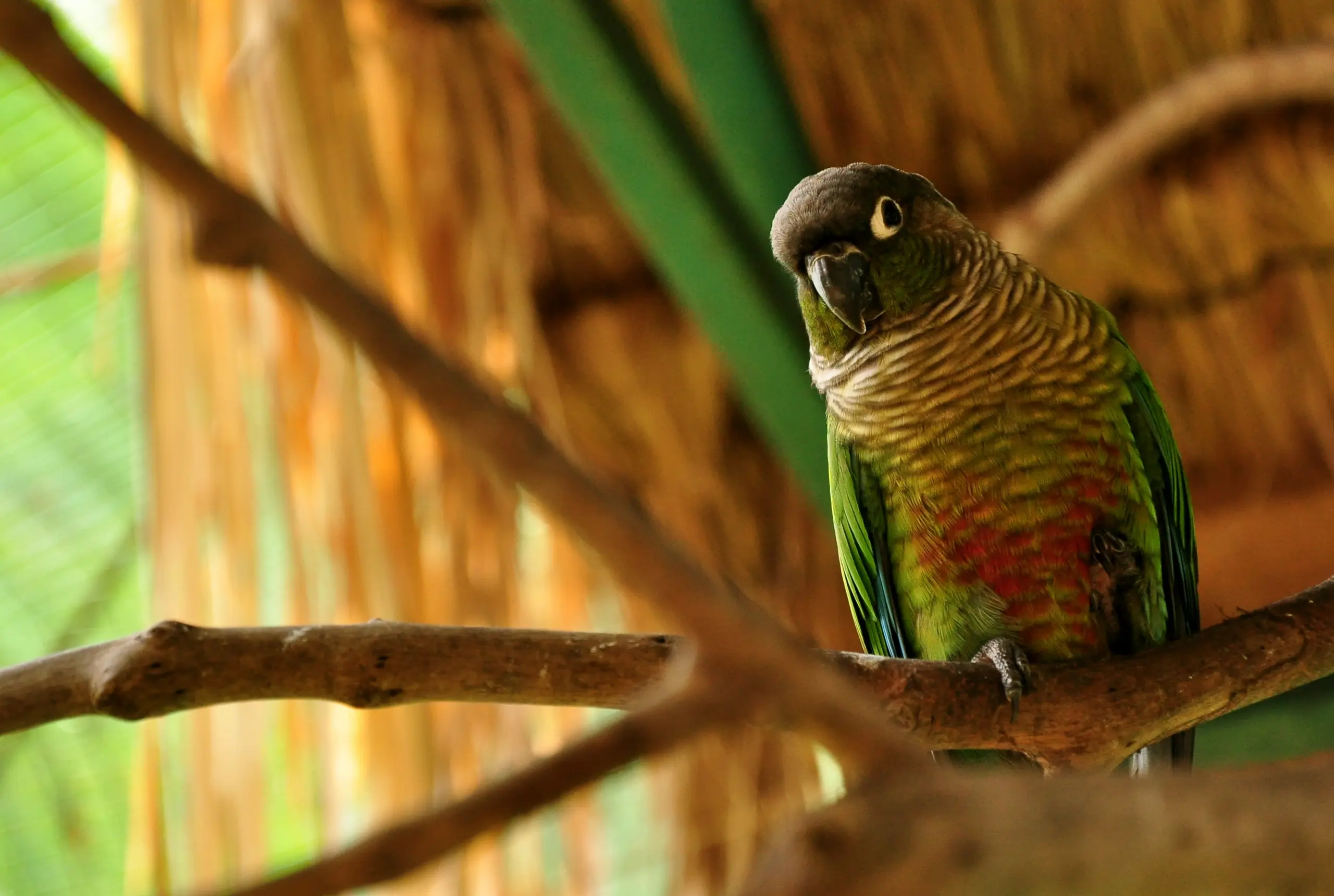
Green-cheeked Conures care guide photo for conure housing, diet, and handling planning.

Conure and Parrot Questions

Answer first

A conure needs a roomy rectangular cage with safe bar spacing, strong doors, room for natural perches, bowls, chew toys, foraging, and open movement space. Bigger is better only when the spacing and materials are safe.

What to check before you act

Width

Useful movement space.

Spacing

Prevent head traps.

Strength

Active beaks test cages.

Layout

Leave open paths.

Cleaning

Daily access matters.

Out time

Still needed.

01

How to act on this

Choose a wide rectangular cage that lets the conure move, climb, stretch, and flap without toys filling every path.

02

Check spacing and strength

Bar spacing must match the species, and doors, welds, locks, and finish need to stand up to an active beak.

03

Leave room for work

Conures need perches, bowls, chewing, and foraging, but crowding the cage creates stress and broken feathers.

04

Plan out-of-cage time

A cage is the home base, not the whole life. Safe supervised time outside the cage still matters.

05

Best default

Buy the largest safe cage you can clean and arrange well.

Before you decide

  • Can the conure flap and turn without hitting everything?
  • Is bar spacing safe?
  • Are doors and locks secure?
  • Is there room after toys and bowls are added?
  • Can you clean the cage easily?

Next best moves

  • Prioritize width, safe spacing, and sturdy construction.
  • Use varied perches and rotate toys without crowding.
  • Add a play stand or station for supervised out time.

Common questions

Can a conure use a cockatiel cage?

Sometimes, but conures often need sturdier construction and careful bar spacing.

Is a tall cage enough?

Not if it lacks usable width and movement space.

Do conures need lots of toys?

They need chewing and foraging, but the cage should not be packed full.

Can two conures share a cage?

Only compatible birds after careful introductions, and the cage must be sized for both.

Useful setup pieces

Use these after the care plan is clear. Match size and materials to the bird you actually keep.

Affiliate links: Furball Cove may earn from qualifying purchases at no extra cost to you.

Roomy rectangular bird cage with natural perches, stainless bowls, paper liner, and a budgie in a bright bird-care room.

Roomy rectangular cage

Start with safe space, ventilation, bar spacing, and room for natural perches.

Natural wood bird perch set with varied diameters and a cockatiel beside the perches on a bright table.

Natural perch set

Varied perch diameters support normal feet better than one smooth dowel.

Bird-safe chew toys made from natural wood, paper, vine, and vegetable-dyed pieces with a lovebird nearby.

Safe chew toys

Plain bird-safe chewing work gives busy beaks something useful to do.

Bird foraging tray with covered cups, pellets, greens, and a curious budgie beside the puzzle.

Foraging toy

Turns part of the meal into a simple job instead of a full bowl of boredom.

References