

Updated

Bird guides

How do I switch a bird to pellets?

Switch a bird to pellets slowly and watch actual intake. Keep the familiar diet available while you introduce pellets in predictable ways, and never let a small bird go hungry during the transition.

A pellet switch is a monitoring job, not a willpower contest.

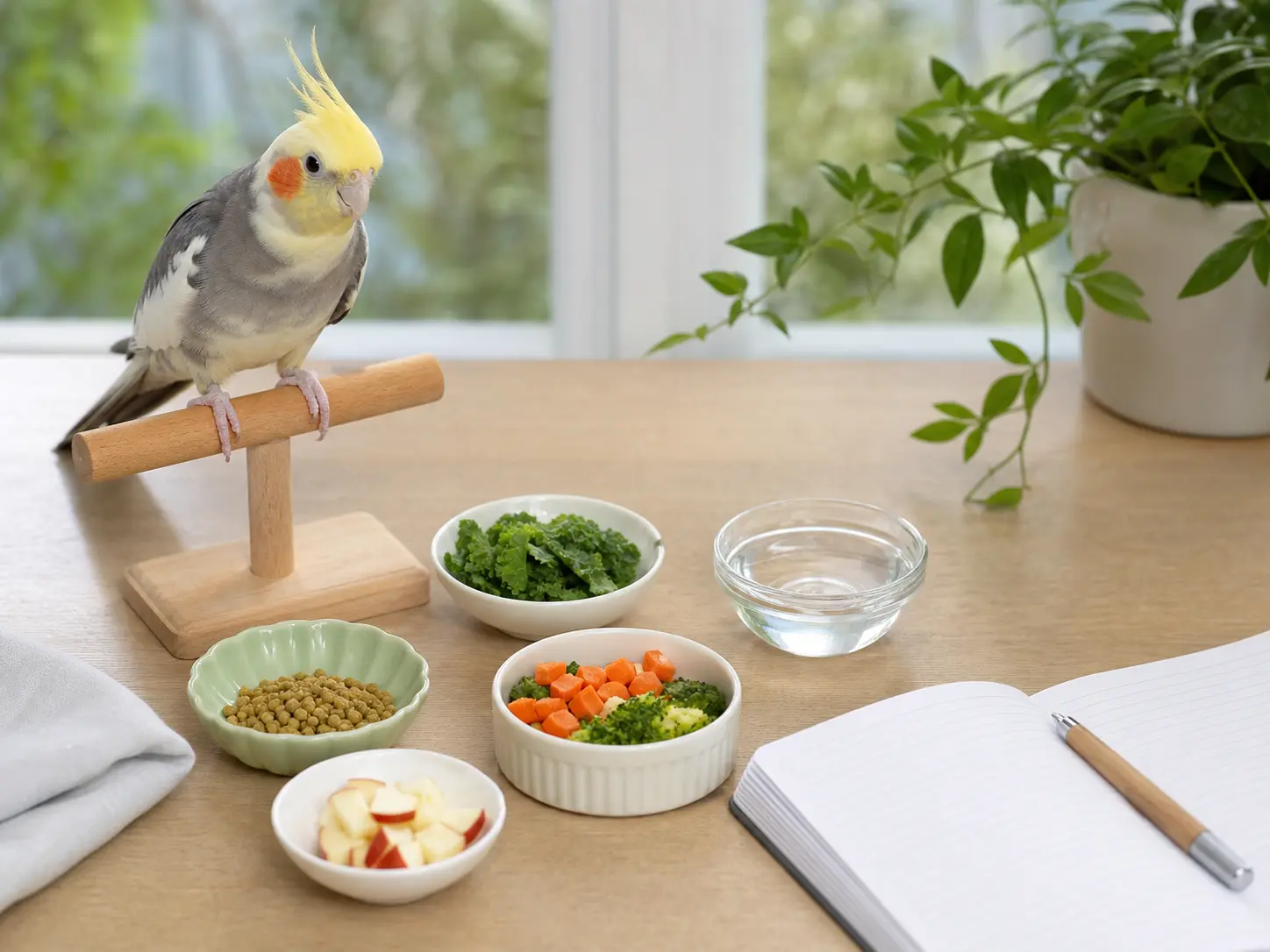
Cockatiel beside pellets, leafy greens, chopped vegetables, a tiny fruit portion, clean water, and food notes.

Food and Water

Answer first

Switch a bird to pellets slowly and watch actual intake. Keep the familiar diet available while you introduce pellets in predictable ways, and never let a small bird go hungry during the transition.

What to check before you act

Weight

Track before changing food.

Intake

Watch what is eaten.

Slow pace

Avoid sudden deprivation.

Texture

Size and feel matter.

Droppings

Changes can show diet stress.

Vet help

Medical birds need guidance.

01

How to act on this

Start by learning what the bird eats now, then add pellets at routine times while tracking weight, droppings, and appetite.

02

Make pellets familiar

Offer pellets in a clean dish, near favorite foods, or during calm morning feeding. Some birds need repeated exposure before tasting them.

03

Do not starve the bird

A bird that does not recognize pellets as food can lose weight quickly. Keep enough familiar food available while acceptance builds.

04

Use small steps

Try different pellet sizes, soften briefly if appropriate, model eating, or mix a tiny amount with familiar food without letting the whole bowl become mush.

05

Progress marker

The switch is working only when the bird is actually eating the pellets and staying stable.

Before you decide

  • Do you know the bird's current weight?
  • Is the bird still eating enough every day?
  • Are droppings and energy staying normal?
  • Are pellets offered consistently without forcing hunger?
  • Does the pellet size and texture fit the species?

Next best moves

  • Use a gram scale before and during the transition.
  • Make one diet change at a time.
  • Ask an avian vet for birds that are small, ill, underweight, overweight, or extremely selective.

Common questions

How long does a pellet switch take?

It can take days, weeks, or longer. The safe pace is the one where the bird keeps eating and stays stable.

Can I just remove seed?

No. Removing familiar food can be dangerous if the bird does not yet eat pellets.

What if my bird throws pellets out?

That can be exploration or rejection. Keep offering small amounts and track actual intake.

Are pellets right for every bird?

No. Species and health matter. Some birds need different staple diets or vet-directed plans.

Useful setup pieces

Use these after the care plan is clear. Match size and materials to the bird you actually keep.

Affiliate links: Furball Cove may earn from qualifying purchases at no extra cost to you.

Digital gram scale with a budgie standing calmly on the scale beside a care notebook.

Digital gram scale

Makes weight checks easier before small appetite changes become big problems.

Stainless bird bowls with clean water, pellets, greens, and a budgie perched beside the feeding station.

Stainless bowls

Separate clean food and water dishes that are easy to wash every day.

Airtight bird food storage containers with scoop, blank labels, and a canary perched nearby.

Food storage

Keeps pellets and seed portions sealed, labeled, dry, and separate from treats.

Open blank bird care notebook with pencil, small supplies, and a cockatiel on a tabletop stand.

Care notebook

Tracks food, weight, sleep, droppings, behavior, and vet questions in one place.

References