

Updated

Bird guides

Should I clip my bird's wings?

Wing clipping should not be the default solution for a pet bird. Flight is important for exercise, confidence, and safety skills. If clipping is considered for a specific safety or medical reason, discuss it with an avian vet or qualified bird professional first.

The real question is how to make the home safe, not how to remove the bird's main way to move.

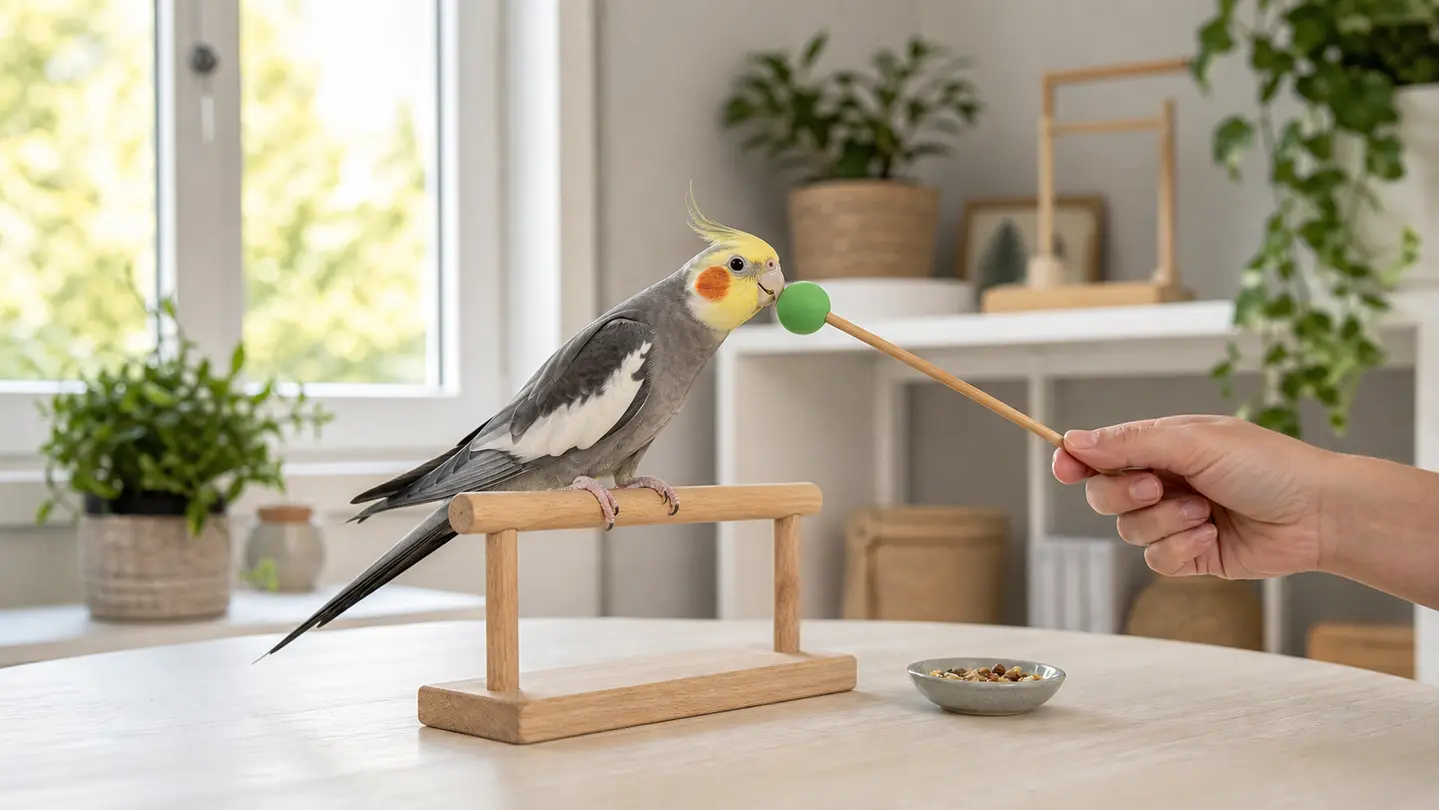
Cockatiel touching a target stick on a tabletop training perch with tiny treats nearby.

Handling and Training

Answer first

Wing clipping should not be the default solution for a pet bird. Flight is important for exercise, confidence, and safety skills. If clipping is considered for a specific safety or medical reason, discuss it with an avian vet or qualified bird professional first.

What to check before you act

Default

Do not clip automatically.

Room safety

Control hazards first.

Training

Recall and stationing help.

Falls

Clipped birds can crash.

Escape

Clipping does not prevent it.

Expert help

Use vet guidance for special cases.

01

How to act on this

Start with room safety, recall training, door control, window protection, and better handling routines before considering a clip.

02

Clipped birds are not automatically safe

A clipped bird can still glide, crash, fall, escape outdoors, be stepped on, or lose confidence. Clipping does not replace supervision.

03

Flight has benefits

Flying supports exercise, balance, coordination, choice, and confidence when the room is prepared safely.

04

If you do clip

Do not cut feathers yourself without training. A severe or uneven clip can cause injury, fear, and bad falls.

05

Better default

Build a safe flight and handling plan unless a specific bird's situation truly calls for clipping.

Before you decide

  • Are doors, windows, fans, mirrors, and hazards controlled?
  • Can the bird return to a perch or station?
  • Is clipping being used to solve biting or poor training?
  • Has an avian vet weighed in on medical or safety concerns?
  • Would a clip increase falls, fear, or household risk?

Next best moves

  • Work on safe-room setup and recall before making a clipping decision.
  • Use an avian vet or qualified bird professional if clipping is truly needed.
  • Never use clipping as a substitute for training, supervision, or door rules.

Common questions

Does clipping stop escape?

No. Clipped birds can still get outside and may be less able to control where they land.

Will clipping stop biting?

No. It may make the bird feel trapped and can make handling worse.

Can flighted birds be safe indoors?

Yes, with prepared rooms, closed doors, covered hazards, training, and supervision.

Do clipped feathers grow back?

Often they do after molts, but timing and quality vary, and broken blood feathers need care.

Useful setup pieces

Use these after the care plan is clear. Match size and materials to the bird you actually keep.

Affiliate links: Furball Cove may earn from qualifying purchases at no extra cost to you.

Tabletop bird training perch with a cockatiel standing on the perch beside small training treats.

Training perch

Gives short trust-building sessions a low, predictable place to happen.

Hard-sided bird carrier with towel liner, stainless bowl, and a cockatiel calmly beside the open carrier.

Hard-sided bird carrier

Keeps transport secure for adoption day, avian-vet visits, and emergencies.

Open blank bird care notebook with pencil, small supplies, and a cockatiel on a tabletop stand.

Care notebook

Tracks food, weight, sleep, droppings, behavior, and vet questions in one place.

Natural wood bird perch set with varied diameters and a cockatiel beside the perches on a bright table.

Natural perch set

Varied perch diameters support normal feet better than one smooth dowel.

References