

Updated

Bird guides

How do I bond with a shy bird?

Bond with a shy bird by being calm, predictable, and patient. Sit nearby, offer tiny treats, keep routines steady, and let the bird choose approach. Trust grows faster when you stop trying to rush it.

A shy bird needs proof that you are safe, not a bigger performance.

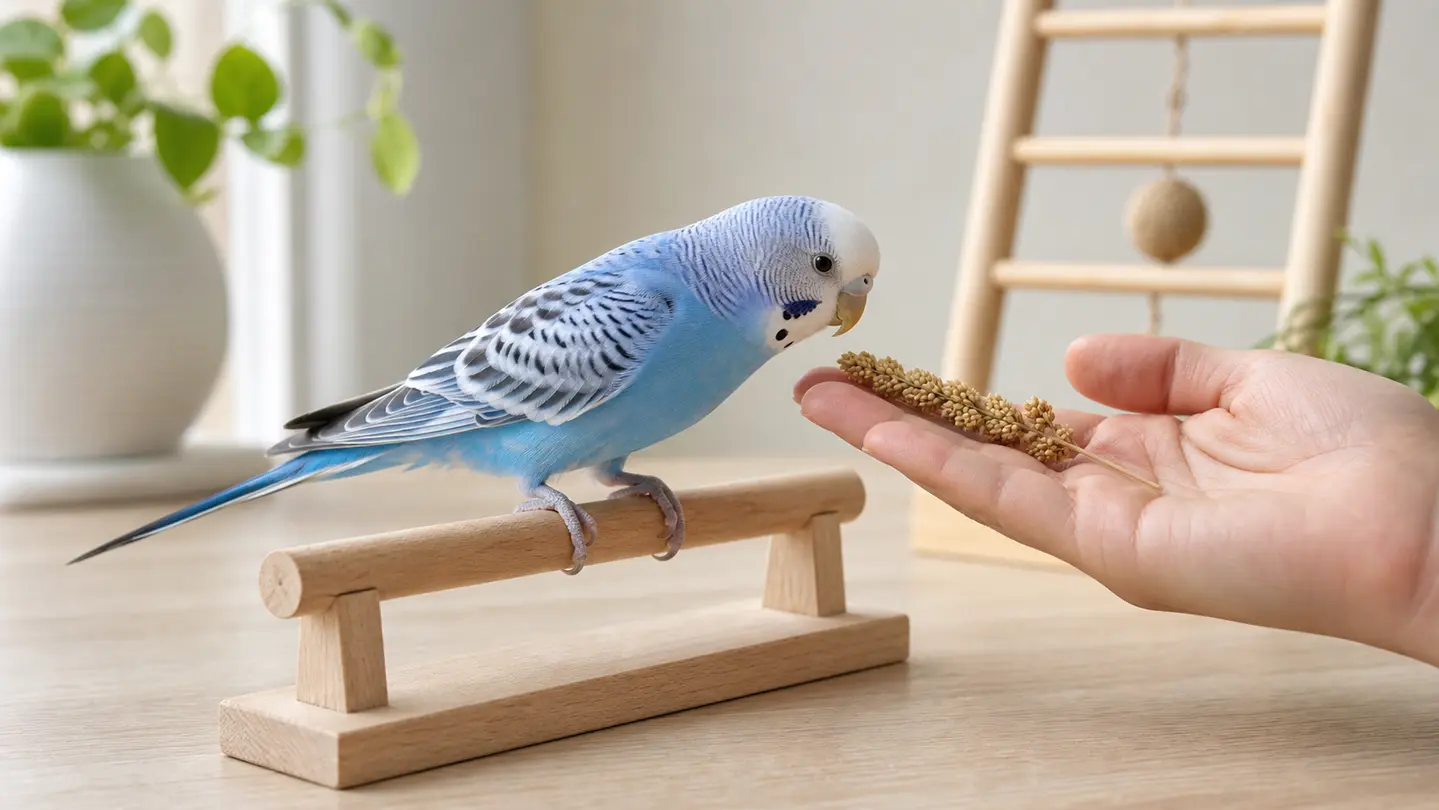
Blue budgie choosing to lean toward millet held beside a low tabletop perch.

Handling and Training

Answer first

Bond with a shy bird by being calm, predictable, and patient. Sit nearby, offer tiny treats, keep routines steady, and let the bird choose approach. Trust grows faster when you stop trying to rush it.

What to check before you act

Calm

Quiet presence matters.

Distance

Start where the bird relaxes.

Routine

Predictability builds trust.

Treats

Reward interest.

Choice

Approach is voluntary.

Time

Progress is measured in small wins.

01

How to act on this

Start with quiet presence and routine care. Let the bird watch you without hands entering its space.

02

Use treats without pressure

Place or offer a tiny safe treat at the bird's comfort distance. If the bird will not take it, you are too close or moving too fast.

03

Make daily life predictable

Same greeting, same feeding rhythm, short visits, and gentle exits help a shy bird relax.

04

Train confidence, not dependence

Targeting, stationing, and foraging let the bird succeed without being handled too soon.

05

Best sign

The bird stays relaxed and chooses a little more contact over time.

Before you decide

  • Can the bird relax while you are in the room?
  • Are you moving slowly enough?
  • Does the bird choose to approach?
  • Are hands waiting until the bird is ready?
  • Are sessions ending before the bird panics?

Next best moves

  • Track the distance where the bird stays comfortable.
  • Reward calm interest instead of pushing for touch.
  • Use target and station training before hands-on handling.

Common questions

How long does bonding take?

It depends on the bird and history. A shy bird may need weeks or months of consistency.

Should I sit by the cage all day?

No. Short calm visits are often better than constant pressure.

What if my bird only likes one person?

Have other people become predictable treat and routine sources without forcing contact.

Can a shy bird still be happy?

Yes. A shy bird can thrive with respectful routines, enrichment, and low-pressure interaction.

Useful setup pieces

Use these after the care plan is clear. Match size and materials to the bird you actually keep.

Affiliate links: Furball Cove may earn from qualifying purchases at no extra cost to you.

Tabletop bird training perch with a cockatiel standing on the perch beside small training treats.

Training perch

Gives short trust-building sessions a low, predictable place to happen.

Bird foraging tray with covered cups, pellets, greens, and a curious budgie beside the puzzle.

Foraging toy

Turns part of the meal into a simple job instead of a full bowl of boredom.

Open blank bird care notebook with pencil, small supplies, and a cockatiel on a tabletop stand.

Care notebook

Tracks food, weight, sleep, droppings, behavior, and vet questions in one place.

Bird-safe chew toys made from natural wood, paper, vine, and vegetable-dyed pieces with a lovebird nearby.

Safe chew toys

Plain bird-safe chewing work gives busy beaks something useful to do.

References