

Updated

Bird guides

Why is my bird not eating?

A bird that is not eating may be sick, stressed, in pain, frightened, overheated, egg-bound, exposed to toxins, or unable to access food. Because birds can decline quickly, call an avian vet promptly if appetite drops or stops.

Not eating is one of the bird signs to take seriously.

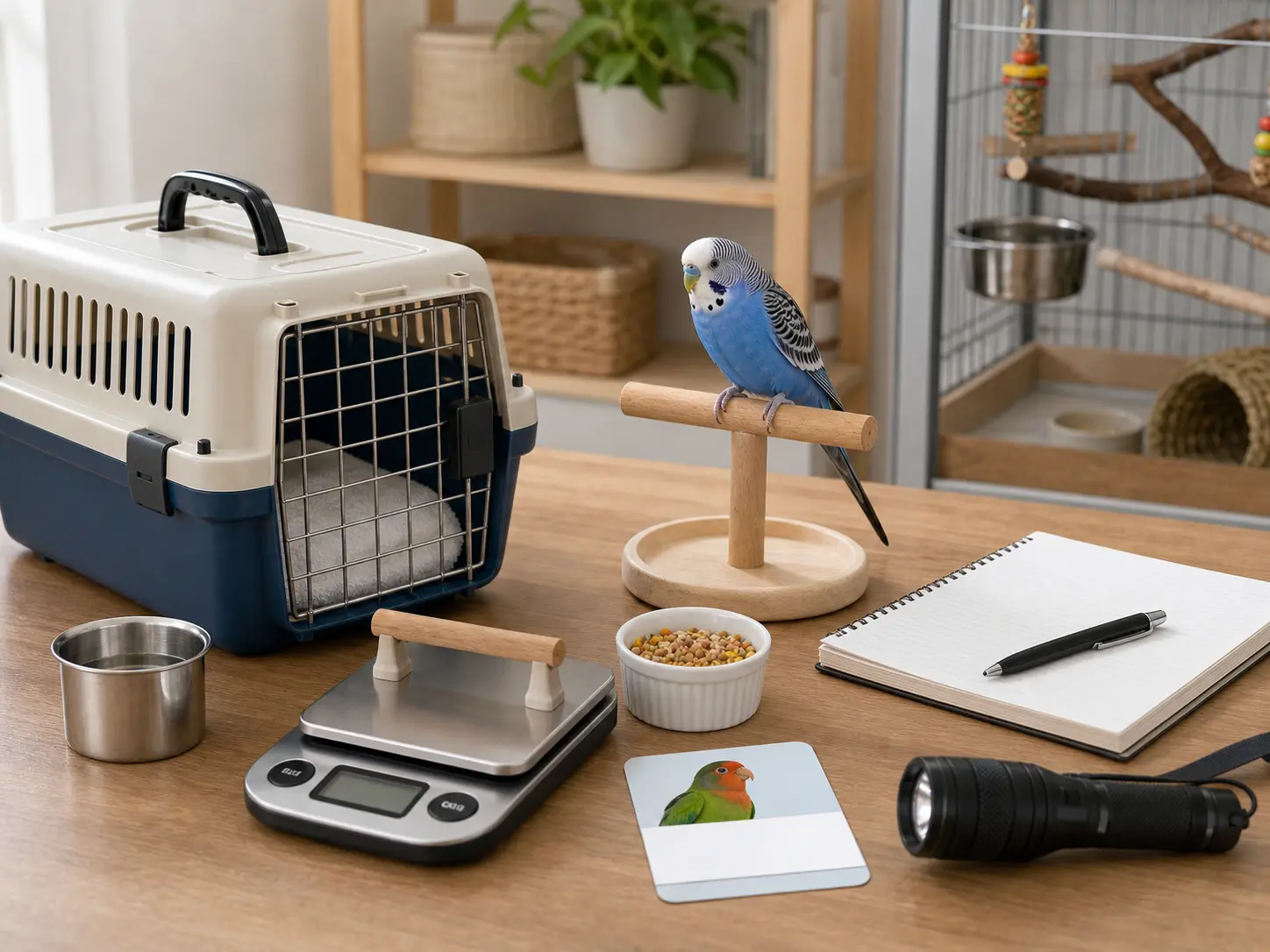
Bird emergency prep setup with hard-sided carrier, towel liner, gram scale, care notebook, water cup, food sample, and flashlight.

Health and Vet Care

Answer first

A bird that is not eating may be sick, stressed, in pain, frightened, overheated, egg-bound, exposed to toxins, or unable to access food. Because birds can decline quickly, call an avian vet promptly if appetite drops or stops.

What to check before you act

Actual intake

Check swallowed food.

Droppings

Fewer droppings matter.

Weight

Use a gram scale.

Other signs

Weakness raises urgency.

Access

Bowl and bullying matter.

Vet

Call promptly.

01

How to act on this

Check whether the bird is truly eating or only cracking shells, shredding food, or sitting near the bowl. Then call an avian vet for guidance.

02

Look for other signs

Fluffed posture, quiet behavior, weight loss, fewer droppings, vomiting, breathing effort, weakness, or sitting low makes this more urgent.

03

Check access and change

New food, dirty bowls, spoiled food, bullying from another bird, cage changes, or a scary room can reduce eating.

04

Keep stress low

Keep the bird calm and prepare a carrier. Do not force food or water unless a vet tells you exactly what to do.

05

Urgent rule

Small birds and sick birds do not have much reserve. Appetite loss deserves fast action.

Before you decide

  • Is the bird actually swallowing food?
  • Are there fewer droppings?
  • Has weight dropped?
  • Is the bird fluffed, weak, or breathing harder?
  • Did food, cage, or household routine change?

Next best moves

  • Call an avian vet for appetite loss, especially with weight or dropping changes.
  • Offer familiar safe food while you seek guidance.
  • Bring food samples, weight notes, and dropping photos if the bird is seen.

Common questions

Can a bird skip a meal?

Brief changes can happen, but a bird that is not eating normally should be taken seriously.

What if the bowl looks full?

Seed hulls can make a bowl look full. Check actual food and droppings.

Should I syringe feed?

Only with veterinary instruction. Aspiration and stress can be dangerous.

Can stress stop eating?

Yes, but stress does not make appetite loss safe to ignore.

Useful setup pieces

Use these after the care plan is clear. Match size and materials to the bird you actually keep.

Affiliate links: Furball Cove may earn from qualifying purchases at no extra cost to you.

Digital gram scale with a budgie standing calmly on the scale beside a care notebook.

Digital gram scale

Makes weight checks easier before small appetite changes become big problems.

Stainless bird bowls with clean water, pellets, greens, and a budgie perched beside the feeding station.

Stainless bowls

Separate clean food and water dishes that are easy to wash every day.

Hard-sided bird carrier with towel liner, stainless bowl, and a cockatiel calmly beside the open carrier.

Hard-sided bird carrier

Keeps transport secure for adoption day, avian-vet visits, and emergencies.

Open blank bird care notebook with pencil, small supplies, and a cockatiel on a tabletop stand.

Care notebook

Tracks food, weight, sleep, droppings, behavior, and vet questions in one place.

References