Updated
Rabbit food check
Can Rabbits Eat Bok Choy? Yes—Wash Between the Stalks
Yes—leaf and stalk
Yes. Adult rabbits can eat bok choy, also sold as pak choi. Wash it, serve the green leaf and crisp white stalk plain, and start with one small piece if it is new. Keep the rest of the greens rotation familiar and leave grass hay available all day.
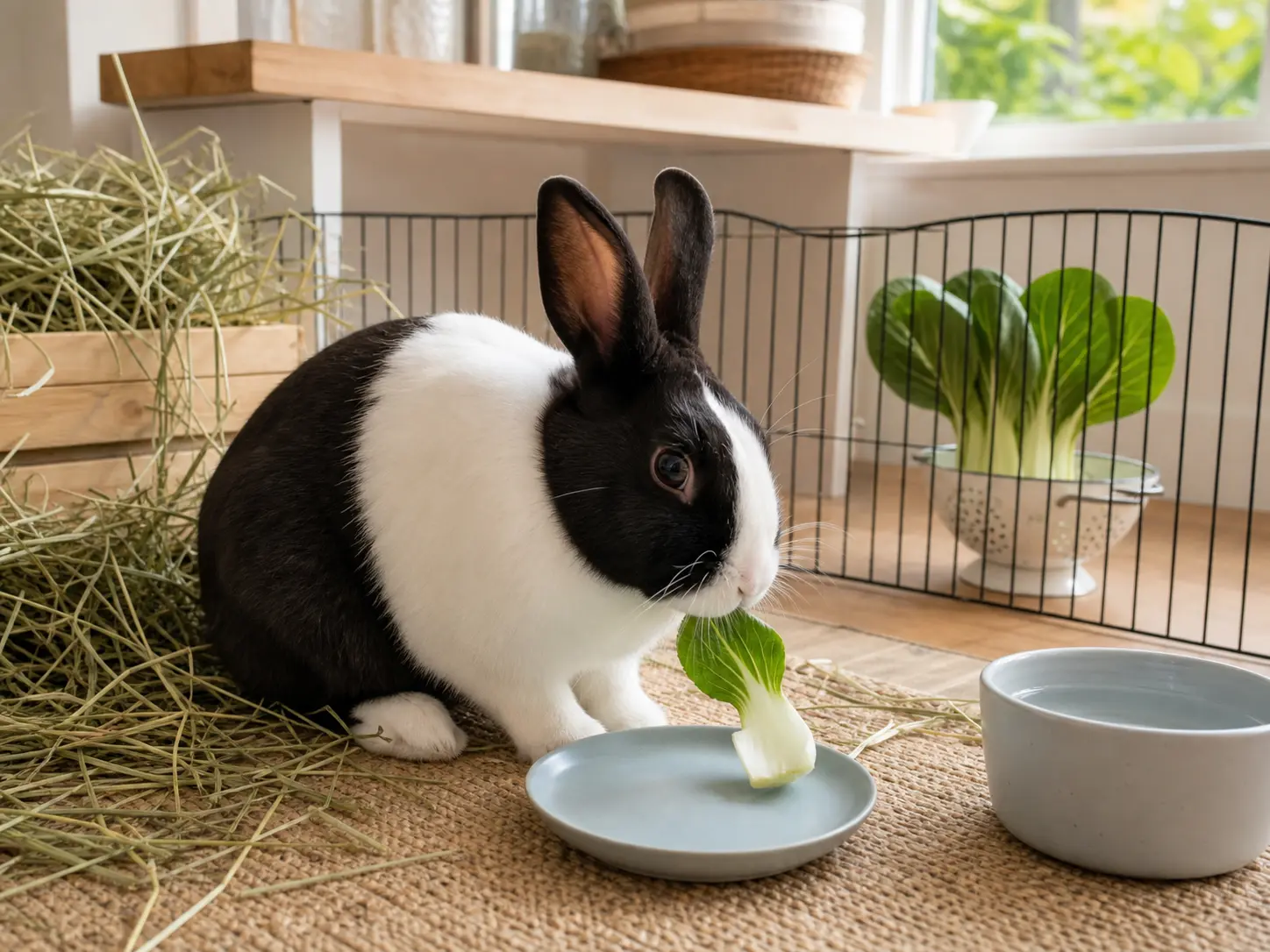 Bok Choy
Yes—bok choy and pak choi are the same decision
The grocery sign may say bok choy, pak choi, or baby bok choy. All refer to closely related forms of the same leafy vegetable, with a dark spoon-shaped blade and a crisp pale stalk. House Rabbit Society and VCA include bok choy among rabbit-safe greens; wash it and keep the first serving modest.
The pale stalk belongs with the green leaf
Bok choy offers two textures on one plant. The green blade bends like a leaf; the white rib snaps like a crisp vegetable. Both can be served plain. For a first trial, tear one small piece across the stalk so the rabbit gets a short rib rather than the whole heavy base.
Open the base before it reaches the sink
The compact stalks can hide soil, tiny insects, and wet decay where they press together. Pull one stalk away from the head and look down the curved white channel. Rinse that groove and both faces of the leaf; do not trust a quick splash over the outside of the closed bunch.
Judge this rabbit, not a cabbage-family rumor
Bok choy belongs to the cabbage family, but that fact alone does not predict digestive trouble. Introduce one small piece while the rest of the day stays familiar. The answer comes from this rabbit's hay eating, posture, and litter box—not from whether broccoli makes a person feel gassy.
Match the stalk to the produce sign
At the store or produce drawer, look for the open base, thick white ribs, and smooth dark green leaves. The sign says baby bok choy. A loose unmarked green stays out of the rabbit bag until someone can identify it.
Pull one stalk from the compact base
Hold the head over the sink and ease one outer stalk away. Follow the white curve down to the cut base. Soil rinses away; a sour wet pocket, fuzzy patch, or brown collapsed tissue sends the affected head to the bin.
Tear a leaf-and-rib piece
Rinse the blade and channel, shake off the excess, and tear one small section across both green and white. Put the remaining bok choy back in the refrigerator. The pale-blue plate enters the pen beside full timothy hay and clean water, with no sauce or stir-fry nearby.
Look past the first crunchy bite
Bok choy may disappear quickly because the stalk is crisp and wet. Later, check whether the rabbit returned to long hay strands and left its usual round droppings. If eating or output slows, remove the new green and contact the rabbit-savvy clinic promptly.
Serve
- Confirm bok choy or pak choi by its smooth dark green spoon-shaped leaves and thick crisp pale stalks gathered into an open compact base.
- Separate one stalk and inspect the hidden curve near the base. Discard leaves with slime, mold, a sour smell, wet brown tissue, or insect damage.
- Rinse the green blade, the back, and the white channel under cool running water. Rub away soil caught where the leaf meets the stalk.
- Tear off one small piece with both textures, serve it plain, and return the remaining unwashed or dried head to a ventilated refrigerator container.
Avoid
- Stir-fried bok choy, soup, kimchi, restaurant sides, or leaves carrying oil, salt, soy sauce, garlic, onion, chili, stock, dressing, or seasoning.
- Confusing bok choy with an unidentified Asian green. Read the produce sign rather than making the rabbit identify a loose stalk.
- An entire baby bok choy as one serving, especially when the rabbit has never eaten the green leaf or watery white stalk.
- A warm, slimy, moldy, sour-smelling, badly bruised, or collapsed head with wet decay hidden between the stalks.
Watch
- Comfortable bites through both the soft green blade and the crisp white rib
- Normal visits to the hay pile, water bowl, and familiar food after the bok choy piece
- The rabbit's ordinary separate round droppings and relaxed posture
- Reduced eating or droppings, soft stool, diarrhea, belly pressing, hunching, tooth grinding, a swollen-looking abdomen, weakness, or unusual quietness; remove bok choy and contact a rabbit-savvy veterinarian promptly
Portion
For an adult already eating fresh greens, bok choy can share the usual greens allowance with other familiar leaves. If it is new, begin with one small piece that includes leaf and a little stalk. Do not put an entire baby head on the plate or introduce another new vegetable at the same meal.
Clean the hidden curve between leaf and stalk
These produce tools help separate one bok choy stalk, rinse its white channel, dry the stored head, and keep the small rabbit serving away from seasoned human cooking.
Affiliate links: Furball Cove may earn from qualifying purchases at no extra cost to you.
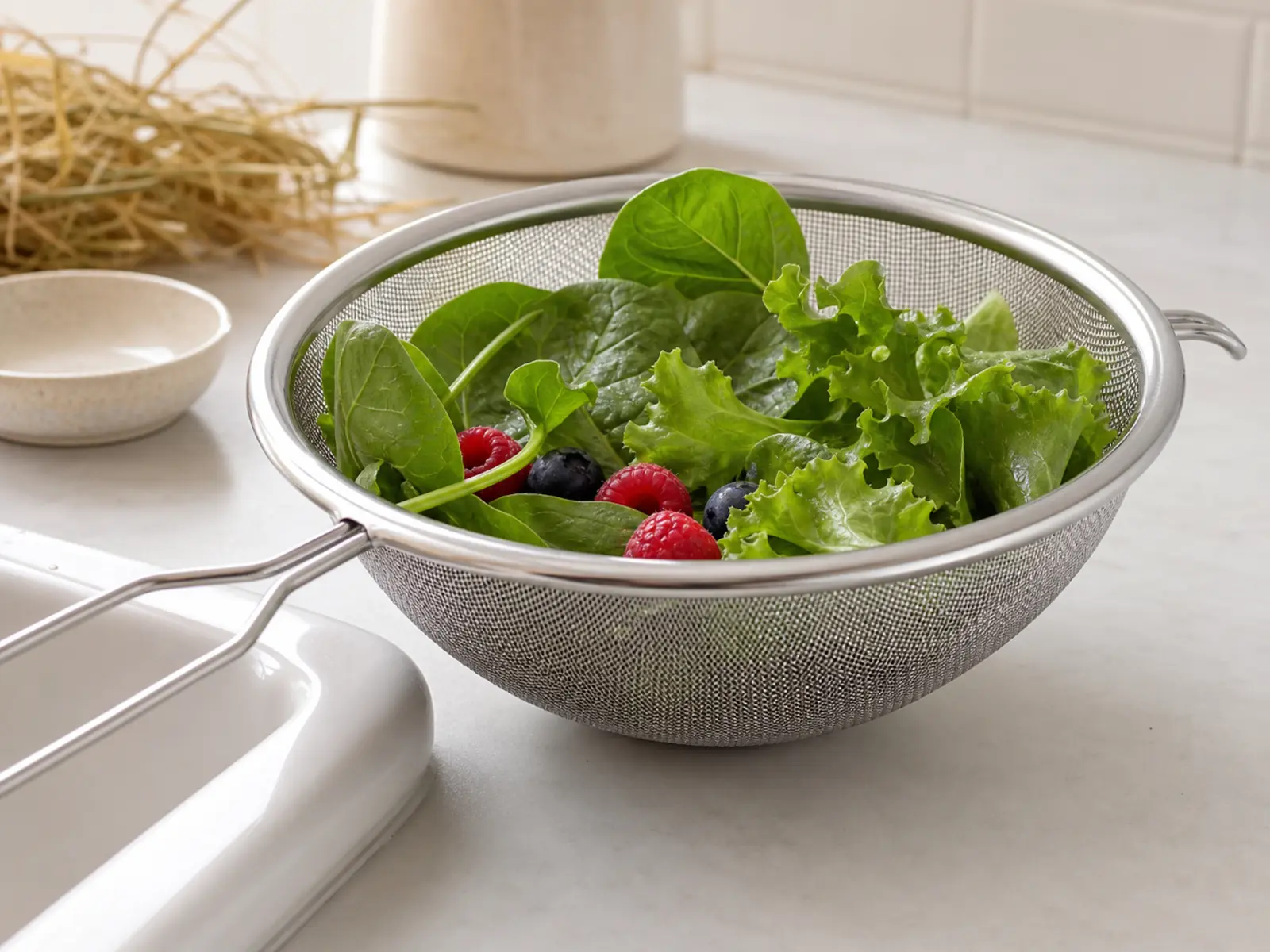
Produce strainer
Rinse the dark leaf and curved white channel over a clean colander so loosened soil leaves the stalk instead of pooling on the plate.
Shop produce strainer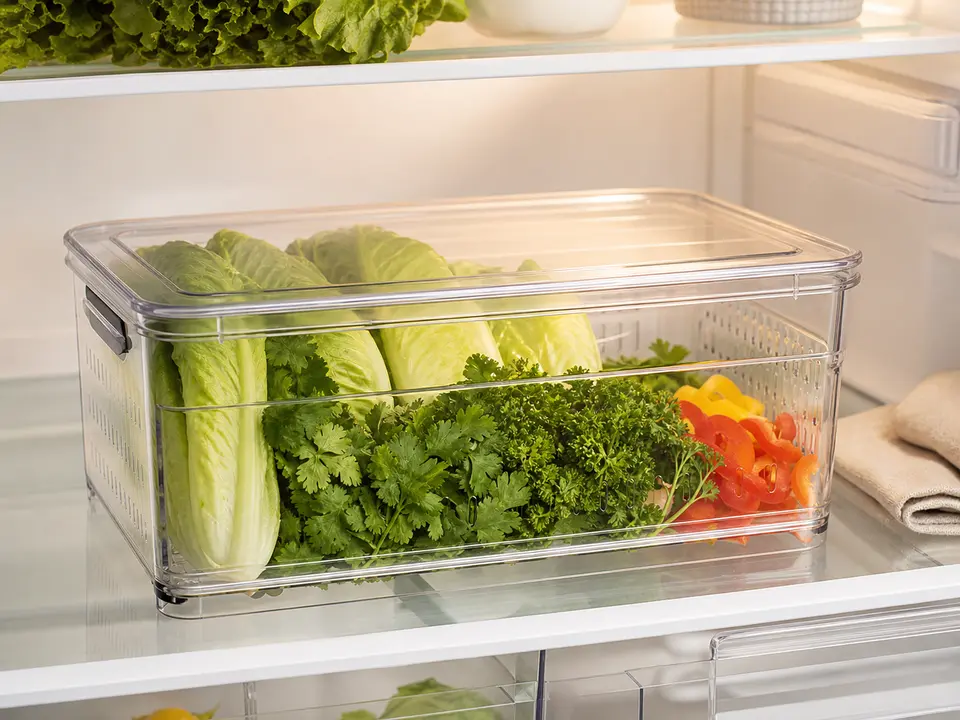
Rabbit greens bin
Store the remaining compact head with airflow where wet decay between the pale stalks stays visible before the next serving.
Shop rabbit greens bin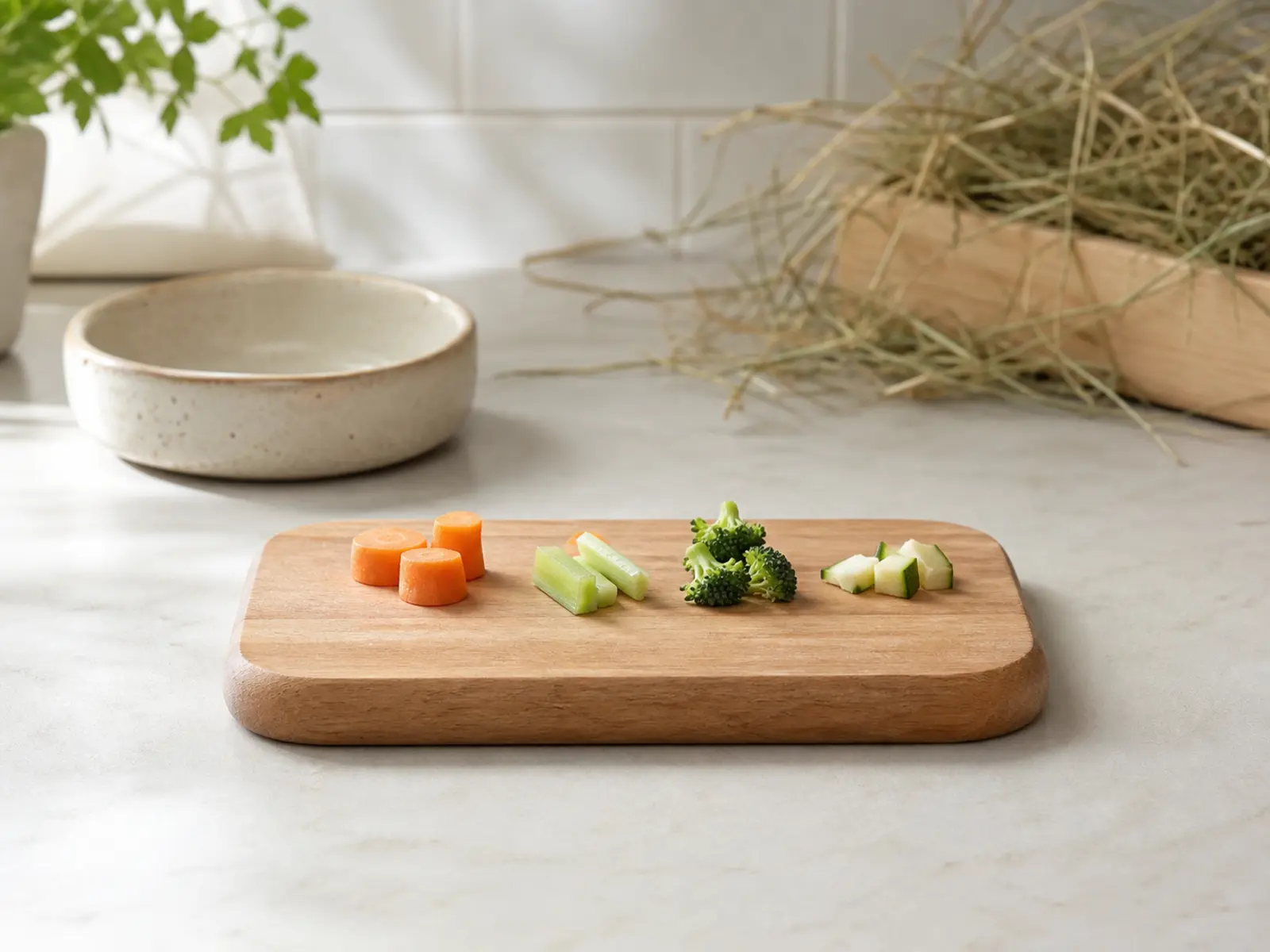
Mini cutting board
Trim a dirty cut end and divide one thick stalk on a clean board reserved for produce rather than seasoned dinner prep.
Shop mini cutting board