Updated
Rabbit food check
Can Rabbits Eat Spring Mix? Read Every Bag First
Yes—after you read the bag
Usually—but spring mix is a package name, not one plant. Read every ingredient each time you buy it. If the bag contains only rabbit-safe leaves your adult rabbit already tolerates, a small plain portion can join the usual greens. Skip dressing, toppings, spoiled leaves, and mixes with unfamiliar ingredients; keep hay unlimited.
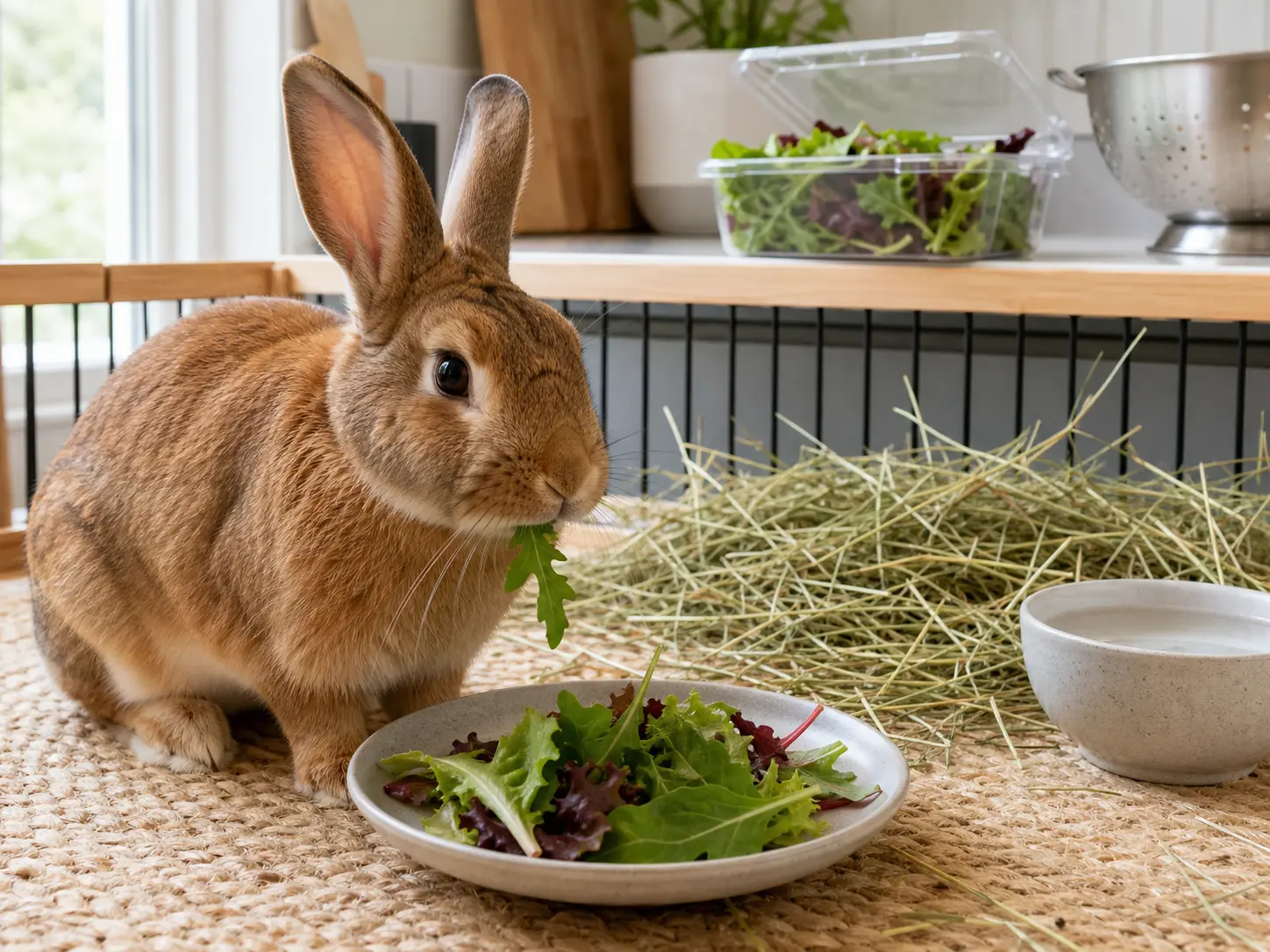 Spring Mix
Spring mix is a label, not a plant
Open two spring-mix containers and the leaves may not match. One holds baby lettuces and arugula; the next adds spinach, chard, kale, radicchio, herbs, or flowers. Turn this bag over at the refrigerator, name every ingredient, and keep the rabbit behind the pen gate until the list checks out.
The safest bag is pleasantly boring
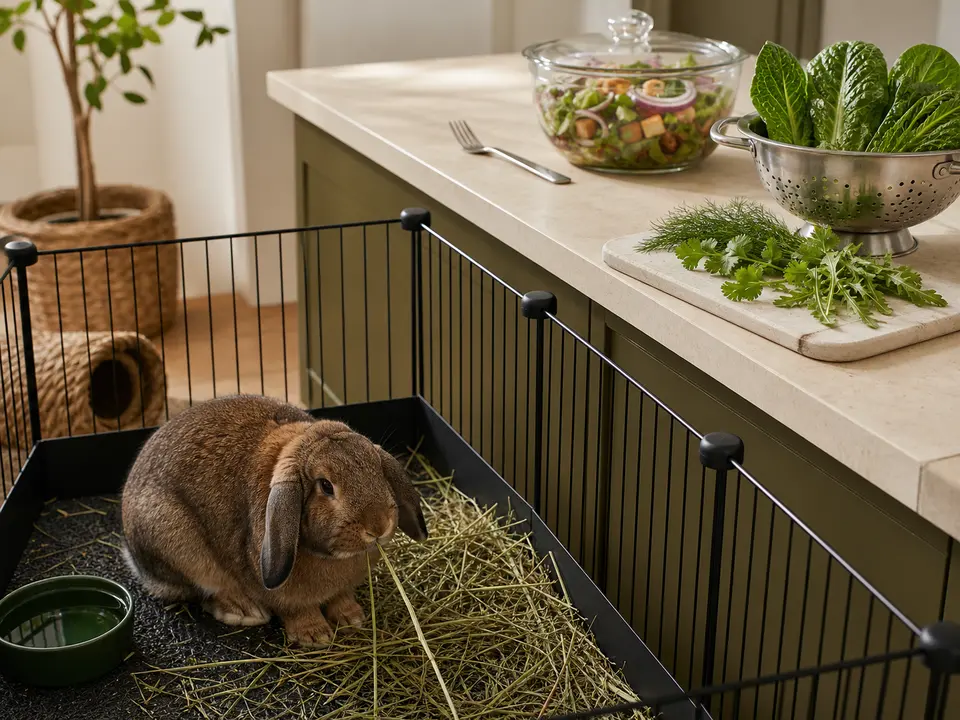
A cold clamshell of named plain leaves is easier to assess than a salad kit with packets and toppings. Put the rabbit's greens on their own plate before the family bowl reaches the table. Once the leaves are dressed or mixed with extras, leave them with the human dinner instead of trying to pick them clean beside the pen.
Let the package settle the washing question
FDA guidance distinguishes raw greens that need rinsing from products labeled washed, pre-washed, or ready-to-eat. Read the package. If you wash a ready-to-eat mix anyway, use clean hands, a clean colander, and a clean surface so the second wash does not add cross-contamination.
Mixed greens still leave hay in charge
Variety can make the fresh-food plate interesting, but it does not turn salad into the main meal. Keep a large loose grass-hay pile open day and night. The useful signs after spring mix are wonderfully ordinary: the rabbit returns to hay, behaves normally, and leaves the usual droppings.
Turn the clamshell over
Hold the cold clamshell under the refrigerator light. Read the ingredients, date, and washing line while the rabbit waits behind the gate. An unnamed flower or sprout sends the closed box back to the shelf; use a familiar whole lettuce instead.
Tip out only what you can inspect
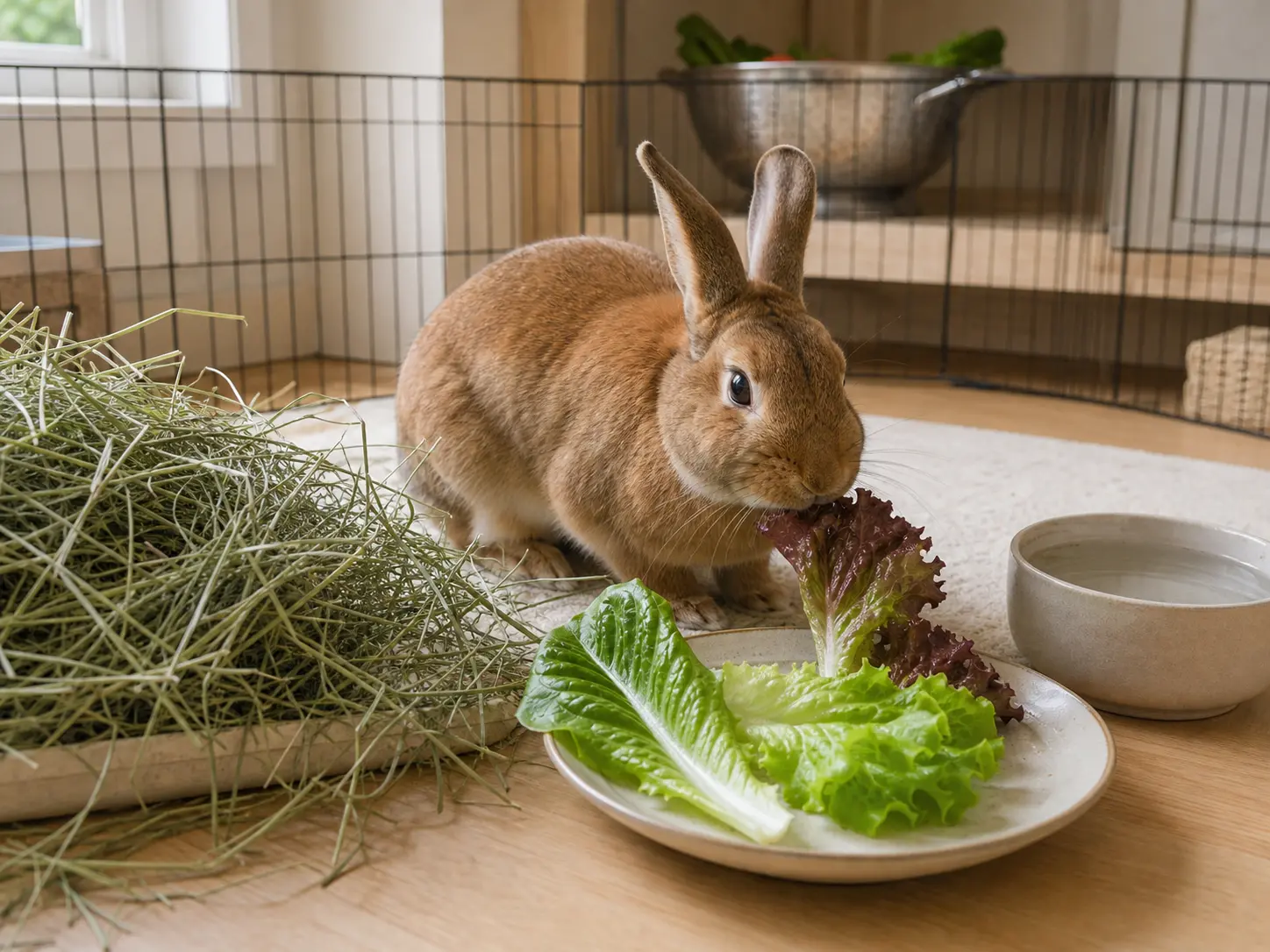
Put a small portion on a wide cream plate under good light. Separate the leaves with clean fingers. A crisp mixed handful can stay; a wet brown clump, gritty fold, fuzzy spot, yellow slime, or sour smell sends the entire questionable portion to the bin.
Keep the rabbit plate plain
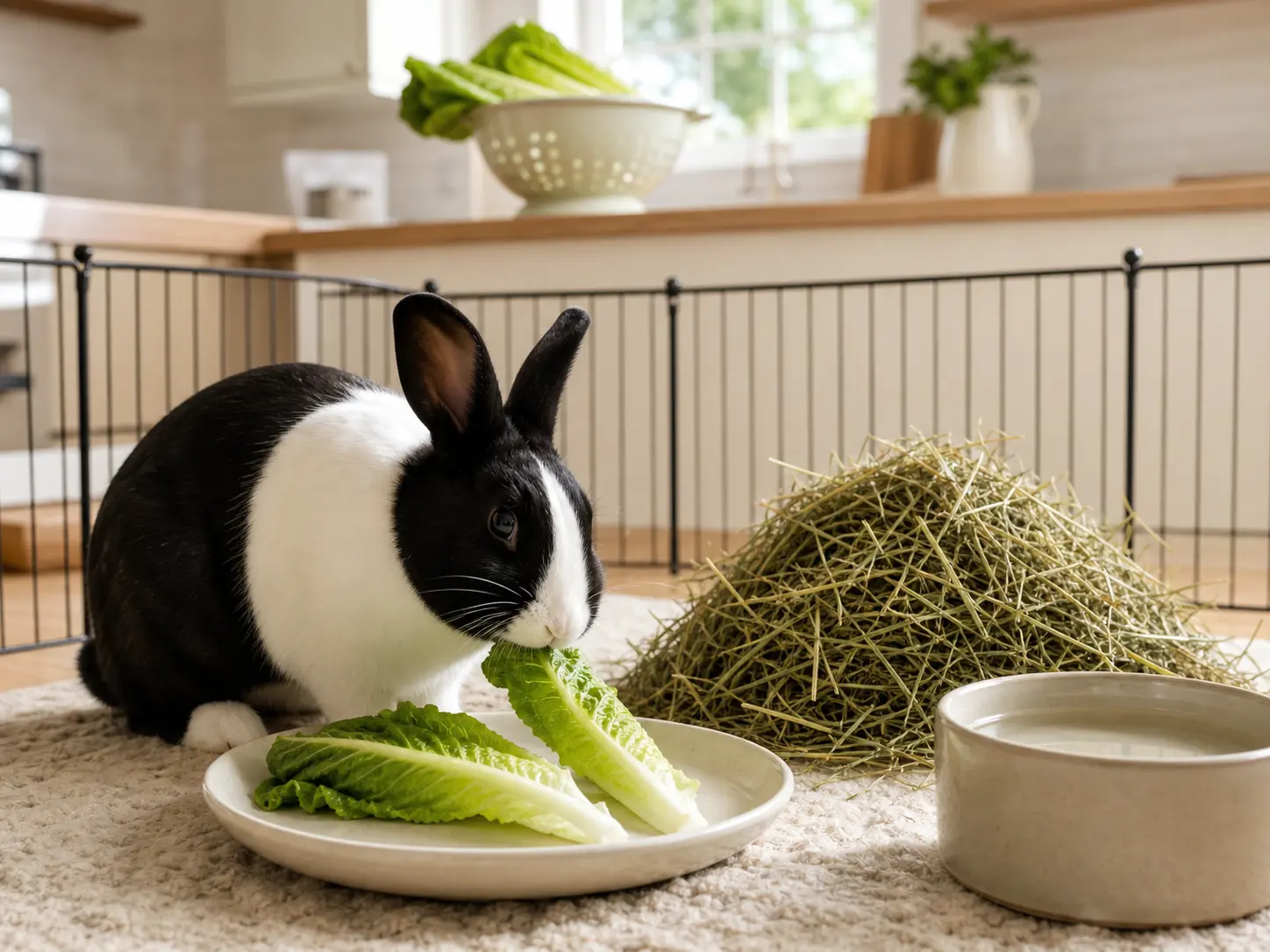
Carry the inspected leaves to the pen before anyone opens dressing or toppings. Set the modest plate beside the full hay pile and clean water bowl. Close and refrigerate the remaining mix instead of leaving the open container within reach.
Read the rabbit after the bag
An eager first bite only says the greens taste good. Later, look for the more useful pattern: several returns to hay, relaxed movement, normal interest in familiar food, and the rabbit's ordinary round droppings. If that routine changes, stop the mix and call the clinic promptly when eating or output slows.
How to offer it
- Read the current bag rather than relying on the color or the last package you bought. Spring-mix recipes change by brand, season, and lot.
- Match every listed leaf to a known rabbit-safe green. Put the bag aside for unidentified ingredients, edible flowers you cannot name, sprouts, or a topping packet mixed into the container.
- Keep refrigerated cut greens cold and follow the package wording. Wash a raw mix under cool running water; a product clearly marked washed or ready-to-eat does not need another wash on a clean setup.
- Spread the serving on a light plate and remove slimy, bruised, yellowing, gritty, moldy, or sour-smelling leaves. Serve the sound greens plain and return the package to the refrigerator.
Avoid
- Restaurant salad, meal-kit salad, or a family bowl carrying dressing, oil, vinegar, salt, cheese, croutons, nuts, seeds, onion, garlic, bacon, or seasoning.
- Assuming every spring-mix bag has the same leaves. A familiar brand can change its recipe, and a picture on the front is not a complete ingredient list.
- Using one mixed handful to test several unfamiliar greens. If digestion changes, the bag gives you no clean way to identify which leaf was involved.
- A warm, puffed, leaking, expired, slimy, moldy, or sour-smelling package, even when some leaves still look usable.
Watch
- The small plate emptying while the rabbit continues making ordinary trips to the hay pile
- Normal posture, activity, water use, and interest in the next familiar meal
- The rabbit's usual supply of separate round droppings after the mixed-greens trial
- Reduced eating or droppings, soft stool, diarrhea, belly pressing, hunching, tooth grinding, weakness, or unusual quietness; remove the mix and contact a rabbit-savvy veterinarian promptly
Portion
If every ingredient is already familiar, spring mix can share the adult rabbit's usual measured greens allowance; it is not an extra bowl on top. When the blend contains a new leaf, do not use the handful to introduce several plants at once. Buy that green separately and begin with one small piece on another day.
Keep a mixed-greens routine easy to inspect
These produce-prep tools make the bag easier to read, sort, wash when required, dry, refrigerate, and portion before human toppings complicate the answer.
Affiliate links: Furball Cove may earn from qualifying purchases at no extra cost to you.
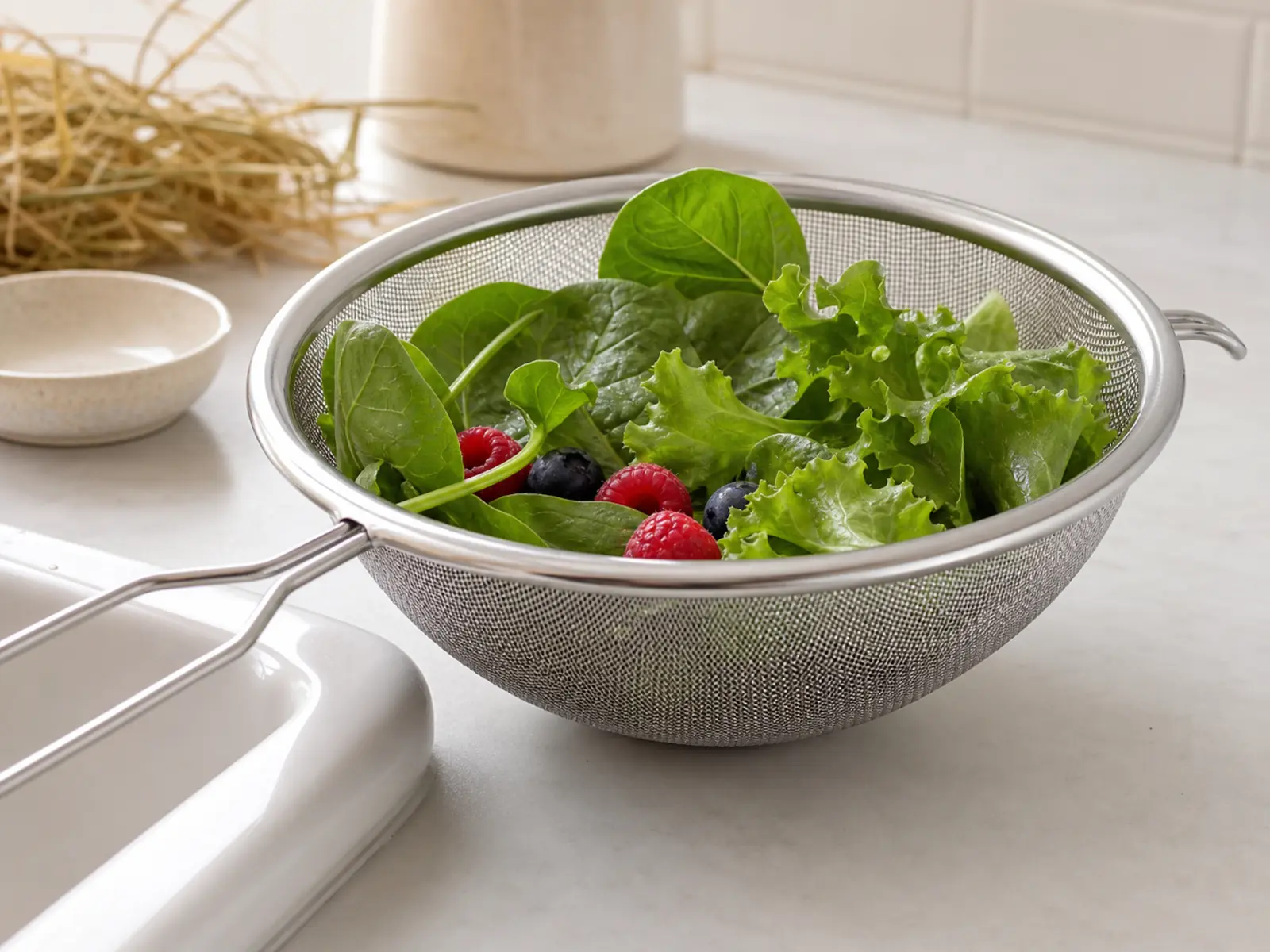
Produce strainer
Rinse raw unpackaged leaves or a mix that requires washing in a clean colander, then inspect what collects between the different shapes.
Shop produce strainer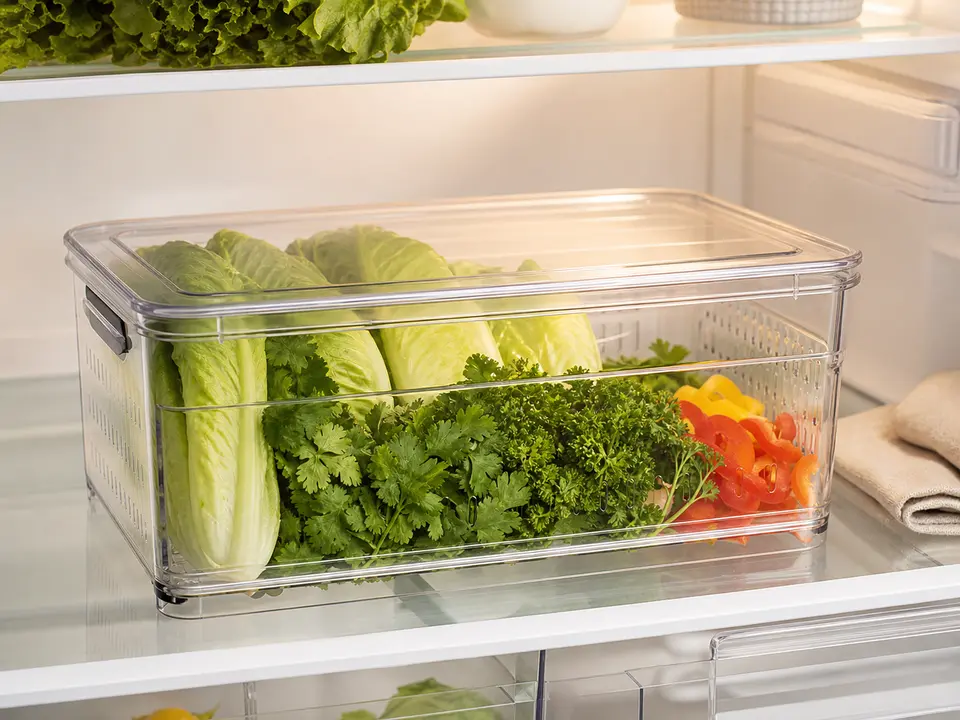
Rabbit greens bin
Give rabbit greens a dedicated refrigerator bin where the use-by date, ingredient panel, and condition of the package stay visible.
Shop rabbit greens bin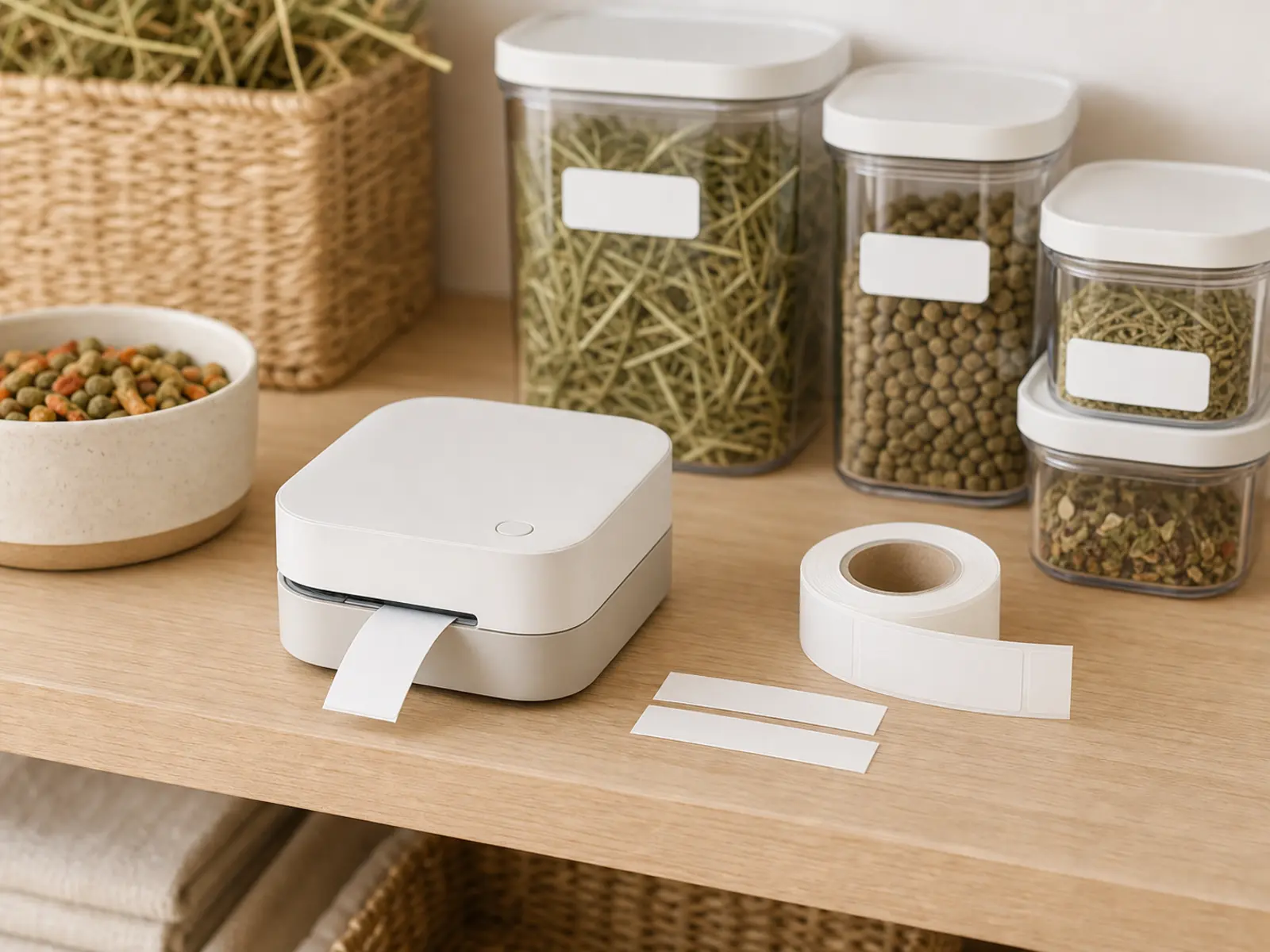
Label maker
Mark a dedicated greens container with the opened date and a reminder to recheck ingredients whenever the spring-mix recipe changes.
Shop label maker