Updated
Rabbit food check
Can Rabbits Eat Swiss Chard? Yes—Keep It Occasional
Yes—limited rotation leaf
Yes. Adult rabbits can eat fresh Swiss chard in limited rotation. Wash one modest leaf piece and a short tender section of its colored rib, then serve it plain beside unlimited grass hay. VCA advises limiting chard rather than using it as a daily green, especially when a rabbit already has a urinary plan.
 Swiss Chard
Yes—Swiss chard can join a limited rotation
House Rabbit Society includes Swiss chard among rabbit-safe leafy greens. VCA advises limiting it instead of making it an everyday default. One washed modest piece can join the adult plate while unlimited grass hay remains the dependable long meal.
The broad leaf grows from a colored rib
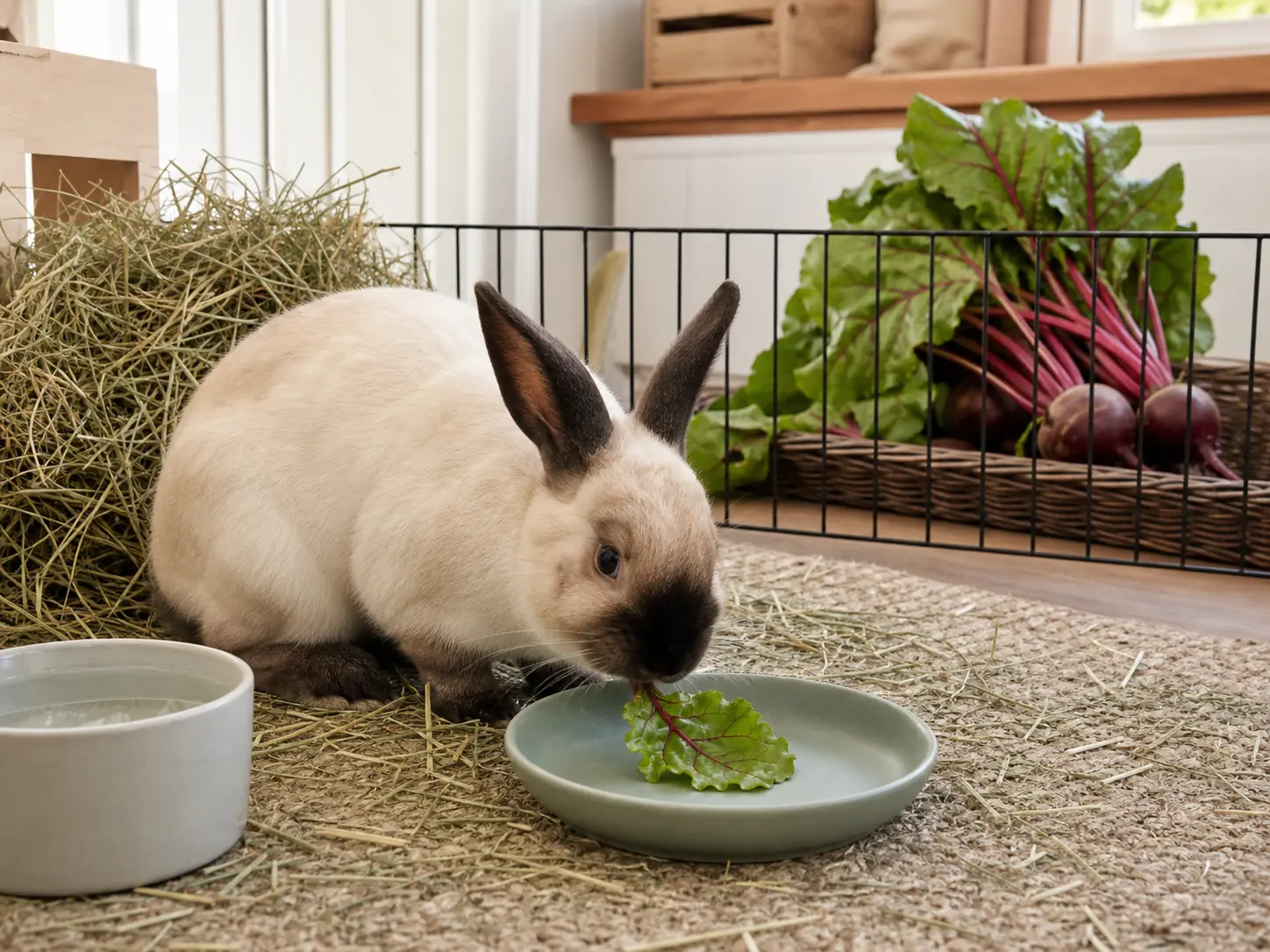
Chard has a large slightly crumpled green blade and one thick central rib that may be white, red, yellow, or orange. The tender upper rib can stay with the leaf. Keep the produce label until the rabbit's piece reaches the saucer.
A bright stalk is not enough identification
Red-stem chard can resemble beet greens, and rainbow bunches mix several rib colors. Do not name a loose leaf from color alone. Use the band, whole bunch, and familiar produce source before washing a rabbit portion.
Urinary advice needs the whole menu
VCA groups Swiss chard with leaves to limit when calcium intake is a concern. That does not make one piece poisonous. Sludge, stones, or painful urination call for a clinic review of hay, pellets, all greens, water, weight, and medical findings.
Find Swiss chard on the produce band
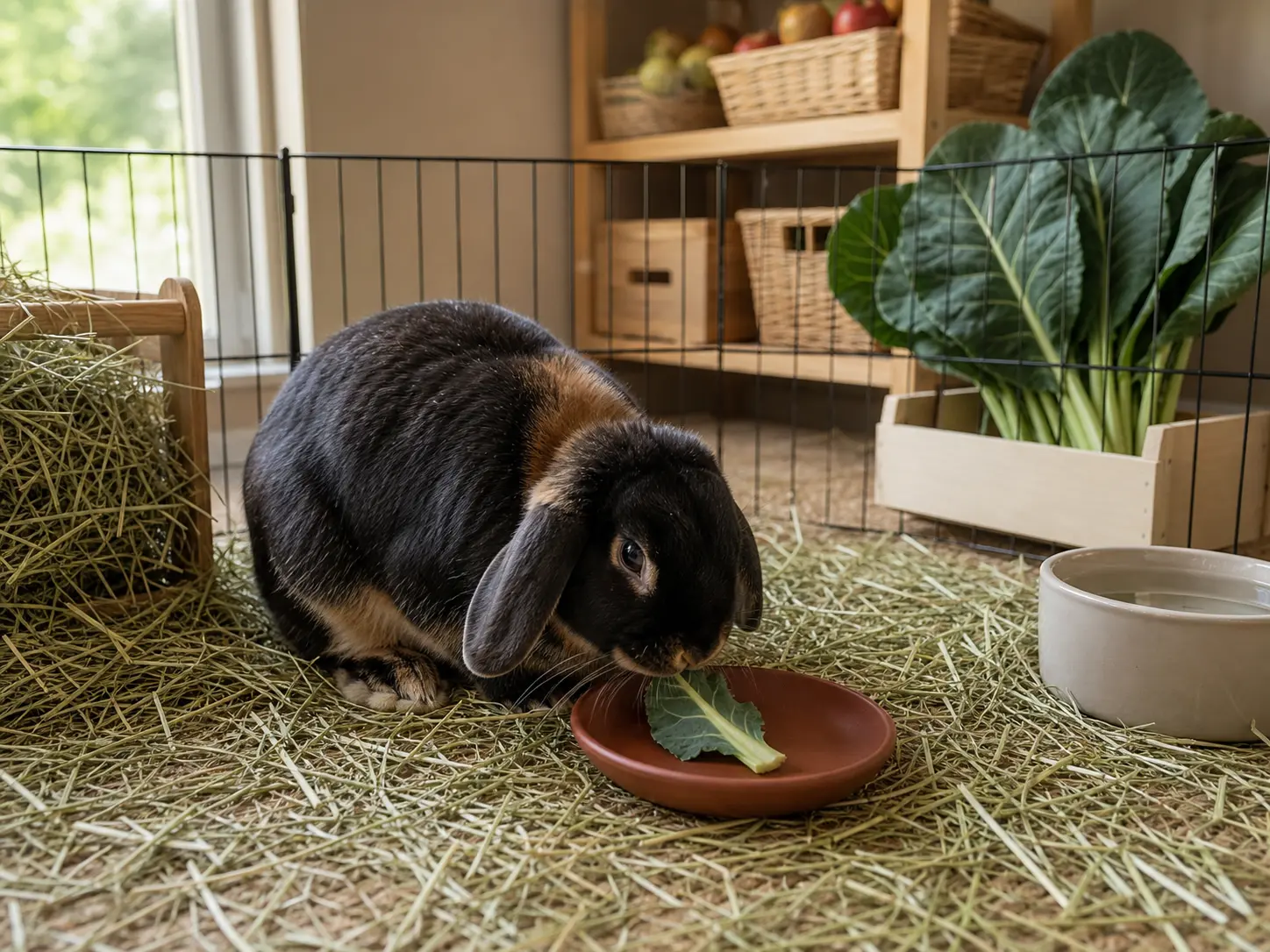
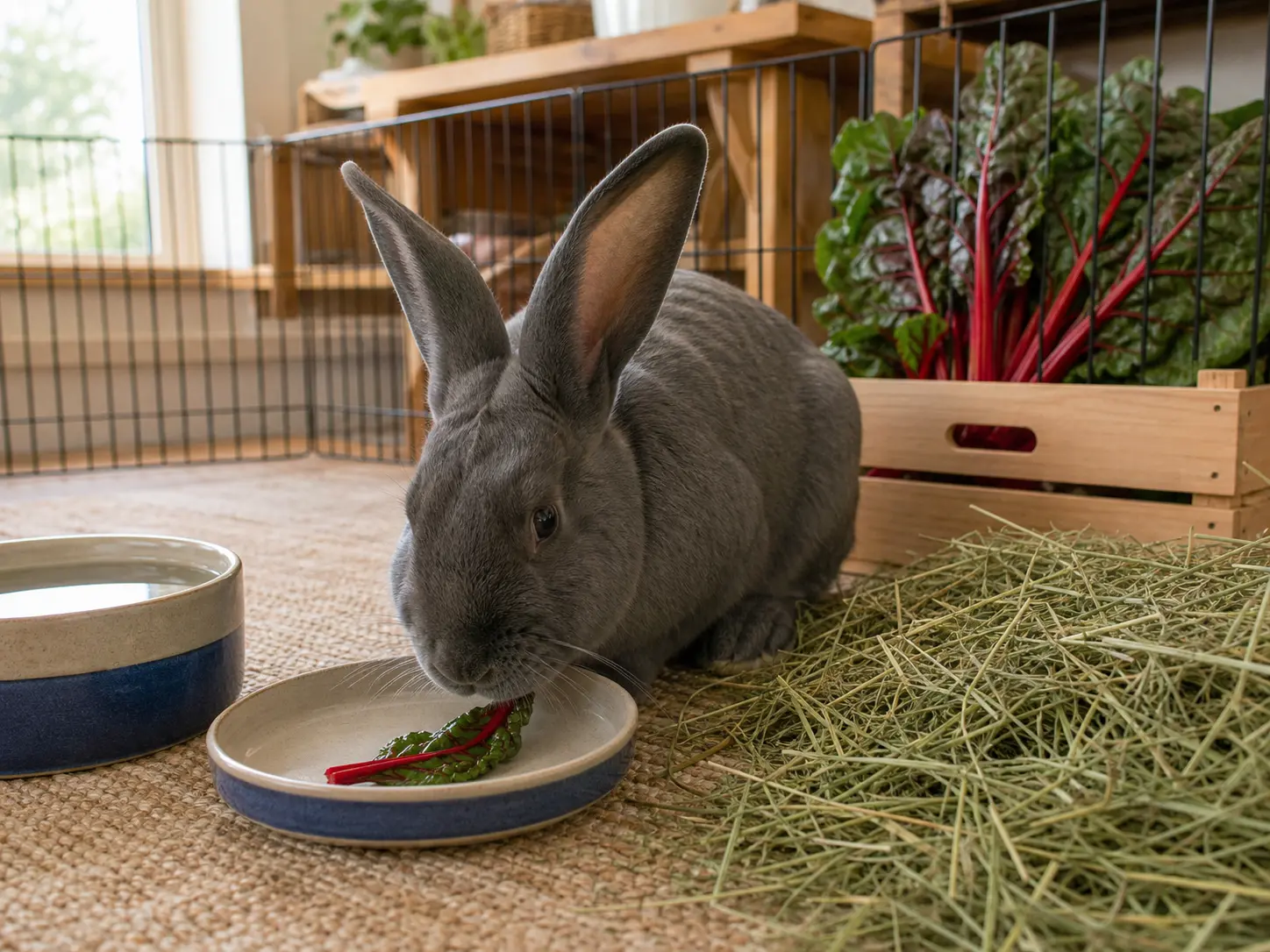
The band says Swiss chard. Broad green blades rise from crimson ribs in the pale-oak box. The blue-gray Flemish Giant waits beside orchard hay while one sound leaf moves to the sink.
Rub the colored rib and leaf creases
Turn the leaf under cool water, trace the red midrib, and open each crumpled fold. Brown slime, fuzzy spots, sour odor, or a blackened stalk end sends that leaf to the compost.
Trim one piece for the cobalt saucer
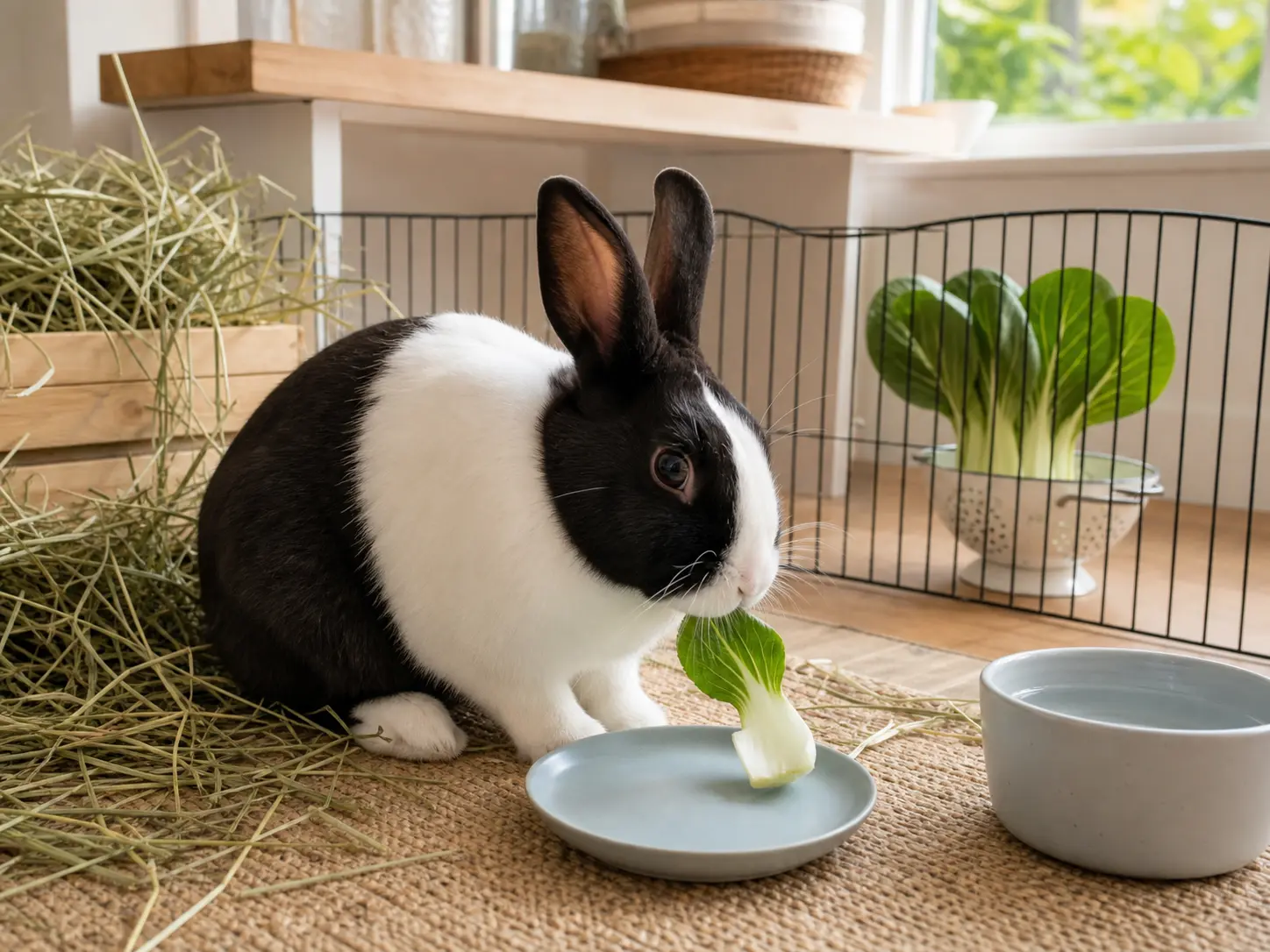
A modest leaf piece with a short tender rib goes beside hay and water. The tough lower stalk and remaining bunch return to the kitchen before oil, cream, cheese, salt, or sauce reaches them.
Check the litter box after chard
An empty saucer only records interest in Swiss chard. Later, look for pulled hay stems, relaxed movement, round droppings, and comfortable urination. Slower eating or output, straining, or blood in urine needs prompt rabbit-savvy veterinary care.
How to offer it
- Confirm Swiss chard from the band or produce sign. Varieties may have white, red, yellow, or orange ribs beneath broad slightly crumpled green leaves.
- Open the bunch and inspect the crowded stalk ends. Discard yellow slime, fuzzy growth, sour odor, blackened ribs, pest damage, and wet collapsed folds.
- Rinse both leaf faces under cool water, rubbing along the colored central rib and opening every crease where grit can hide.
- Tear one modest leaf piece with a short tender rib. Trim away a tough lower stalk, then serve the piece plain before cooking oil, salt, sauce, or seasoning appears.
Avoid
- A red- or yellow-stemmed leaf guessed to be chard after its band is gone. Beet greens and other colored-stem produce need their own label and feeding decision.
- A whole oversized leaf, repeated refills, or Swiss chard at every meal. Keep this green in a varied limited rotation rather than using it as the daily bowl.
- A thick tough lower stalk offered as a long chew. Use the leaf and only a short tender section of rib.
- Sautéed chard, soup, gratin, quiche, restaurant sides, or leaves carrying oil, butter, cream, cheese, stock, salt, sauce, spice, or seasoning.
- A moldy, slimy, sour-smelling, badly wilted, gritty, pest-damaged, chemically treated, or unidentified leaf.
Watch
- The Swiss-chard piece disappearing while the rabbit continues ordinary visits to the hay pile
- Normal posture, movement, water use, urination, and interest in familiar food
- The rabbit's usual separate round droppings after a first chard tasting
- Reduced eating or droppings, soft stool, diarrhea, belly pressing, hunching, tooth grinding, straining to urinate, blood in urine, weakness, or unusual quietness; contact a rabbit-savvy veterinarian promptly
Portion
For an adult already eating leafy vegetables, one modest chard piece can share the usual greens allowance. Start smaller if it is new. VCA places Swiss chard in the limited group rather than the everyday default; follow the rabbit-savvy clinic's plan when sludge, stones, or painful urination are already concerns.
Keep broad chard leaves labeled, rinsed, and modestly portioned
These produce-prep tools help keep the variety identifiable, expose damp stalk ends, rinse colored ribs and leaf folds, and reserve one plain rabbit piece.
Affiliate links: Furball Cove may earn from qualifying purchases at no extra cost to you.

Rabbit greens bin
Give the labeled chard bunch a visible refrigerator space where wet stalk ends, dark patches, and the opened date stay easy to check.
Shop rabbit greens bin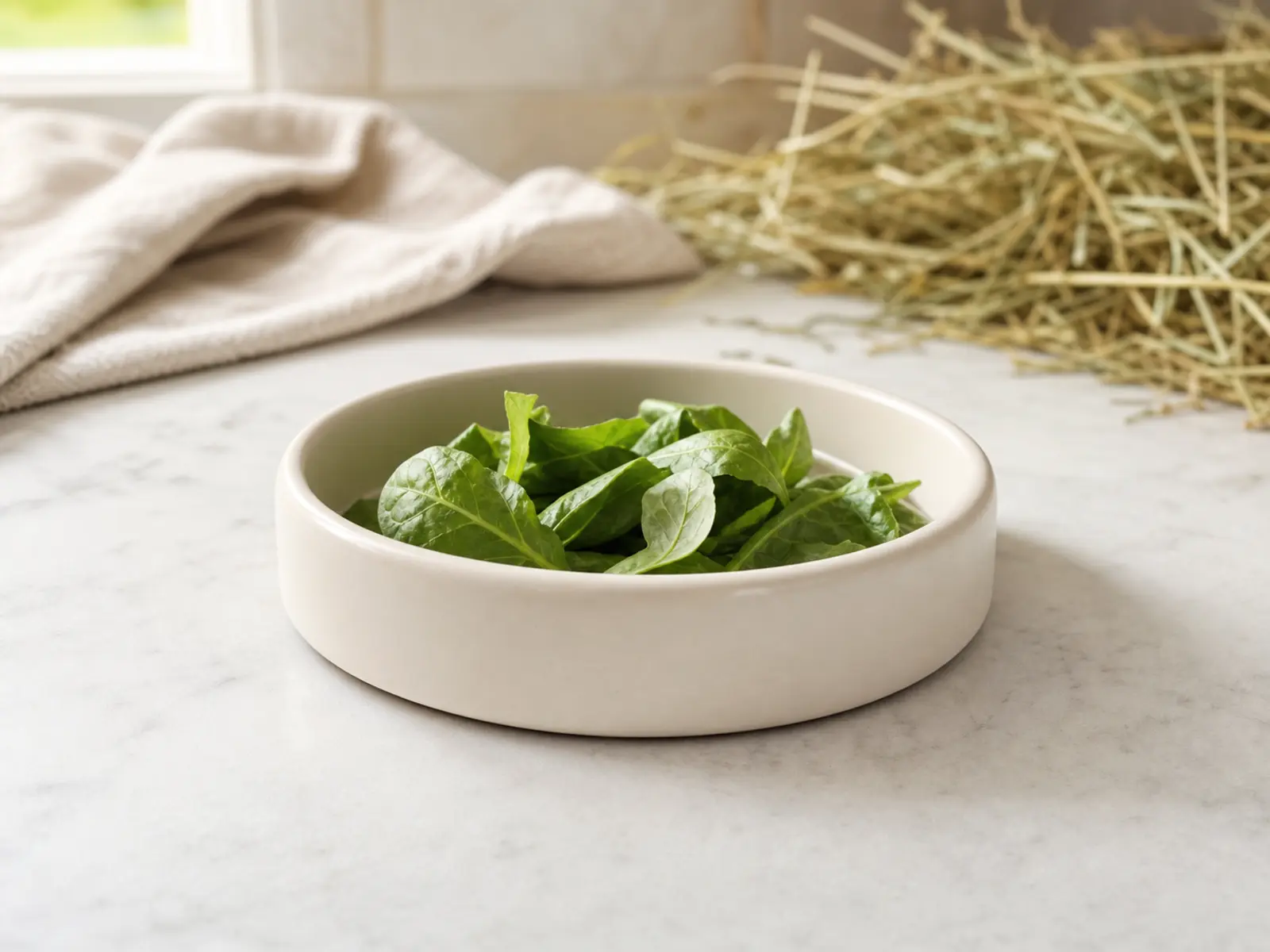
Ceramic food dish
Place one modest leaf piece on a washable saucer apart from pellets, cooked chard, oil, cream, cheese, salt, and sauce.
Shop ceramic food dish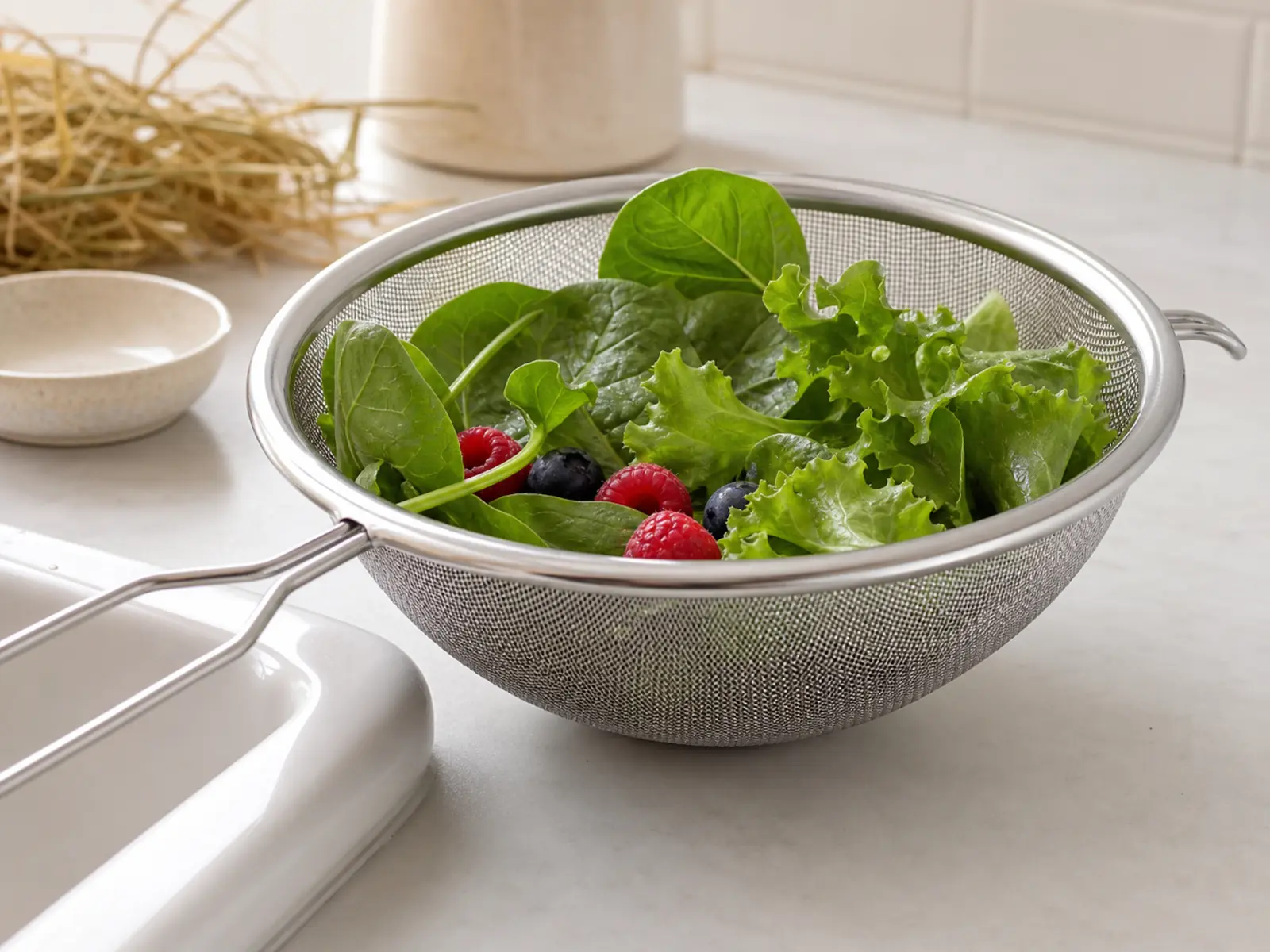
Produce strainer
Lay the broad chard leaf across a small colander so grit rinses from both faces, every crease, and the thick colored rib.
Shop produce strainer