Updated
Puppy crate training
Puppy Departure Routine
A departure routine gives your puppy a predictable pattern before you step away.
Good departures are boring. Potty happens, the room gets set, the puppy gets a safe quiet job, and you leave without turning the moment into a big emotional scene.
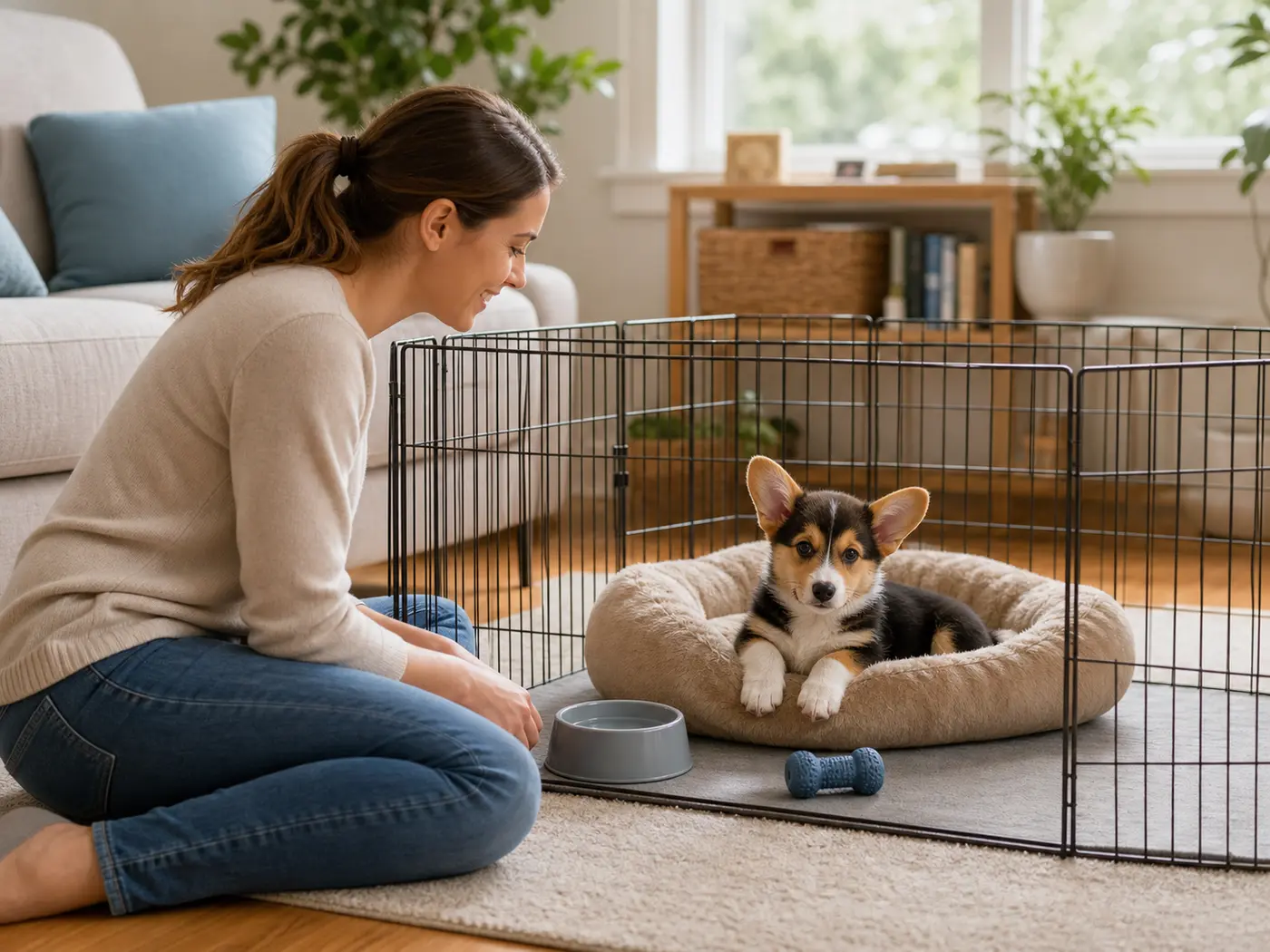
Puppies read patterns. If every departure is rushed, emotional, or different, they have more to worry about.
A calm routine does not guarantee instant alone-time comfort, but it removes a lot of avoidable confusion before you practice short absences.
Great for
- Puppies practicing brief crate or pen absences.
- Owners who want departures to feel predictable, not sneaky.
- Dogs who do better with a clear pre-rest sequence.
Wait a bit if
- Your puppy is already panicking before you leave.
- Your absence will be longer than your puppy can handle.
- The crate or room is not safe for unsupervised time.
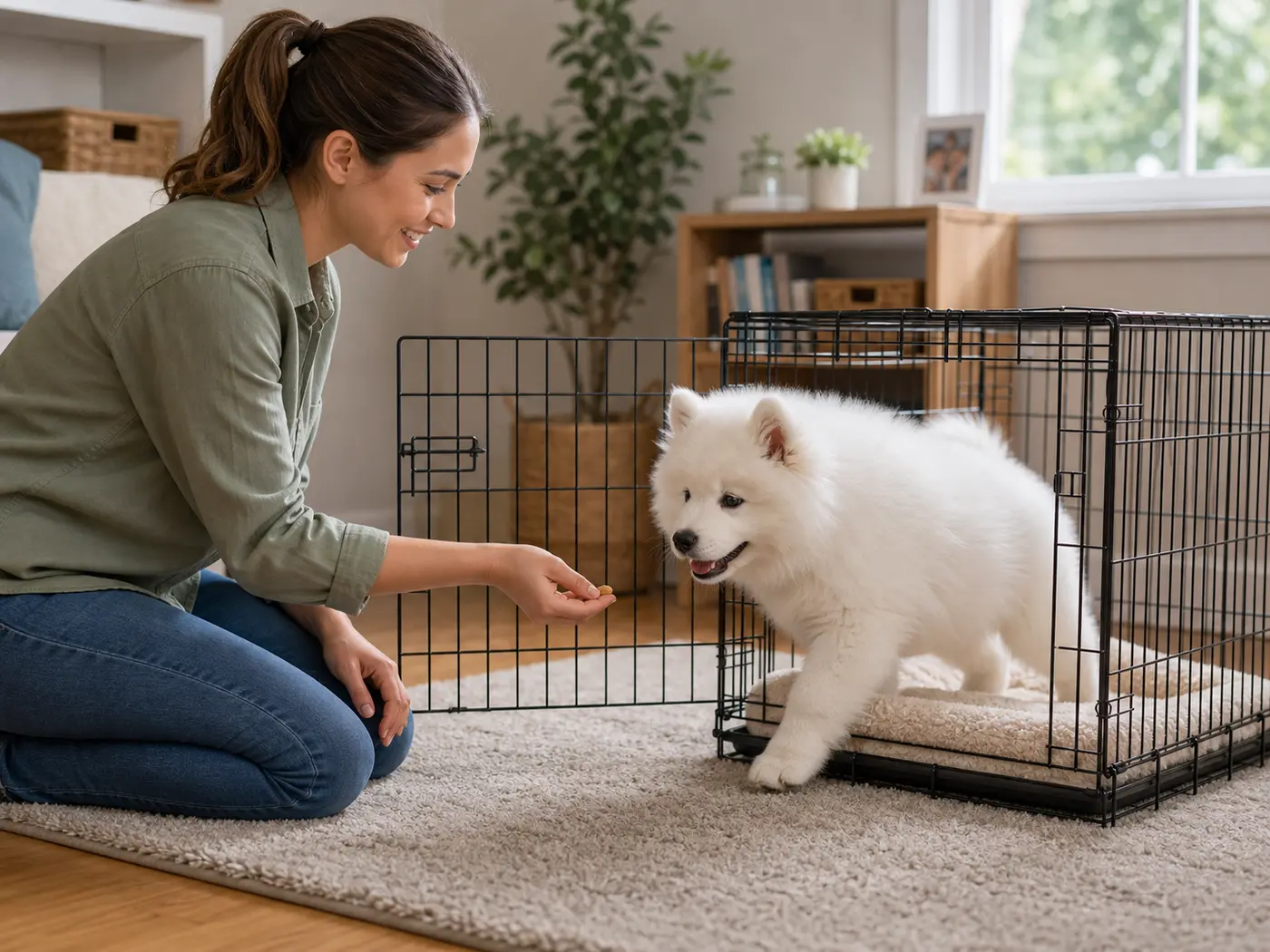
Practice calm crate moments
Do potty first
Take your puppy out before crate or pen time. A full bladder can ruin an otherwise good plan.
Set the room
Check temperature, bedding, safe chew or lick mat, water plan, and anything your puppy might reach.
Use one calm cue
Say the crate or rest cue in the same tone each time. Keep it kind and ordinary.
Give a quiet job
Offer a safe chew, lick mat, or scattered kibble only if your puppy can use it calmly and safely.
Leave without drama
Skip the long goodbye. Step away calmly and return before your puppy is over threshold during training reps.
Review what happened
Use a camera or quick notes to see whether the routine helped or whether the next version should be shorter.
Little things that help
Do not rely on food alone
Food can help, but a puppy who panics after finishing it needs an easier plan.
Keep the pattern short
A long goodbye routine can make departure feel more important.
Practice when you are not leaving for real
Fake departures give you room to return early and keep the lesson easy.
Helpful little extras
Affiliate links: Furball Cove may earn from qualifying purchases at no extra cost to you.
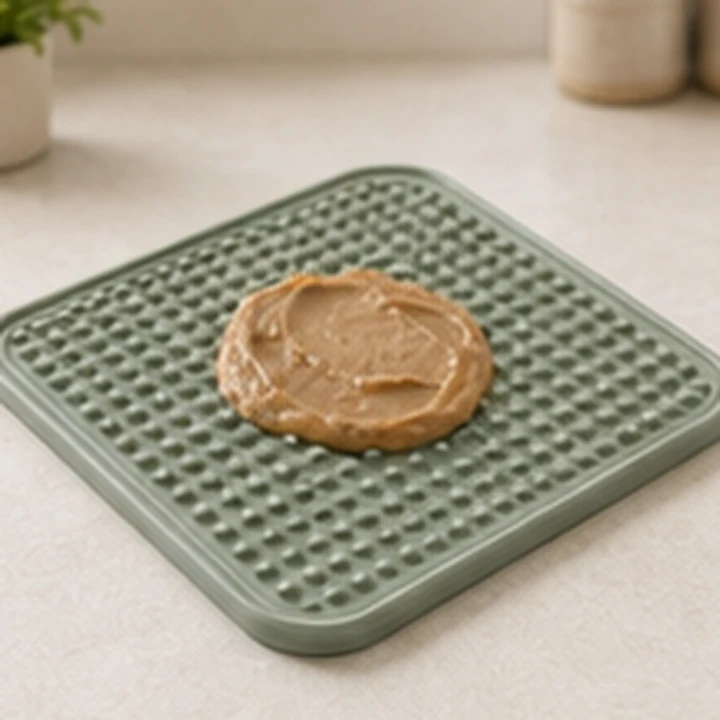
Lick mat
A thin spread on a lick mat can make daytime crate practice feel slower and calmer for puppies who already tolerate it.
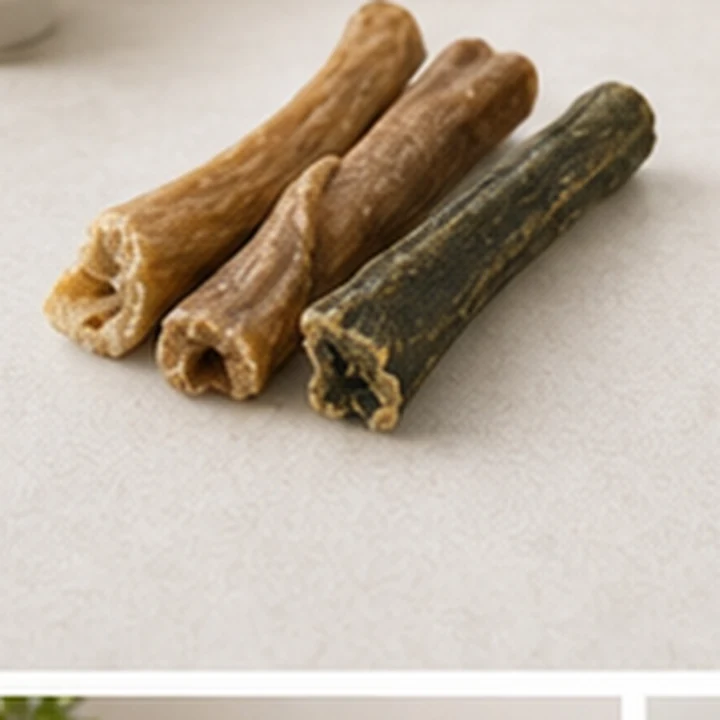
Puppy-safe chew
A safe chew gives your puppy a quiet job during supervised crate practice, especially after the crate already feels comfortable.
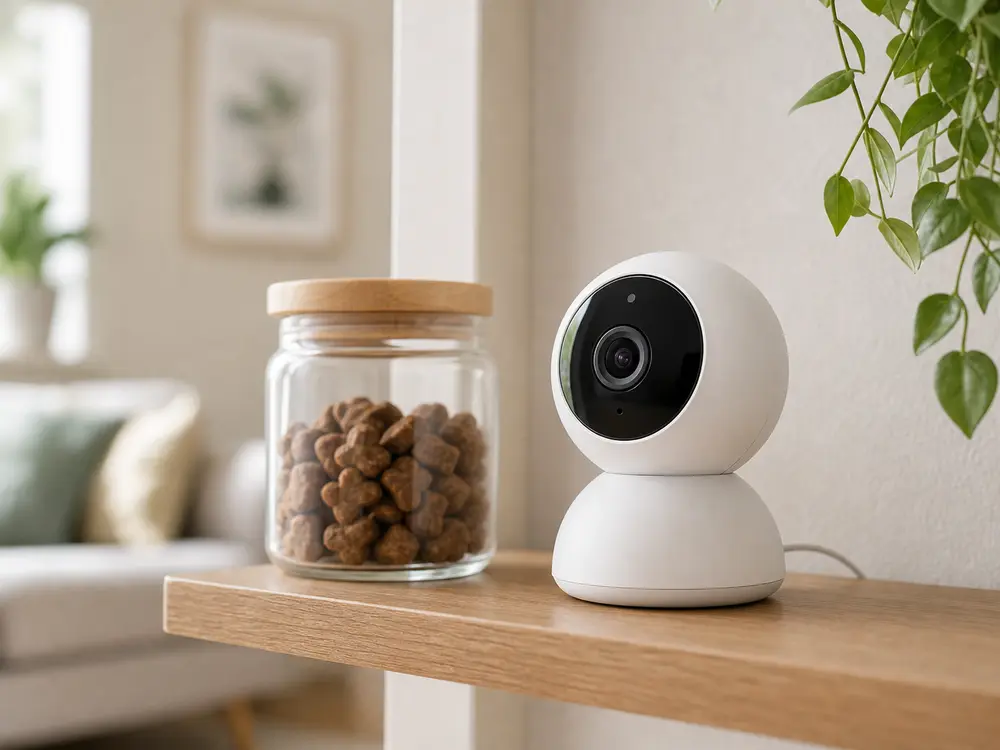
Pet camera
A camera shows whether your puppy is napping, lightly fussing, or escalating after you step away.
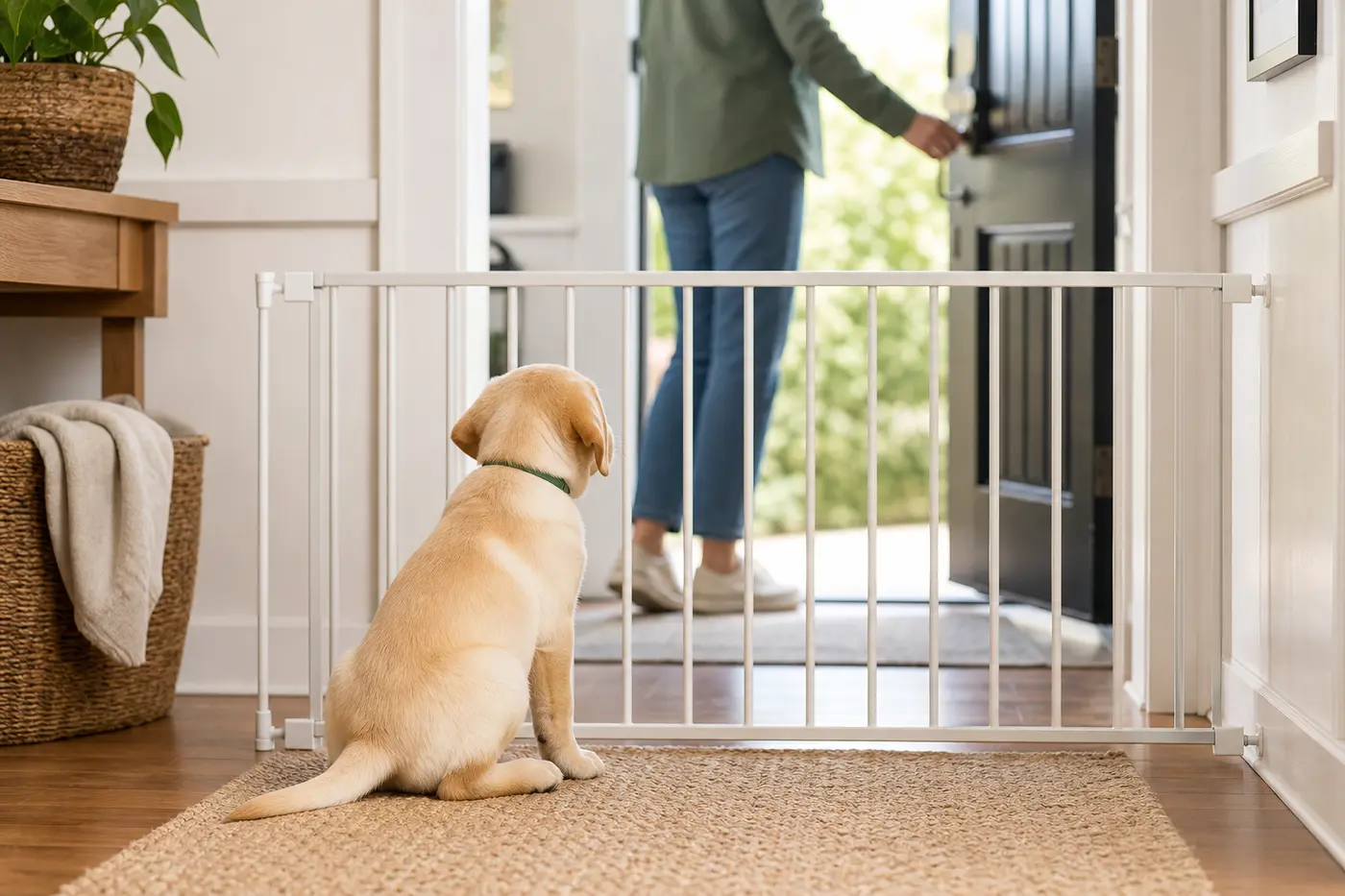
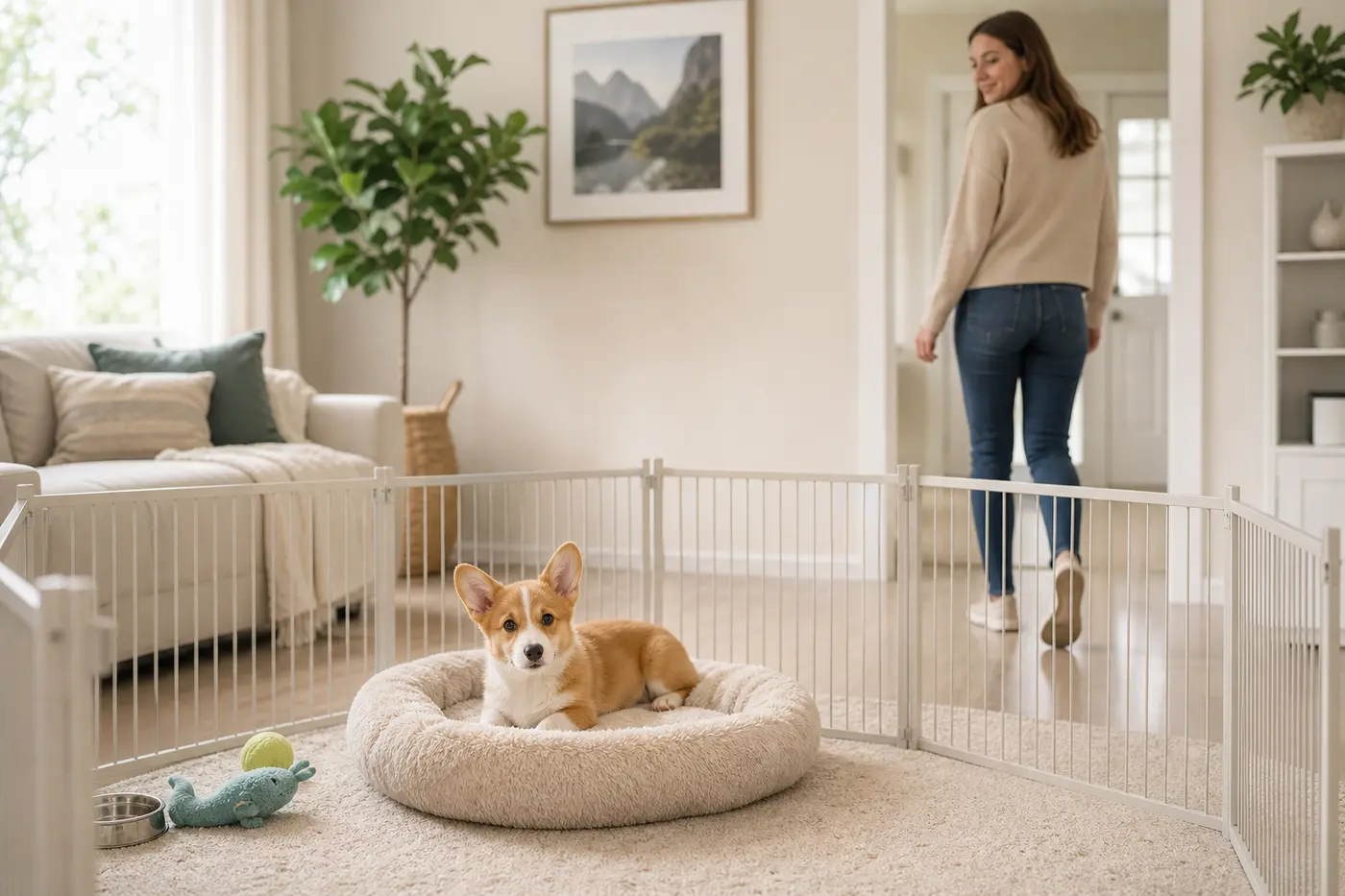
Baby gate or pen
A gate or pen lets you practice tiny absences without making the crate carry every alone-time lesson at once.
Questions people ask
Should I say goodbye to my puppy?
A short calm phrase is fine. Avoid emotional goodbyes that make the departure feel bigger.
Can I give a chew in the crate?
Only if it is safe for your puppy and you know their chew style. Supervise new items first.
What if my puppy is fine until the food is gone?
Shorten the absence and build comfort without relying only on food distraction.