Updated
Puppy crate training
Know the Crate Training Limit
Knowing the limit means stopping before crate practice becomes panic practice.
Some fussing can be normal. Panic is different. A puppy who cannot recover is not being difficult; the setup is too hard, or a health or comfort issue may be part of the picture.
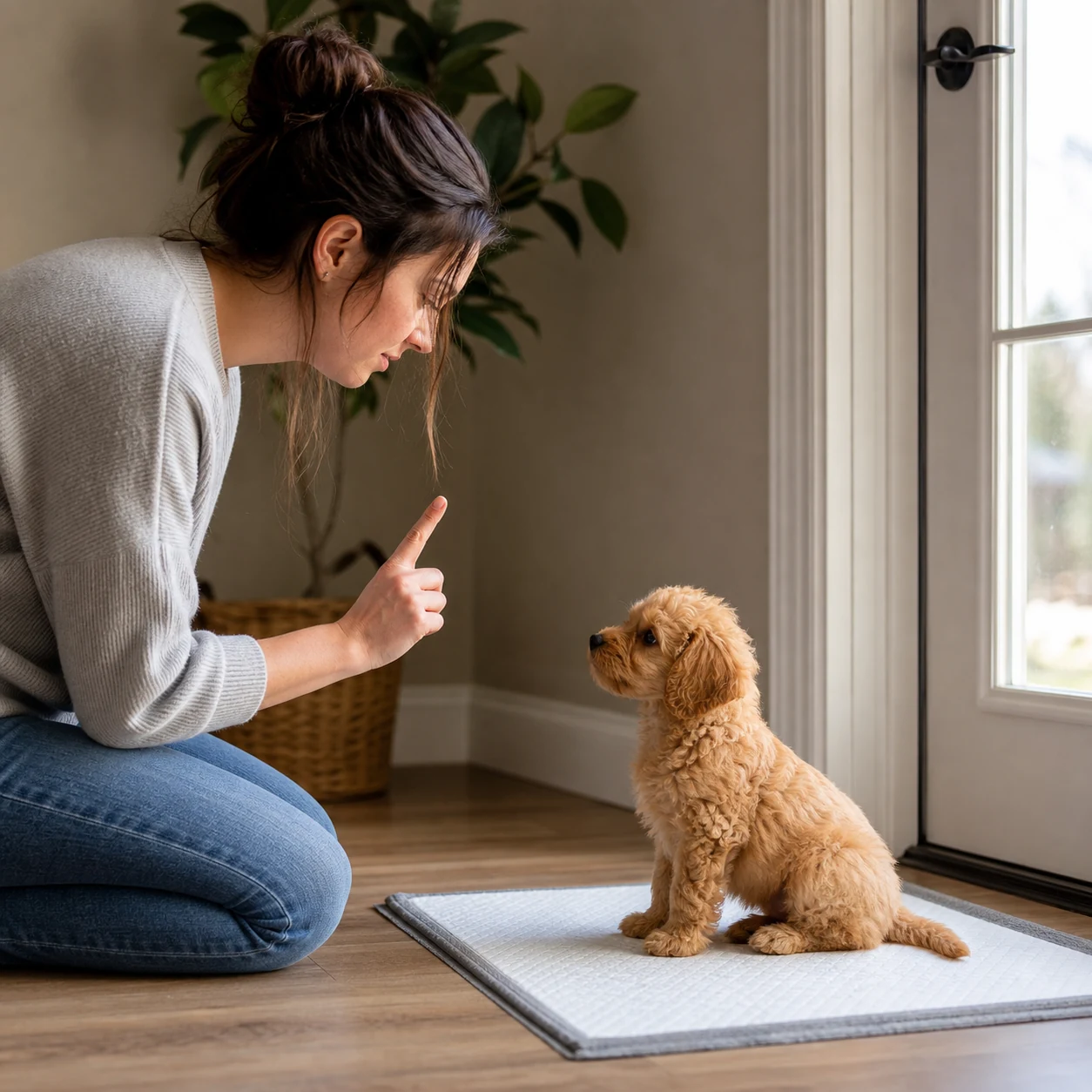
Crate training should build rest and safety, not helplessness. If a puppy is repeatedly terrified in the crate, more time is not the answer.
The kindest move is often to pause, use another safe management setup, and rebuild with smaller steps or professional help.
Great for
- Owners deciding whether crate practice is moving too fast.
- Puppies with repeated crate distress.
- Families who need a safer fallback plan while training catches up.
Wait a bit if
- Your puppy has sudden illness, injury signs, vomiting, diarrhea, collapse, or pain; call your vet.
- Your puppy is panicking, injuring themselves, bending crate bars, or soiling from distress.
- The crate is being used after trouble or for absences longer than your puppy can handle.
Build crate comfort
Name the hard signs
Watch for panic, escape attempts, heavy drooling, frantic biting at the crate, repeated soiling, or inability to settle after release. If these signs repeat, call your vet or work with a qualified trainer.
Stop the current test
If distress is intense, end the setup calmly. Do not make the puppy prove they can endure it.
Use a safer fallback
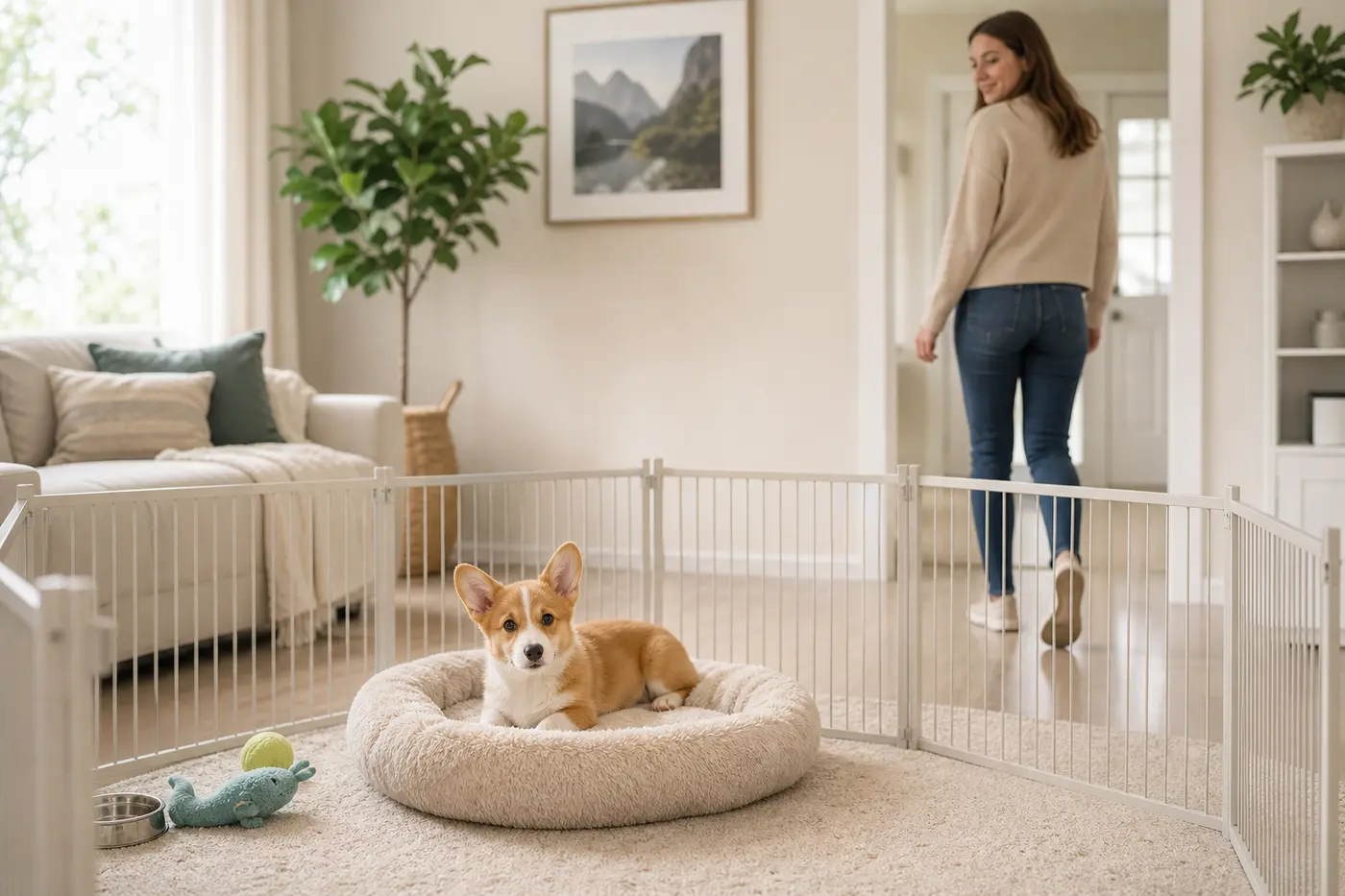
Try a pen, gate, puppy-proof room, supervised tether, or another safe setup while you rebuild crate comfort.
Go back several steps
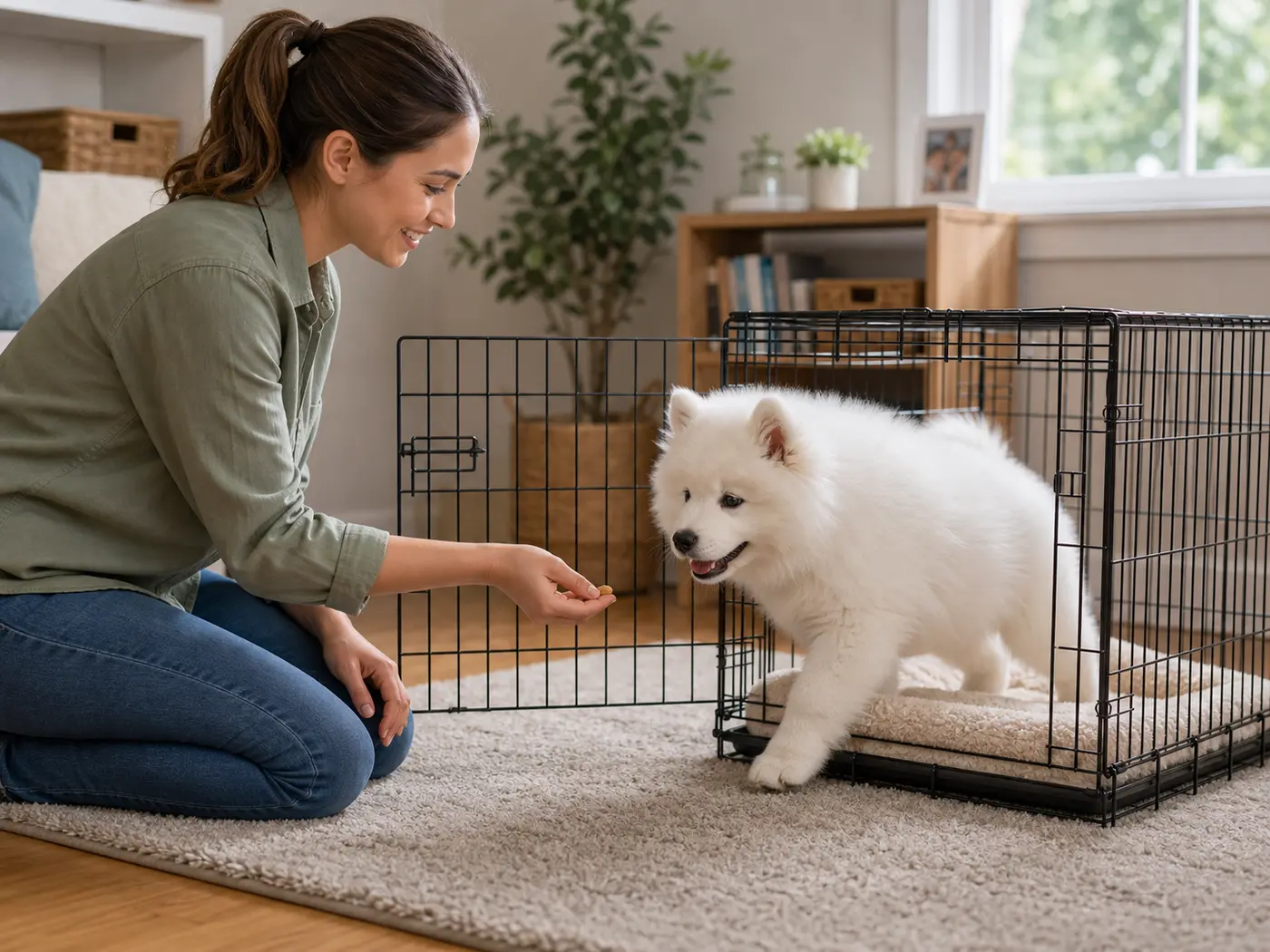
Return to open-door games, crate spot changes, shorter door touches, or staying nearby.
Check health and comfort
Pain, stomach trouble, overheating, and urinary issues can all make confinement harder. Call your vet when signs point that way.
Bring in qualified help
For separation distress, panic, or aggression around confinement, work with a reward-based trainer or veterinary behavior professional.
Little things that help
Do not make panic cute
A puppy screaming, drooling, or trying to escape is not being dramatic. Treat those signs as information, and bring in your vet or a qualified trainer if they repeat.
Shorter can be stronger
A ten-second calm rep is more useful than a ten-minute panic session.
Keep management humane
If the crate is not ready, use another safe setup while training continues.
Helpful little extras
Affiliate links: Furball Cove may earn from qualifying purchases at no extra cost to you.
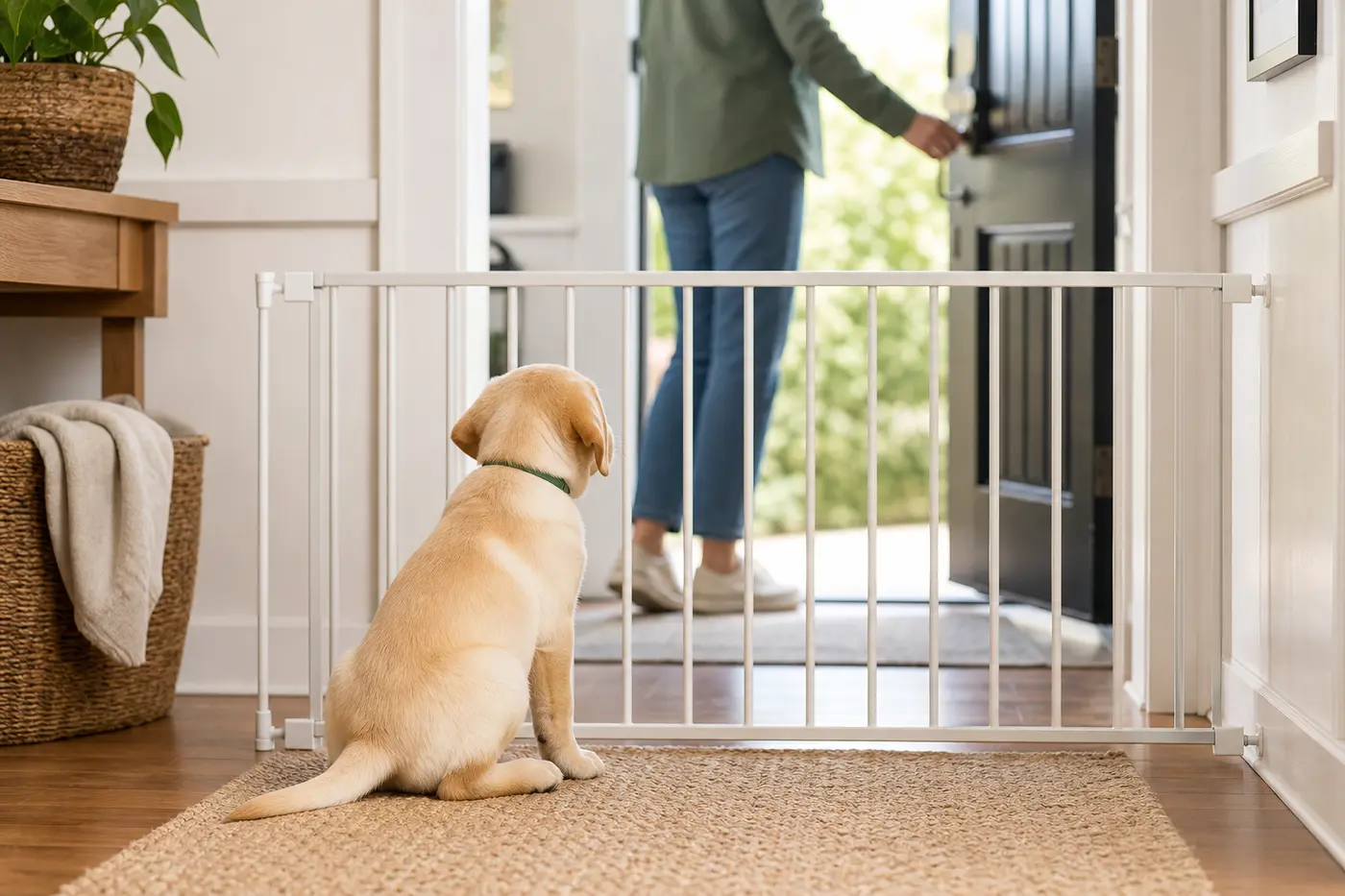
Baby gate or pen
A gate or pen lets you practice tiny absences without making the crate carry every alone-time lesson at once.
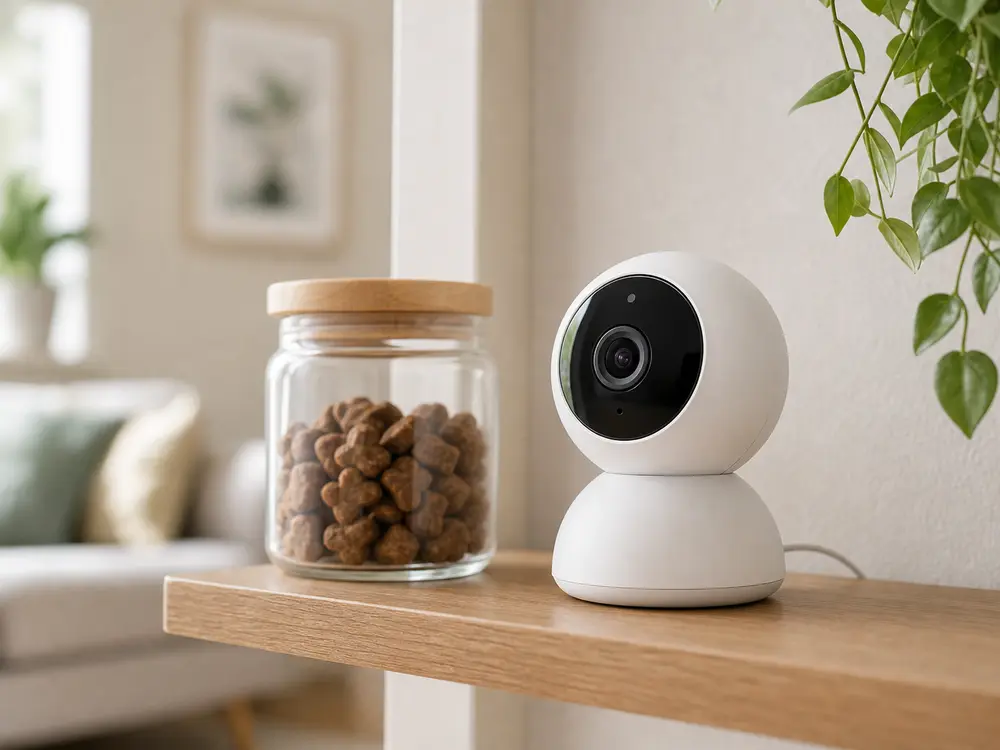
Pet camera
A camera shows whether your puppy is napping, lightly fussing, or escalating after you step away.
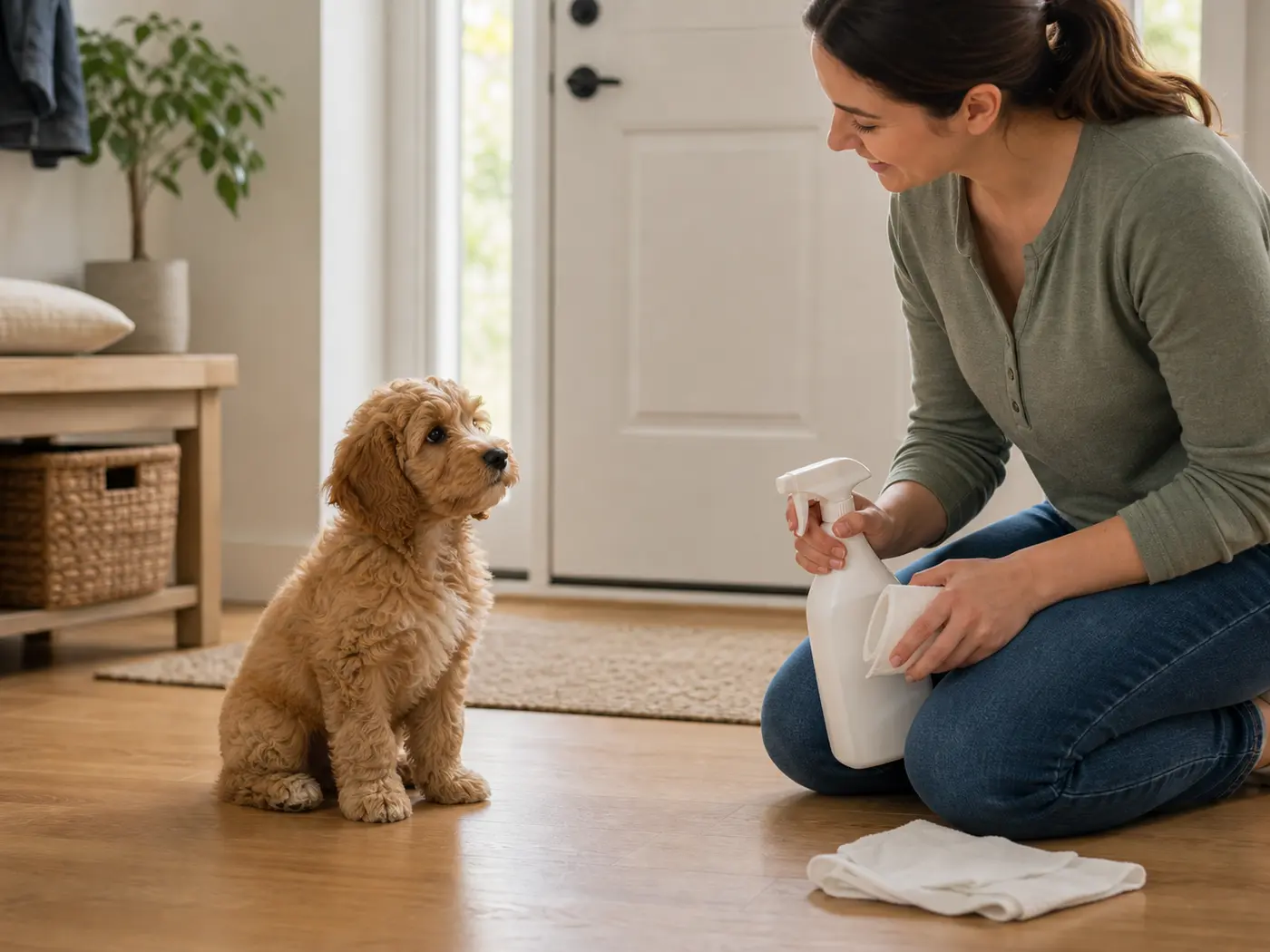
Enzyme cleaner
Useful after accidents so the crate, bedding, and nearby floor do not keep smelling like a potty spot.
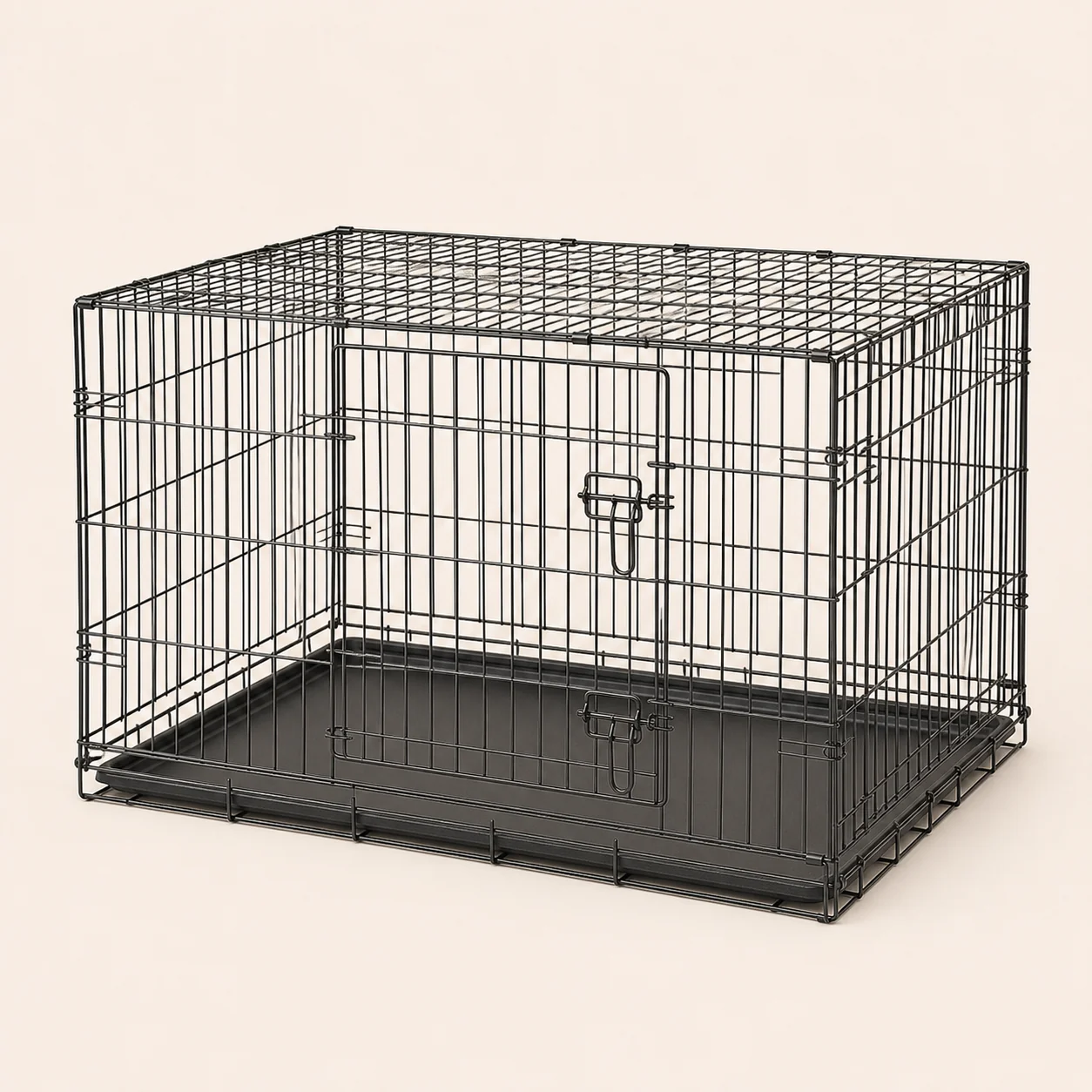
Puppy crate with divider
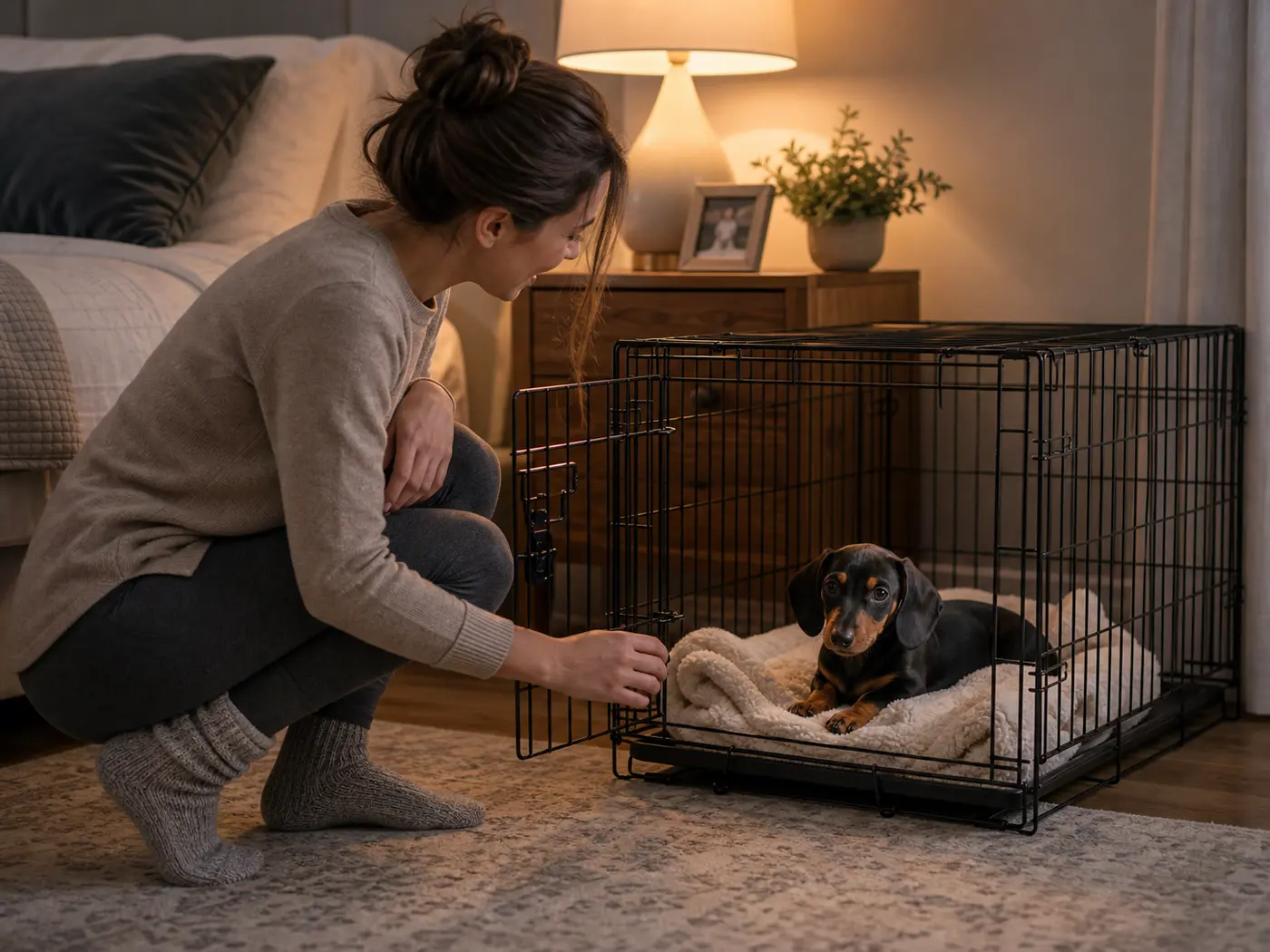
A divider lets the crate fit your puppy now without leaving a giant space that feels more like a playroom than a sleep spot.
Questions people ask
How much crying is too much?
Escalating panic, escape attempts, heavy drooling, soiling from distress, or inability to recover means the plan should stop there. Call your vet or work with a qualified trainer before testing longer crate time.
Should I stop crate training completely?
Not always. Often you pause the hard version, rebuild easier steps, and use a pen, gate, or puppy-proof room while crate comfort catches up.
Who should I ask for help?
A reward-based trainer can help with training plans. A vet or veterinary behavior professional is important when health or severe anxiety may be involved.