Reptile guides
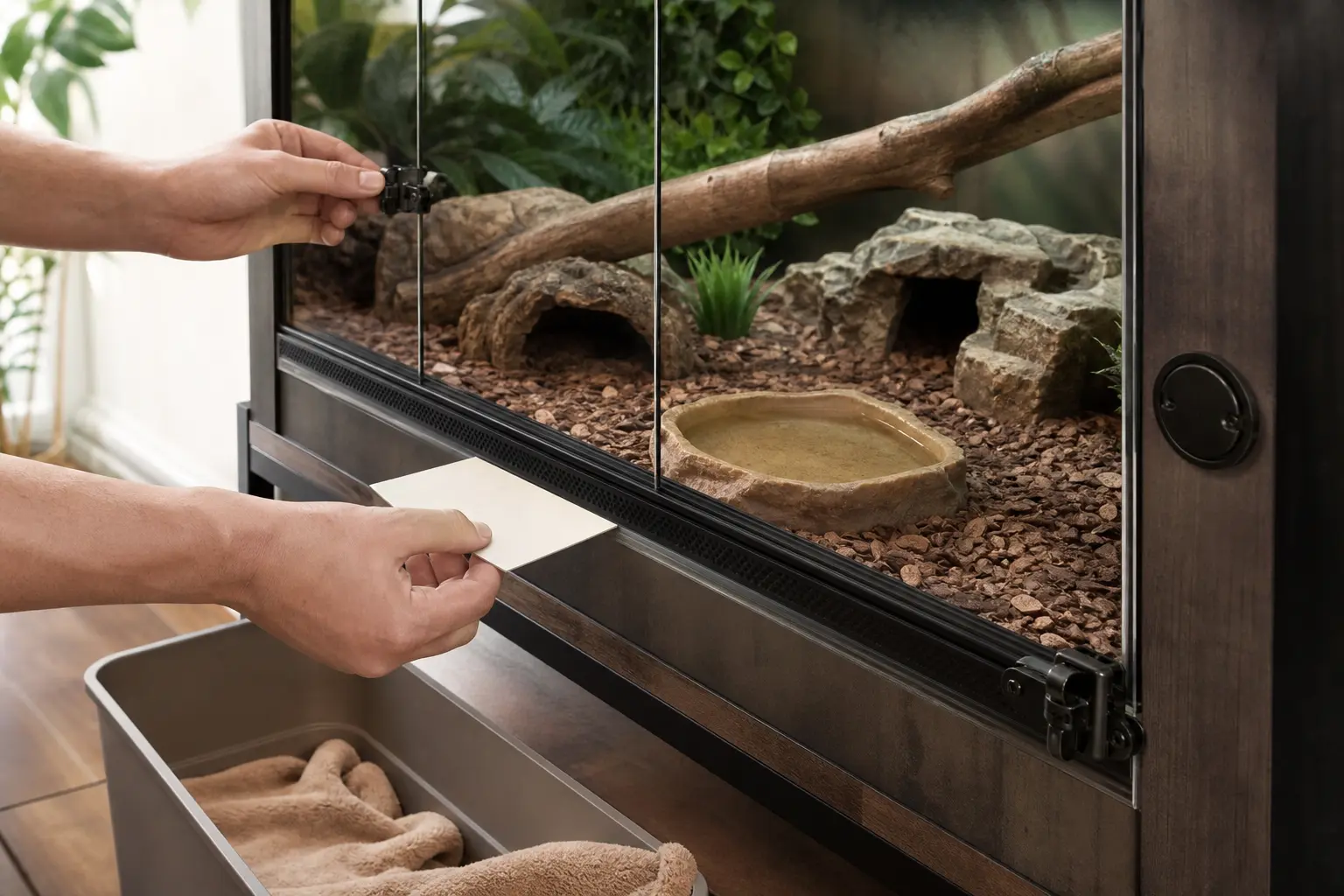
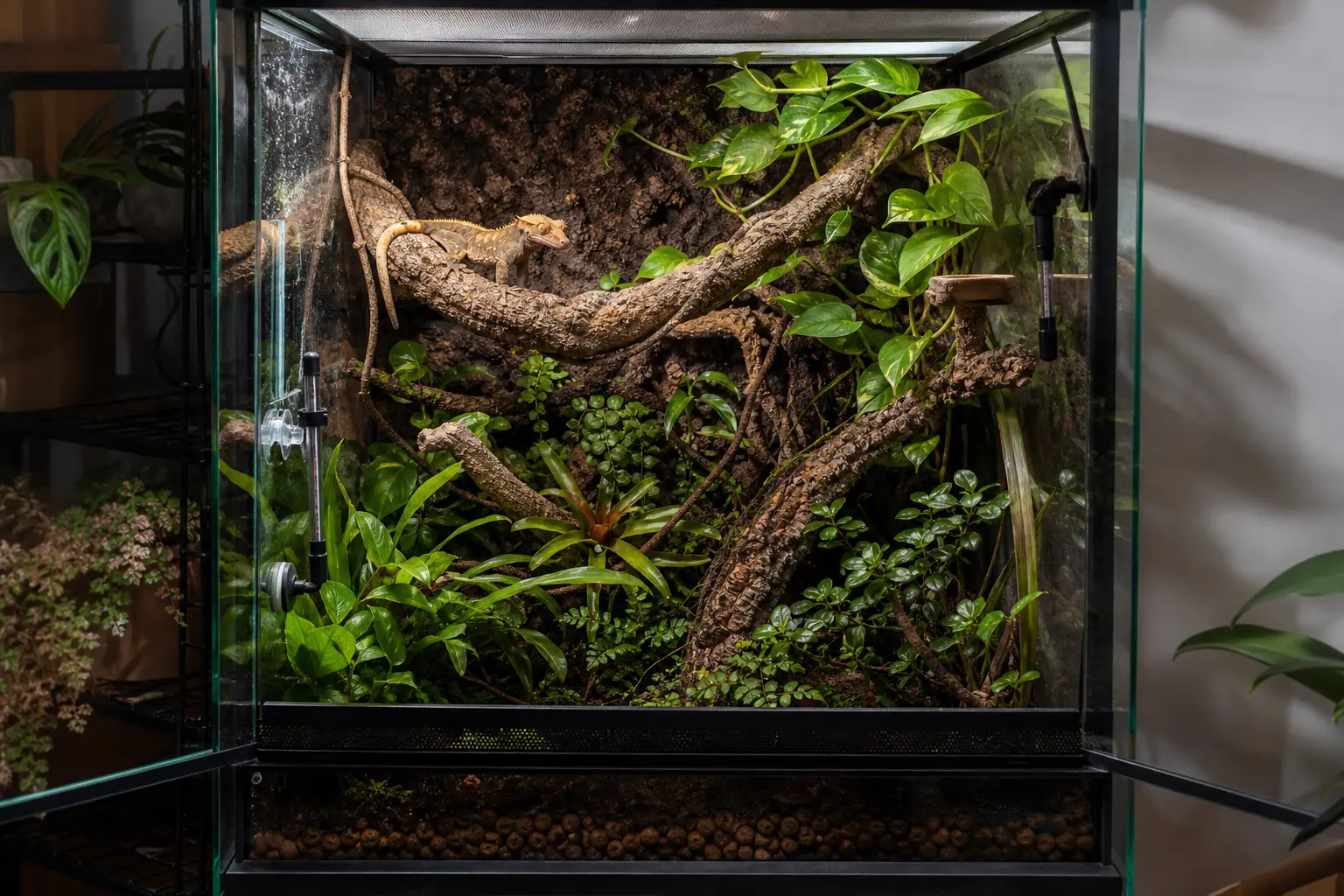
Set Up a Reptile Habitat
Build the enclosure, layout, climate, and test run in order.
Finish and measure the empty habitat before move-in.
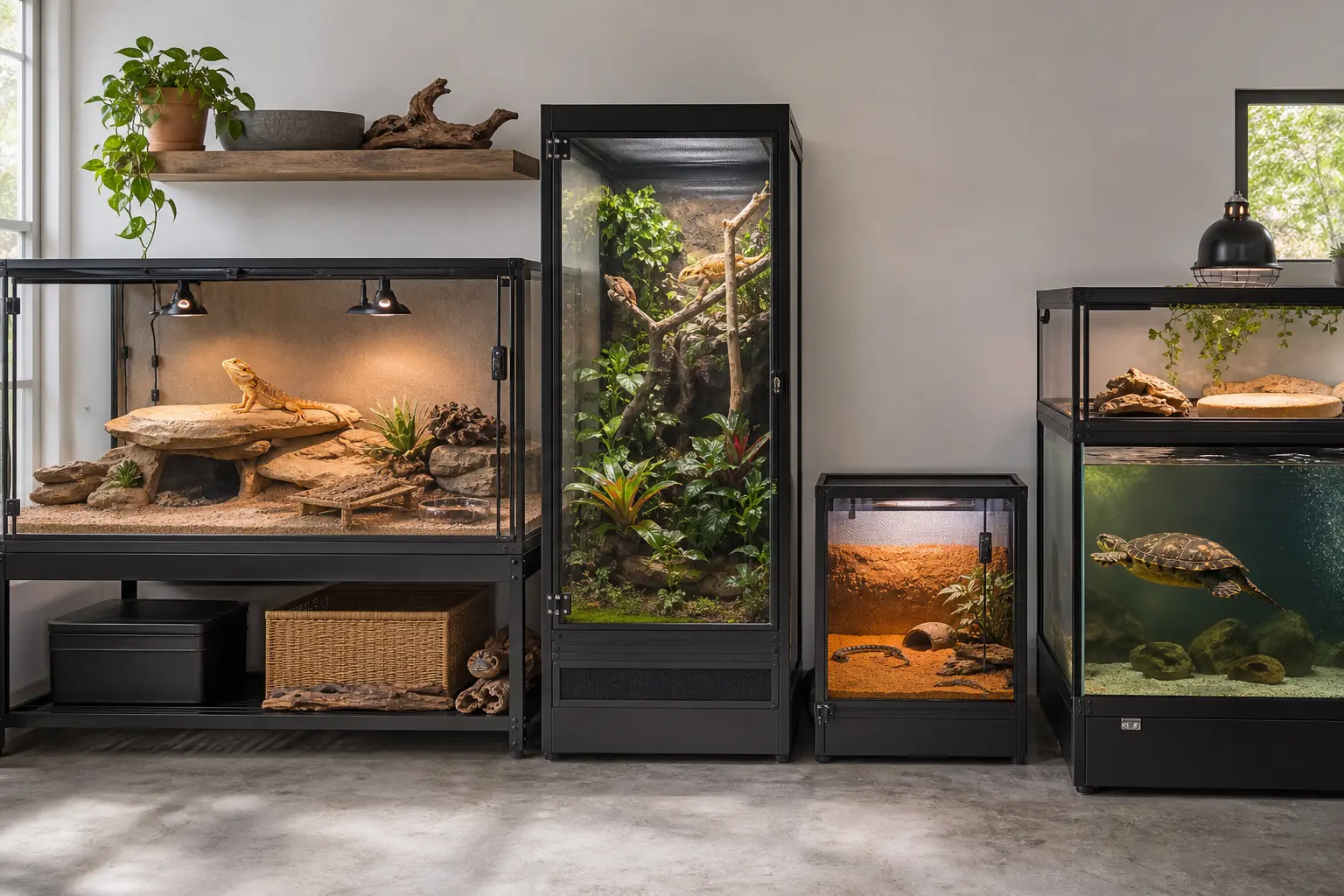
Build it in this order
Complete each step before relying on the next one.
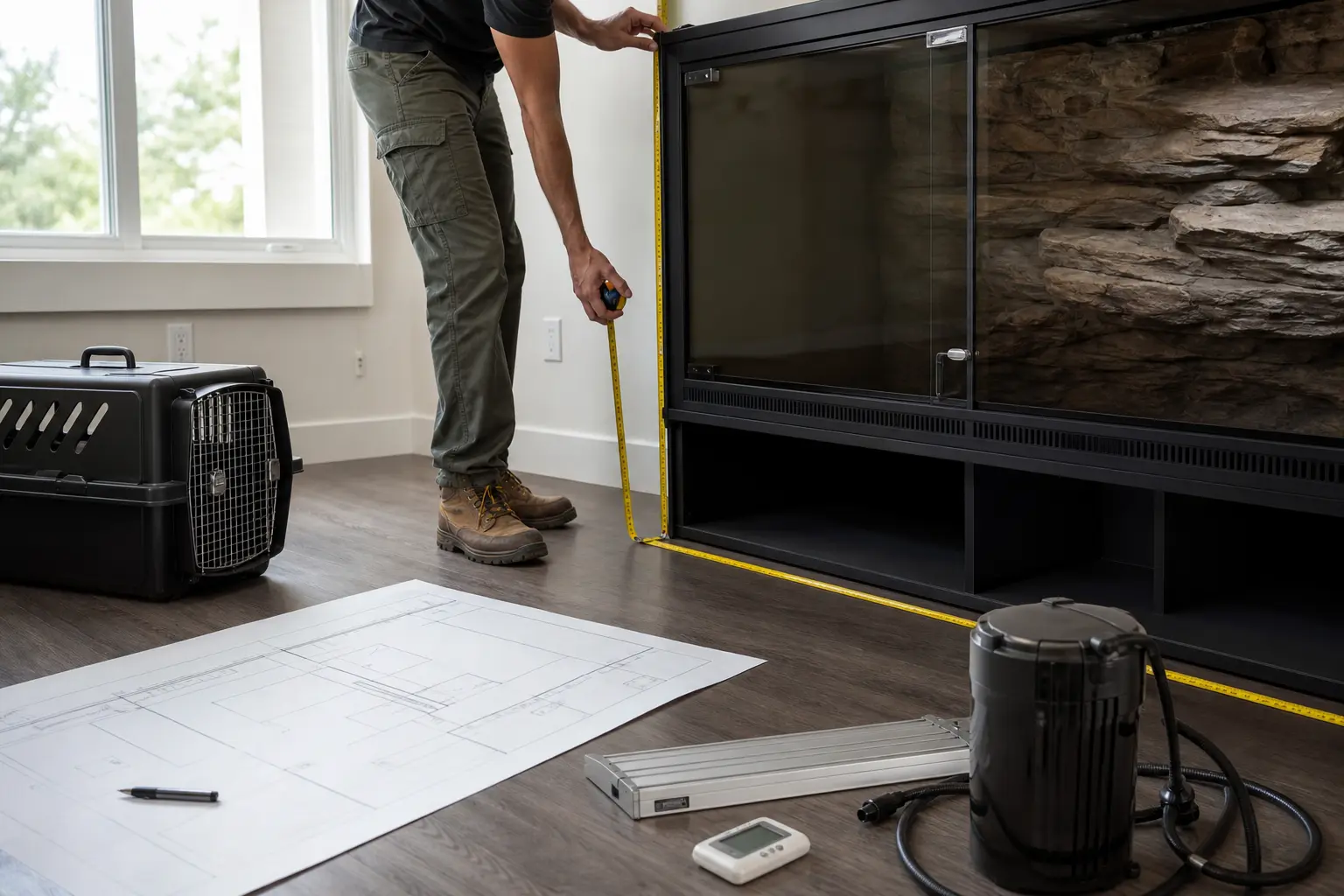 1. Enclosure Size & Security
Confirm adult space, access, doors, gaps, and stable equipment.
1. Enclosure Size & Security
Confirm adult space, access, doors, gaps, and stable equipment.
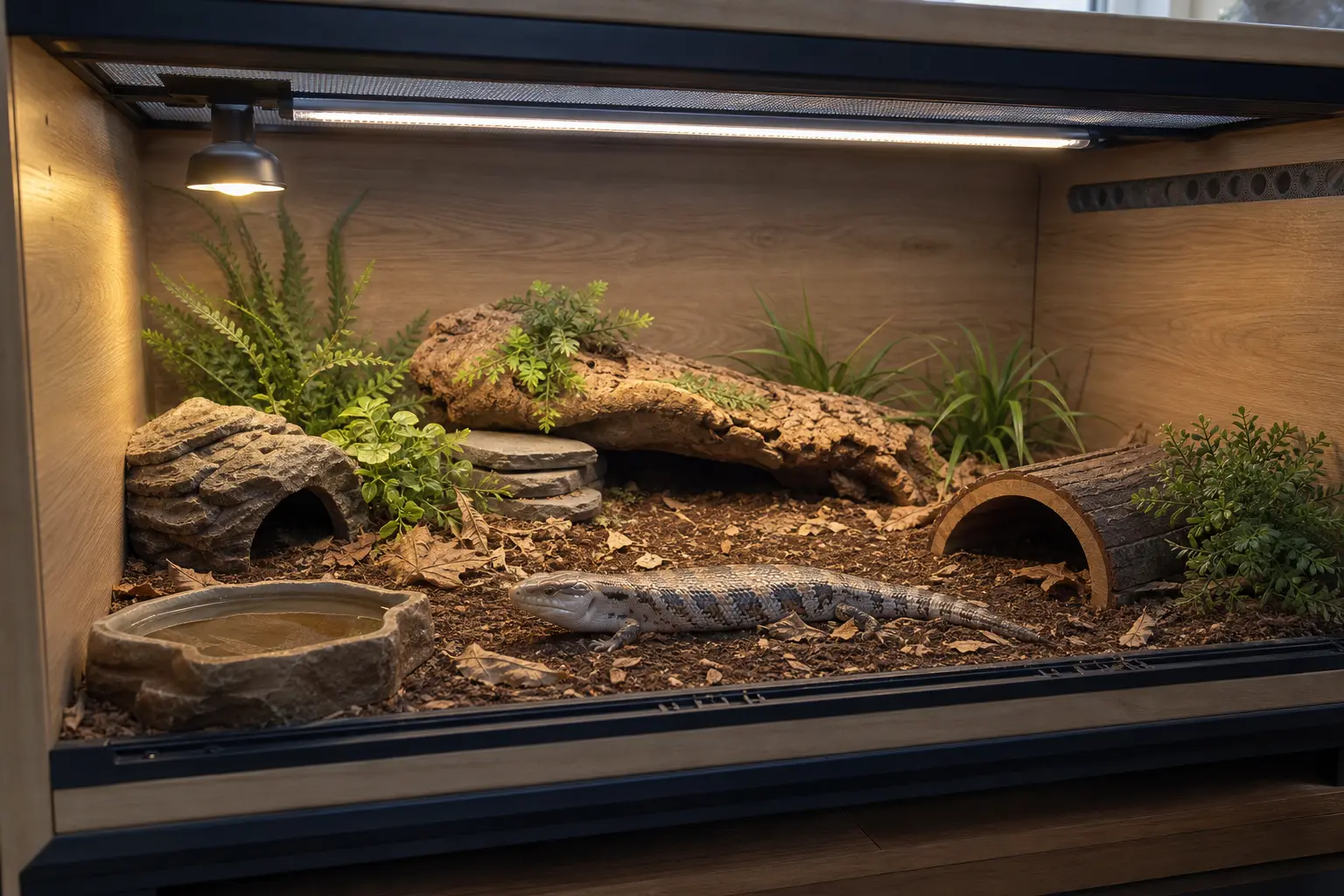 2. Layout, Hides & Furnishings
Arrange cover and movement routes for the exact species.
2. Layout, Hides & Furnishings
Arrange cover and movement routes for the exact species.
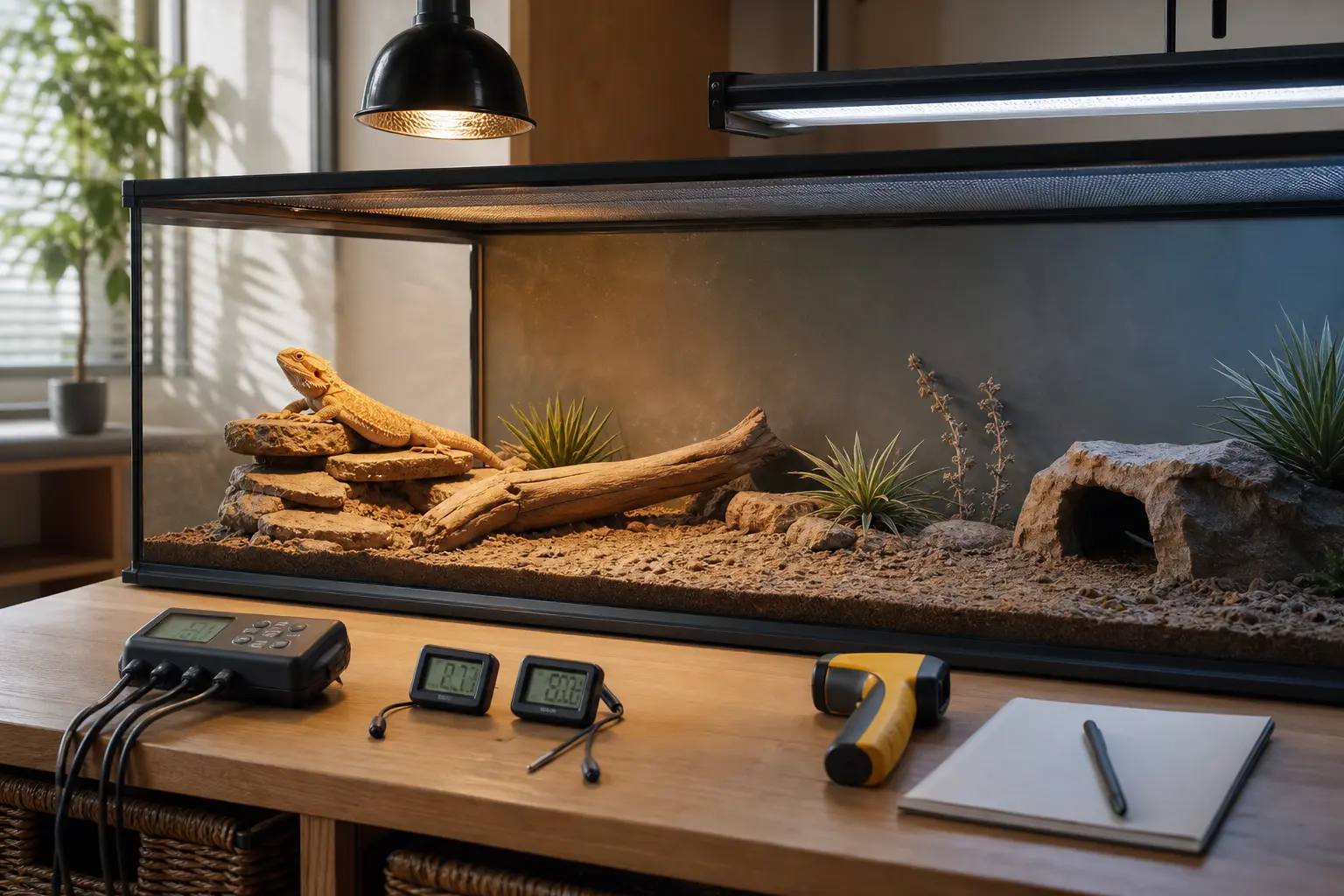 3. Heating & Lighting
Install controls, guards, light, shade, and fixed probes.
3. Heating & Lighting
Install controls, guards, light, shade, and fixed probes.
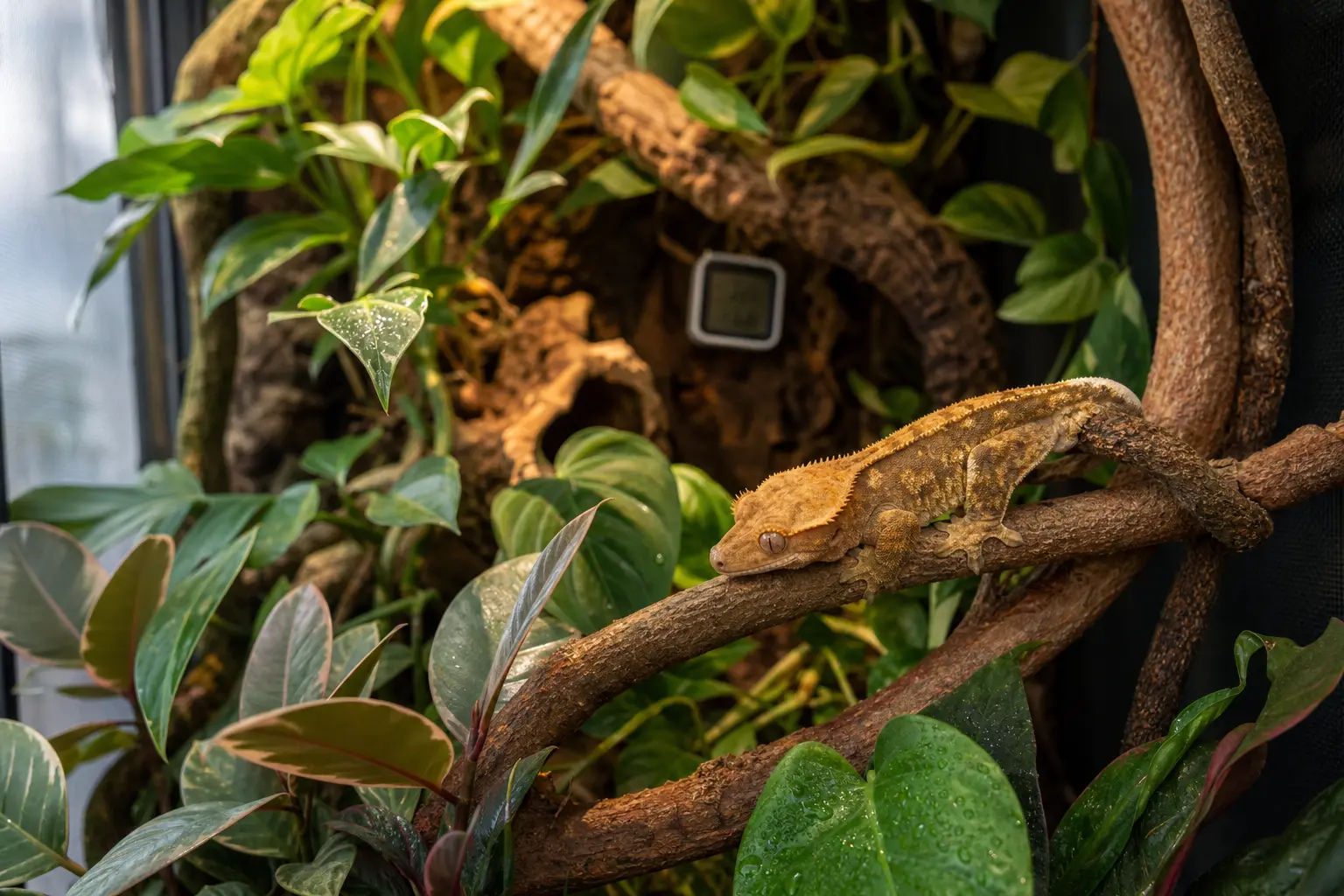 4. Humidity & Airflow
Build the species' moisture pattern with useful ventilation.
4. Humidity & Airflow
Build the species' moisture pattern with useful ventilation.
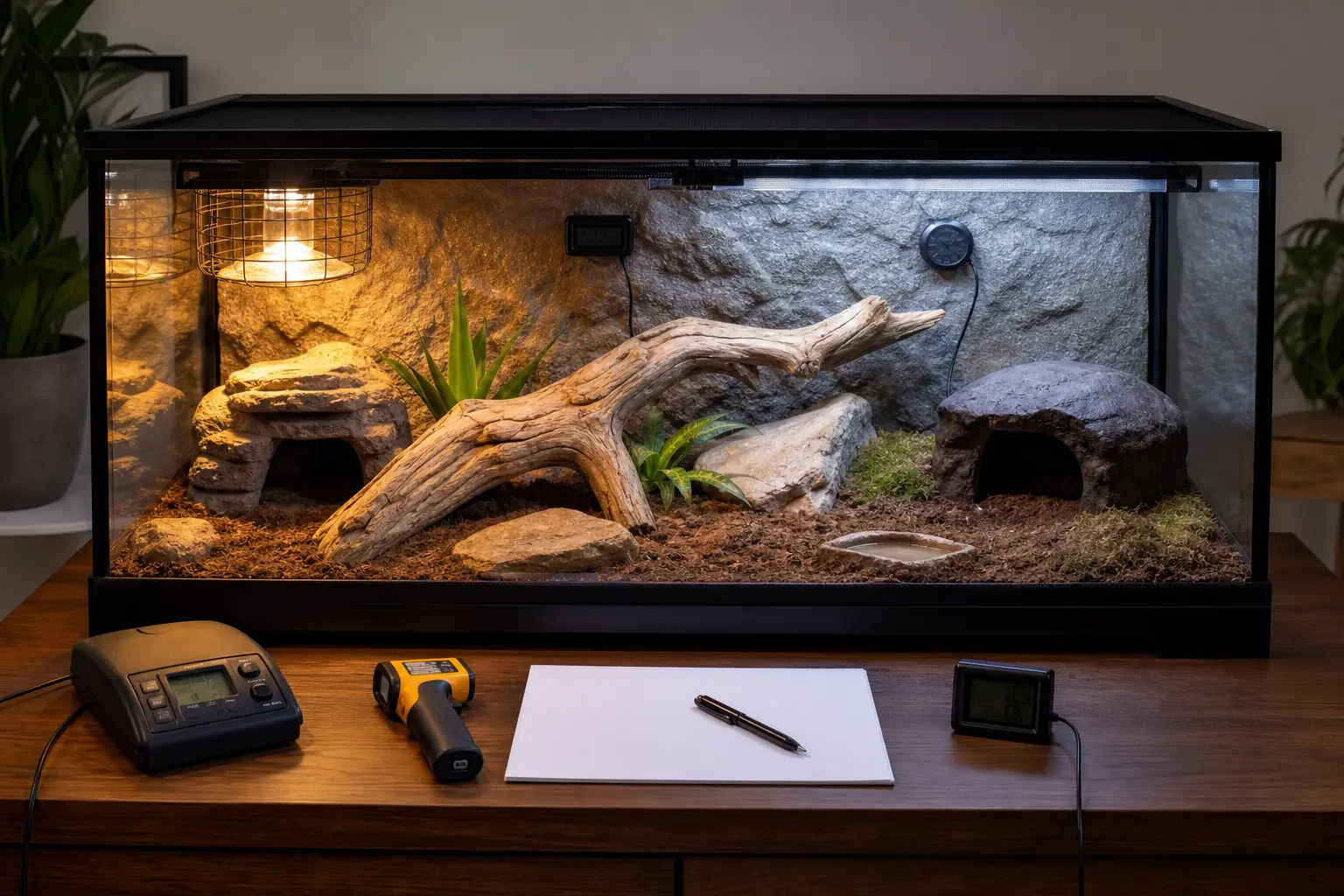 5. Test the Empty Habitat
Run every system and correct unstable conditions before move-in.
5. Test the Empty Habitat
Run every system and correct unstable conditions before move-in.
References
Useful tools for a secure, measurable habitat
Optional equipment matched to this enclosure topic. Start with adult dimensions and species-specific heat, UVB, humidity, and security requirements.
Affiliate links: Furball Cove may earn from qualifying purchases at no extra cost to you.