Updated
Dog food guide
How Much Should I Feed My Dog?
Use the label as your starting point, then measure your dog’s meals for one week. Count treats, chews, and toppers too, because those extras often explain more than the scoop.
Start with the label
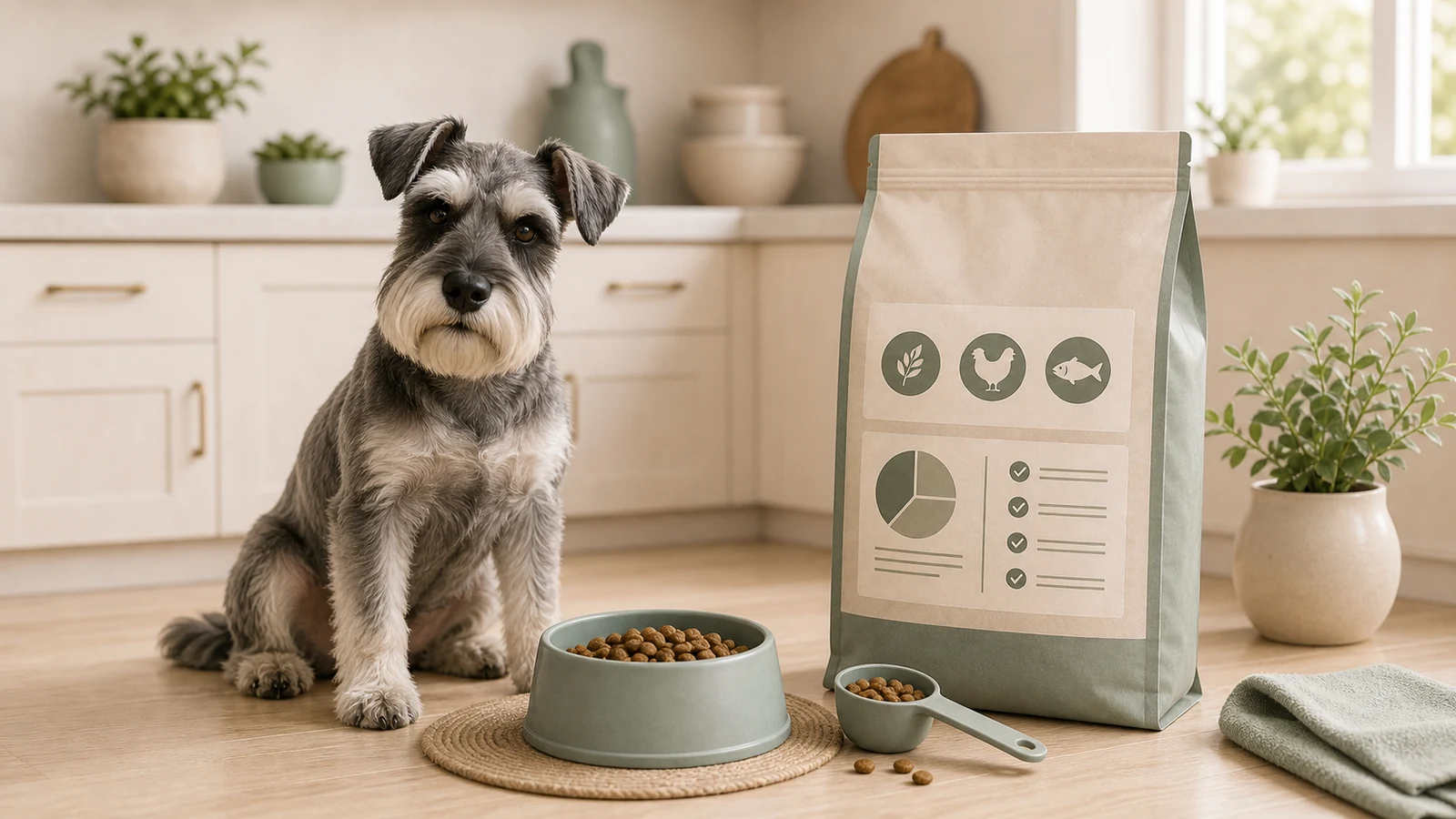
The feeding chart on the bag or can is the starting line, not the finish line. It gives you a reasonable first amount for your dog’s weight and life stage, but it has never met your dog, your treat jar, or your Tuesday night routine.
If the label gives a range, start near the middle unless your dog is clearly gaining, losing, growing fast, working hard, or following a clinic-set plan. Then pick one amount you can measure the same way tomorrow morning. That repeatable scoop is your baseline.
A common pattern: the label amount looks high, the dog seems hungry, and the owner adds a little more every few days. Before you do that, measure the starting amount for a week. You may find the food is fine and the treats are the part that moved.
Measure for one week
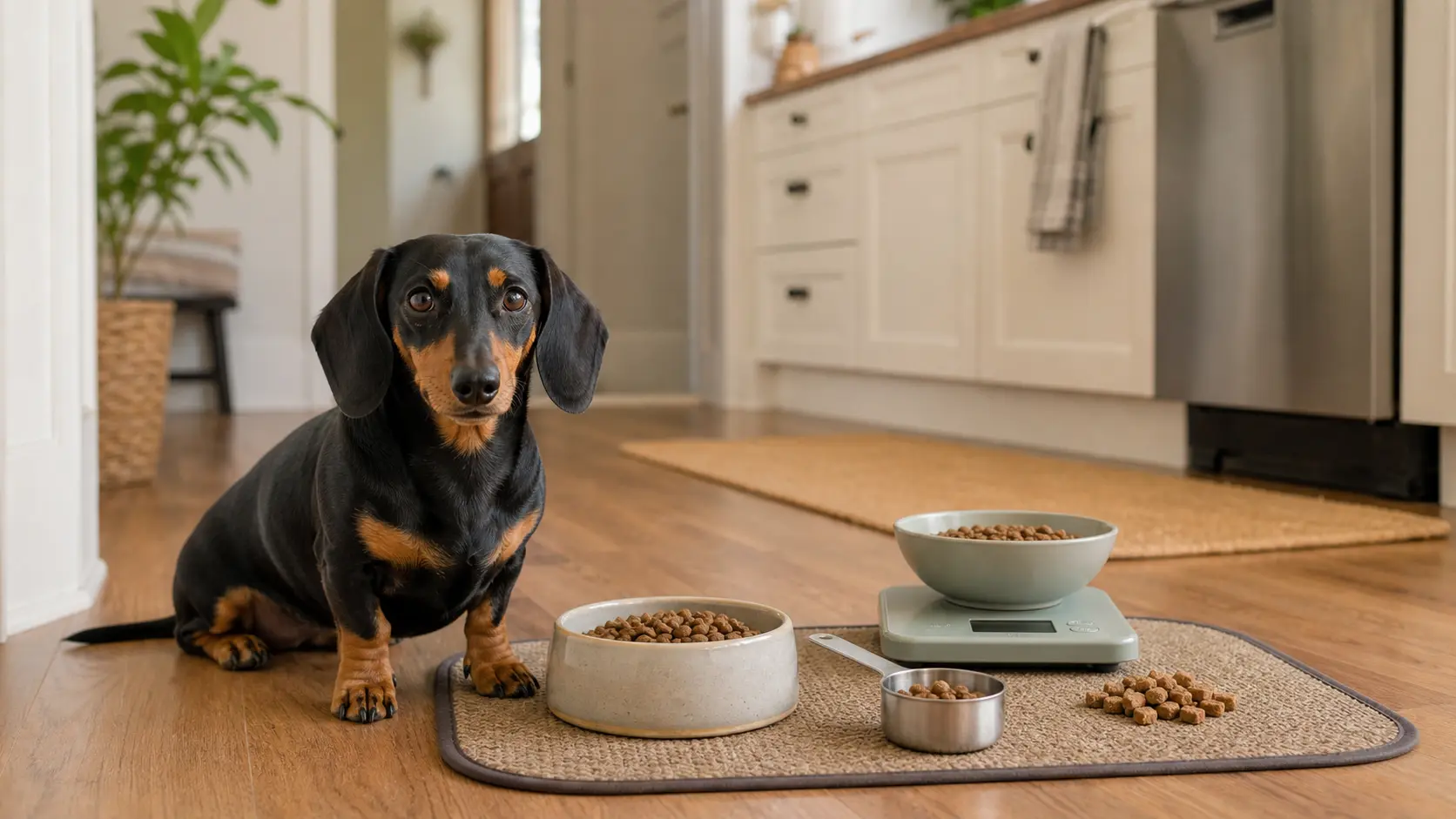
For the next seven days, measure the food the same way every time. Use a real measuring cup or a kitchen scale, level the scoop, and write down what went into each meal. Do this before you switch foods, buy a new bowl, or add another scoop for a hungry-looking dog.
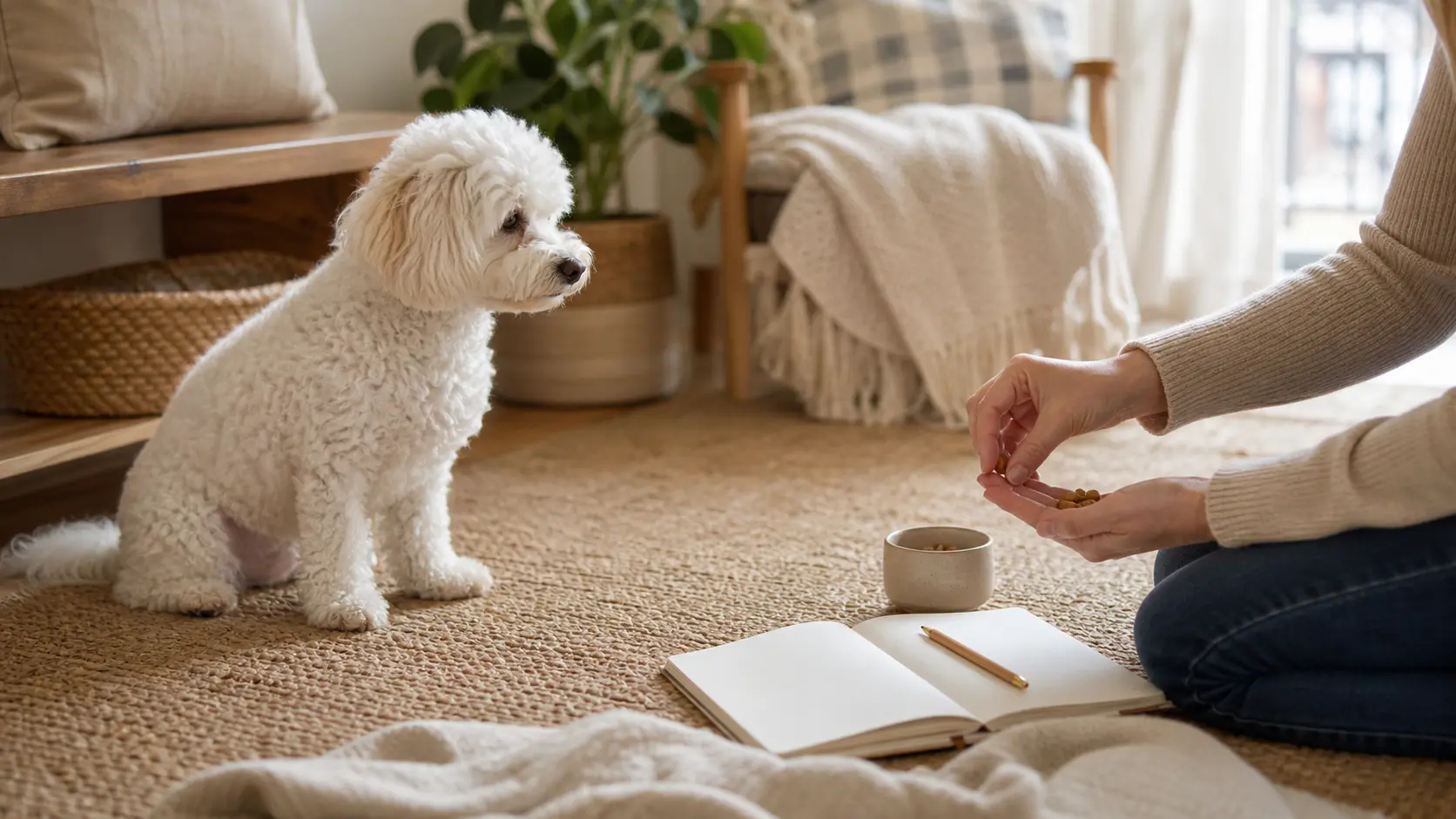
Keep the notes boring and useful: breakfast amount, dinner amount, treats, chews, toppers, and anything unusual. If your dog practices tricks after work, those rewards count. A dog who hikes for two hours on Saturday may need a different plan than they do on a rainy couch day. If someone adds a biscuit at lunch, count it kindly and move on.
Think of the dog who spends Monday at daycare, Tuesday napping under your desk, and Wednesday begging through a family dinner. The same scoop may still work, but those three days are not the same day. Your notes help you adjust without guessing.
What to write down
You do not need a spreadsheet. A note on your phone is enough, and it can be messy.
Write down the amount you served, who fed the dog, and the extras that happened around the meal. For example: half a cup at breakfast, three training rewards after the walk, a dental chew at lunch, and a spoon of wet food mixed into dinner.
Look for the little patterns a label cannot see. If breakfast keeps getting skipped but dinner disappears, meal timing may matter as much as the scoop. If your dog gulps every meal and still looks for crumbs, the pace of the meal may need help too.
At the end of the week, you can see whether the portion is actually steady or whether the day has more food in it than the scoop suggests. Those notes are useful if weight, appetite, stool, or energy also looks off.
What changes the portion
The label cannot know your dog’s whole week. Use it as the starting point, then adjust from what you can see on the floor, on the leash, and around the snack drawer.
| Puppy growth | Growing dogs need enough food for all that body-building, and sudden changes deserve extra care. |
|---|---|
| Adult maintenance | Many adults do well on steady portions with small changes when activity or body shape shifts. |
| Senior changes | A senior dog may eat slower, move less, lose muscle, or need a clinic-set amount. |
| Neutered or spayed dogs | Some dogs need portion adjustments after metabolism and activity shift. |
| Big activity days | A long hike, sport class, or working day can change what your dog burns. |
| Quiet weeks | Hot weather, injury rest, or a lazy winter week can make the usual amount too much. |
| Medical conditions | Kidney, heart, stomach, pancreas, hormone, or weight concerns may need a professional calorie amount. |
Count the extras
Rewards are part of feeding, not a moral failure. Most dogs would vote for more snacks, and honestly, they make a good case. Your job is just to see the whole day clearly.
A dental chew, a spoon of topper, table scraps from a toddler’s high chair, and training rewards can quietly change the portion. For a small dog, a little extra food can be enough to spoil dinner or nudge weight upward. For a large dog, the same extras may matter less, but they still count.
One small dog can look picky at dinner simply because the afternoon was full: a chew after lunch, a few rewards on the walk, and two bites from the kids. That is not a bad dog or a bad food. It is just a day that already had dinner hiding inside it.
- Chews that last a while, even when they look small.
- Training rewards during walks, classes, grooming, or crate practice.
- Toppers, wet food, broth, yogurt, pumpkin, or leftovers added to make dinner more interesting.
- Plate bites from kids, guests, or the person who always says it was just one piece.
If the portion is not working
When your dog still seems hungry, gains weight, loses weight, or gulps meals, use the one-week notes before changing everything at once. A good feeding fix usually starts with one clean clue, not five changes on the same day.
After a week, one dog’s notes might show a portion problem. Another dog’s notes might show a timing problem: breakfast sits untouched, dinner disappears, and bedtime treats are doing a lot of work. Those two dogs need different fixes.
| Your dog seems hungry all the time. | Check snacks, meal timing, body shape, and whether food is being split well before simply adding more. |
|---|---|
| Your dog is gaining weight. | Use the one-week notes first. They show the food amount, extras, and meal timing you can adjust or bring to your vet. |
| Your dog is losing weight. | Call your vet, especially if appetite, stool, thirst, or energy also changed. |
| Your dog gulps meals. | Use a slow feeder, puzzle feeder, or smaller meals without increasing the total food. |
When to get help
Ask your vet about sudden weight gain or loss, puppies, seniors, health problems, exact calorie amounts, weight-loss plans, appetite changes, repeated vomiting or diarrhea, or any dog who seems weak, painful, or not like themselves. Bring the one-week notes with you; they turn a vague feeding worry into something useful.
Helpful tools
These tools help when they make the amount repeatable and the extras visible.
Affiliate links: Furball Cove may earn from qualifying purchases at no extra cost to you.
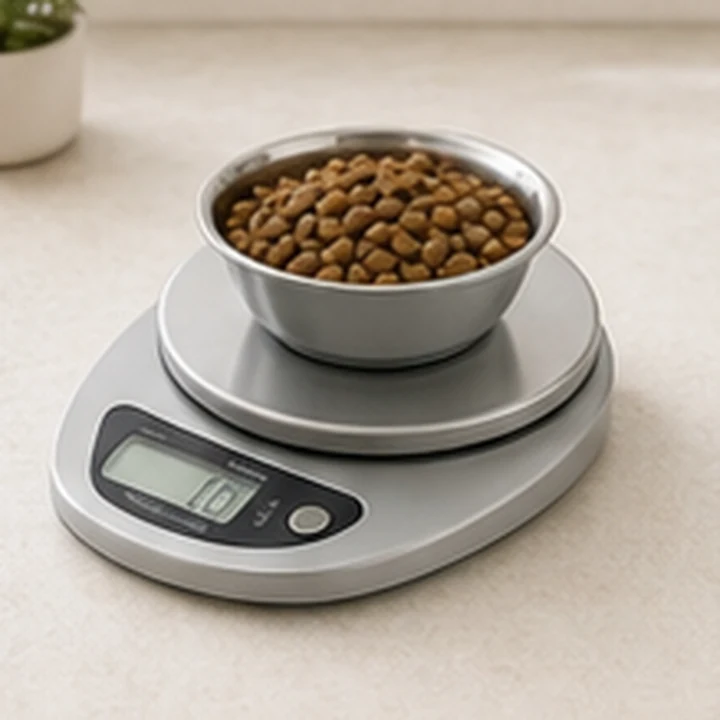
Portion scale
Useful for tiny dogs, weight plans, or any week when a rounded scoop keeps turning breakfast into a guessing game.
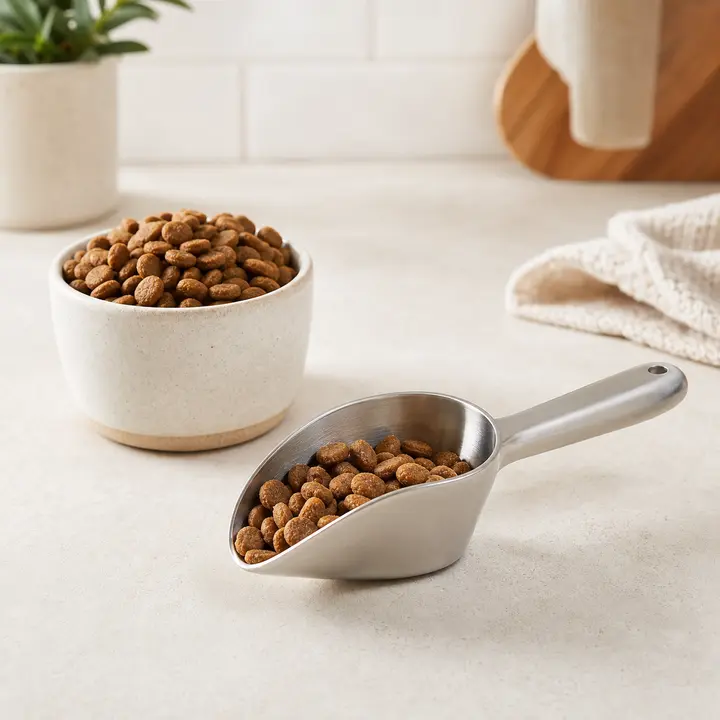
Measuring scoop
Keeps breakfast and dinner repeatable when one person feeds before work and someone else handles dinner.
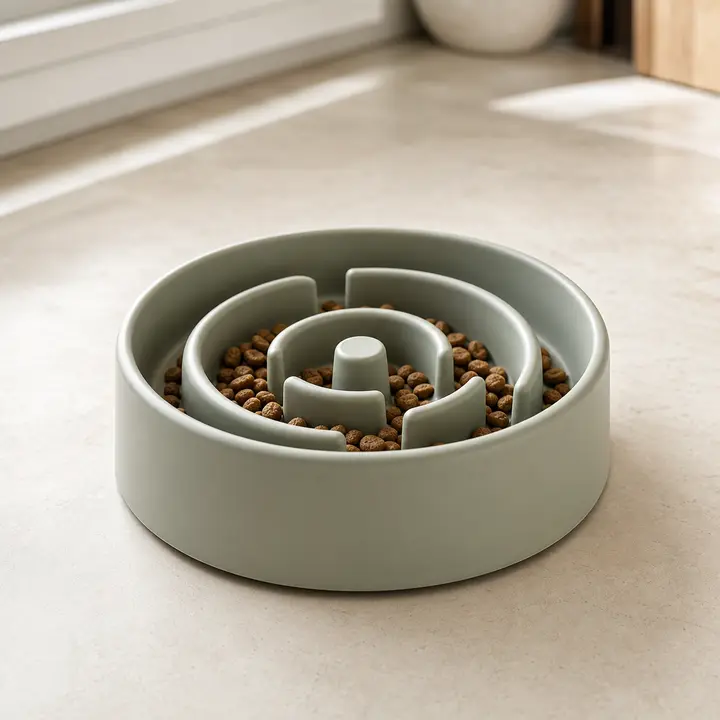
Slow feeder bowl
Helps the dog who inhales dinner slow down without adding more food to the day.
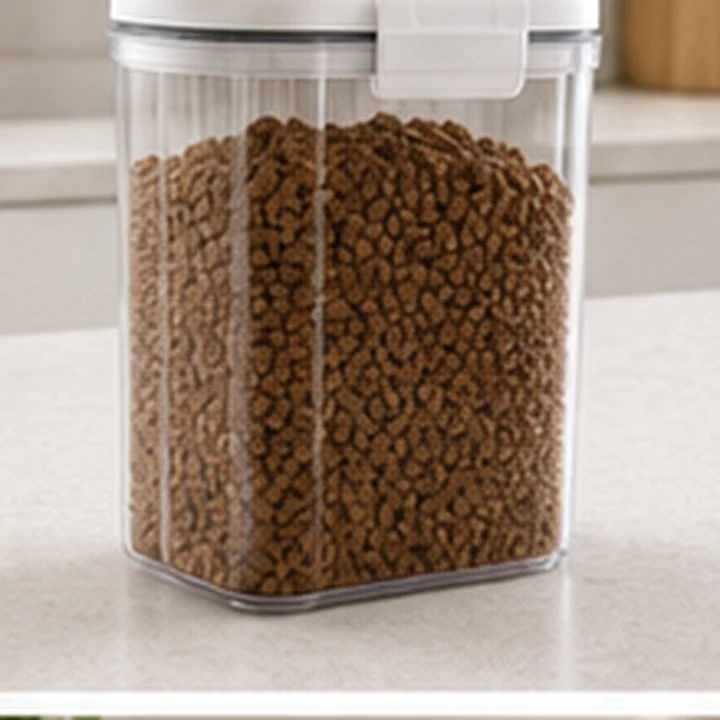
Treat jar
Makes the treat budget visible so rewards do not quietly erase the measured meal plan.
Common questions
How much should I feed my dog?
Start with the label for your dog’s weight and life stage, then adjust from what you see: treats, activity, body shape, appetite, and how your dog does over a normal week.
Is a measuring cup enough?
A consistent measuring cup is better than a random scoop. A scale is more accurate when portions are small or weight change matters.
Do treats really count?
Yes. Treats, chews, toppers, leftovers, and training rewards all add calories.