Puppies
Puppies often need smaller, more frequent meals while they grow. The puppy who crashes into a nap after breakfast may need a different rhythm than a sturdy adolescent who can wait calmly until dinner.
Updated
Dog food guide
Most adult dogs do well with predictable meals once or twice a day, while puppies usually need more frequent meals. Start with your dog’s age, health, appetite, and the hours your home can repeat without turning meals into a scramble.
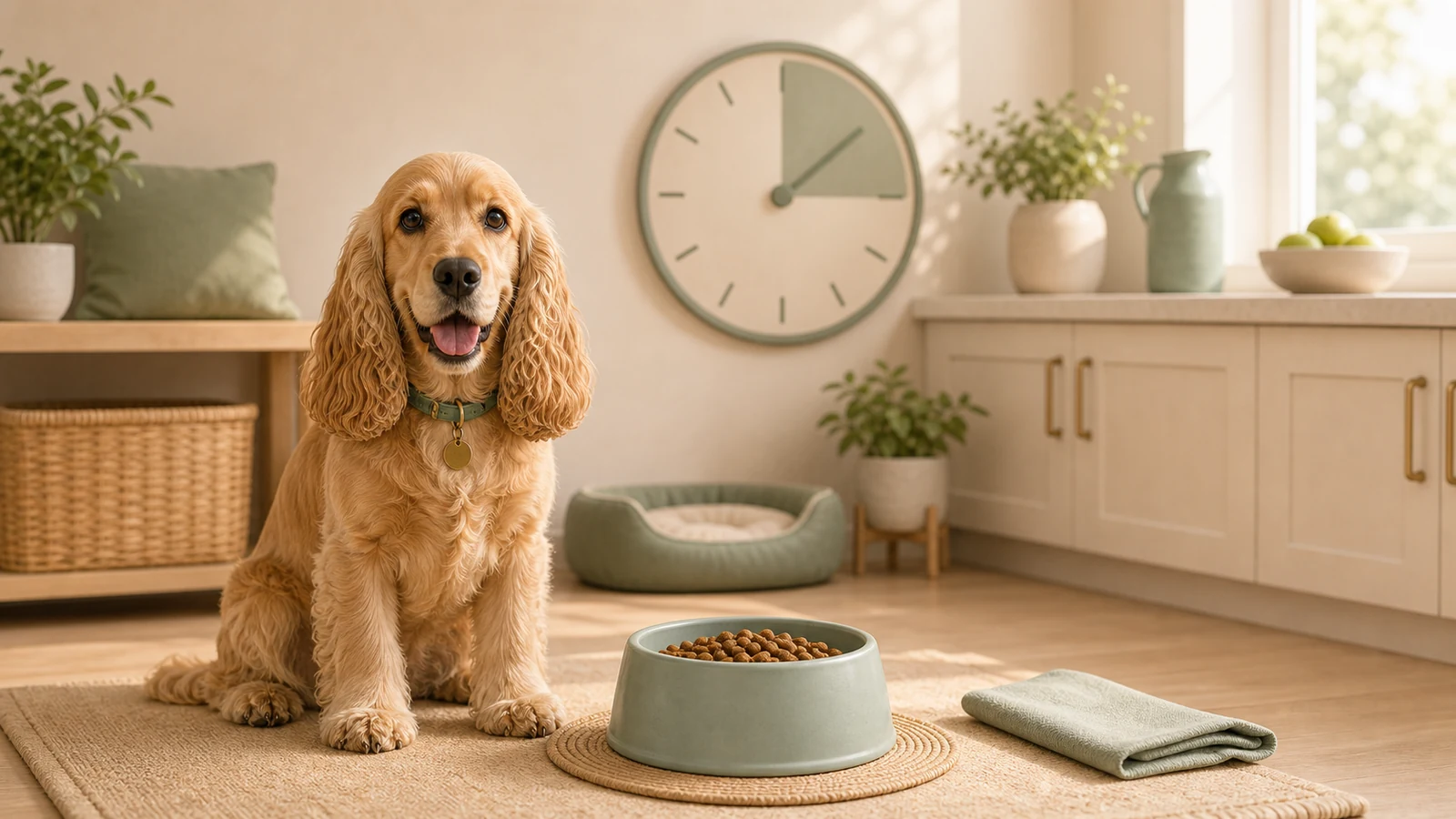
A feeding schedule should fit your dog’s age, health, appetite, and the rhythm of the house. Puppies usually need more frequent meals. Many adult dogs do well with a morning meal and an evening meal. Older dogs may do better with a different rhythm if teeth, appetite, medicine, or vet care changes.
I would start with the easiest schedule your home can actually repeat, then change it only when your dog’s body, appetite, or vet plan gives you a reason.
The best schedule is easy to repeat and easy to notice. If your dog suddenly skips breakfast, starts begging in a new way, drinks more, or loses weight, do not treat it as a manners problem. Track what changed and call your vet if the pattern is new, sudden, or paired with illness signs.
Puppies often need smaller, more frequent meals while they grow. The puppy who crashes into a nap after breakfast may need a different rhythm than a sturdy adolescent who can wait calmly until dinner.
Many adult dogs do well with predictable meals that make portions and appetite easier to track. If one person feeds before work and another feeds after the evening walk, write the plan down so nobody accidentally doubles dinner.
Senior dogs may need softer food, smaller meals, medication timing, or faster attention when appetite changes. A senior who suddenly leaves food behind deserves a health check, not a wait-and-see week.
Usually need separated meals so each dog eats their own portion without pressure or stealing.
Training rewards should come from the day’s food plan, not float outside it. A pocketful of extras can quietly turn a normal day into too much food.
Some dogs can graze, but free feeding can hide appetite changes and make portions harder to see.
Free feeding can sound easier, but planned meals usually give you a clearer read on appetite. For example, if your dog leaves half the food after a new bag, you can see the change right away instead of discovering it days later.
| Planned meals | Easier appetite tracking, easier portion control, and usually better for multi-dog homes. |
|---|---|
| Free feeding | May work for some steady eaters, but can hide appetite changes and make portion control harder. |
Busy weeks are where feeding plans usually fall apart. If mornings are chaotic, measure breakfast the night before, keep the scoop in the same place, and make one person responsible for serving the meal.
A common pattern is the dog who eats normally Monday through Thursday, then begs all weekend because breakfast, snacks, and dinner drift around. Aim for an anchor rather than a perfect clock time; many dogs relax when the window feels familiar.
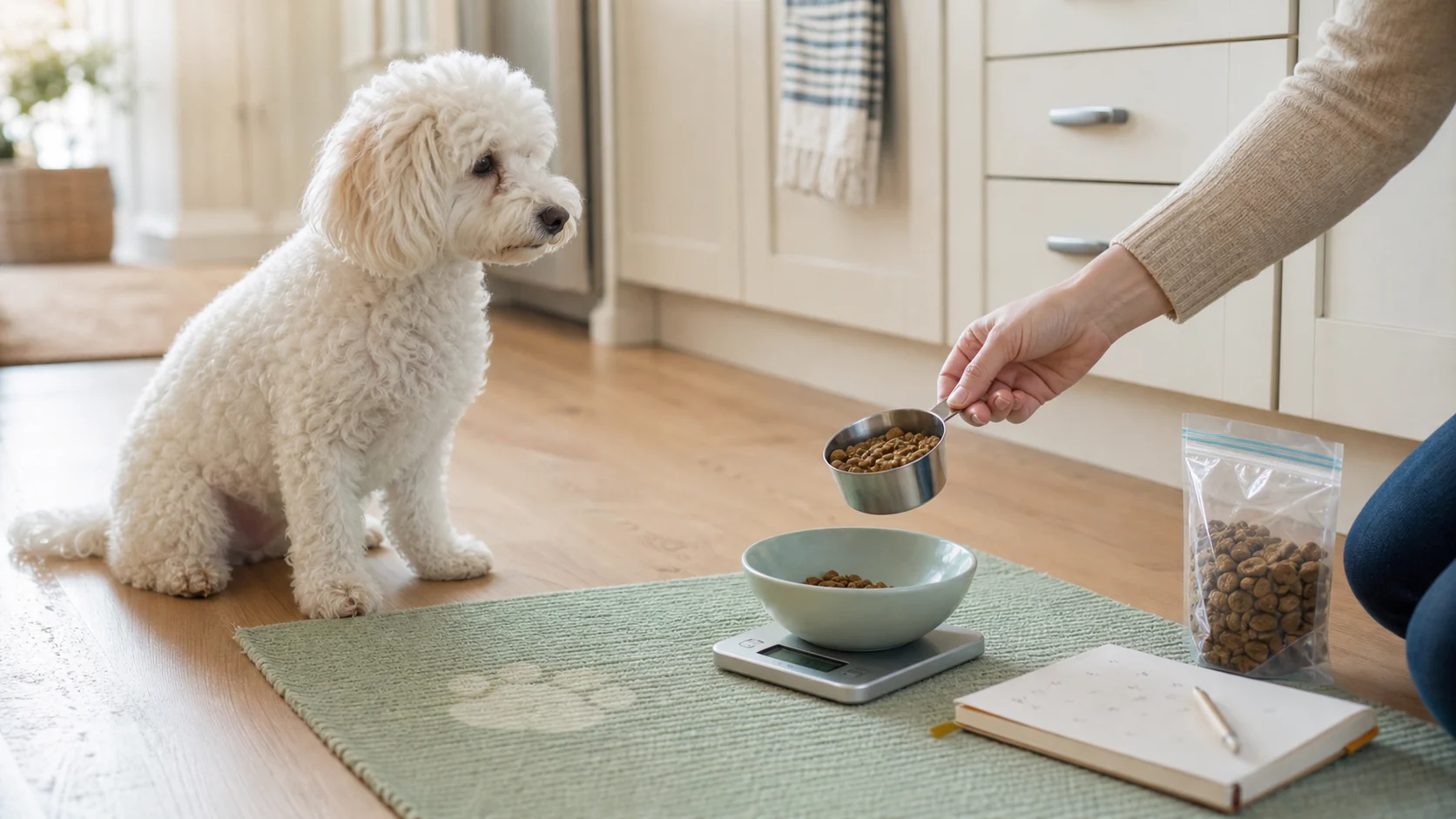
Travel is easier when the food routine is boring on purpose. Think of the dog who eats well at home but skips dinner at the cottage because the ride was long, the room smells different, and everyone is excited. Pack measured meals, bring the usual dish if it helps your dog settle, and keep the first meal simple.
If weekends at a cottage or relatives’ house come with extra snacks, name the limit before you arrive. A dog who gets bacon from one person, biscuits from another, and dinner on top may look hungry, but the schedule is no longer telling the truth.
Look for the pattern before you change everything. Watch for what happens before and after meals: some dogs are hungry because dinner is too late, while others are bored, full from extras, worried by another dog near the feeding spot, or uncomfortable enough that your vet should weigh in. Try writing down two or three days of meals and bring those notes to your vet if appetite changes seem sudden or odd.
| Dog begs between meals. | Look at meal amount, extras, boredom, and whether dinner is landing too early or too late. |
|---|---|
| Dog skips breakfast. | Look for pattern, stress, treats, nausea, dental discomfort, or sudden change. Call your vet if it is new or paired with symptoms. |
| Multiple dogs steal food. | Feed separately and pick dishes up when meals are done. |
| Workdays and weekends differ. | Keep a predictable anchor meal, then adjust the second meal within a realistic window. |
| Training rewards blur the plan. | Use a small daily cup or portion from the measured meal, then stop when it is empty. |
Call your veterinarian for sudden appetite loss, repeated vomiting, weight loss, excessive thirst, pain, weakness, puppies not eating, seniors changing suddenly, or any dog whose meal routine changes along with illness signs.
The useful tools are the ones that make meals easy to repeat and easy for the whole home to follow.
Affiliate links: Furball Cove may earn from qualifying purchases at no extra cost to you.
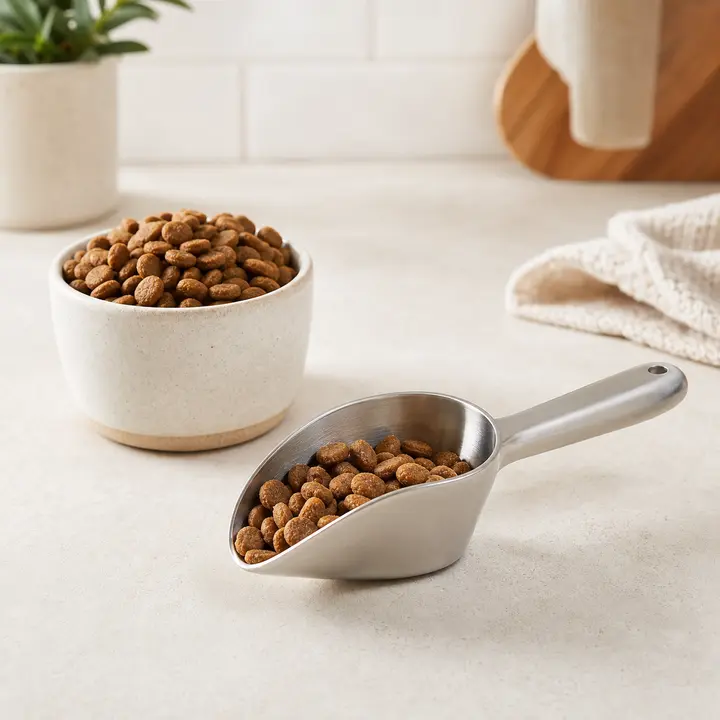
Keeps breakfast and dinner portions consistent when more than one person feeds the dog.
Helpful when a scoop is too rough for a puppy, senior, small dog, or weight-care plan.
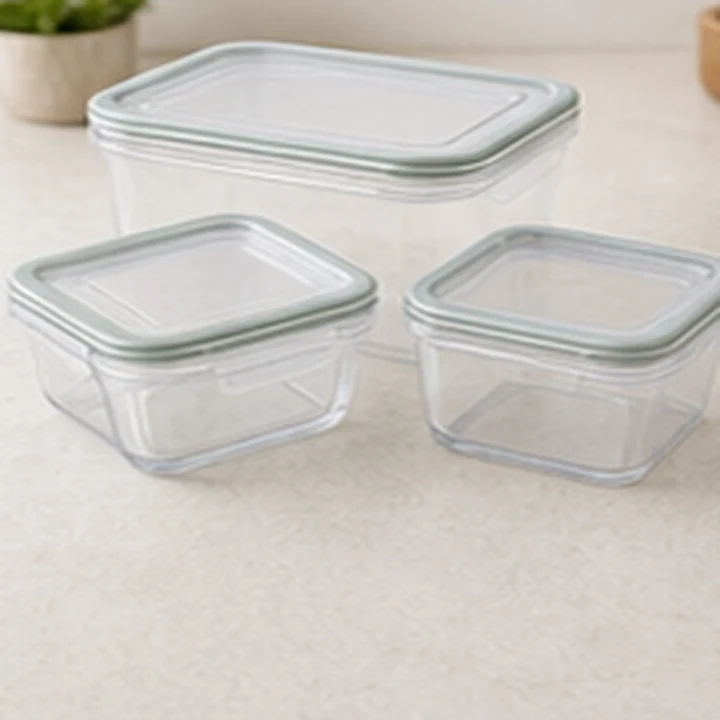
Keeps measured meals together for daycare, cottage weekends, road trips, or a sitter handoff.
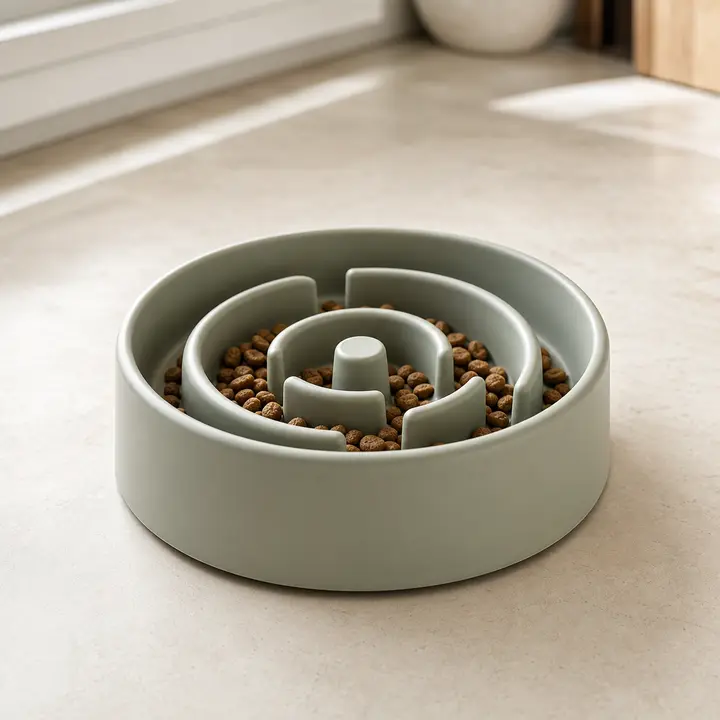
Helpful when timing is fine but your dog gulps dinner before the day has a chance to slow down.
Start with your dog’s age, health, appetite, and normal day. Puppies often need more frequent meals, while many adult dogs do well with predictable planned meals.
It can work for some dogs, but it can make appetite and portions harder to track, especially in multi-dog homes.
No. Use tiny rewards and count them in the day’s food plan.