Updated
Dog food guide
Help an Overweight Dog Lose Weight Safely
Helping a dog reach a healthier weight usually starts with measured meals, counted rewards, steady routines, and a veterinarian check when weight changes are sudden or significant. Do not use crash diets or miracle products.
Quick answer for real life
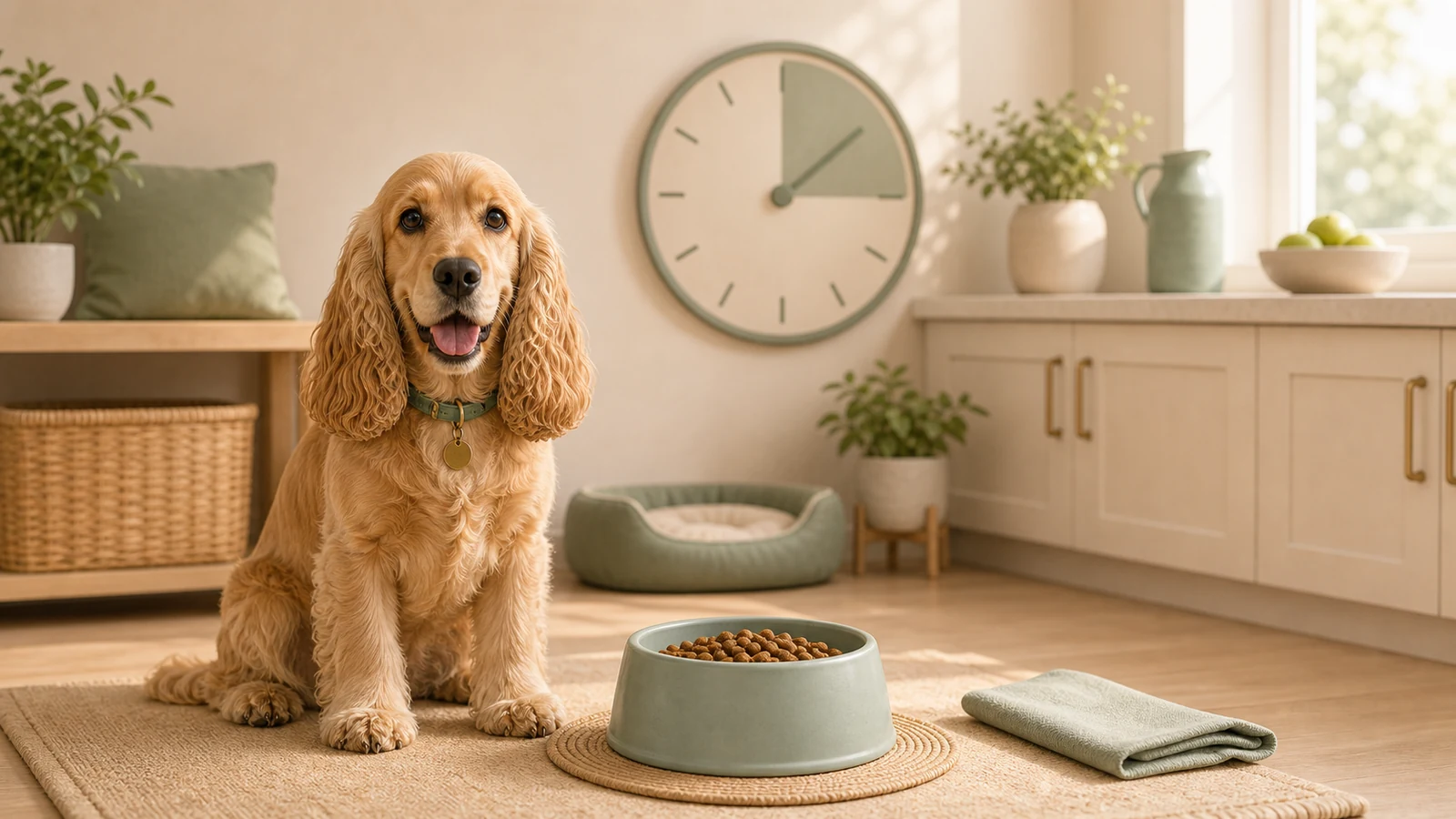
Helping an overweight dog is not about shame. It is about small repeatable habits: measured meals, counted rewards, a feeding schedule the whole house follows, and movement your dog can enjoy without feeling pushed.
Start with the real day in front of you. Measure breakfast and dinner, count the training rewards, and write down chews or table scraps before you change the meal. If weight gain was sudden, your dog seems weak or painful, or you need a major change, call your veterinarian before cutting food.
Measure meals
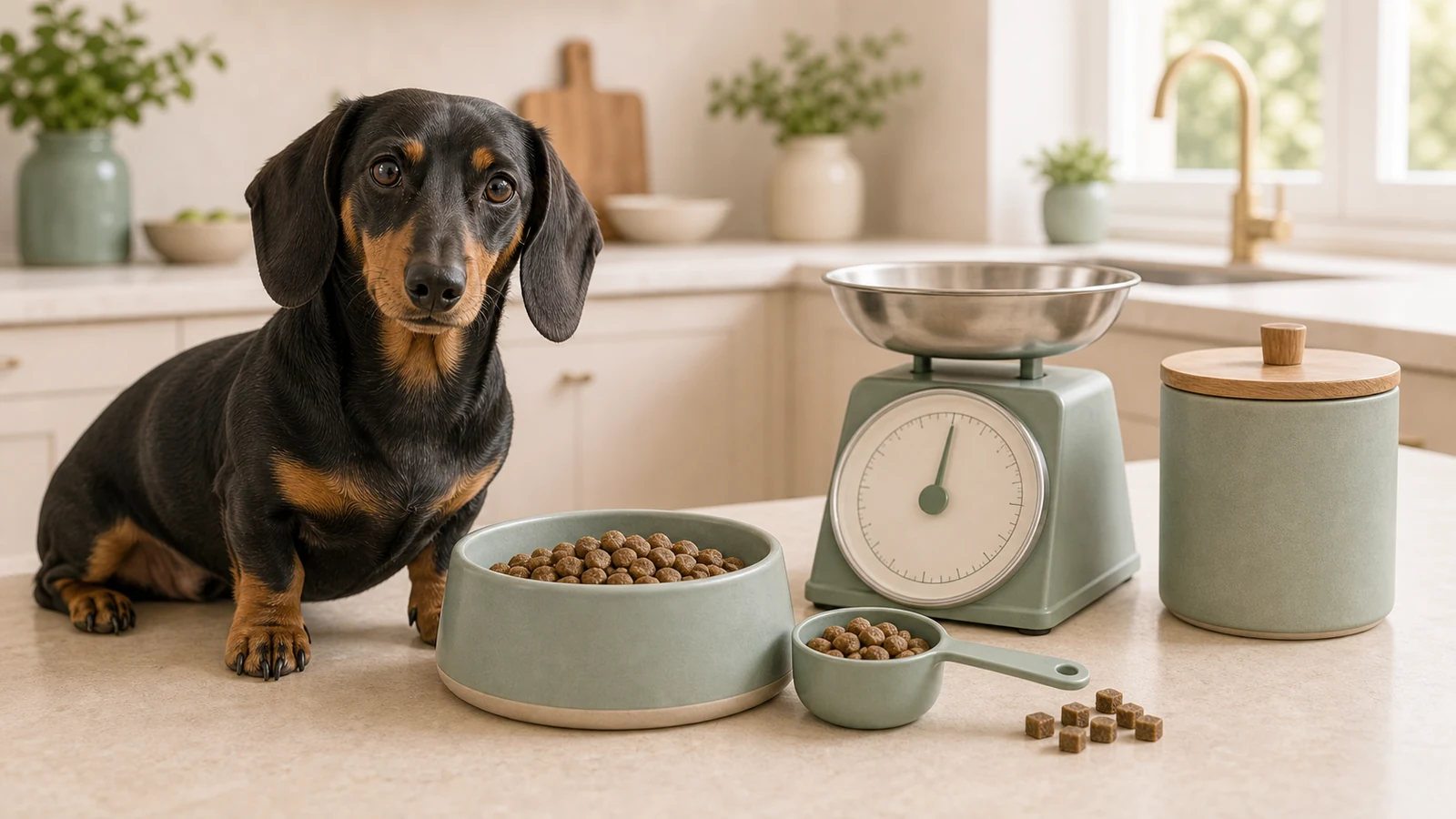
Measure the current food before changing anything. A scoop that looks normal can drift larger over time, especially during a busy morning or when two people take turns feeding.
If your dog begs after breakfast, check the amount, timing, and daily rewards before adding more. Some dogs are hungry; some are bored; some have learned that staring sweetly at the dish works. Try weighing the usual scoop once so everyone can see what is actually going into the meal.
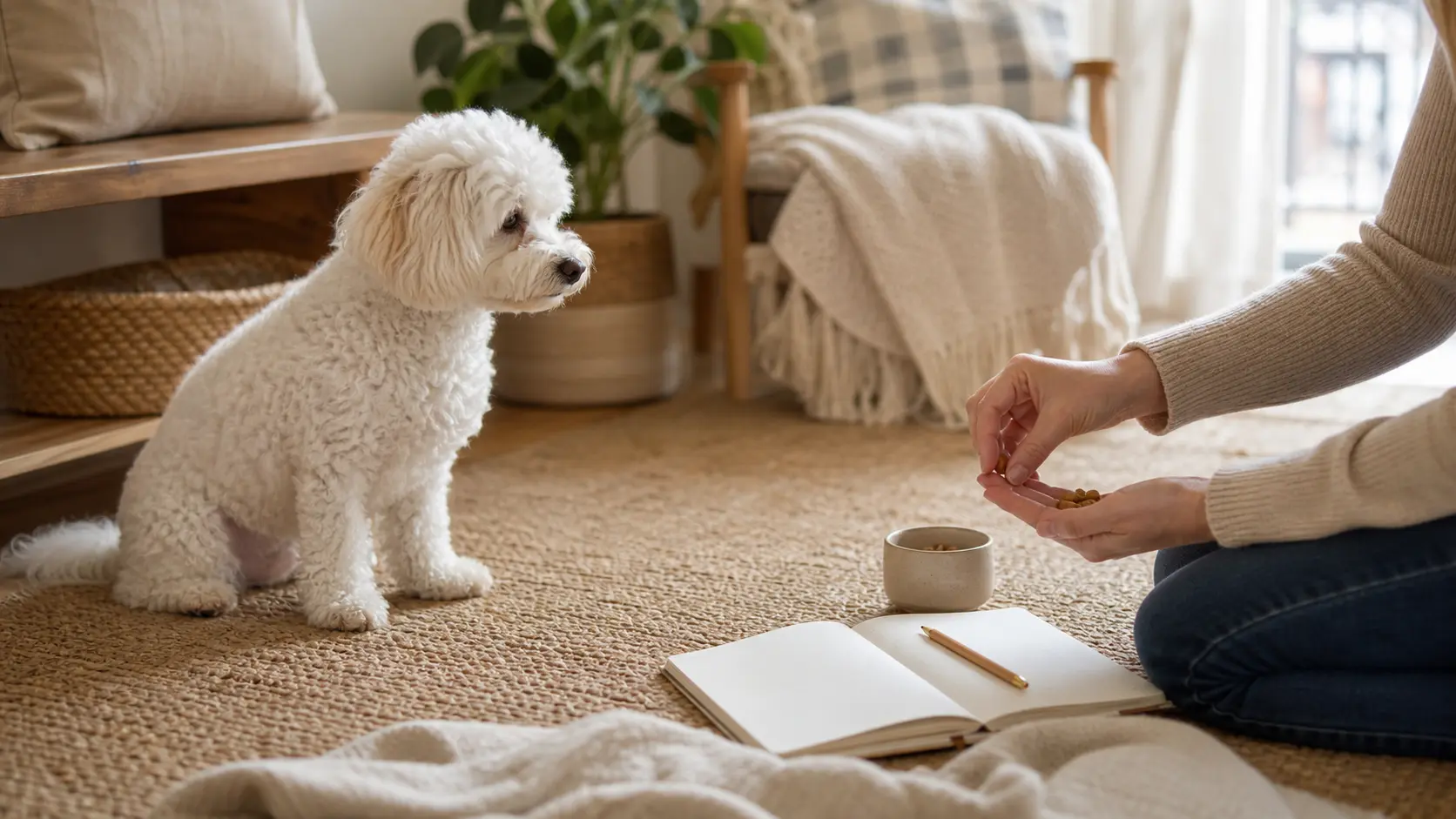
Count treats
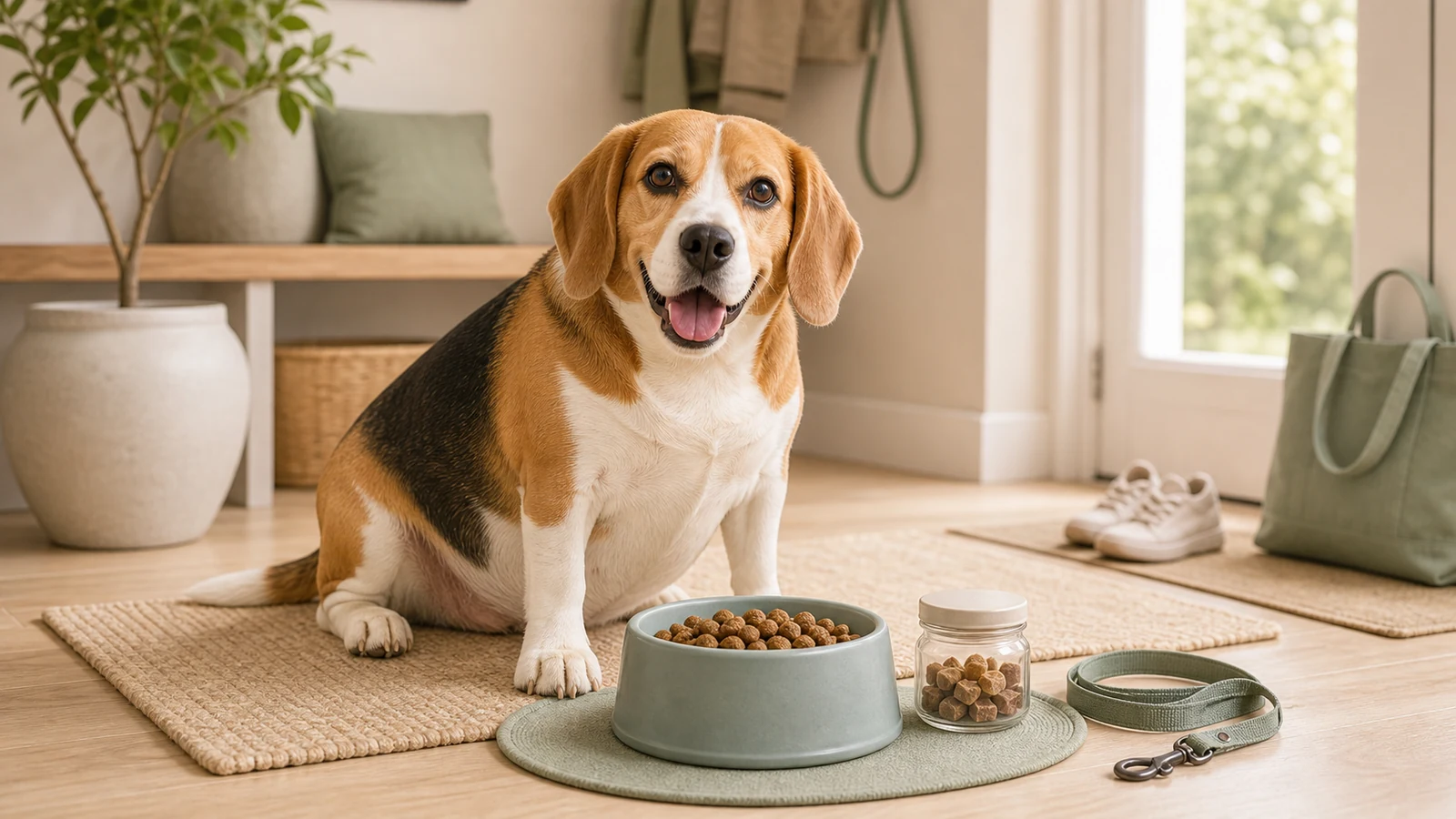
The hidden calories usually come from love: training rewards, chews, table scraps, pill pockets, and the little bite someone gives because the dog looked hopeful.
A common pattern is the dog who eats a measured dinner but also gets rewards on the walk, a chew after lunch, and scraps during cleanup. Count the whole day, not just the dish. For example, put the day's snacks in one cup and use pieces from that cup for training, door manners, and bedtime rewards. When dinner is over, close the kitchen routine instead of letting cleanup bites become part of the habit.
Body condition
Use your hands, not just the scale. Look for ribs you can usually feel with light pressure and a waist that fits your dog's build.
If your dog has a thick coat, feels stiff, pants sooner on walks, or no longer hops into the car easily, write that down. After a week, those notes can help your veterinarian connect food, comfort, movement, and health. You know your dog best, so small changes like slower stairs or shorter play can be worth mentioning.
Exercise and routine
Food changes work better when the day also gives your dog something satisfying to do. That does not have to mean hard exercise. For many dogs, sniffy walks, gentle play, short training, or a slow feeder make the day feel fuller.
Think of the senior who still loves a slow block walk, the dog who lights up for five minutes of hide-and-seek with kibble, or the puppy who needs structure more than extra snacks. For a dog who gulps food, a slow feeder can make the same measured meal last longer. When your dog seems sore, winded, weak, or suddenly different, ask your veterinarian what activity is safe before pushing more exercise.
Start with a kind plan
- Measure first Learn the real daily amount before changing it.
- Create a reward budget Put the day's snacks in one cup and stop when it is empty.
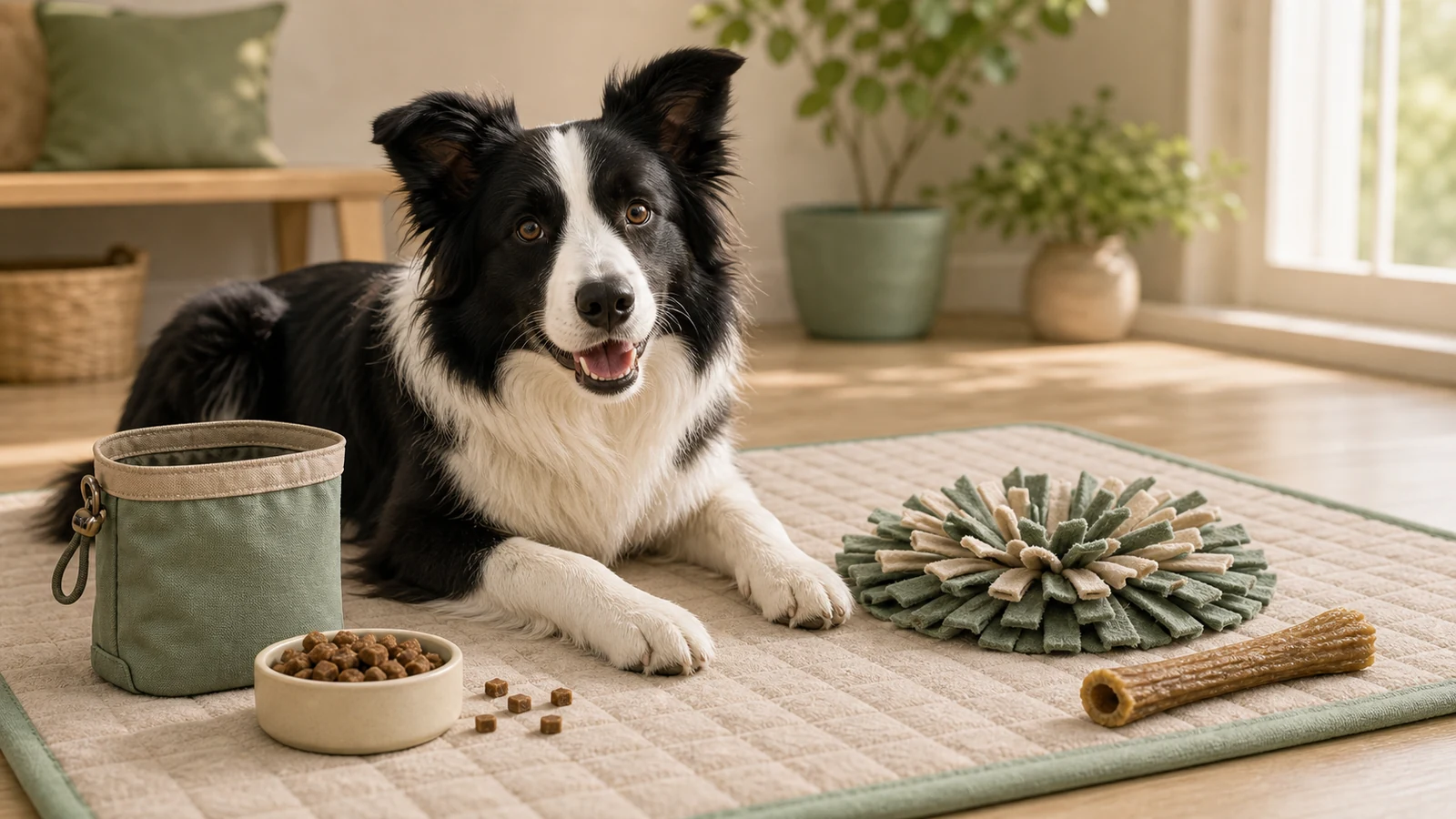
- Keep meals satisfying Use a slow feeder, snuffle mat, or training rewards from the measured food.
- Track the body Watch ribs, waist, stamina, stool, and comfort over time.
- Adjust slowly Make small changes, then give your dog time to settle into the new rhythm.
- Call the clinic Ask before major reductions, diet foods, or weight changes tied to illness signs.
When to ask your vet
Ask your veterinarian for help with major weight loss, sudden gain or loss, medical concerns, pain, weakness, breathing trouble, pregnancy, senior dogs, or any plan that makes you unsure.
Bring the food label, measured amount, reward list, chews, table scraps, activity notes, and weight history. A kind plan is easier when your veterinarian can see the whole day, including the snacks that never touch the food dish.
Helpful tools
Choose tools that help the whole house measure meals, slow dinner down, and count rewards without turning food into a fight.
Affiliate links: Furball Cove may earn from qualifying purchases at no extra cost to you.
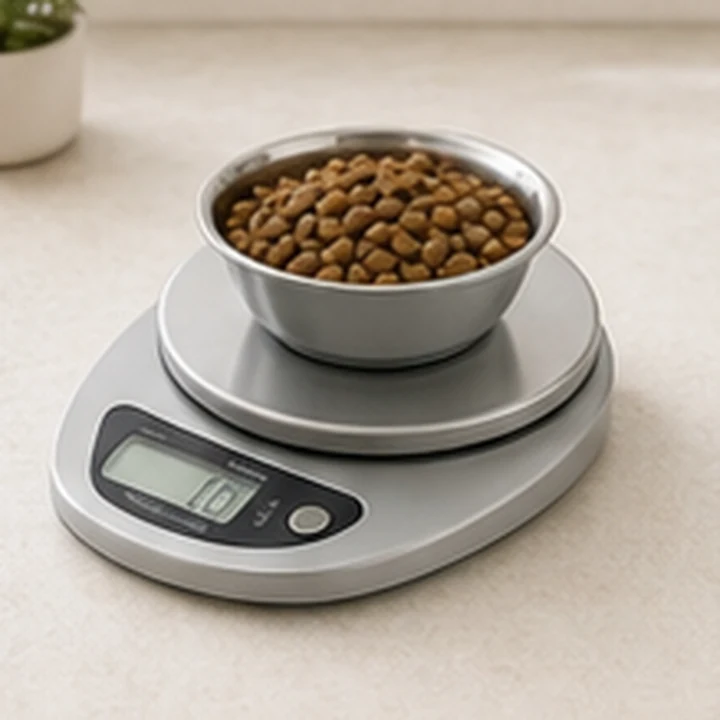
Portion scale
Useful when weight care depends on measuring a small food change instead of guessing by scoop.
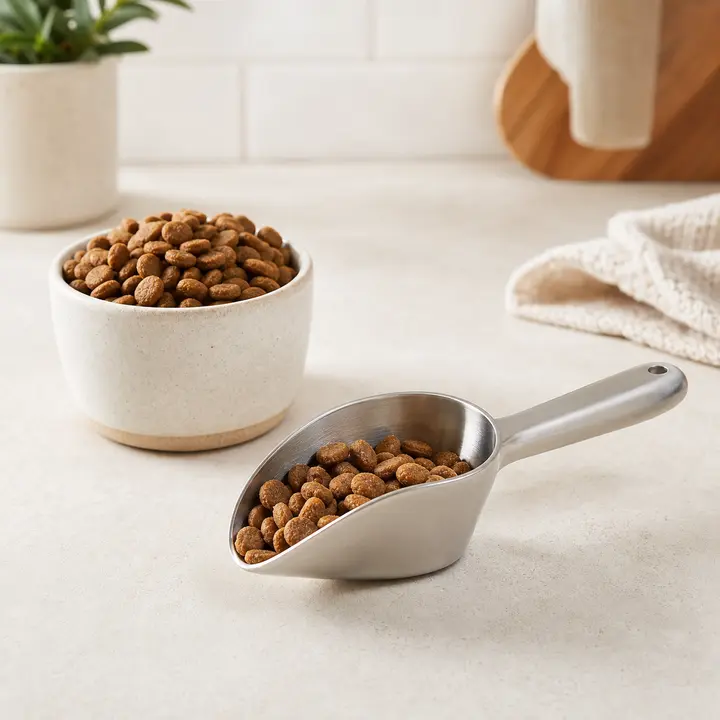
Measuring scoop
Keeps breakfast and dinner consistent when more than one person feeds the dog.
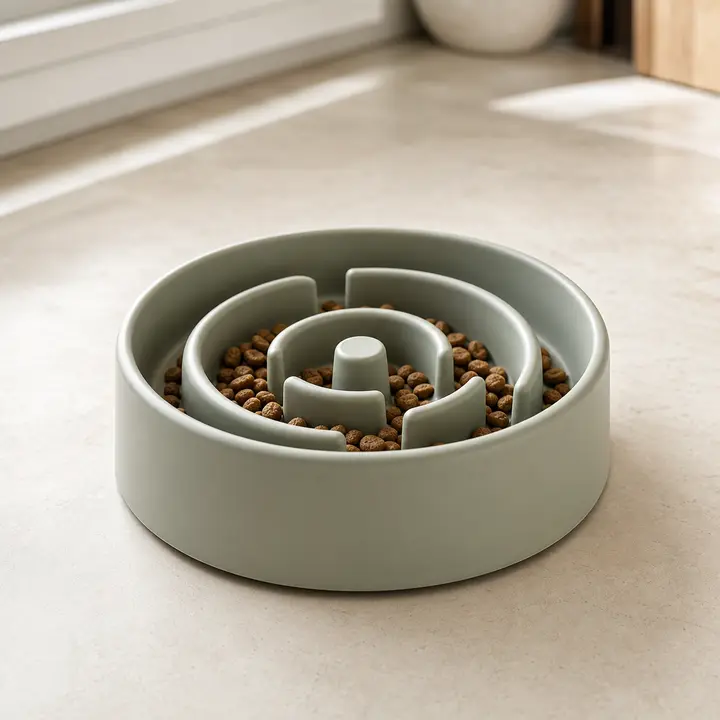
Slow feeder
Slows fast meals so dinner lasts longer without adding more food.
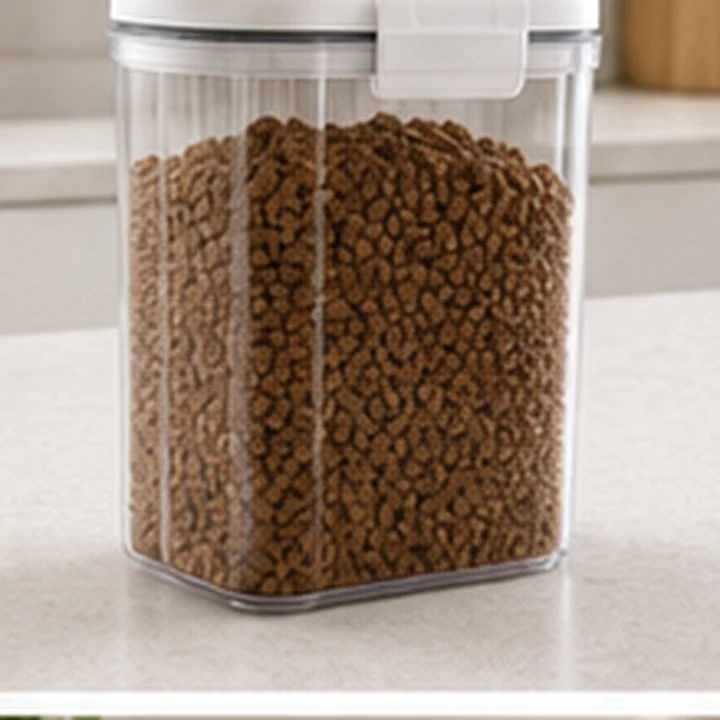
Treat jar
Gives the household one visible treat budget instead of five quiet snack locations.
Common questions
Should I buy weight-loss dog food?
Ask your veterinarian first, especially if your dog has medical issues, sudden weight change, or needs a significant reduction.
Do rewards count?
Yes. Snacks, chews, table scraps, and training rewards all count toward the day.
Can puzzle feeders or slow feeders help?
They can slow meals and add enrichment, but they do not erase calories. Measure the food before it goes into the feeder.