Updated
Dog food guide
How to Read a Dog Food Label
Start with the nutritional adequacy statement, life stage, calories, and feeding directions before obsessing over the ingredient list. The front of the bag is marketing; the useful details are usually on the back or side.
Quick answer for real life
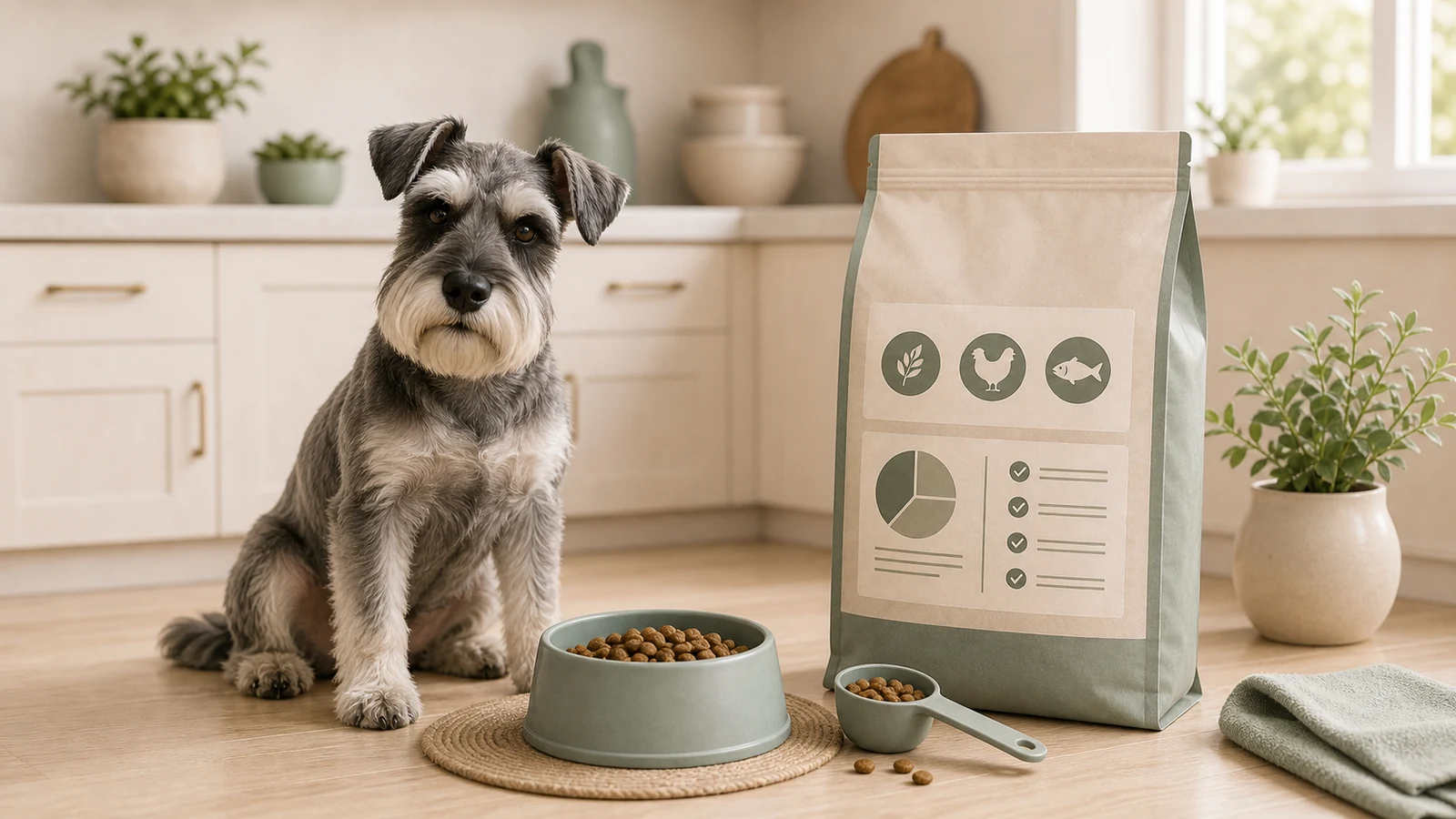
Read the label in order: adequacy statement, life stage, calories, feeding directions, then ingredients and claims. That order keeps you from choosing dinner based only on the biggest word on the front of the package.
If your dog is doing well, the dog food label helps you keep the routine consistent. If your dog is a puppy, large-breed puppy, senior, overweight, itchy, vomiting, or losing weight, the label becomes a starting point for a better conversation with your vet.
When your dog finishes dinner and still seems hungry, the answer may be calories, feeding directions, training rewards, or a portion that changed after you opened a new bag. Check those dog-meal details before you blame one ingredient.
Read the label in this order

- Find the adequacy statement Check whether the food is complete and balanced or meant only as a treat, topper, or mixer.
- Match the life stage Look for growth, adult maintenance, all life stages, or another life-stage statement that fits your dog.
- Check calories Compare calories per cup, can, pouch, or serving before you compare portions by eye.
- Read feeding directions Use them as a starting point, then adjust with your dog's body condition and your vet's advice.
- Scan ingredients and claims Treat the ingredient list and front-label wording as context, not the whole decision.
- Save traceability details Keep the lot code, best-by date, and manufacturer contact in case a recall or quality concern appears later.
Adequacy statement
The adequacy statement tells you whether the dog food is meant to be a complete meal for a certain life stage. This is the line to find before you fall in love with a protein name, a fresh-looking photo, or a front-label promise.
A topper, mixer, chew, or short-term food can still be useful. It just should not quietly become the main diet if the label does not say it is complete and balanced for your dog's life stage.
For example, if breakfast is a complete kibble and dinner is mostly a mixer, your dog may not be getting the meal you think you are serving. Read that statement before your dog's routine drifts.
Life stage
Puppies need growth food. Adult maintenance food is for adult dogs. All life stages can work for some dogs, but it may not be the best fit for every senior, overweight dog, or large-breed puppy.
A large-breed puppy deserves extra care because the growth plan leaves less room for guessing. If you are feeding a fast-growing puppy, compare the package with a puppy-food guide and ask your vet if the wording is unclear.
For a dog who is moving from puppy food to adult food, write down the start date and watch stool, appetite, and body shape for the first week.
Calories and feeding directions
Calories can change a meal more than the ingredient list does. Two foods may fill the same scoop but give your dog very different energy, especially if you mix wet and dry food or use training rewards every day.
Start with the feeding directions, measure for a week, and watch your dog's body condition. If your dog gains, loses, begs, skips meals, or seems less comfortable, adjust with notes instead of guessing from the bowl.
If dinner looks the same but your dog starts gaining weight after a brand change, check calories per cup before you cut the meal in half.
Ingredients and claims
The first dog food ingredient matters, but it is not the whole story. Water content, recipe design, calories, life stage, and whether the food is complete can matter more than one ingredient at the top of the list.
Slow down around dog food words like premium, natural, ancestral, human-grade, fresh, with chicken, flavor, and grain-free. Some claims may be useful context, but none of them replace the adequacy statement, calories, feeding directions, and how your dog actually does.
| Grain-free | Not automatically better dog food and not the same as hypoallergenic. |
|---|---|
| With chicken | May not mean chicken is the main calorie source in your dog's meal. |
| Flavor | May describe taste source, not a large ingredient amount in the dog food. |
| Fresh | Still check whether the dog food is complete, how many calories it has, and how it needs to be stored. |
Red flags and vet questions
Ask your vet before changing food because of repeated vomiting, diarrhea, blood in stool, weight loss, severe itching, recurring ear problems, pregnancy, or a known medical condition.
Bring the dog food label or a clear photo of it. Your vet can read the adequacy statement, calories, feeding directions, ingredients, and your notes together, which is much better than trying to remember the package from the pet store aisle.
Helpful tools
These tools help you turn label information into a repeatable meal: measure the food, store it well, and keep portions consistent.
Affiliate links: Furball Cove may earn from qualifying purchases at no extra cost to you.
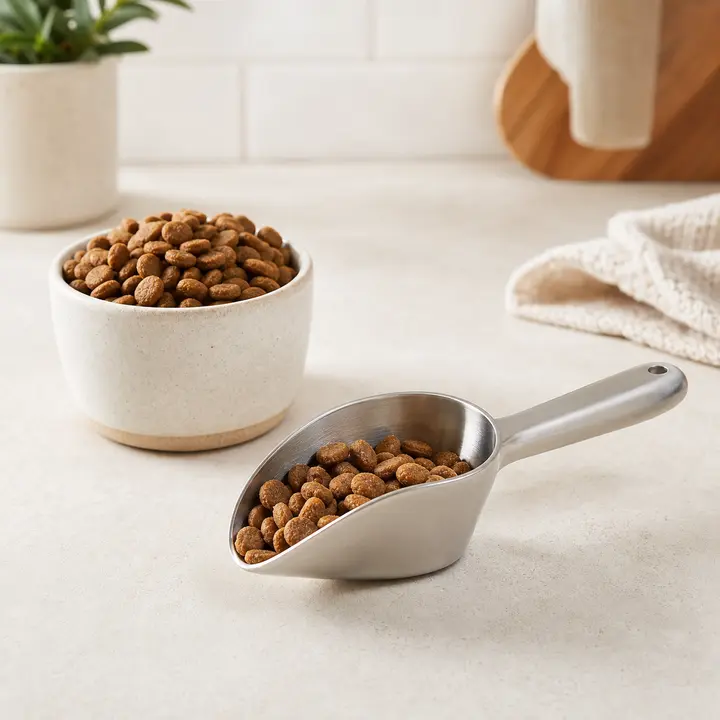
Measuring scoop
Helps the feeding directions become a repeatable meal amount instead of a guess by sight.
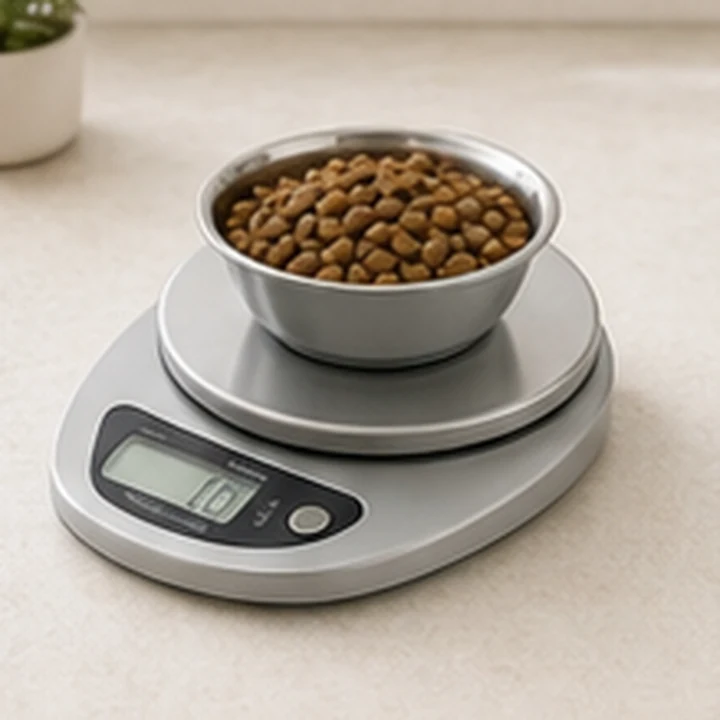
Portion scale
Useful when the new food is richer, your dog is small, or the portion needs more than a rough scoop.
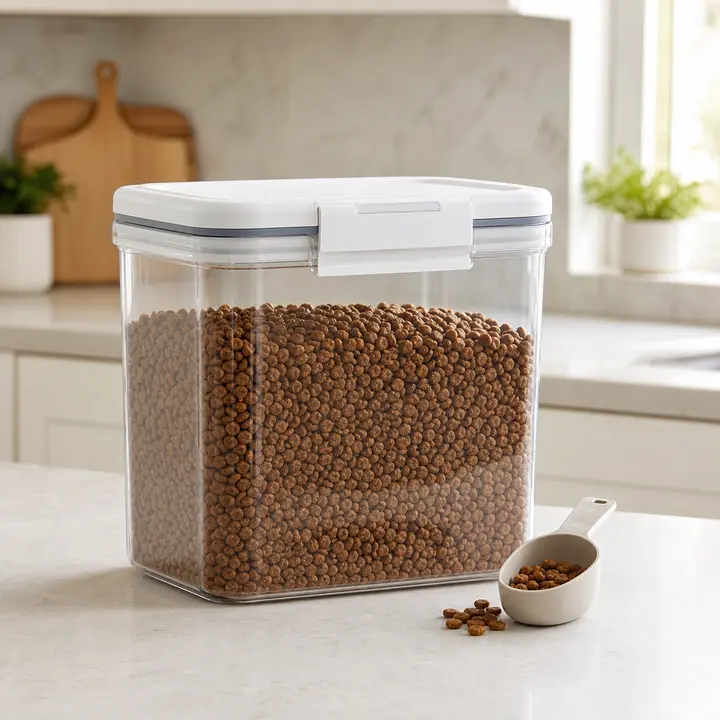
Airtight food storage
Keeps food sealed while the original package stays nearby for lot codes and feeding notes.
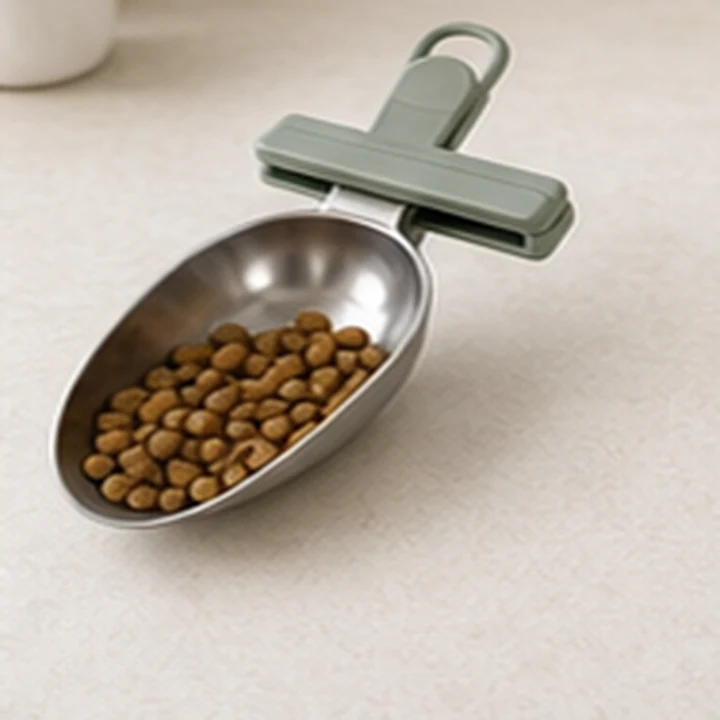
Food scoop with clip
Helps keep the original bag closed after you check the label, lot code, and feeding directions.
Common questions
What should I read first on a dog food label?
Find the adequacy statement first, then check the life stage, calories, and feeding directions before you compare ingredients.
Is the first ingredient the most important thing?
No. It is one detail, but calories, adequacy, life stage, and the full formula matter more than one ingredient.
Does grain-free mean better?
No. Grain-free is not automatically better and is not the same as hypoallergenic.
When should I ask my vet about a food label?
Ask your vet if your dog is a puppy, large-breed puppy, senior, pregnant, overweight, losing weight, vomiting, itchy, or on a medical diet.