Updated
Dog food guide
How to Switch Dog Food Without Upsetting Their Stomach
Switch slowly unless your vet gave a different plan. Mix a little new food into the old food over several days, watch stool and appetite, and pause at the last comfortable mix if stool gets soft.
Change one thing first
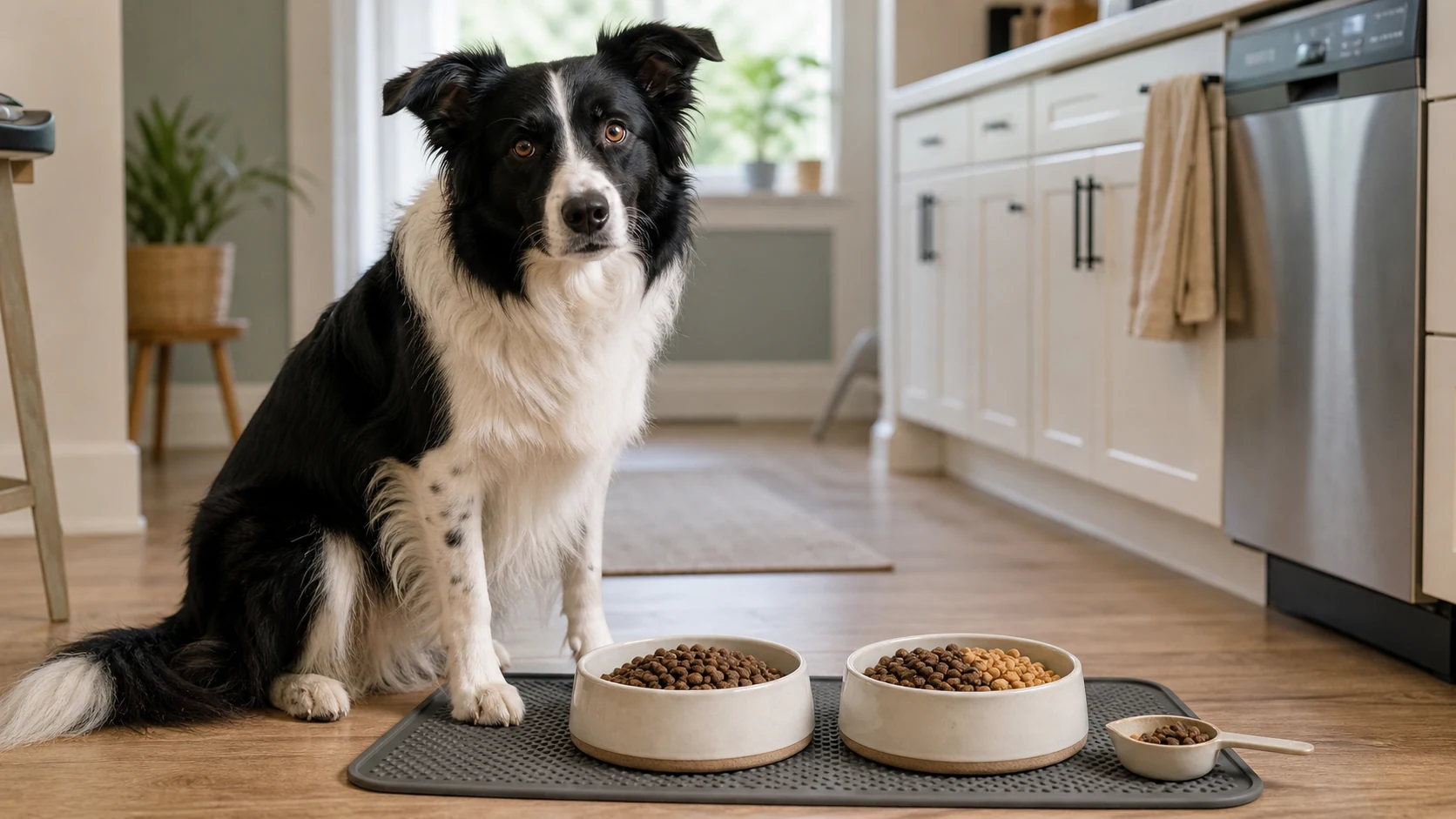
For the first few days, let the food be the main change. Use a clean bowl, keep meal times familiar, use the same treats, skip new toppers, and measure the old food before you add the new.
A busy morning, table scraps, a new chew, or an opened can of wet food can make stool and appetite harder to understand.
For example, the dog who skipped breakfast after a late-night chew may not dislike the new kibble at all. If stool gets soft after the half-and-half meal, the mix probably moved too fast. If dinner gets ignored after a chew-heavy afternoon, snacks may be part of it.
Simple transition schedule
Use this as a starting plan, not a race. Stay longer at any step for a sensitive dog, and follow your vet's instructions for prescription or medical diets.
A common pattern is simple: one dog needs a week, another needs two. Check the bowl, write down stool changes, and adjust the next meal instead of pushing through because the calendar says day five.
- Days 1-2 About 75% old food and 25% new food.
- Days 3-4 Half old food and half new food if stool and appetite look normal.
- Days 5-6 About 25% old food and 75% new food.
- Day 7 and after Serve the new food if your dog is eating comfortably and stool still looks normal.
- Any day If loose stool, gas, vomiting, or refusal shows up, go back to the last mix that worked for a few meals.
Watch stool, appetite, and comfort
After breakfast and dinner, make one quick note: ate it, picked around the new pieces, stool soft, extra gas, normal walk, skipped after treats.
Those notes tell you whether the next scoop of new food should be bigger, smaller, or left alone. Soft stool, gas, lip licking, pacing, or belly tenderness means hold the current mix or step back.
Think of the bright dog who leaves a few new pieces but still trots out for a normal walk. That is a different situation from a weak, painful, or suddenly unwell dog who refuses food.
Picky eaters during a food switch
Some dogs leave the new pieces or wait to see if something better arrives. Start with a smaller amount of new food, mix it well, or soften the meal with a splash of warm water.
Keep the offer predictable: one meal window, then pick it up and try again at the next normal meal. Cut training treats smaller during the switch so snacks do not replace dinner.
One small dog may eat perfectly at dinner once afternoon rewards are counted. Another dog may need the new food softened for a few meals before the smell and texture feel familiar.
For sensitive stomachs, slow the schedule
Some dogs need two or three extra days at each step. If the last mix went well, stay there for a few more meals before adding more new food.
Keep the rest of the day familiar: no rich leftovers, no new chews, and no topper test while you are trying to learn what the food is doing. If your vet is checking allergies or your dog is on a prescribed diet, use that plan.
If your dog has a sensitive stomach, bring your notes to your vet when loose stool keeps returning. Meal timing, treats, medication, and the exact mix can all matter.
When to call your vet
Call your vet if vomiting repeats, diarrhea is bloody or severe, your dog seems weak or painful, appetite drops suddenly, or symptoms do not settle when you slow the change down.
Call sooner for puppies, senior dogs, tiny dogs, medically fragile dogs, and any dog on a prescribed diet. If your vet gave you a schedule, follow that schedule.
Check portions before the final switch
Before the new food becomes the regular dinner, compare calories per cup or can. One cup of the old recipe may not feed the same as one cup of the new one.
Once you choose the portion, leave it alone for a few days. Changing amount, texture, treats, and food type all at once makes stool and appetite harder to understand.
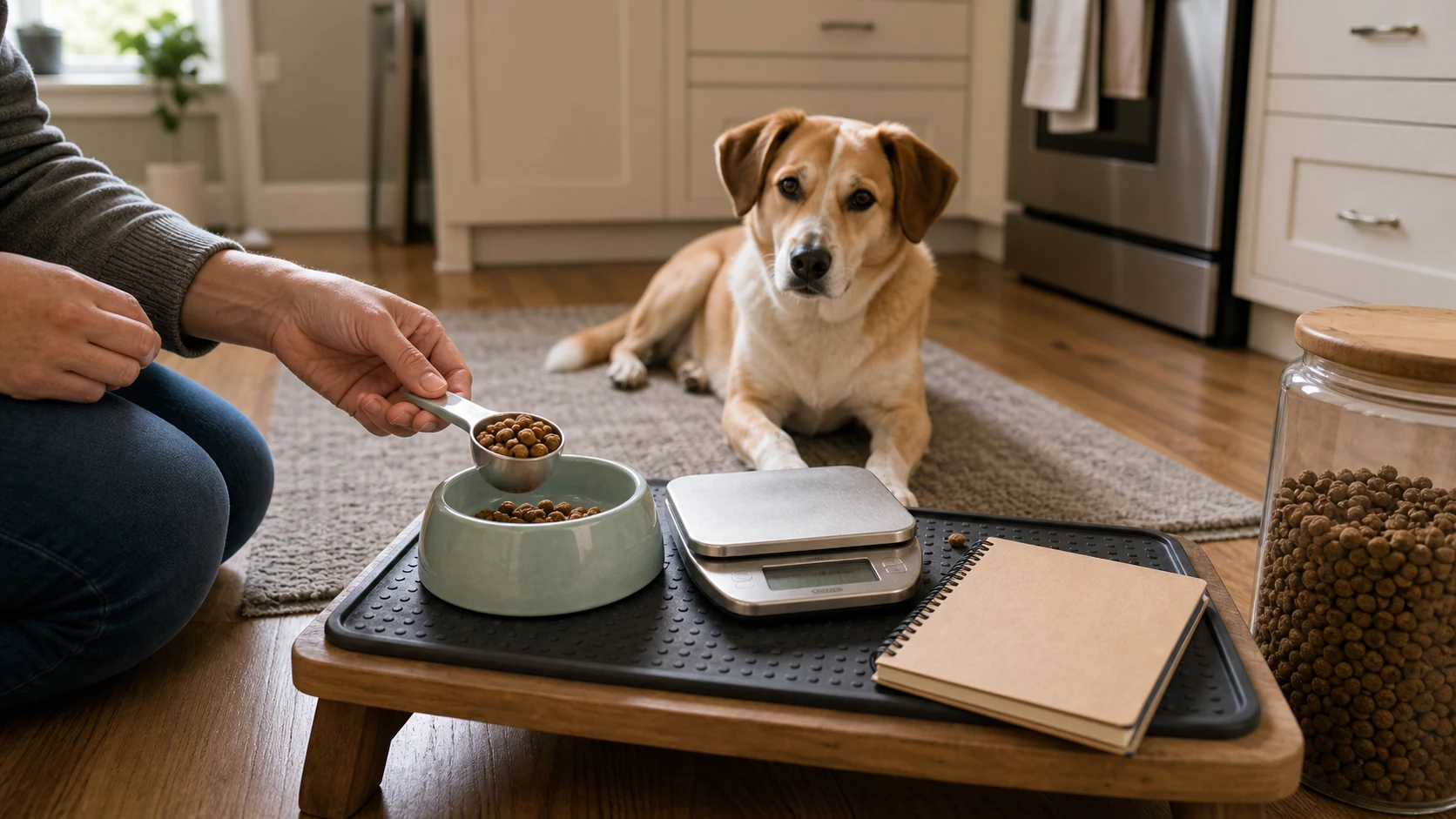
A few useful tools
A measuring scoop is enough for most switches. Add a slow feeder only if your dog gulps meals; it should not become another food change.
Affiliate links: Furball Cove may earn from qualifying purchases at no extra cost to you.
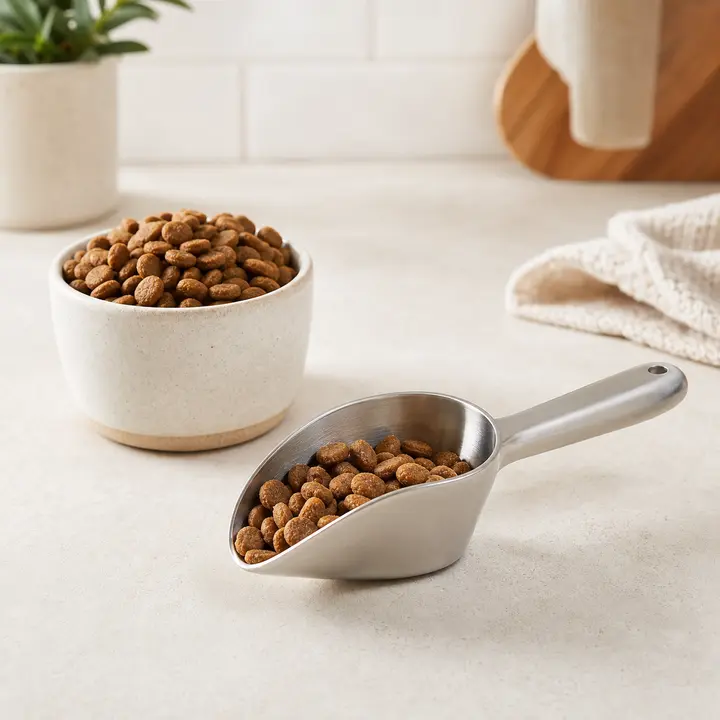
Measuring scoop
Keeps each old-and-new mix repeatable, especially when one extra handful would change the plan.
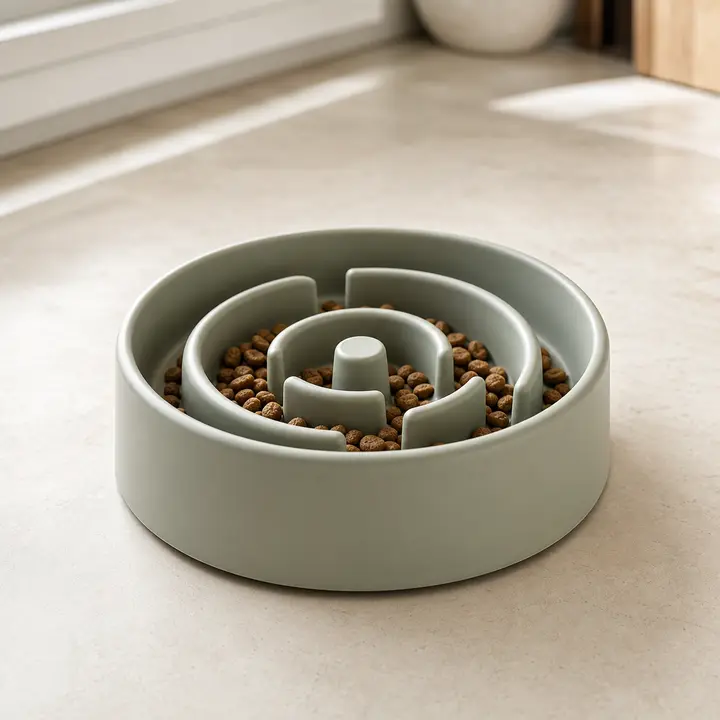
Slow feeder bowl
Useful only if your dog gulps the mixed meal; it slows eating without changing the food again.
Portion scale
Useful when the old and new foods have different calories and the scoop stops being honest.
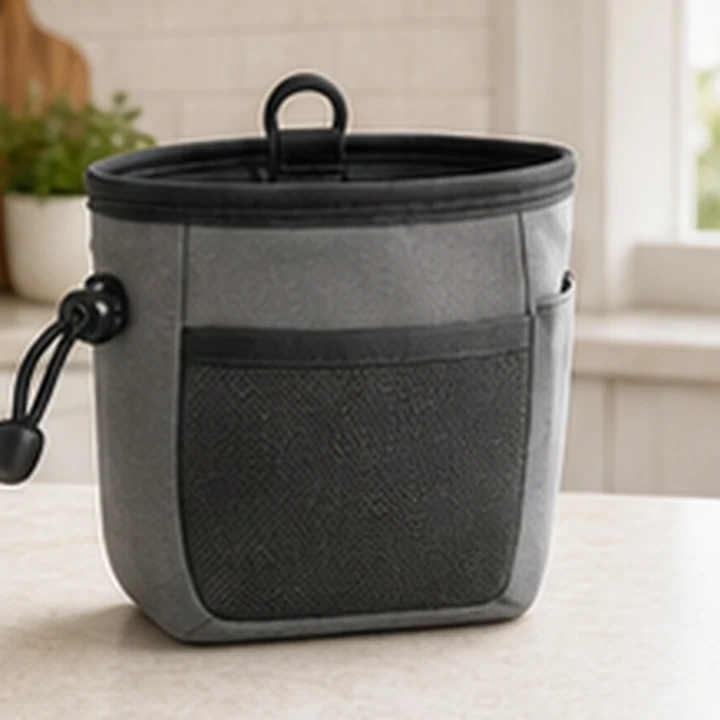
Travel food container
Keeps a pre-mixed meal steady if the transition week overlaps with a trip or sitter.