Updated
Dog food guide
Sensitive Stomach or Food Allergies? Slow Down Before You Switch Again
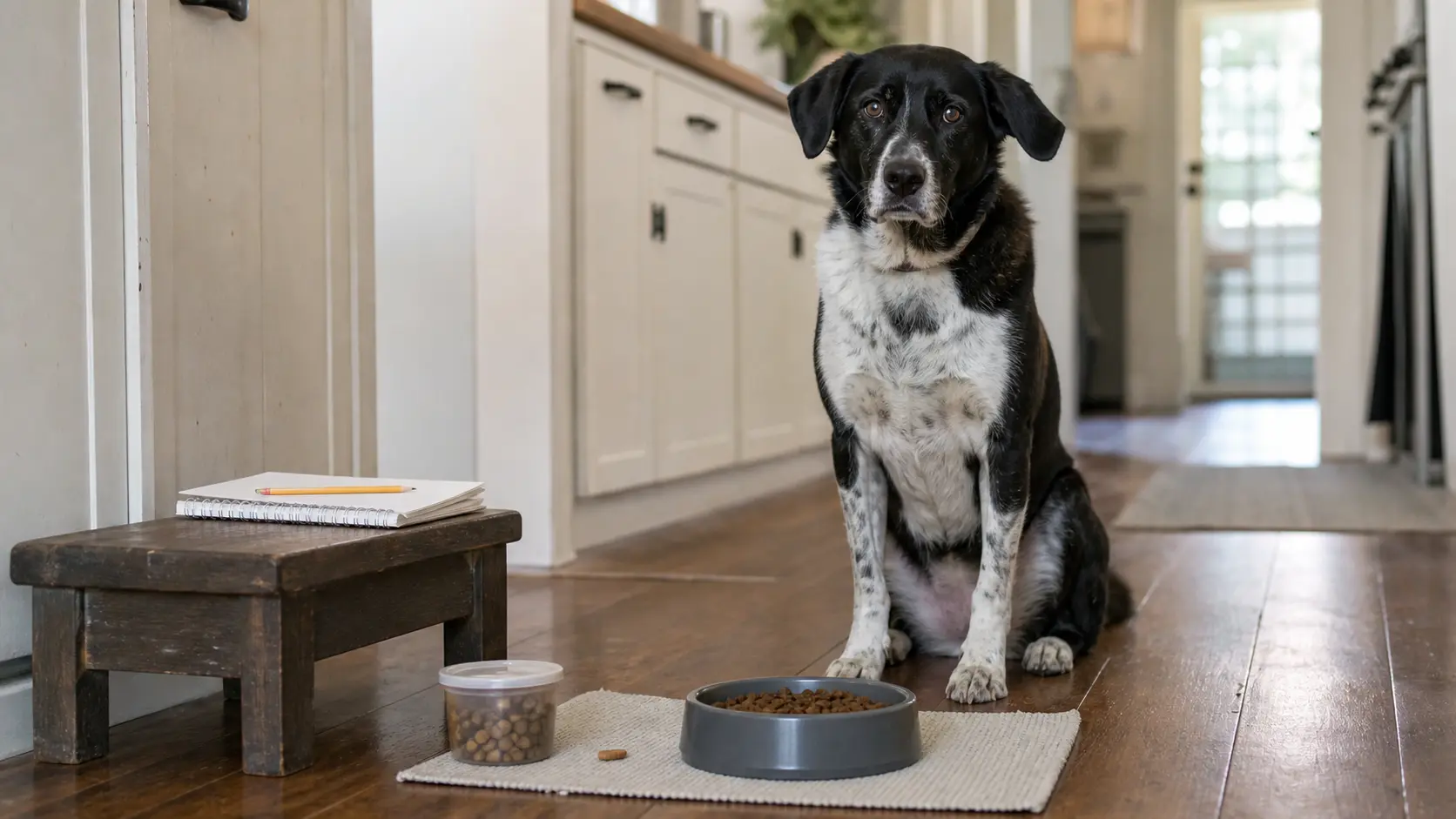
Start with one consistent food and a one-week log before you switch again. Write down meals, rewards, chews, stool, itching, vomiting, and timing so you and your veterinarian have a real pattern to read.
Start with one consistent week
A dog with a sensitive stomach can make every bag look suspicious. One food causes loose stool, the next seems better for three days, then a dental chew or leftover chicken sneaks in and the whole picture gets muddy.
Try this for one week before you switch again: choose one complete food, measure the meal amount, and write down everything else your dog eats. Check rewards, chews, meal add-ins, table scraps, flavored medicine, and the bite someone gave under the table.
You are not trying to solve the whole mystery in seven days. You are trying to give yourself and your vet a cleaner starting point, especially if your dog seems hungry, itchy, gassy, or uncomfortable after meals.
When your dog eats well on a busy morning but skips dinner after a rich chew, that detail matters. It keeps the next step focused instead of turning every meal into a new food search.
What to track
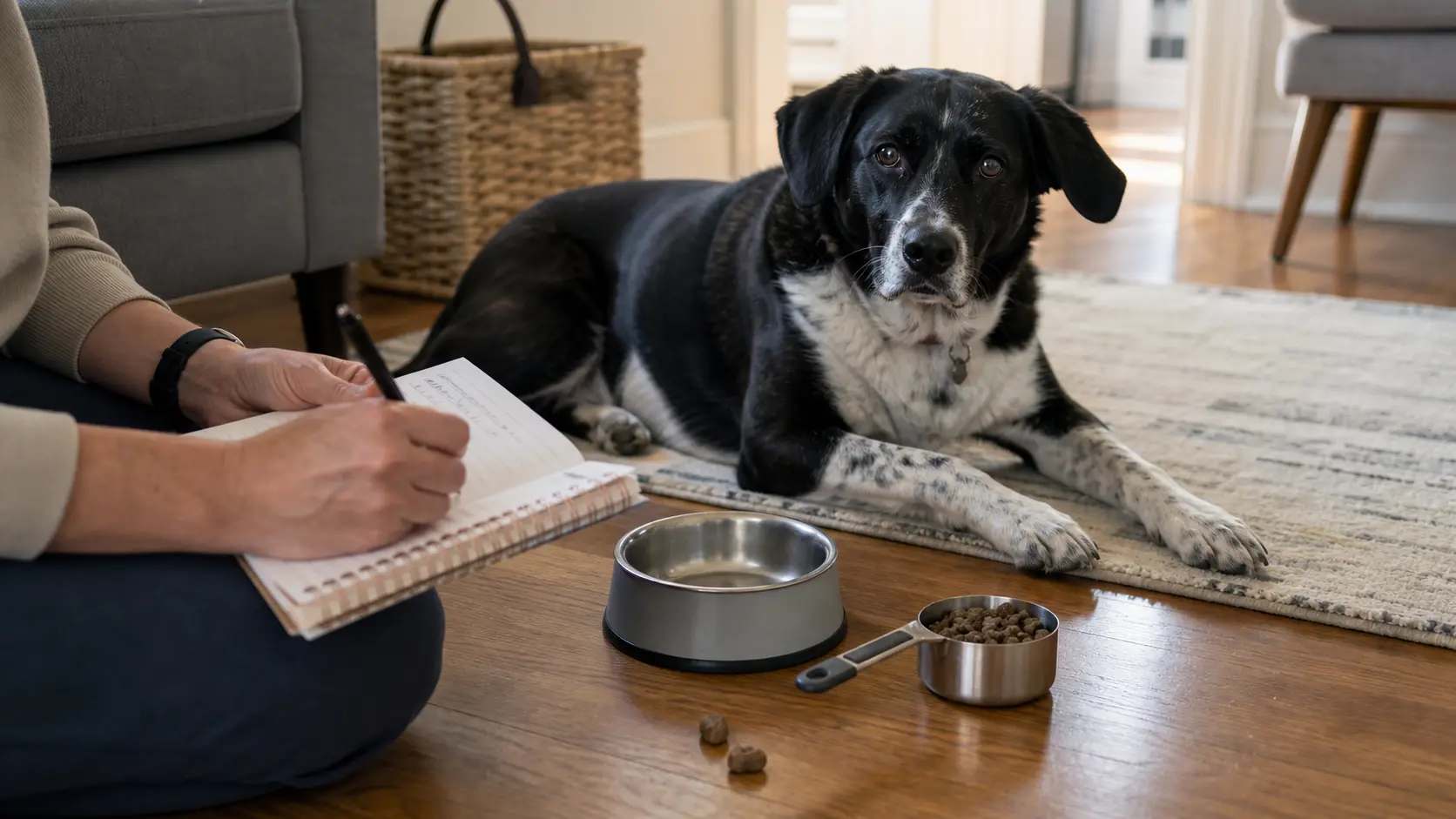
Keep the log short. A note on your phone is enough: breakfast, dinner, rewards, chews, stool, vomiting, itching, ear rubbing, appetite, and anything unusual.
For example, Monday looked fine until you notice the bully stick after lunch. Tuesday had soft stool after a new meal add-in. Wednesday was normal because dinner stayed unchanged. Those plain notes are useful.
The goal is not to diagnose your dog from a notebook. The goal is to stop guessing long enough to see whether the pattern belongs to the main food, the extras, the transition speed, or something your veterinarian should check. Bring that log to your vet if symptoms keep coming back.
If your dog skips breakfast after a rich chew, write that down too. If they eat happily but lick their paws all evening, that belongs in the same note. Small details are easier to trust when you record them the day they happen.
Sensitive stomach basics
For many dogs, the first win is not a fancy food. It is fewer changes at once. A consistent food, measured meals, clean water, and a slower transition can tell you more than three new formulas in a row.
A common pattern is the weekend stomach wobble: daycare snacks on Friday, pizza crust from a kid on Saturday, a new chew on Sunday, then soft stool on Monday. The food may be part of the story, but it is not the only clue. Look for what changed before you change the main meal again.
I would also check the boring stuff: how fast your dog eats, whether the water bowl is clean, whether the food was stored well, and whether dinner lands too far from breakfast. Sometimes the fix starts with measuring, timing, or storage instead of a brand-new recipe.
For a dog who does fine with breakfast but gets loose stool after an opened can is added at night, the add-in is worth tracking before you blame the main food.
| Main food | Record brand, formula, protein, flavor, and the day you started it. |
|---|---|
| Treats and chews | Extras often contain protein, fat, dairy, smoke flavor, or rich ingredients that get missed. |
| Toppers and scraps | A spoon of wet food, broth, yogurt, pumpkin, or leftovers can change the whole day. |
| Timing | Stool, vomiting, itching, and ear rubbing are easier to read when you know what happened first. |
Allergy caution
Itching, ear trouble, licking paws, vomiting, and diarrhea can come from more than food. That is why allergy guessing gets frustrating so fast.
If your veterinarian recommends a diet trial, the rules matter. Chews, flavored medicine, table scraps, meal add-ins, and a chicken snack from a neighbor can spoil the test. Ask what counts as allowed before you start, and write down any slip so the result is easier to read.
Think of the dog who gets itchy every spring and also changed food in April. That may be food, pollen, fleas, ears, skin, or more than one thing at once. Watch for timing, take photos if your vet asks for them, and avoid turning every symptom into a new food order.
If your dog rubs their ears after dinner, check whether the same thing happens after breakfast, after a chew, or after a day at the park. If your dog licks paws only after rainy walks, that is useful context too.
Transitioning slowly
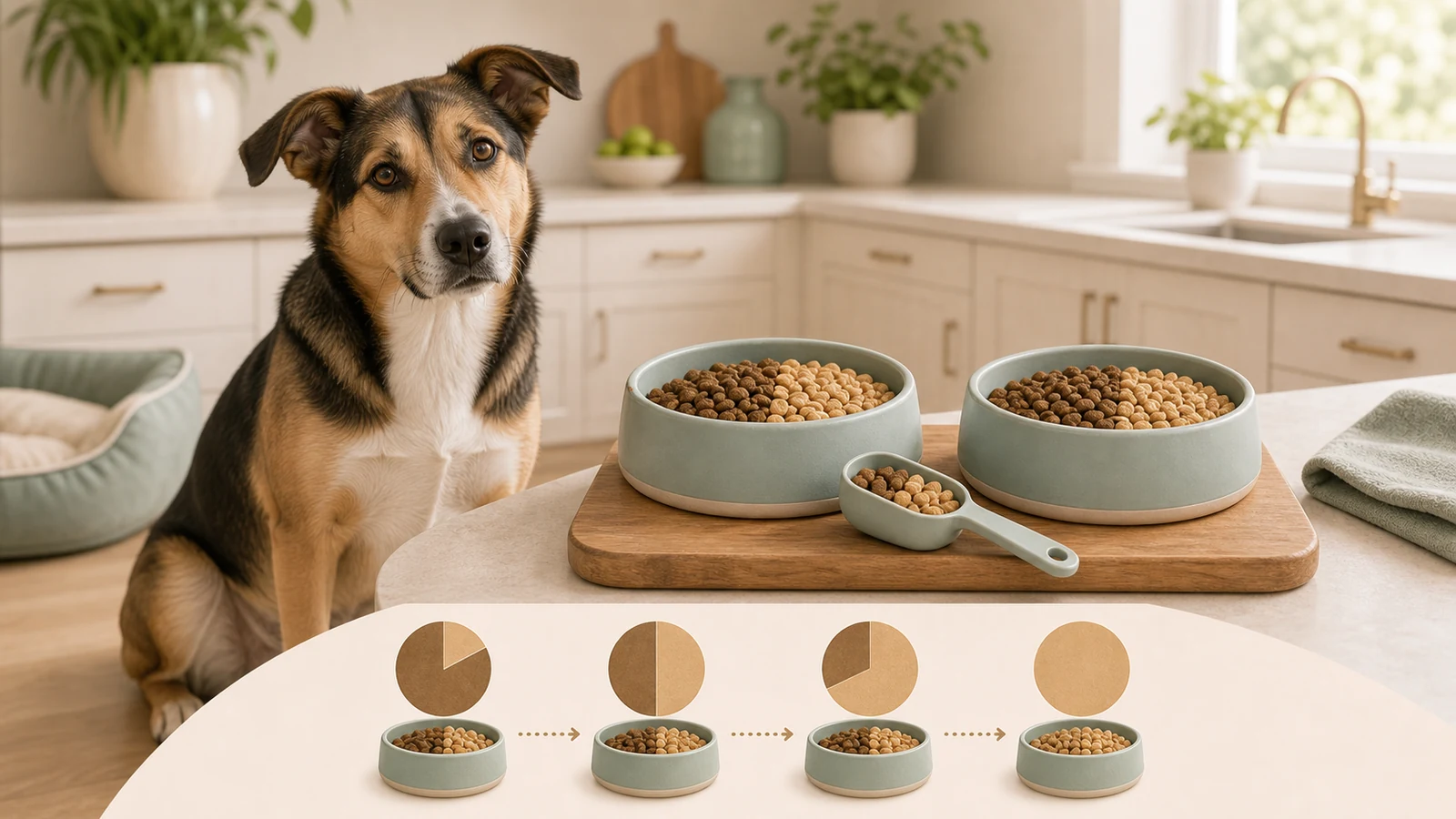
Sensitive dogs often need slower changes than the back of the bag suggests. If your dog has had soft stool with fast switches, stretch the transition and keep the rest of the day unchanged.
A practical plan is this: change the main food slowly, avoid new snacks during the switch, and wait before judging the result. If stool gets worse, vomiting starts, appetite drops, or your dog seems off, pause and call your vet instead of pushing through.
If your dog is bright, hungry, and only a little soft for one meal, hold the mix and watch the next bathroom trip. If your dog seems painful, weak, dehydrated, or repeatedly sick, skip the experiment and get help.
- Start with the old food and add a small amount of the new food.
- Hold the same mix for a few meals if stool gets soft but your dog otherwise seems bright.
- Keep rewards, meal add-ins, chews, and table scraps out of the test while you watch the response.
When the food may not be the problem
Sometimes food gets blamed because it is the easiest thing to change. A dog who vomits bile before breakfast may need meal timing checked. A dog who gulps dinner may need a slower bowl. A dog with chronic ear trouble may need a veterinarian exam, not a fourth bag of food.
Look for the everyday pattern before you shop again. Does your dog get soft stool after training rewards? Do they seem uncomfortable after a car ride? Does a skipped dinner happen only when the house is loud or busy?
Bring your notes instead of a perfect theory. The list of foods, rewards, chews, stool changes, itching, and timing gives your veterinarian something real to work with.
| Every food seems to fail. | Stop changing randomly and review the full food, snack, and symptom log with your veterinarian. |
|---|---|
| Symptoms improve, then return. | Look for rewards, chews, scraps, flavored medicine, or meal add-ins that came back into the day. |
| Stool gets worse during a switch. | Slow the transition and keep extras out of the test unless your veterinarian says otherwise. |
| You suspect an allergy. | Ask about a clean diet trial instead of guessing from ingredient lists alone. |
When to ask your vet
Call your vet for repeated vomiting, severe diarrhea, blood, weight loss, weakness, pain, dehydration, chronic itching, recurring ear problems, or symptoms that keep coming back. If your dog is young, senior, already sick, or not acting like themselves, get help sooner.
For the appointment, bring the notes: food name, start date, rewards, chews, meal add-ins, stool changes, vomiting, itching, ear trouble, and appetite. That list is more useful than trying to remember three messy weeks from memory.
Helpful tools
These are quiet tools for keeping the test clean and repeatable. They are not allergy treatments.
Affiliate links: Furball Cove may earn from qualifying purchases at no extra cost to you.
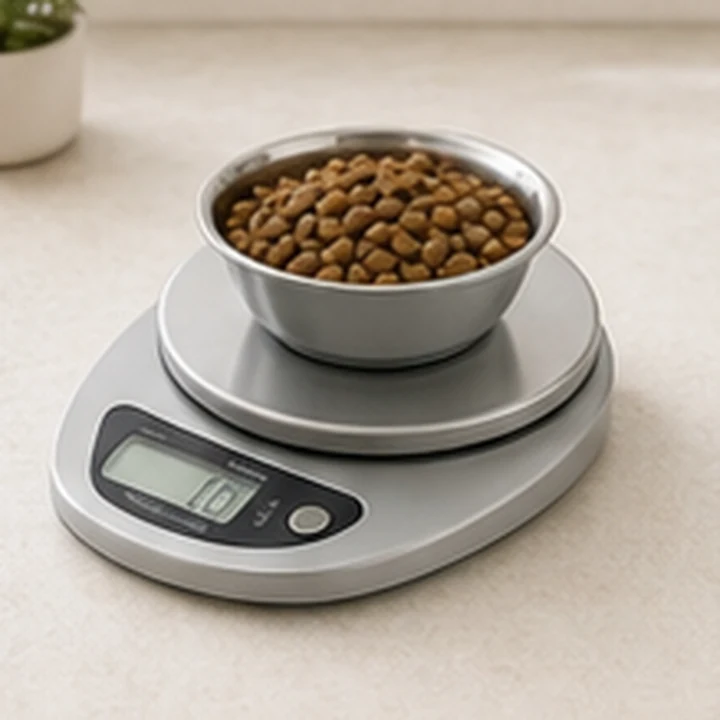
Portion scale
Useful when a sensitive dog needs the same meal amount every day while you track stool, appetite, and extras.
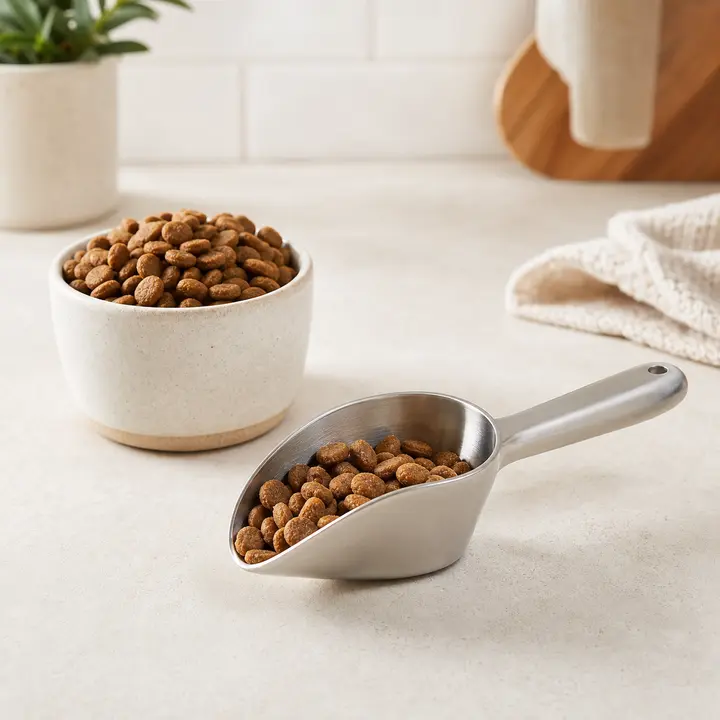
Measuring scoop
Helps keep the same kibble amount in the log when stomach symptoms make every small change matter.
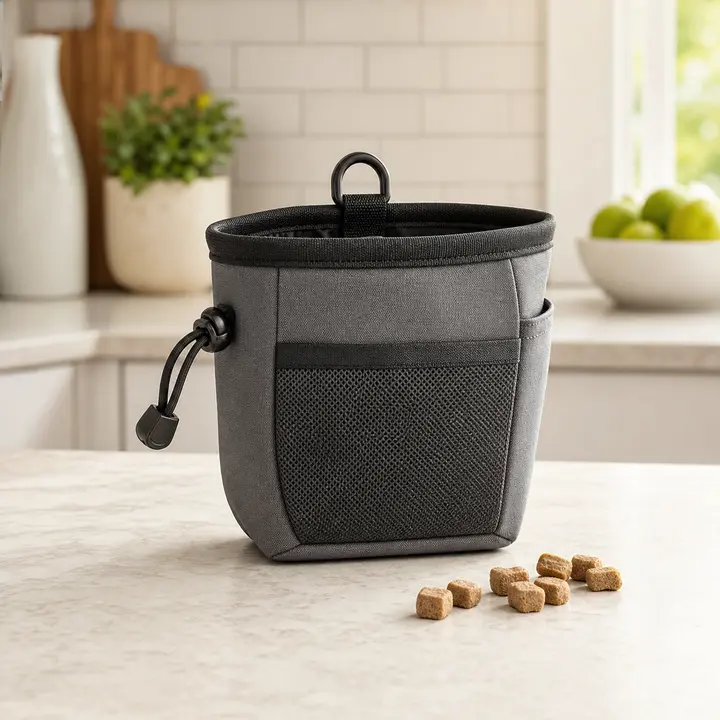
Training treat cup
Useful for counting tiny rewards so snacks do not quietly blur the food trial.
Treat jar
Keeps approved treats separate so symptom notes are not confused by random snacks.
Common questions
What should I feed a dog with allergies or a sensitive stomach?
Start with one complete food, stop random extras, transition slowly, and track symptoms. For recurring skin, ear, vomiting, diarrhea, or weight problems, work with your veterinarian before guessing at allergies.
Is grain-free food best for allergies?
Not automatically. Food reactions are individual, and grain-free does not mean allergy-safe or sensitive-stomach-safe.
Can snacks cause stomach or skin symptoms?
Yes. Training rewards, chews, meal add-ins, table scraps, and flavored medications can all matter when you are trying to read a pattern.
How fast should I change foods for a sensitive dog?
Go slower than you think. Many sensitive dogs do better with a gradual transition, and recurring or severe symptoms should be discussed with your veterinarian.