Updated
Dog food guide
What Should I Feed My Puppy?
Puppies need complete food made for growth, served in portions and meal times that fit their age. Start with the label, keep the first week familiar, and do not use adult food as the default unless your vet says it fits.
Quick answer for real life
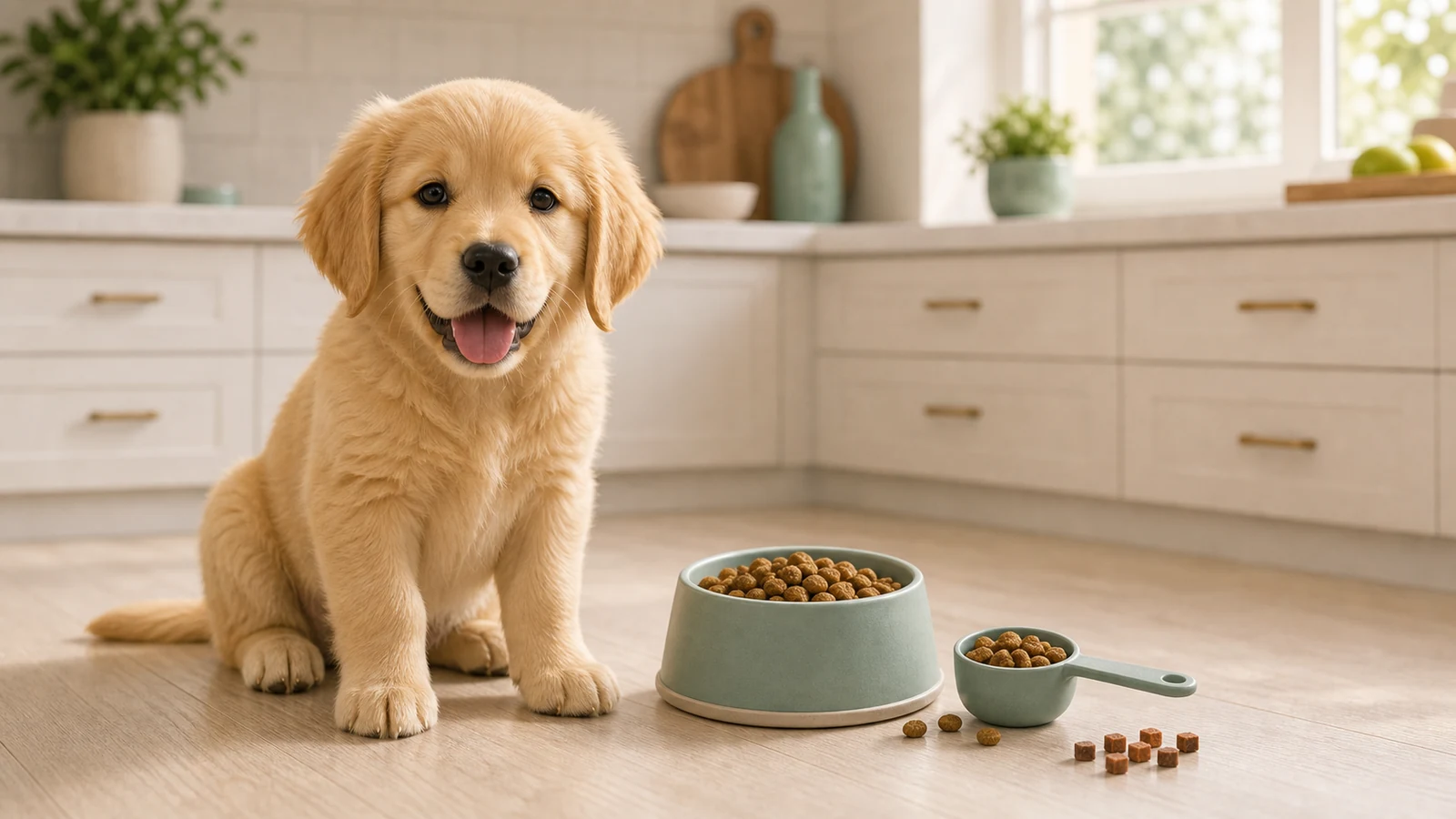
Start with a complete puppy food, not a random adult formula served in a smaller bowl. Look for growth or all-life-stages wording, then check whether the label has guidance for large-breed puppies.
A good puppy routine feels boring in the best way: predictable meals, tiny training rewards, slow food changes, fresh water, and body-condition checks as your puppy grows. If your dog came home with food from a breeder, rescue, or shelter, keep that first week steady before you switch.
What puppy food needs to do
Puppy food has a bigger job than keeping the dish full. Your puppy is building bone, muscle, teeth, immune function, and a brain that is learning the house rules at the same time.
Check the adequacy statement before you fall for the front of the bag. If the food is only for adult maintenance, ask your veterinarian before using it as your puppy's main diet. For example, a puppy who looks hungry after dinner may need better meal spacing, not a random adult-food upgrade.
Meal frequency
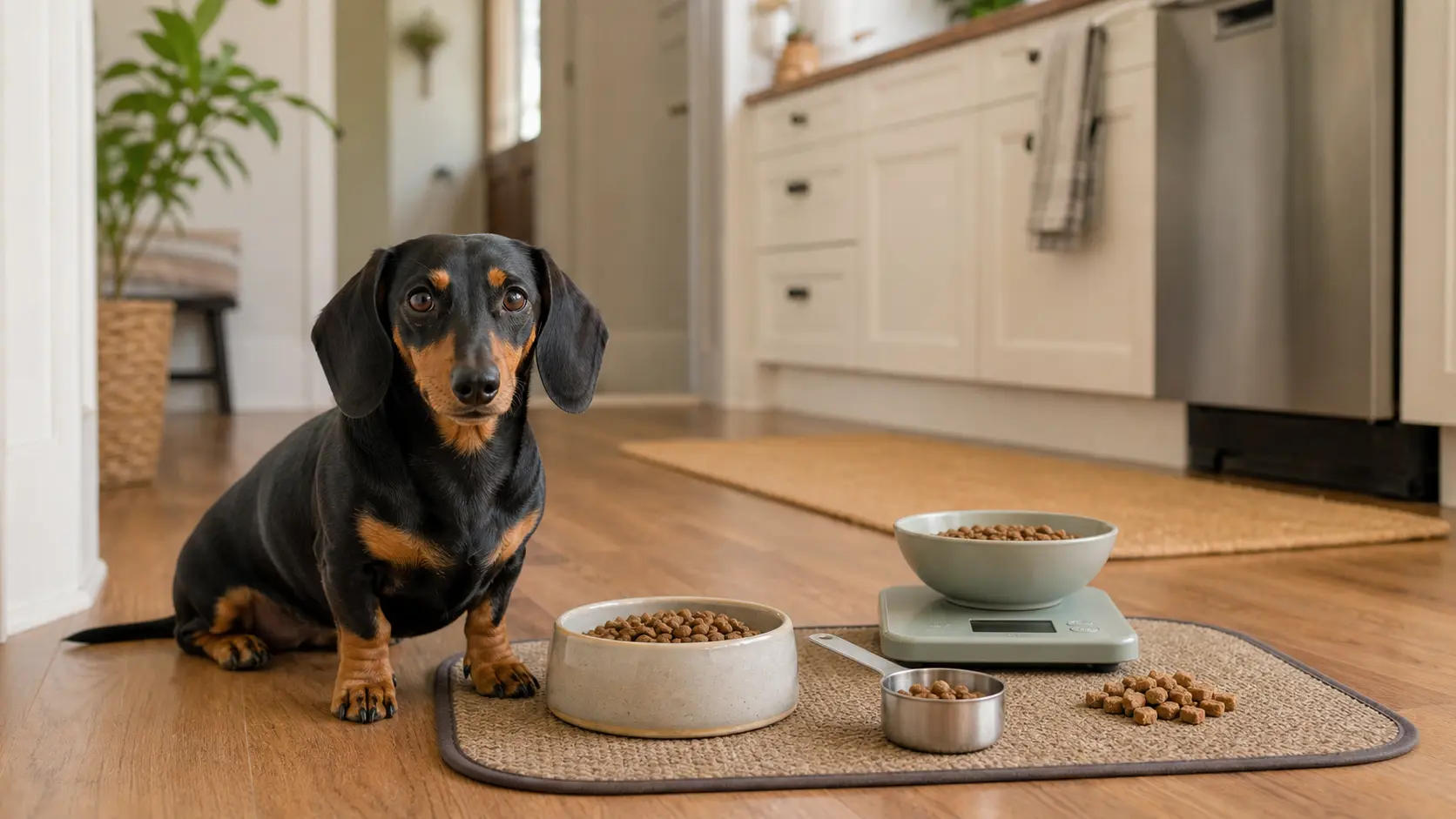
Many puppies do better with several smaller meals before they settle into an adult rhythm. A tiny puppy may not feel good going too long between meals, and a busy puppy may also need meal timing that works with potty breaks and naps.
If breakfast gets rushed, try setting the scoop and bowl in the same place each morning. When your puppy knows the rhythm, meals can become part of potty training, short practice sessions, and a calmer nap afterward. Think of the puppy who wakes up hungry, eats, goes outside, practices two cues, and then finally settles because the normal day makes sense.
Portions and growth
Use the label as a starting point, then watch the puppy in front of you. Growth should feel steady, not like you are trying to make your puppy bigger as fast as possible.
For example, a puppy who is getting training snacks all morning may need those rewards counted from the daily food plan. If your puppy's ribs disappear under a soft layer or weight changes quickly, ask your vet what to adjust. Some dogs look lanky during growth spurts, so track appetite, stool, waist, and energy instead of reacting to one odd-looking week. After a week of notes, it is easier to see whether your puppy is truly hungry, growing normally, or just asking for more because the rewards are fun.
Large-breed puppy note
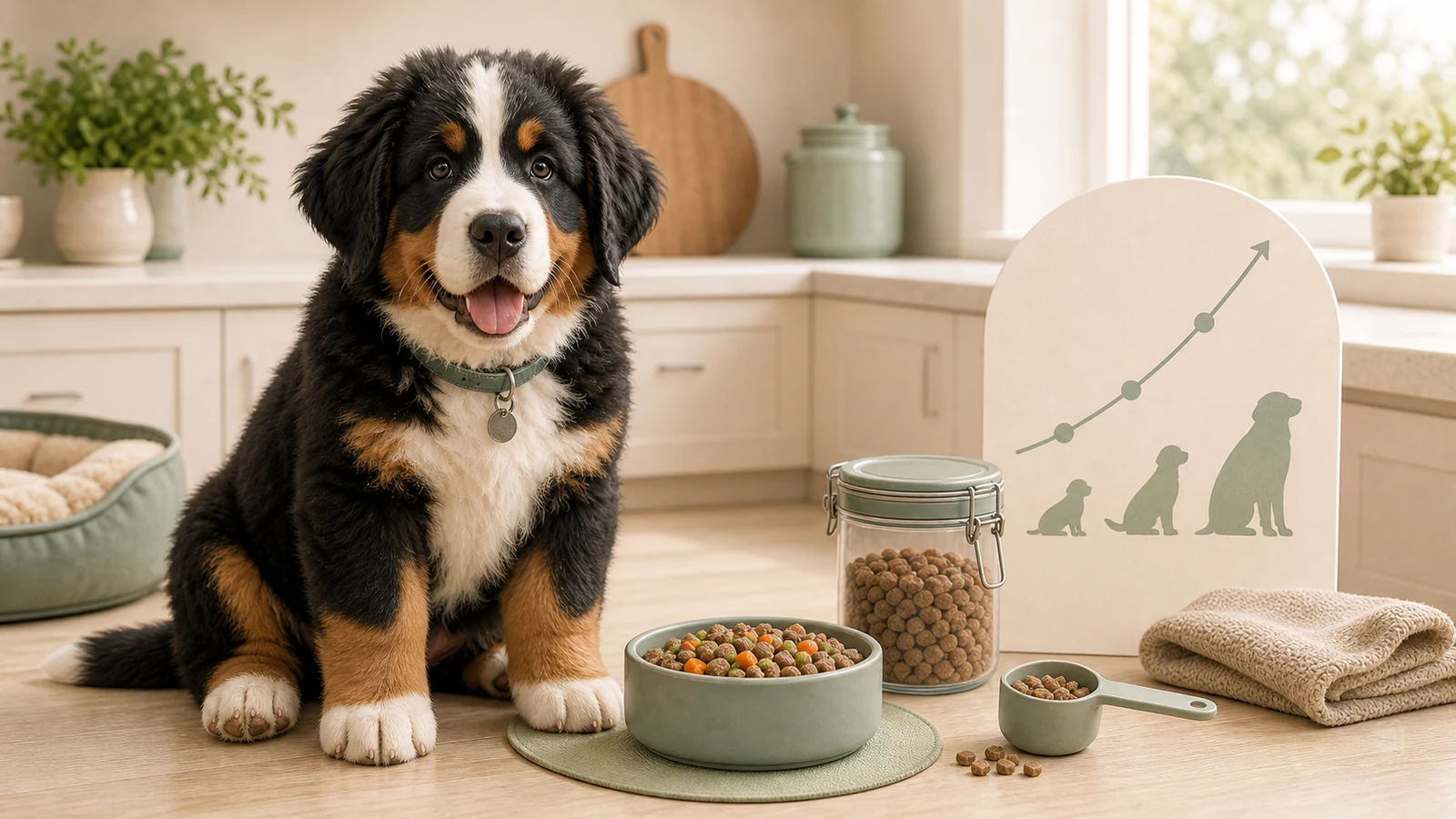
If your puppy may become a large or giant adult, food choice deserves extra care. Large-breed puppy foods are made to support controlled growth, not just bigger servings.
Ask your breeder, rescue, or veterinarian what adult size they expect. When in doubt, compare the label with a large-breed puppy guide before you buy the next bag. A puppy with giant paws and a fast-changing body deserves more care than just filling the scoop higher.
Treats and training
Puppies learn all day, so food often becomes part of training. Keep rewards tiny: one soft treat can be broken into smaller pieces, and some practice can use kibble from the measured meal.
A common puppy day includes sit practice, crate rewards, door manners, leash practice, and a chew for settling. Count those extras before they crowd out the food doing the real growth work. If your puppy is wild before bedtime, a short training game with measured kibble may help more than another snack. For a dog who gets rewards on every walk, every crate entry, and every visitor greeting, look for the extras before you blame the main food.
How to start
- Check the label Look for growth or all-life-stages wording before choosing the food.
- Keep the first week familiar Start with the food your puppy was already eating when possible.
- Transition slowly Mix new food in gradually unless your veterinarian tells you otherwise.
- Measure the day Count meals, training rewards, chews, and table scraps.
- Watch the puppy Track stool, appetite, energy, ribs, waist, and comfort as your puppy grows.
- Ask early Call your vet if vomiting, diarrhea, poor appetite, weakness, or fast weight change shows up.
When to ask your vet
Ask your veterinarian about food if your puppy has vomiting, diarrhea, poor appetite, weakness, sudden weight change, suspected allergies, or a health condition. Young puppies can get into trouble faster than adult dogs, so do not wait on repeated or severe symptoms.
If your dog skips dinner, seems uncomfortable, or cannot keep food down, check the pattern instead of guessing. One missed meal after a big training day is different from a puppy who is quiet, droopy, and not acting happy.
Bring the food name, label, portion amount, treat list, stool notes, and your puppy's age and weight. Those details help your vet separate a feeding issue from a health issue.
Helpful tools
Choose tools that help you measure small meals, keep training rewards tiny, and make puppy feeding easier to repeat.
Affiliate links: Furball Cove may earn from qualifying purchases at no extra cost to you.
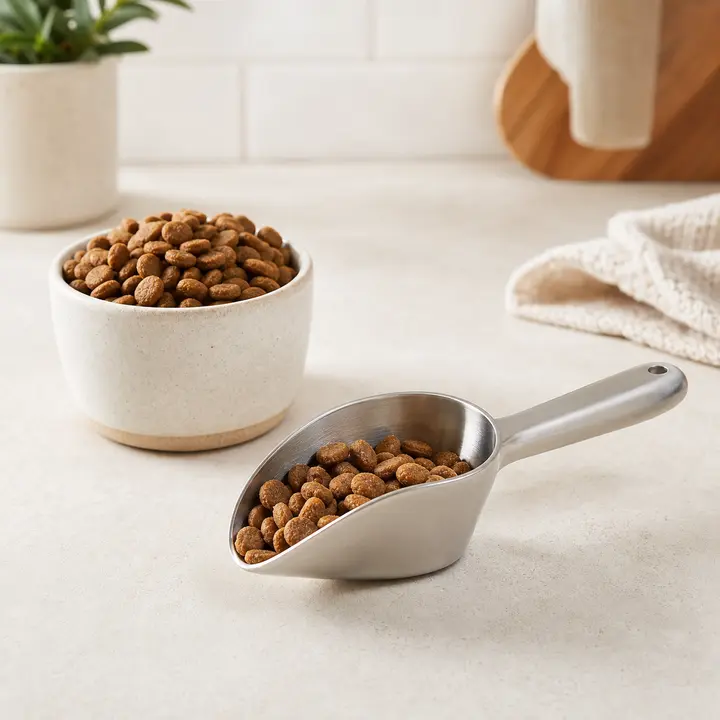
Measuring scoop
Keeps puppy meals consistent when mornings are busy or more than one person feeds.
Portion scale
Helps with small puppy portions where a little extra can become a lot over the day.
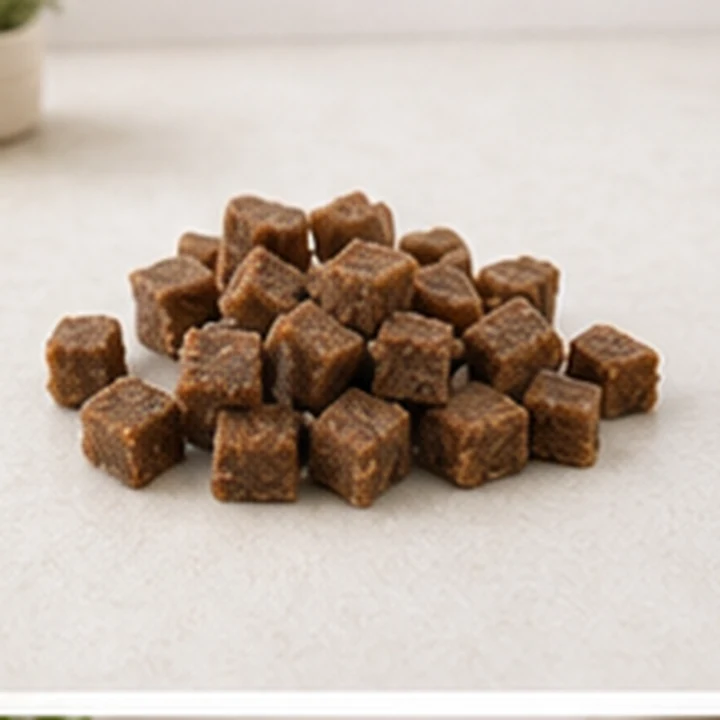
Small soft training treats
Tiny rewards are easier to count during puppy training, potty trips, and crate practice.
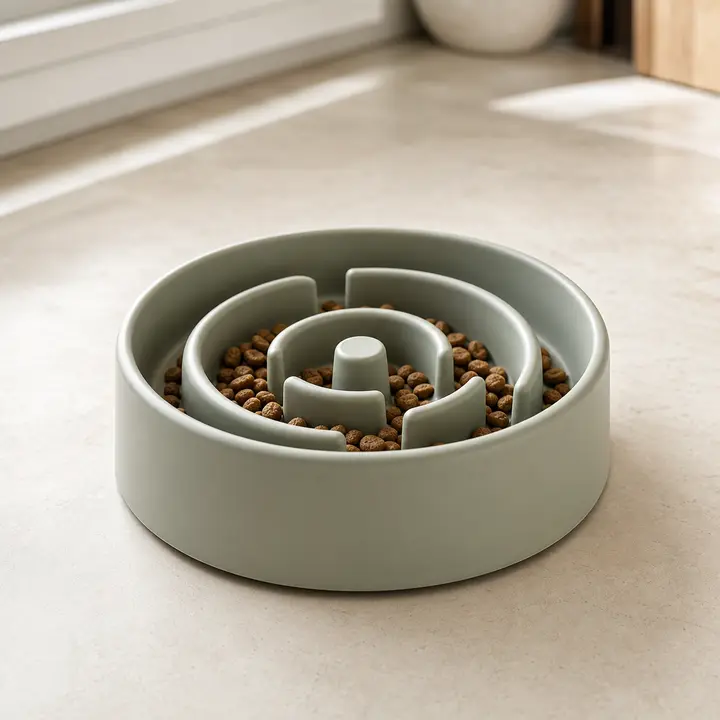
Slow feeder bowl
Can help a fast puppy slow down while you keep growth portions measured.
Common questions
Can puppies eat adult dog food?
Puppies usually need food labeled for growth or all life stages. Adult maintenance food may not meet growth needs unless your veterinarian specifically says it fits your puppy.
How often should puppies eat?
Many puppies do better with several smaller meals, then fewer meals as they mature. Ask your veterinarian how timing should change for your puppy's age, size, and health.
Do large-breed puppies need special food?
Often yes. Puppies expected to become large or giant adults may need food designed for controlled growth, so check the label and ask your vet if you are unsure.