Updated
Dog food guide
What to Look For in Senior Dog Food
Senior dogs do not all need the same food, but age can change appetite, teeth, weight, digestion, and health. Start with a one-week note check, and call your vet for sudden changes.
Quick answer for real life
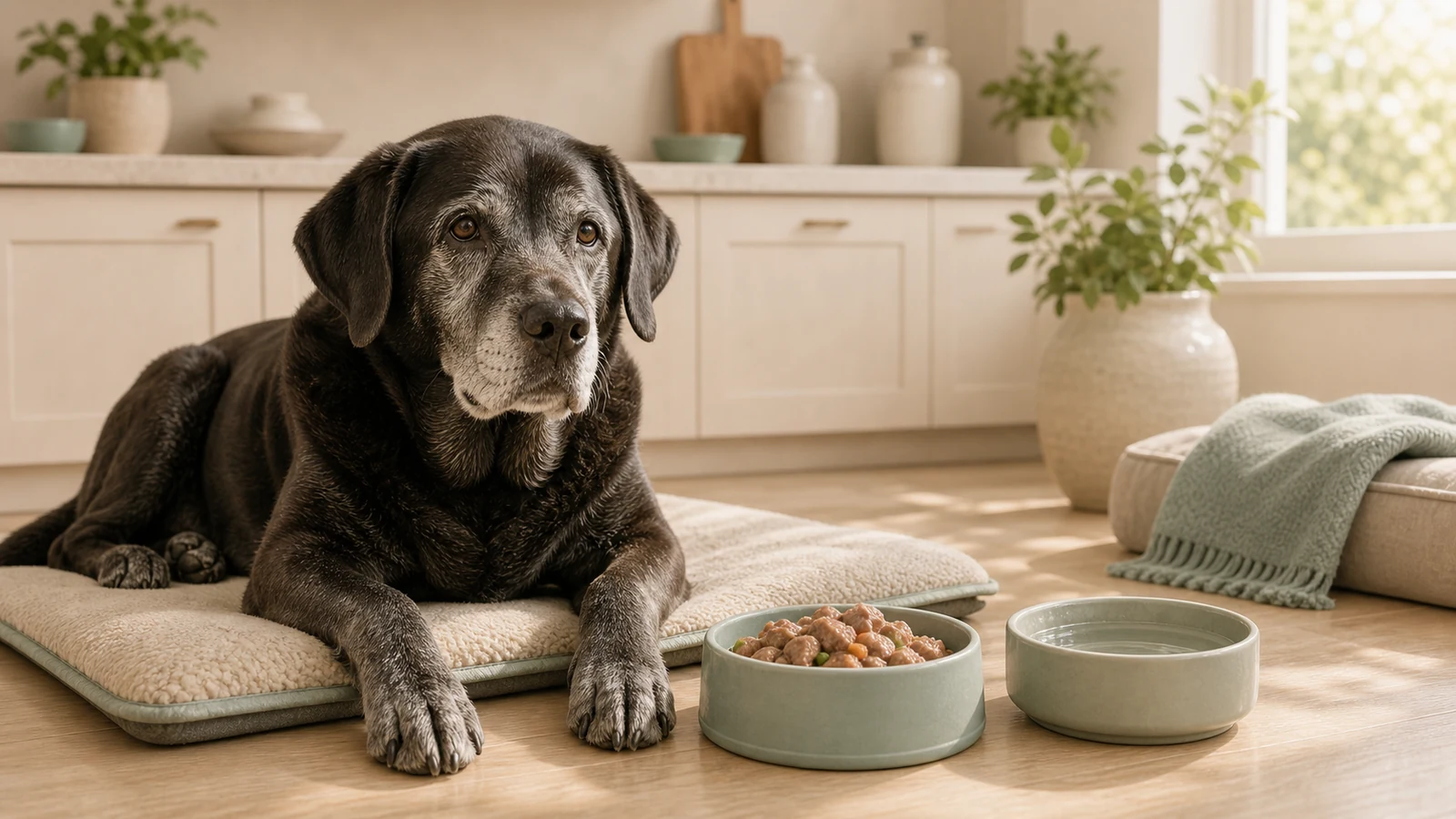
Senior dog food is not one universal formula. Age matters, but teeth, appetite, weight, muscle, stool, water intake, pain, and diagnoses matter more.
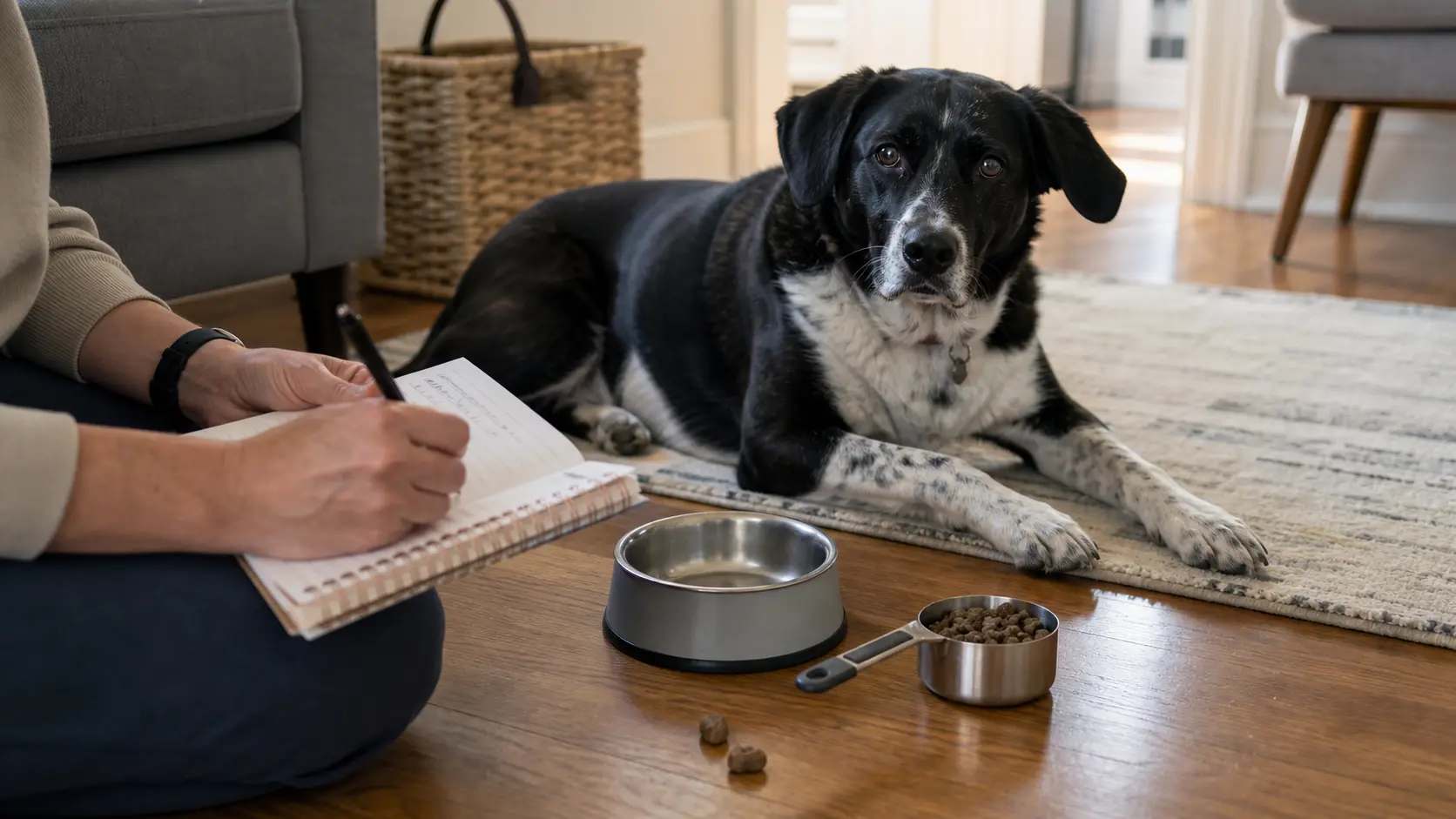
Start by watching the dog in front of you for a week: how breakfast goes, whether chewing looks comfortable, how walks feel, and whether thirst or bathroom habits have changed. You know your dog, so write down the small things that feel different.
What changes with age
A healthy ten-year-old dog and a medically fragile ten-year-old dog may need very different bowls. Some seniors do better with softer texture, some with measured calories, and some with the same complete food served in a steadier rhythm.
For example, a senior who still trots happily on walks may not need a dramatic food change. A dog who is losing weight, drinking more, avoiding kibble, or acting uncomfortable deserves a closer look.
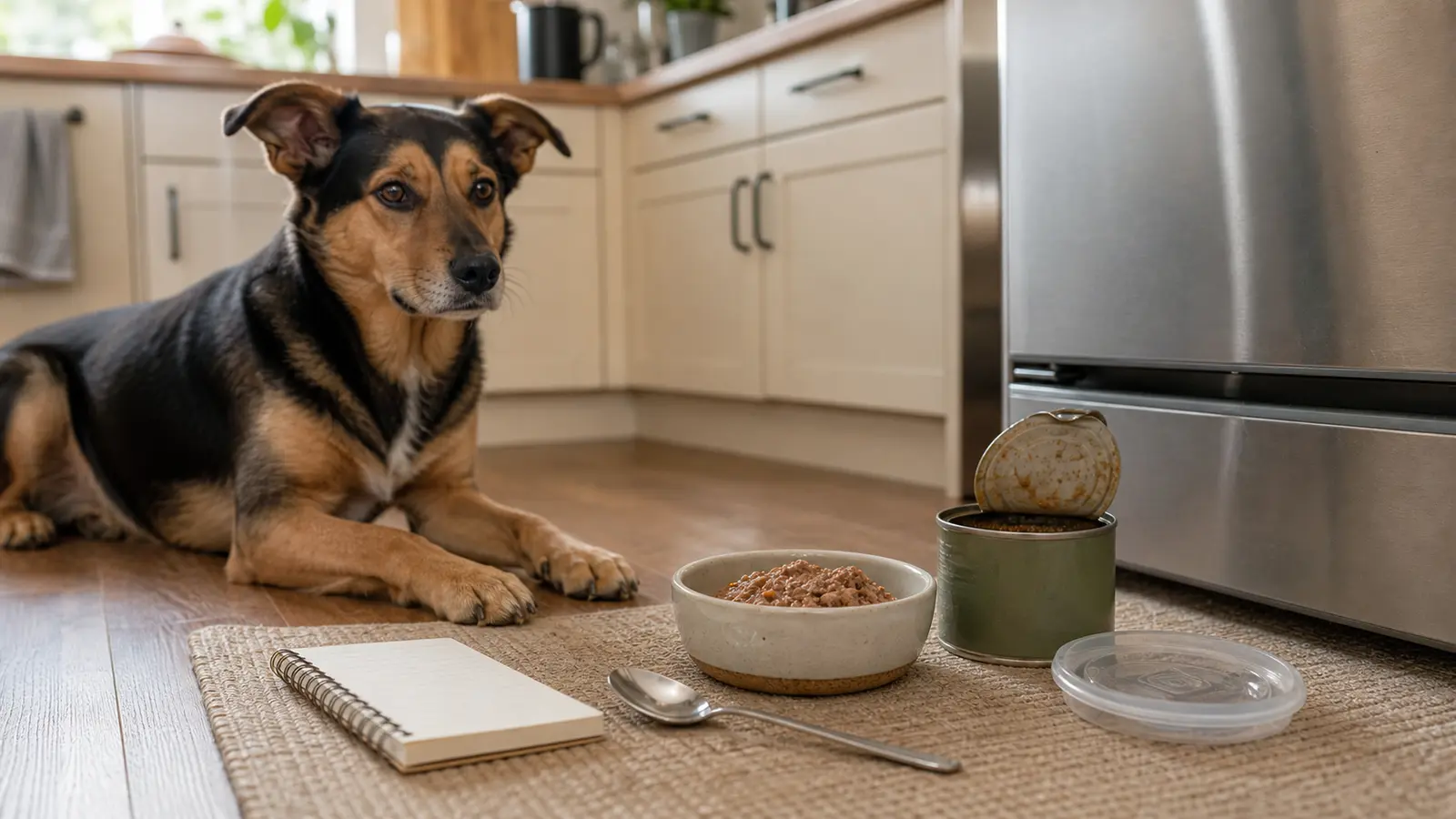
Texture and appetite
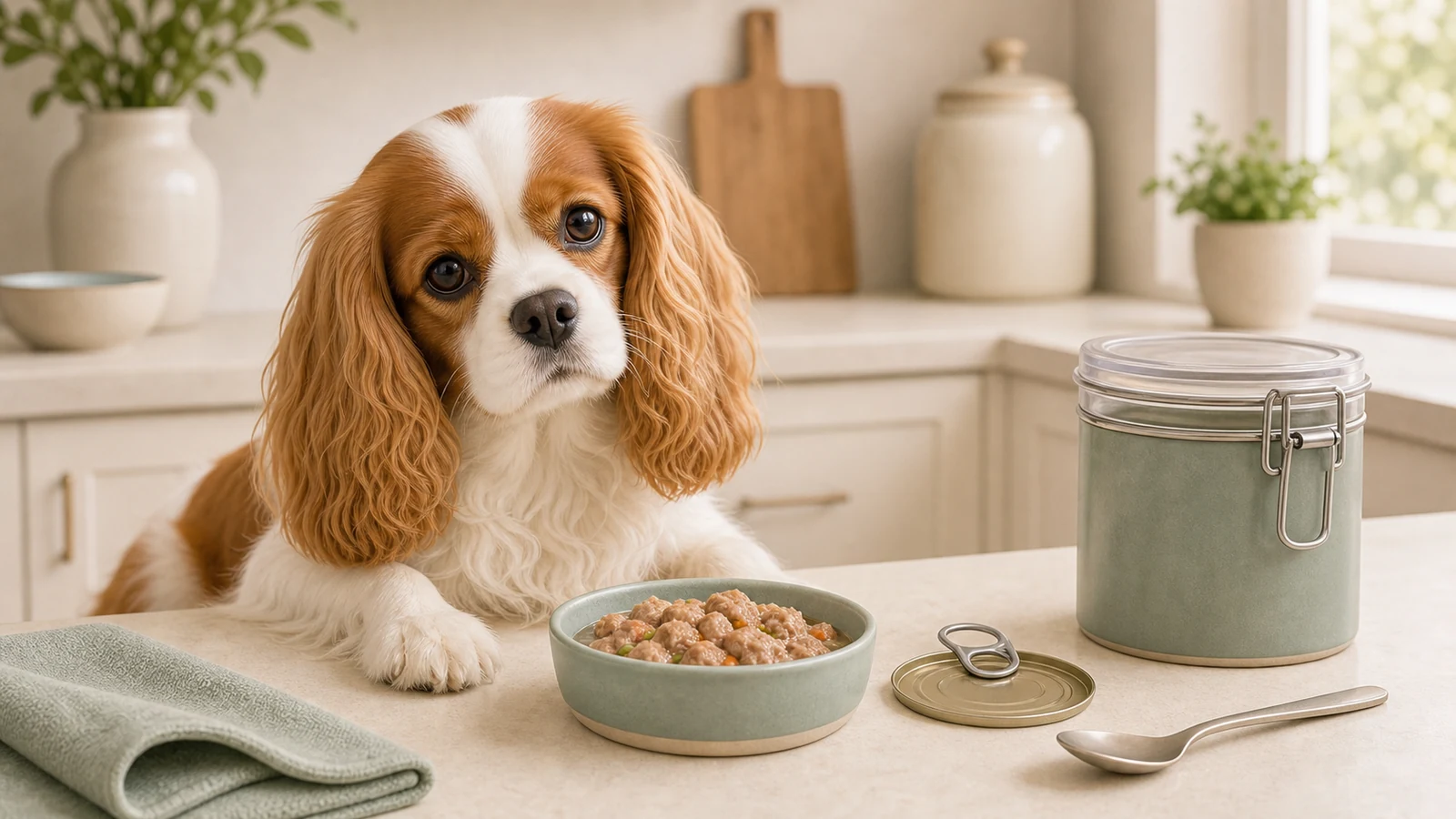
Texture can matter more with age. Wet food, soaked kibble, or a little warm water may help when smell or chewing comfort changes, but appetite changes are still worth taking seriously.
If your dog skips dinner once after a big day, watch the next meal. If your dog repeatedly walks away from food, drools, paws at the mouth, vomits, has diarrhea, or seems weak, call your vet instead of treating it as normal aging. Many dogs will still wag on the couch even when chewing hurts.
Weight and muscle
Older dogs can gain fat slowly or lose muscle quietly, so the scale is only part of the story. Use your hands to feel ribs, shoulders, hips, and waist, especially under a thick coat.
A common pattern is the senior who gets shorter walks but the same meals and treats. Another is the dog whose weight looks stable while muscle fades. Measure food, count extras, and bring those notes to your vet. Some dogs also beg because the usual routine changed, not because the meal is too small.
Medical conditions
Kidney disease, heart disease, diabetes, dental disease, GI problems, arthritis pain, and medications can all change what food makes sense. Do not use a prescription-style diet, protein restriction, or major calorie change without veterinary guidance.
When your dog has a diagnosis, the best food is not just the one with senior on the bag. It is the food that fits the care plan, keeps your dog eating, and is realistic for your daily routine.
How to adjust senior meals
- Watch one normal week Note appetite, stool, thirst, chewing, energy, walks, and weight.
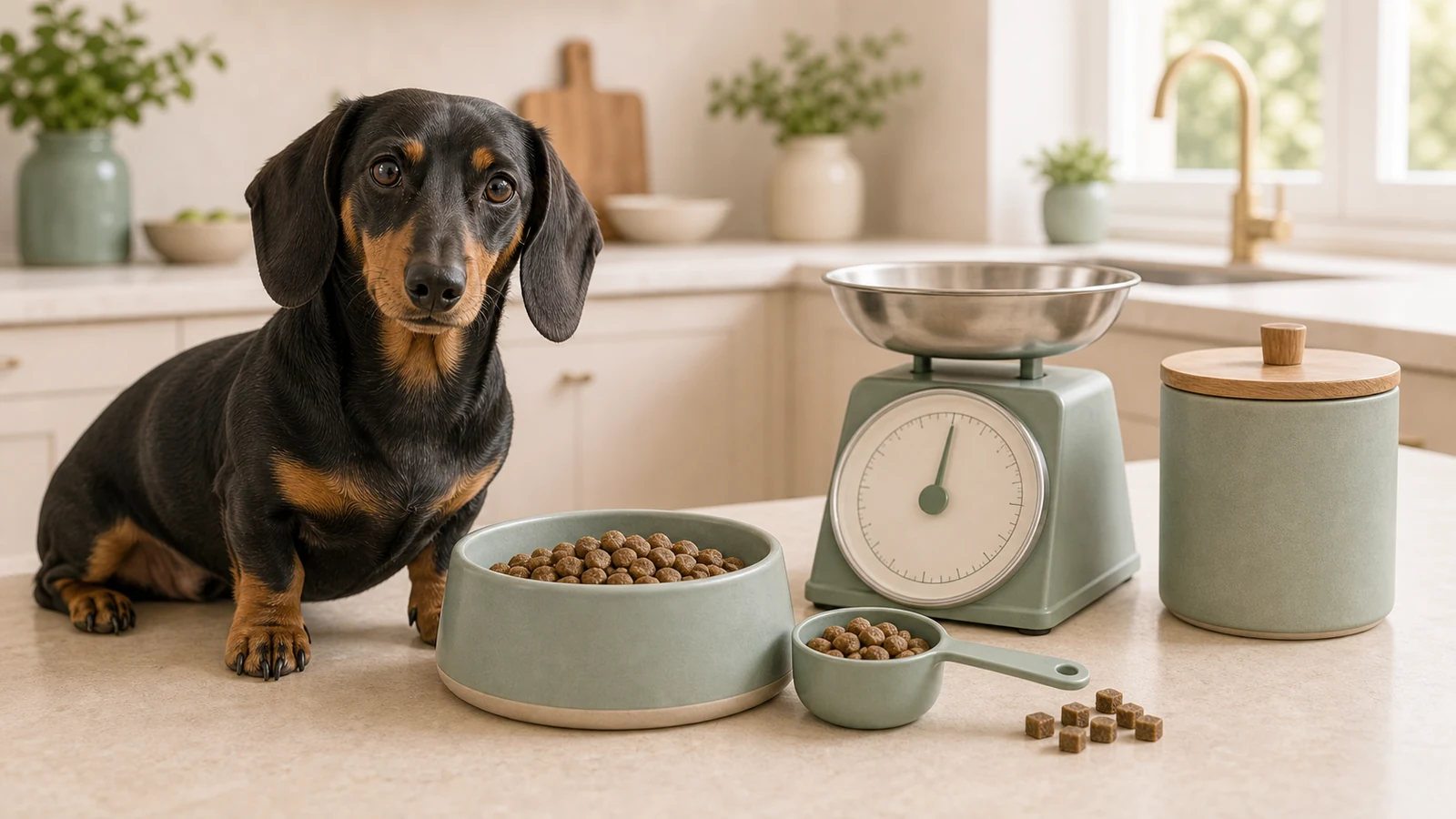
- Measure meals Use the real amount in the bowl before you change the food.
- Check comfort Look for dental pain, stiffness, nausea, or trouble bending to the dish.
- Soften carefully Try wet food or soaked kibble when chewing seems harder.
- Count extras Include treats, chews, toppers, pill pockets, and table scraps.
- Call your vet Ask sooner for sudden appetite loss, weight change, weakness, vomiting, diarrhea, or drinking changes.
When to ask your vet
Ask your veterinarian about senior food when appetite, thirst, weight, stool, energy, pain, dental comfort, or mobility changes suddenly or keeps recurring. Senior dogs can hide discomfort, and food changes should not cover up a health problem.
Bring the food label, measured portions, treat list, medication list, weight history, and notes about chewing, walks, water, and bathroom habits. Those everyday details help your vet make practical recommendations.
Helpful tools
Choose tools that help you measure meals, soften texture, and keep opened wet food clean for an older dog with a gentler routine.
Affiliate links: Furball Cove may earn from qualifying purchases at no extra cost to you.
Portion scale
Helps track small portion changes when weight or appetite starts drifting.
Lick mat
Can make soft food or a small topper last longer for a senior who eats too fast.
Covered can lid
Useful when a senior does better with a spoonful of wet food or softer meals.
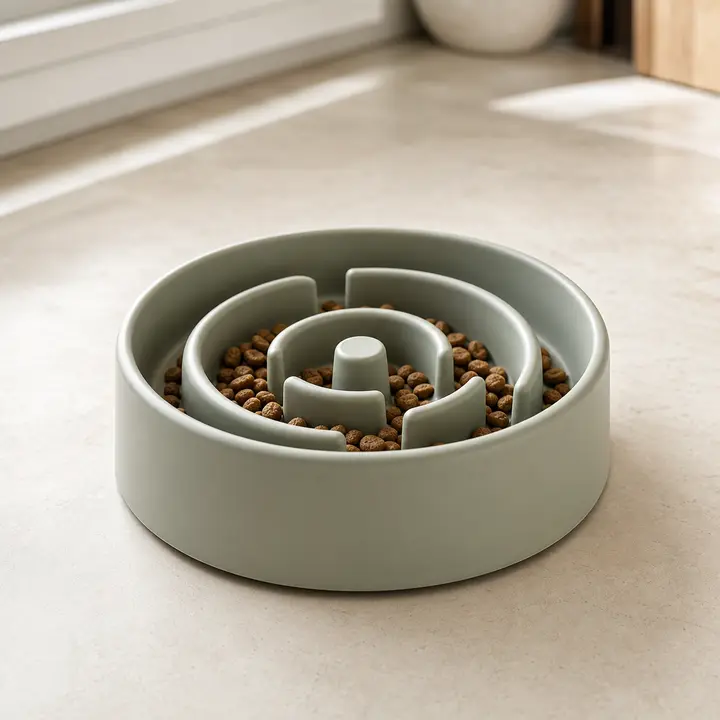
Slow feeder bowl
Can slow dinner down for seniors who gulp meals but still need portions kept steady.
Common questions
Do all senior dogs need senior food?
No. Some older dogs do well on adult food. The right choice depends on body condition, appetite, teeth, health, and veterinary guidance.
Should older dogs eat less protein?
Do not reduce protein just because of age. Ask your veterinarian if kidney disease, another diagnosis, or medication changes what your dog should eat.
Is wet food better for senior dogs?
Wet food can help with texture, smell, or chewing comfort, but it is not automatically better for every senior dog.