

Updated

Bird behavior

Bird Chewing and Destructive Behavior

Chewing is normal; unsafe chewing is a setup problem.

Parrots and many other birds need to use their beaks. The owner job is to provide safe outlets and protect the room before curiosity turns expensive or dangerous.

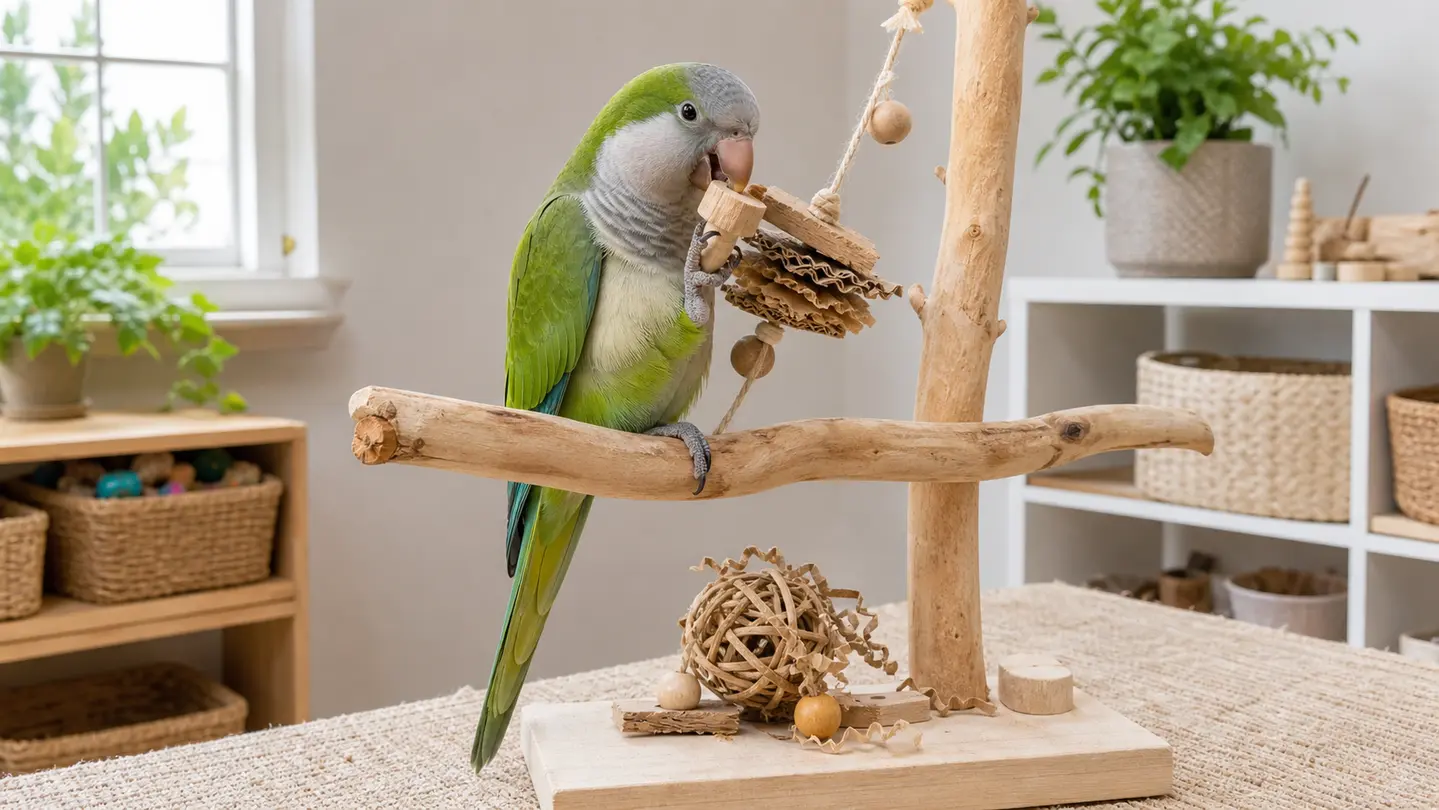
Quaker parrot chewing a bird-safe wood toy on a tabletop play stand.
01

Assume the beak needs a job

Chewing, shredding, peeling, and testing objects are normal for many birds. A bird with no safe chewing work will often invent its own project.

02

Rotate simple safe materials

Use bird-safe wood, paper, cardboard, palm, vine, cork, and species-appropriate chew toys. Rotate a few at a time so the cage stays usable instead of crowded.

03

Bird-proof before out-of-cage time

Cover or remove cords, toxic plants, candles, open water, small swallowable objects, unsafe metals, lead paint, sharp edges, and anything you cannot supervise.

04

Redirect early, not after the crime scene

Move the bird to a play stand, offer a safe chew, or cue a station before the bird locks onto furniture or trim. Reward the safe choice right away.

05

Watch for boredom and anxiety patterns

Chewing that spikes when the bird is ignored, overtired, underworked, or left in a dull cage is not random. Improve sleep, foraging, movement, and daily attention.

06

Beak or appetite changes need a vet

If chewing changes suddenly, the beak looks abnormal, the bird drops food, loses weight, or seems painful, call an avian vet.

Before you decide

  • Safe chew materials are available every day.
  • Out-of-cage rooms are checked for cords and toxic hazards.
  • Toys are rotated without crowding movement space.
  • Unsafe chewing is redirected before the bird is fully committed.

Next best moves

  • Keep a small basket of safe chew refills ready.
  • Use a play stand for messy chewing jobs.
  • Pair chewing with foraging so the bird works longer.

Simple tools that support this behavior plan

Use supplies as structure, not shortcuts. The goal is to make calm choices easier for the bird.

Affiliate links: Furball Cove may earn from qualifying purchases at no extra cost to you.

Bird-safe chew toys made from natural wood, paper, vine, and vegetable-dyed pieces with a lovebird nearby.

Safe chew toys

Plain bird-safe chewing work gives busy beaks something useful to do.

Bird foraging tray with covered cups, pellets, greens, and a curious budgie beside the puzzle.

Foraging toy

Turns part of the meal into a simple job instead of a full bowl of boredom.

Natural wood bird perch set with varied diameters and a cockatiel beside the perches on a bright table.

Natural perch set

Varied perch diameters support normal feet better than one smooth dowel.

Tabletop bird training perch with a cockatiel standing on the perch beside small training treats.

Training perch

Gives short trust-building sessions a low, predictable place to happen.

Common questions

Why does my bird chew everything?

Many birds explore and maintain their beak by chewing. The routine needs enough safe materials and better room protection.

Are cardboard boxes good bird toys?

Plain cardboard can be useful for some birds, but avoid glue, ink, tape, staples, coatings, and nest-like enclosed spaces.

How do I stop my bird chewing furniture?

Supervise more closely, block access, offer a better chew spot, and reward the bird for using it before furniture chewing starts.

References