

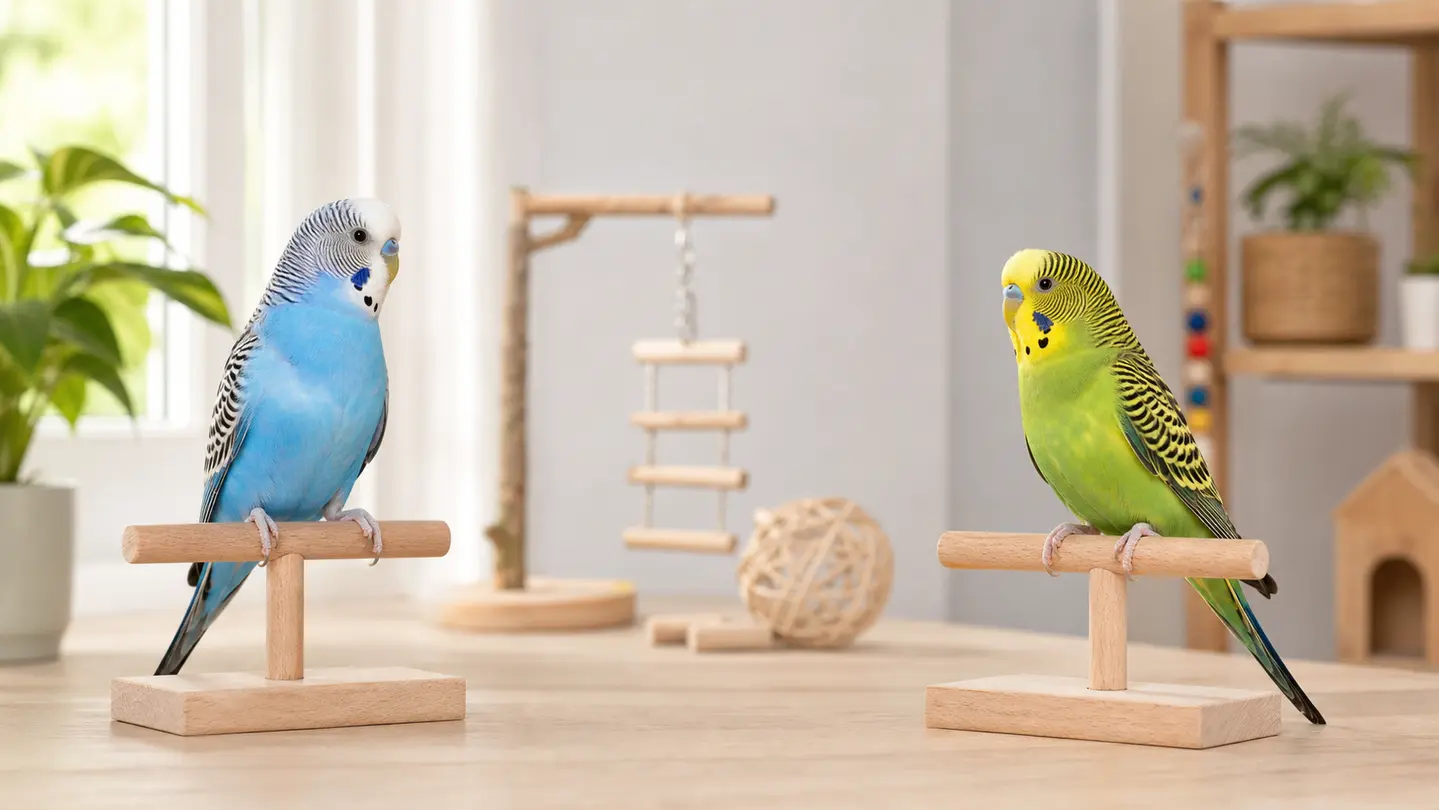
Do not buy a second bird to fix a problem
A second bird will not automatically solve screaming, biting, boredom, or loneliness. It adds another personality, another care routine, and another safety plan.
Plan separate cages first
Arrange an avian-veterinary examination for a newly acquired bird. Keep the newcomer isolated from resident birds for at least 30 days in a separate cage and, where practical, a separate room or airspace. Keep dishes, cleaning supplies, and other equipment separate, and wash hands between birds. Ask the veterinarian which tests fit the species and history. If illness appears, continue isolation and seek veterinary advice. Household introduction quarantine is preventive care; a clinic directs veterinary isolation for a bird that may be ill. General information only. Contact an avian veterinarian for advice about an individual bird.
Let birds watch before they share space
Start with distance. Reward calm looking, relaxed posture, and easy redirection. Do not force birds onto the same stand or into the same cage.
Supervise body language closely
Chasing, pinning, blocking food, guarding a person, beak fencing, foot grabbing, or one bird trying to escape are signs to separate and slow down.
Expect human bonds to change
A bird that bonds to another bird may want less handling from people, or may guard a person more strongly. That is not betrayal. Adjust expectations and keep routines kind.