Is Dry Dog Food a Good Choice? How to Use Kibble Well
Kibble is a practical pantry food for many dogs: easy to store, simple to measure, and useful for puzzle toys or training. The part to watch is the scoop; small extras add up quickly.
Why dry food works for many dogs
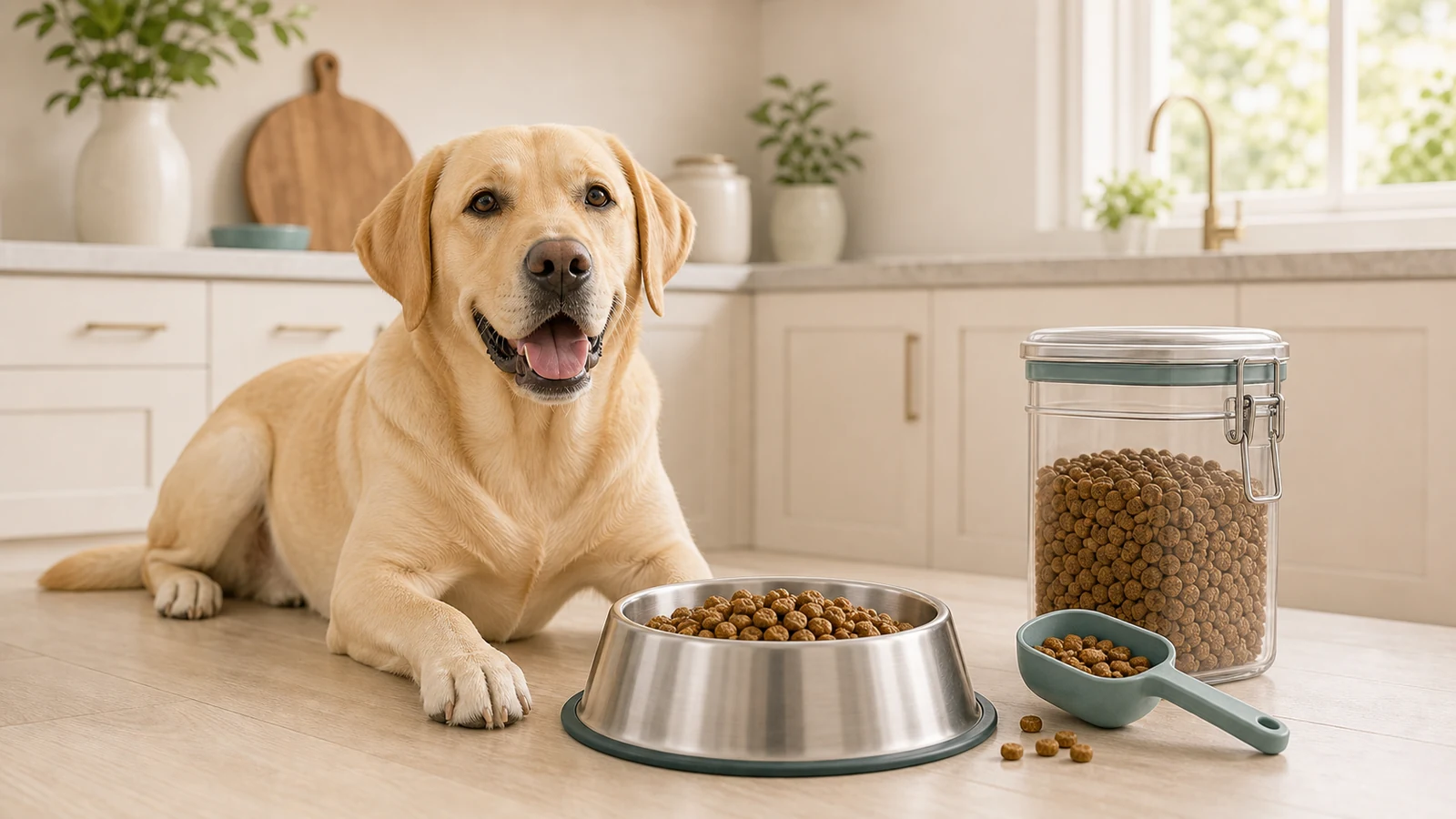
Dry dog food earns its place in a lot of kitchens because it is easy to pour, easy to store, and simple to split between a bowl, puzzle toy, or training pouch. For many dogs, that steady routine is exactly what keeps meals calm.
The trouble usually comes from everyday habits, not from kibble itself: a rounded scoop, stale food, a few too many treats, or a dog who swallows dinner before you set the cup down. Start with the label, then watch how your dog actually does on the food.
Is dry food a good fit?
Works well when
A food does not have to look fancy to work well. Dry food is a good fit when your dog chews comfortably and the same measured meal is easy to repeat on busy mornings.
Your dog chews comfortably.
You want predictable portions.
You need food that stores easily.
You use puzzle feeders or training treats from the daily portion.
Your dog’s stool, coat, appetite, and weight are stable on it.
Check first
These signs do not automatically rule out kibble, but they do mean the routine deserves a closer look.
Your dog has dental pain or missing teeth.
Your dog gulps meals.
Your dog drinks very little water.
Your dog has recurring vomiting, diarrhea, itching, or weight changes that should be discussed with your veterinarian.
Food is stored in heat, humidity, or an unsealed bin.
How to choose a good dry food
Turn the package around before judging the front panel. A useful label tells you the life stage, whether the food is complete and balanced, how many calories are in a cup, and how to reach the company.
Marketing words can be pleasant, but they do not feed the dog by themselves. Natural, premium, ancestral, fresh, or with chicken still need to be backed up by the adequacy statement, calories, and feeding directions.
Complete and balanced statement
Correct life stage: puppy, adult maintenance, all life stages, or senior guidance
Calories per cup, can, pouch, or prepared serving
Feeding directions and serving notes
Ingredient list and guaranteed analysis
Manufacturer or distributor contact information
Lot code and best-by date
Before you pour
Life stage
Puppies, adults, seniors, and pregnant or nursing dogs may need different nutrition.
Calories per cup
Two foods can look similar but deliver very different calories.
Kibble size
Tiny dogs, flat-faced dogs, seniors, and gulpers may need a different shape or serving style.
Best-by date and smell
Kibble can go stale or rancid, especially if stored poorly.
Your dog’s response
Normal stool, steady appetite, comfortable skin, and a stable weight tell you more than the front panel.
How to feed kibble well
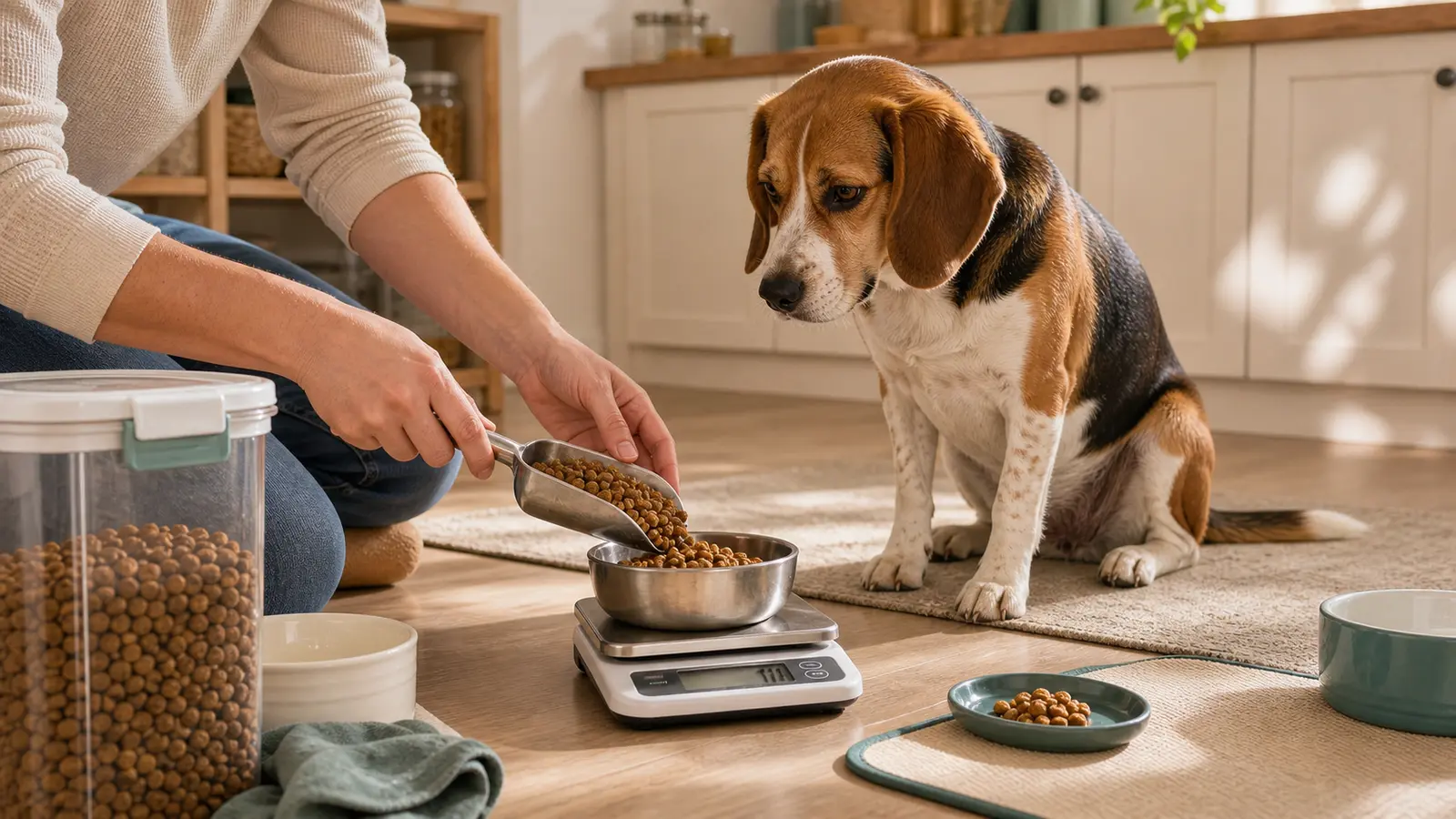
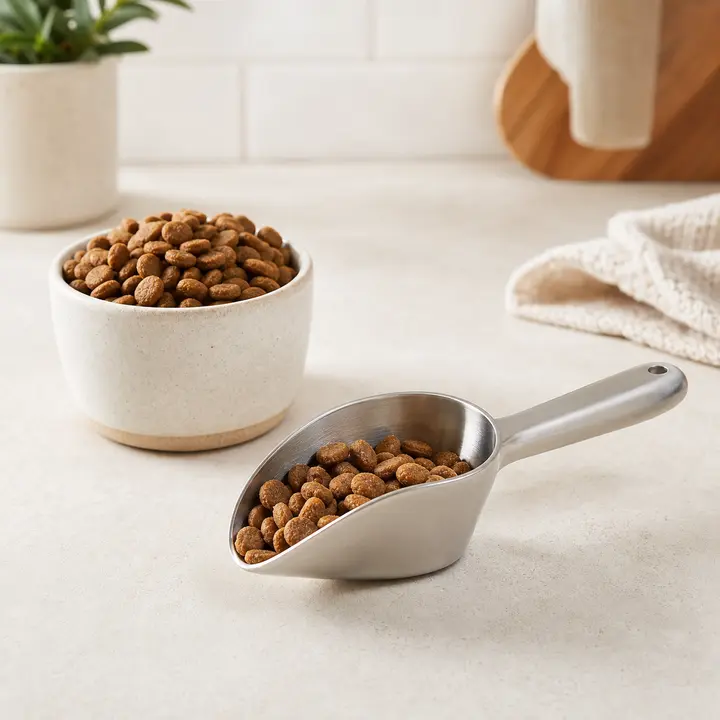
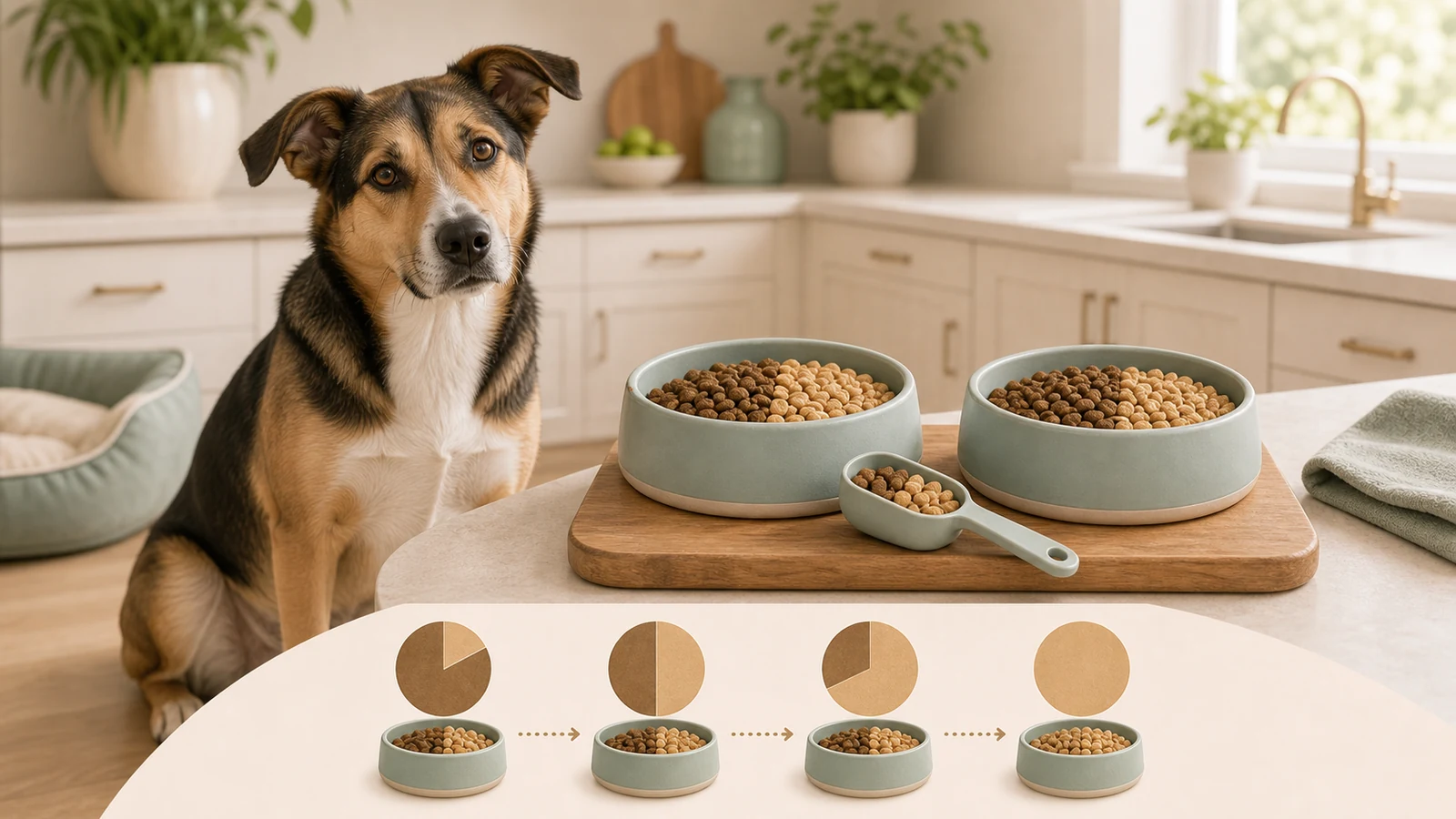
Measure the meal with a real measuring cup or scale. Casual scoops are the easiest way to overfeed.
Keep treats honest. If rewards are frequent, pull a little from the daily meal or use tiny rewards.
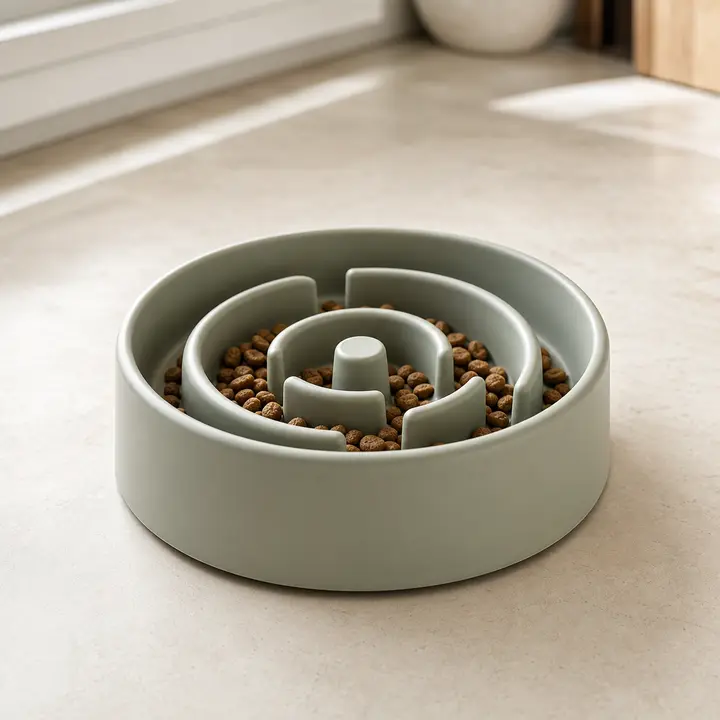
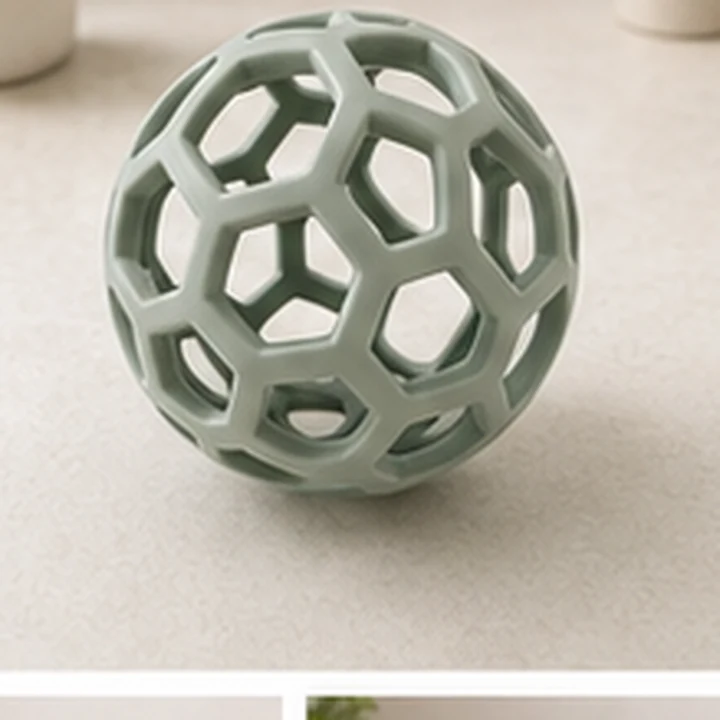
Slow down gulpers with a slow feeder, scatter feeding, puzzle feeder, or snuffle mat if your dog inhales meals.
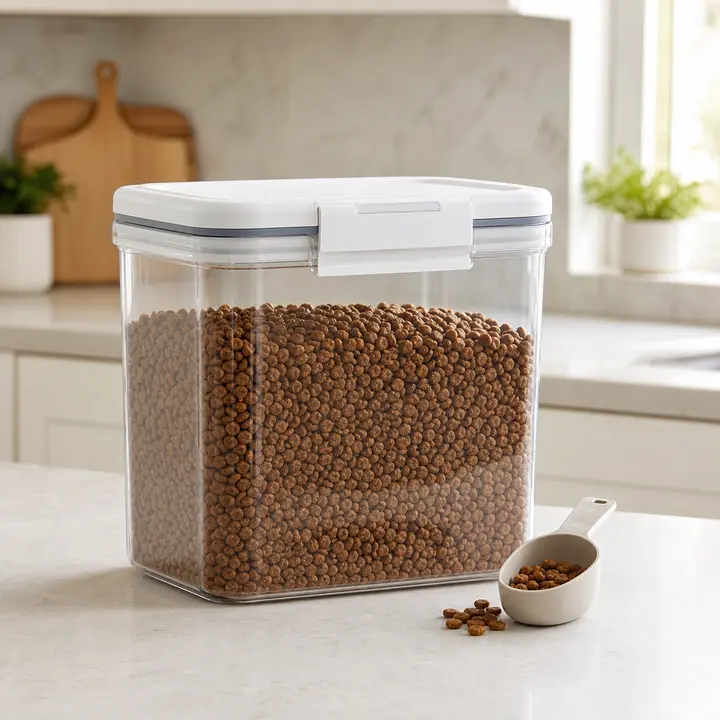
Store it like food. Keep the package closed, preferably inside an airtight container, and save the lot code and best-by date.
Change gradually when switching foods unless your veterinarian gives different instructions.
Watch the dog, not just the label. Feeding directions are a starting point; body condition, stool, appetite, and weight matter.
The catch with kibble: portions creep
Kibble looks tidy in the bowl, which makes it easy to pour a little extra without noticing. A rounded scoop, a handful of training treats, and a dental chew can turn a normal dinner into too much food.
Measure breakfast and dinner for one plain week. If your dog is still hungry, gaining weight, leaving food, or having loose stool, those notes give you a better next step than guessing at a new food.
Use a slow feeder, puzzle toy, scatter feeding, or smaller meals. If gulping is new or extreme, ask your veterinarian.
My dog seems hungry all the time.
Check calories, treats, body condition, and feeding schedule before simply adding more food.
My dog refuses kibble.
Check the food smell, dental comfort, stress, nausea, treat use, and whether refusal is sudden.
My dog has loose stool after switching.
Slow the transition, simplify treats, and call your veterinarian if symptoms are severe, bloody, repeated, or paired with weakness.
The food smells stale.
Stop feeding it, check the date and storage, save the package, and contact the company or your veterinarian if your dog seems unwell.
When to mix or switch
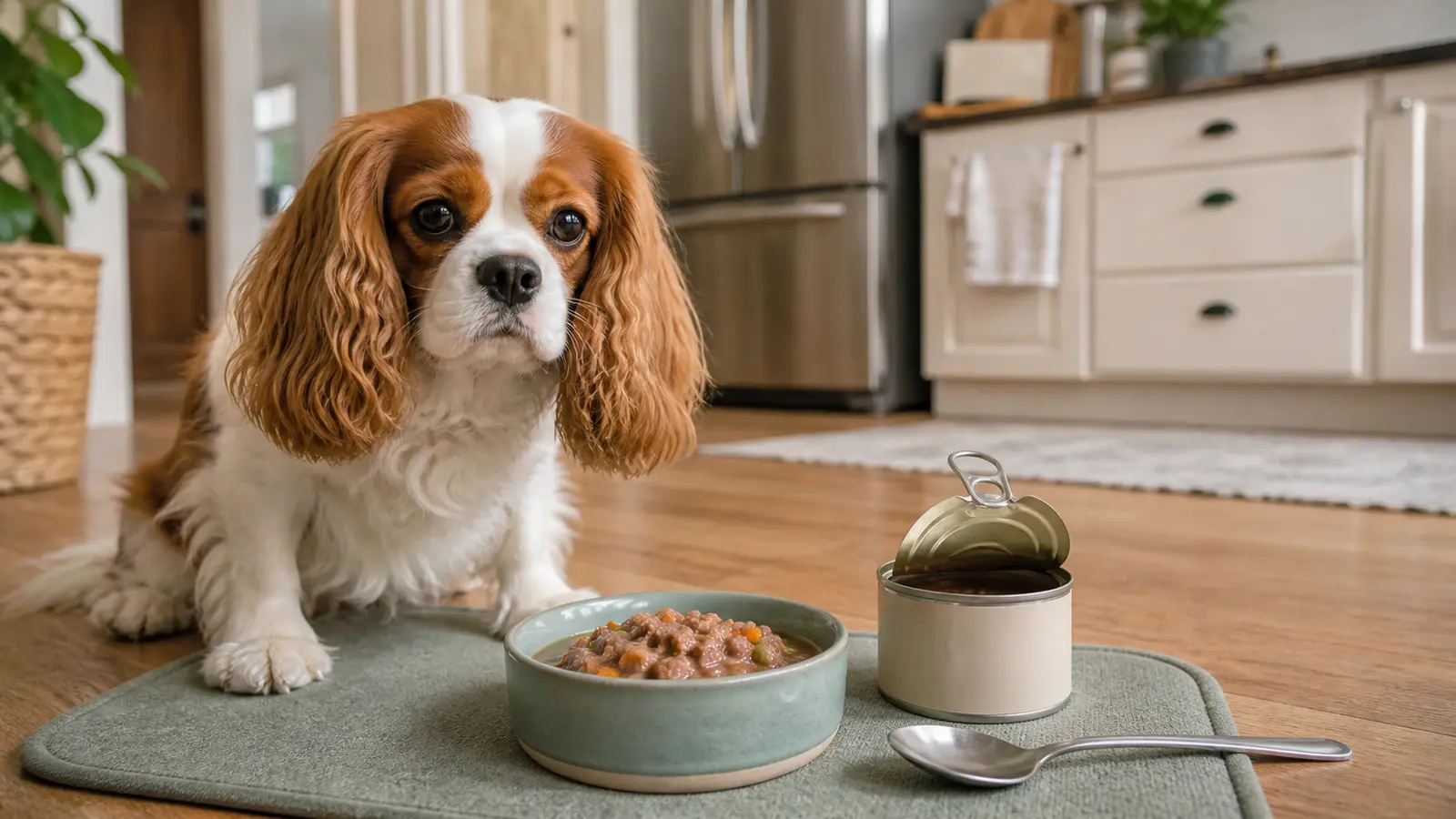
Kibble can be a solid base. It also mixes well with a little wet food or water for dogs who chew better with softer texture or perk up for more aroma.
Ask your veterinarian for help if your dog has repeated vomiting or diarrhea, sudden appetite loss, unexplained weight loss or gain, dental pain, excessive thirst, chronic itching, or a medical diagnosis. Bring the package, calories, and a few days of meal notes so the conversation starts with real details.
You do not need a kitchen full of gadgets. These are useful only when they make kibble easier to measure, store, slow down, or turn into a calmer meal.
Affiliate links: Furball Cove may earn from qualifying purchases at no extra cost to you.
No. Plenty of dogs do well on a complete kibble that fits their life stage and agrees with their stomach. Check the label first, then watch weight, stool, coat, appetite, and energy for a plain week.
Does dry food clean dogs’ teeth?
Regular kibble should not be treated as dental care. Some dental diets and chews are designed for that purpose, but ordinary kibble does not replace toothbrushing or veterinary dental care.
Should I add water to dry food?
You can. A little water can soften the pieces for dogs who gulp, have fewer teeth, or simply like a warmer-smelling meal. Mix only what your dog will eat soon and wash the bowl afterward.
How long does dry dog food stay fresh after opening?
Check the package storage directions and best-by date. Once opened, keep the food sealed in a cool, dry spot, and save the lot code in case you ever need to ask the company about that food.
Should I rotate dry foods?
Variety is optional. Some dogs handle rotation easily, while others do better when breakfast stays boring and predictable. If you switch, do it gradually and watch stool, appetite, and comfort.