Updated
Dog food guide
When Wet Dog Food Helps: Soft Meals, Aroma, and Easy Mixing
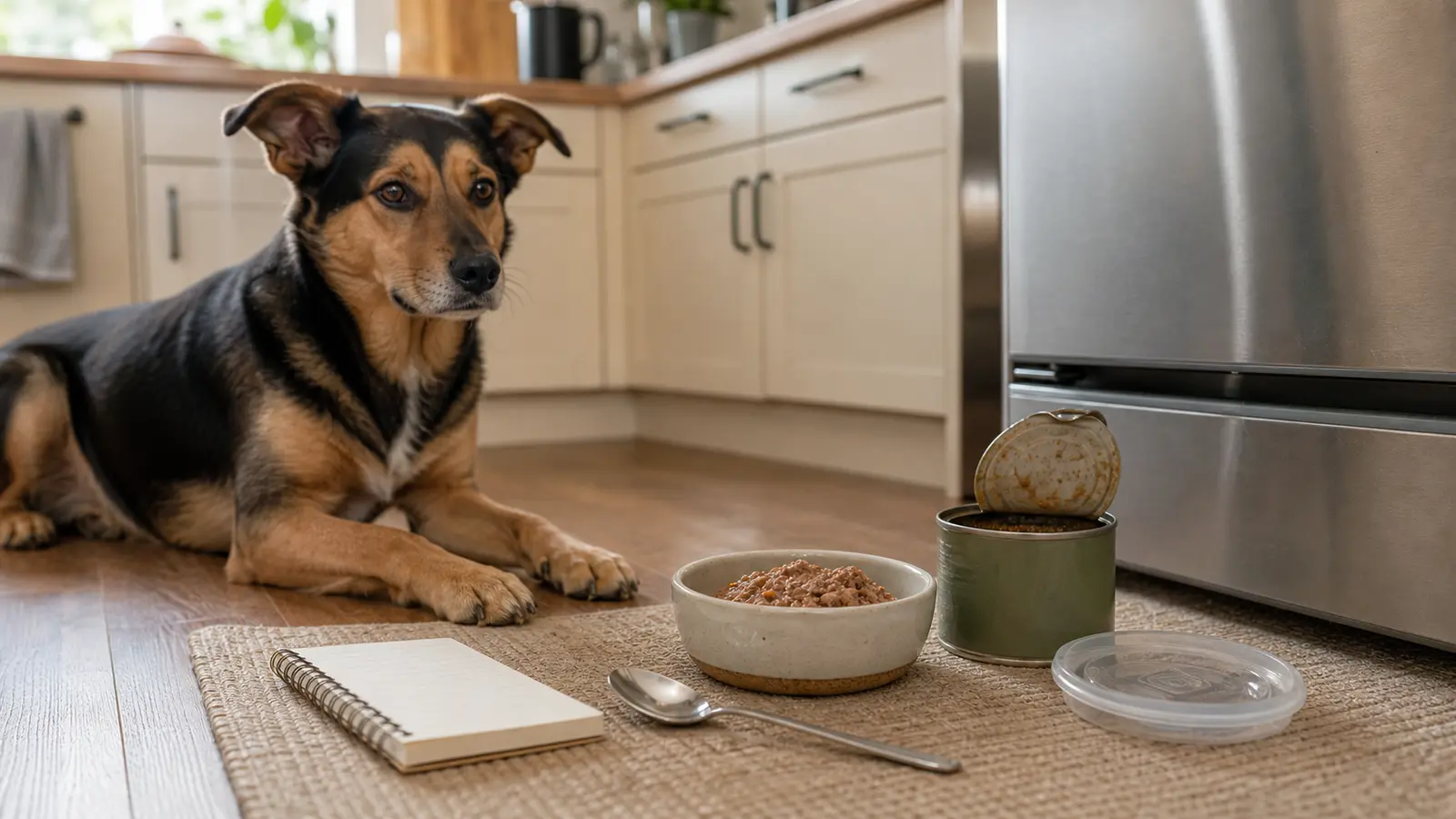
Choose wet food for a clear reason: softer texture, stronger aroma, or more moisture. Start with one measured spoonful, reduce kibble if needed, and plan where opened cans or trays will go in the fridge.
What wet food is good at
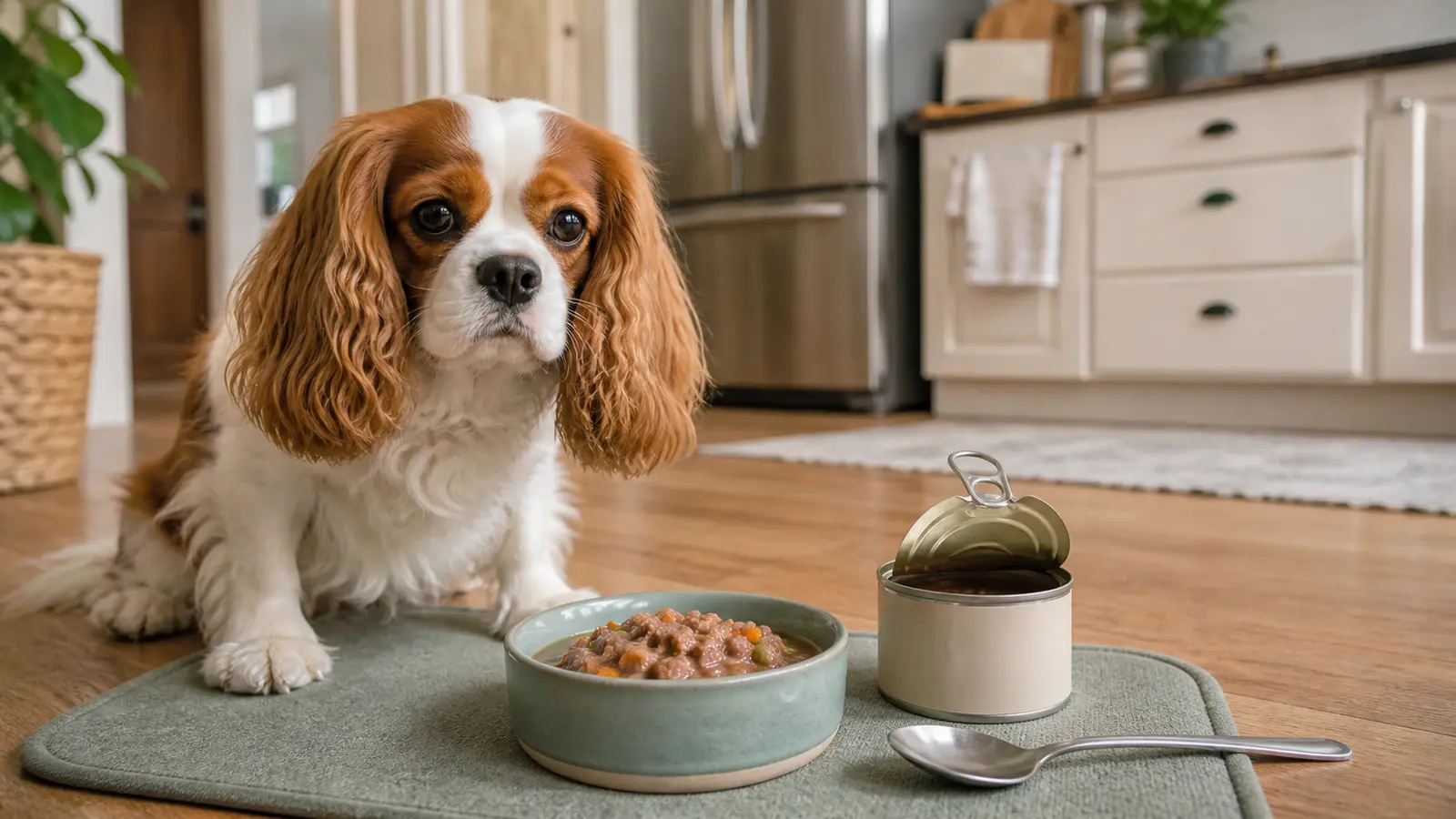
Wet food is often about comfort and interest at the bowl. The softer texture can help dogs who struggle with hard pieces, and the stronger aroma can make breakfast easier for a dog who sniffs kibble and walks away.
It also gives you a tidy way to add moisture or make a meal feel more interesting without cooking. After the meal, cover leftovers, put them in the refrigerator, wash the spoon and dish, and make sure the calories still fit the day.
Good moments to reach for wet food
A can, tray, or pouch is most useful when it solves a specific mealtime problem. Ask what should change at the bowl: chewing comfort, appetite, moisture, medicine, or a dinner with more aroma.
- Try it when hard kibble is left behind or chewing looks uncomfortable.
- Use a small amount when breakfast is sniffed and skipped, but your dog otherwise seems bright.
- Mix it with dry food when you want softness or moisture without changing the whole diet.
- Use it for medicine only when you can confirm the full dose was eaten.
- If the only change is one skipped breakfast, take notes. If your dog seems sick, painful, weak, or is losing weight, call your veterinarian.
Fridge and budget reality
Serving soft food can be easy, but the leftovers ask more from the refrigerator and the budget. Before buying a case, try a small amount and notice how much your dog finishes over a normal week.
| Cost per meal | Cans and trays often cost more than kibble for the same dog. |
|---|---|
| Opened food | Leftovers need a cover, cold storage, and a clear use-by plan from the package. |
| Dish cleanup | Soft food residue should be washed away after meals. |
| Travel days | Leftovers are less convenient when you cannot chill them. |
| Waste | A small dog may not finish a large can before the food should be discarded. |
How to mix wet food with kibble
Mixing wet food with kibble works best when you choose the reason first: more aroma, softer texture, extra moisture, or a better place to hide a pill. Decide that amount before you open the can.
- Keep the dry food as the base if it already works, then add only the wet amount you planned.
- Look up calories for both foods. A spoonful from one can may not match a spoonful from another.
- Start with a small wet amount for several meals so your dog's stomach has time to adjust.
- Reduce the dry portion when the wet portion goes up.
- Write down appetite, stool, leftovers, and treats for one week before changing the meal again.
Read the can like dinner
Read the back of the can, tray, or pouch before judging the picture on the front. Some wet foods are complete meals. Others are toppers, mixers, or treats, and those should sit beside a balanced main food instead of replacing it.
| Complete and balanced statement | This tells you whether the food can be the main meal. |
|---|---|
| Life stage | Puppies, adults, and all-life-stage foods are not always interchangeable. |
| Calories per can, tray, or pouch | Wet food portions can look small while still adding a lot of energy. |
| Feeding directions | The label gives a starting point, not a final answer for every dog. |
| Storage directions | Check the package for how long opened soft food can stay chilled. |
Keep spoonfuls from becoming a second dinner
Wet food can look light because it contains moisture, but the calories are still there. For a small dog, a few extra spoonfuls plus training treats can be enough to change the week.
Measure the wet portion for seven days and note treats and chews too. If weight, stool, appetite, or leftovers change, you will know what to adjust instead of guessing from memory.
Common wet-food problems
Use the problem that sounds closest, then keep the next few meals measured while you watch stool, appetite, and leftovers.
| My dog wants only wet food now. | Decide the wet amount before the meal, then keep the same mix for several days before changing it again. |
|---|---|
| Stool gets loose after adding wet food. | Use a smaller amount, change more slowly, and keep treats simple for a few days. |
| Opened food smells off. | Throw it away. Check the package date, refrigerator time, and how it was covered. |
| The meal gets messy. | Serve on a washable mat and pick up leftovers after the meal window. |
| My dog suddenly will not eat. | Call your veterinarian, especially with vomiting, diarrhea, weakness, pain, weight loss, or drinking changes. |
When the vet should help
Ask your veterinarian before using wet food to solve sudden appetite loss, dental pain, repeated vomiting or diarrhea, weight loss, excessive thirst, kidney or heart concerns, or a prescribed diet. Bring the label, calories, how much your dog ate, and a few days of stool and appetite notes.
Helpful tools
Keep the tool shelf small. Pick one only if it helps cover leftovers, slow down a lickable snack, or catch soft-food drips.
Affiliate links: Furball Cove may earn from qualifying purchases at no extra cost to you.
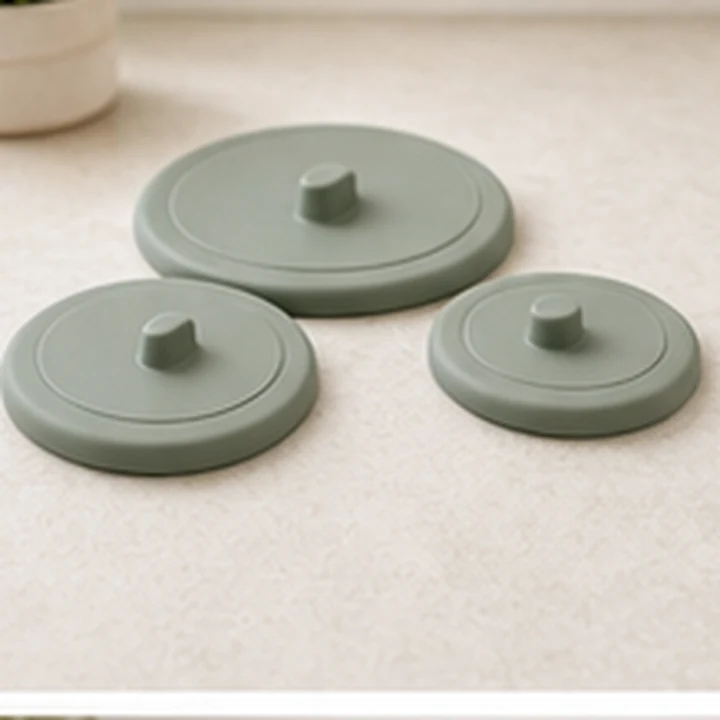
Covered can lid
Covers opened wet food before it goes back in the refrigerator, so leftovers stay cleaner between meals.
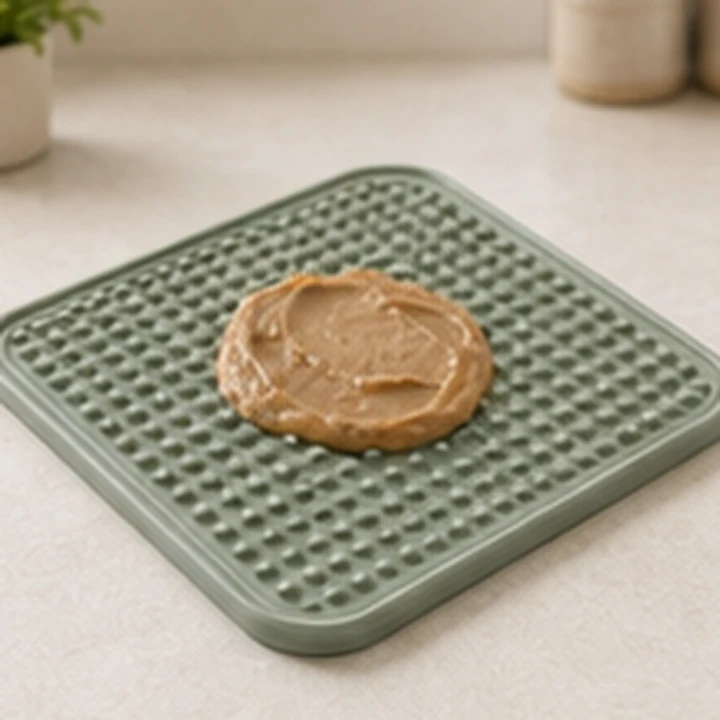
Lick mat
Lets a dog lick one measured spoonful slowly instead of gulping a soft topper in two bites.
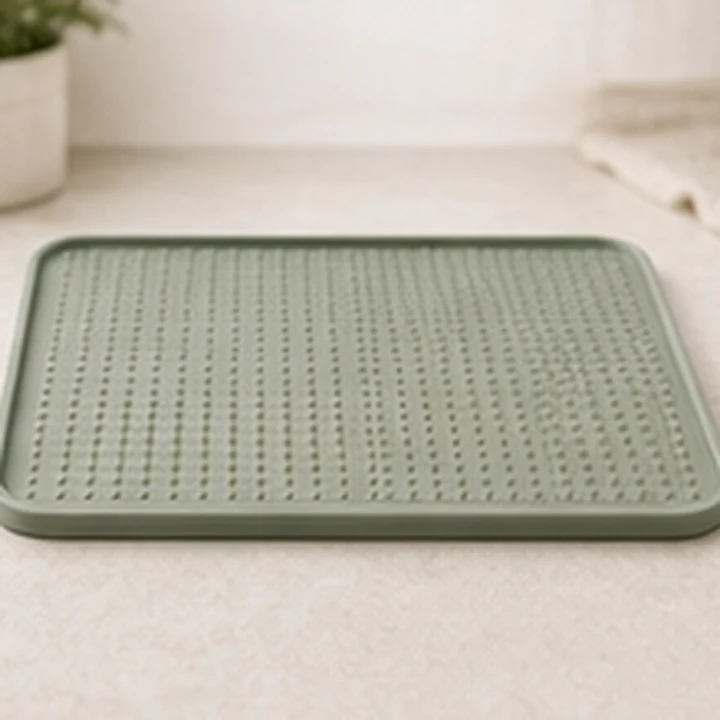
Nonslip feeding mat
Catches soft-food drips and keeps dishes from sliding while you serve or clean up.
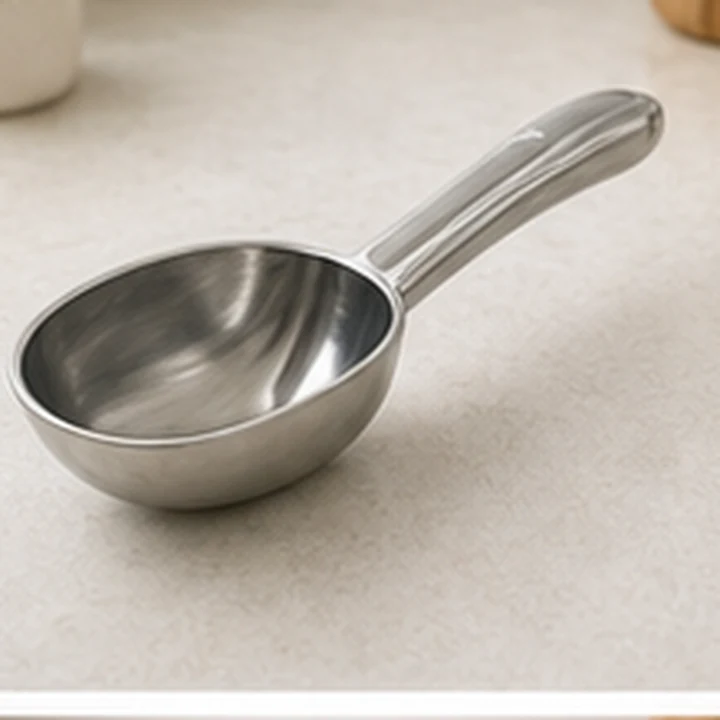
Wet food spoon
Helps serve a measured spoonful without guessing from the can or tray.
Common questions
Is wet dog food better than dry dog food?
It depends on the dog. Wet food can be easier to chew and more tempting to smell, while kibble is usually easier to store, pack, and measure. Choose the meal your dog eats comfortably and you can serve without waste.
Can I mix wet and dry dog food?
Yes. Use a small spoonful first, then pull back a little kibble so dinner does not quietly get bigger. A measured mix is usually easier to repeat than a random scoop from the can.
How long can wet dog food sit out?
Use the package directions and keep the meal window short, especially in a warm room. Pick up leftovers and wash the dish so breakfast does not start with old food in the bowl.
How should I store opened wet dog food?
Cover opened cans, trays, or pouches and put them in the refrigerator according to the label. If the food smells off, looks wrong, or sat out too long, toss it.
Can wet food help a picky dog?
Sometimes. The smell and soft texture can make dinner more inviting, especially for dogs who are bored with dry pieces or need a gentler mouthfeel. If the appetite change is sudden or your dog seems sick or painful, call your veterinarian.