Updated
Small mammal food safety
Can Rats, Hamsters and Guinea Pigs Eat Banana?
Species-dependent tiny treat
Banana is not one shared small-mammal food rule: guinea pigs and some rodents may have a tiny plain treat, while chinchillas and ferrets should skip it.
 Banana
Guinea pigs
Tiny treat, not a vitamin C plan
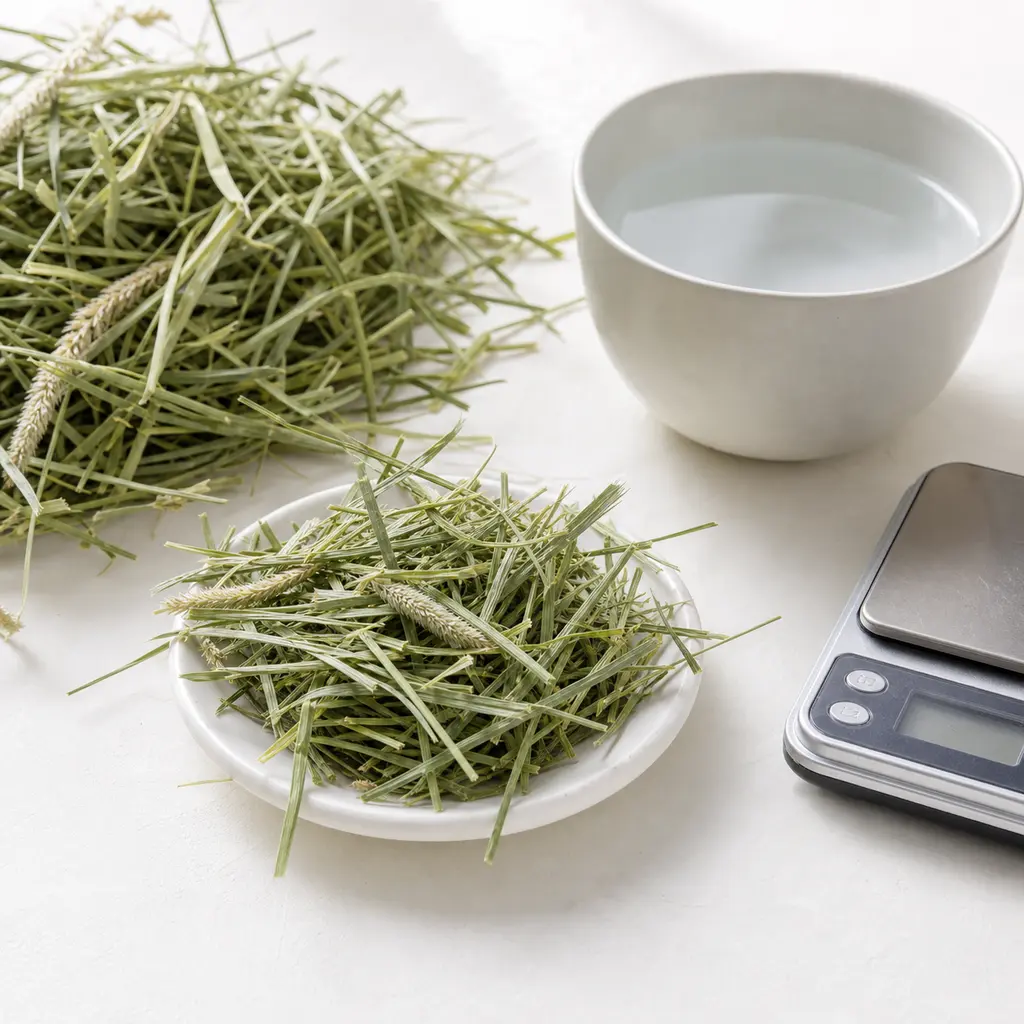
A healthy guinea pig may have a tiny plain banana treat from a clean dish, but unlimited grass hay, guinea-pig pellets, and vitamin C-rich vegetables remain the daily plan. Keep the hay rack full, and do not use banana to tempt a guinea pig that is eating less.
Syrian and dwarf hamsters
Tiny treat; staple diet first
A hamster's main food should be a complete hamster diet. If you use banana, keep it to a very small plain piece and remove any hoarded leftovers; fruit should not replace the staple.
Rats
Tiny treat; staple diet first
A pet rat's base should be a complete rat diet. A tiny plain banana piece can be an extra, not a meal component; stop if the normal stool or appetite changes.
Mice
Tiny treat; remove leftovers
A tiny plain banana piece may fit as an extra for a healthy mouse on a complete mouse diet. Remove uneaten fruit promptly so it does not become a sticky hidden food source.
Gerbils
Tiny treat; check hoards
A complete gerbil diet stays central. If banana is offered, keep the piece very small and remove it before it is buried in bedding or mixed into a food hoard.
Chinchillas
Skip banana
Skip banana for chinchillas. Their diet should stay hay-centered; a chinchilla with any digestive, dental, weight, or appetite concern needs veterinary guidance rather than a new fruit treat.
Ferrets
Do not feed
Do not use banana as a ferret treat. Ferrets need a low-fiber carnivore diet, and fruit can contribute to diarrhea and blood-sugar swings. If a ferret eats banana and develops diarrhea, low energy, or another change, call a ferret-experienced veterinarian.
Start with the species, not the fruit
Guinea pigs, hamsters, rats, mice, gerbils, chinchillas, and ferrets do not share one diet. The species row is the answer; banana is only the item being checked.
Treats do not solve symptoms
Do not use fruit to encourage an animal that is eating less or to cover up a change in stool, droppings, weight, or energy. Those changes deserve veterinary guidance rather than a food experiment.
Plain fruit and peel are different questions
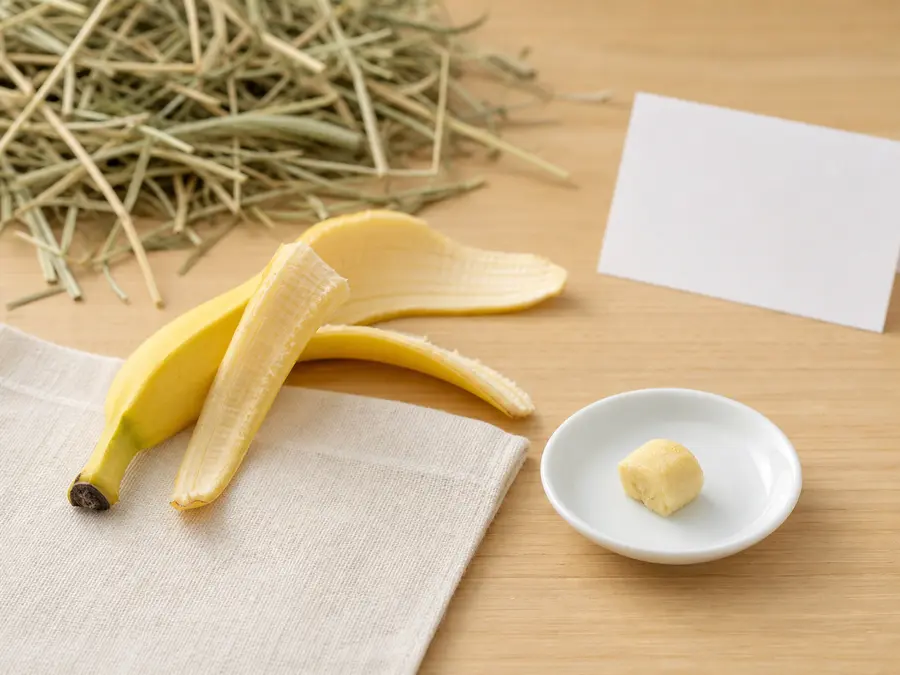
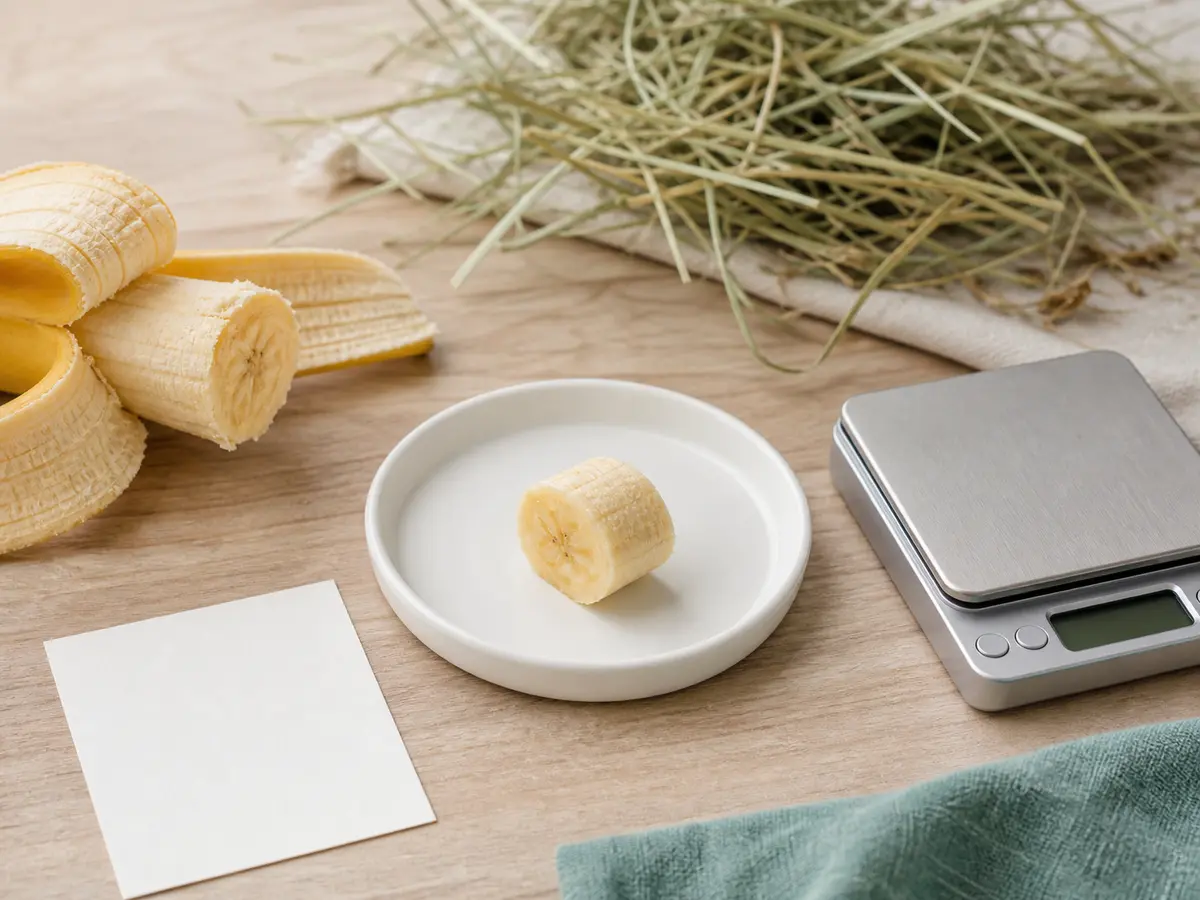
Plain peeled banana flesh is the only version considered here. Peel, dried banana, chips, baked goods, smoothie ingredients, and sweetened foods change the question and should stay out of the habitat.
Hoard and cleanup matter
Banana can smear into bedding and food stores. A tiny portion is only useful when you can find and remove the leftovers promptly.
Make one change at a time
If you choose to offer a new food, keep the rest of the normal meal and routine steady so any change in appetite, droppings, stool, or energy is easier to notice.
Return to the normal diet
After the treat check, go back to the species-appropriate staple: hay and guinea-pig food, a complete rodent diet, or a ferret-appropriate meat-based diet.
Peel and portion
- Use only plain ripe banana flesh; remove the peel, strings, stickers, and bruised or dirty pieces.
- Keep the banana separate from the normal meal and offer only the tiny amount allowed by the animal's species guidance.
- Remove sticky leftovers from bowls, bedding, hammocks, and hoards promptly.
Avoid
- Banana peel, dried banana, banana chips, banana bread, smoothies, baby food, yogurt cups, honey, nut butter, sweetened foods, large sticky pieces, or any banana food containing chocolate or another unsafe ingredient. If an unsafe ingredient may be involved, call a veterinarian or poison hotline.
- Banana for chinchillas or ferrets, or using banana as a way to manage poor appetite, weight loss, soft stool, constipation, or reduced droppings.
- Any fruit experiment when appetite, stool, droppings, bloating, or energy are already abnormal.
Watch
- Soft or loose stool, bloating, reduced appetite, fewer droppings, quietness, or a change from the animal's normal routine after a new food.
- Sticky residue in bedding, bowls, hammocks, or a food hoard that needs to be removed before it spoils.
- Contact an exotic-pet veterinarian promptly if a guinea pig, chinchilla, tiny animal, weak animal, or animal with abnormal signs eats less or produces fewer droppings.
Portion
Do not use one portion rule for every small mammal. For guinea pigs and rodents, any banana should be a tiny plain treat beside—not instead of—the normal diet; chinchillas and ferrets: none.
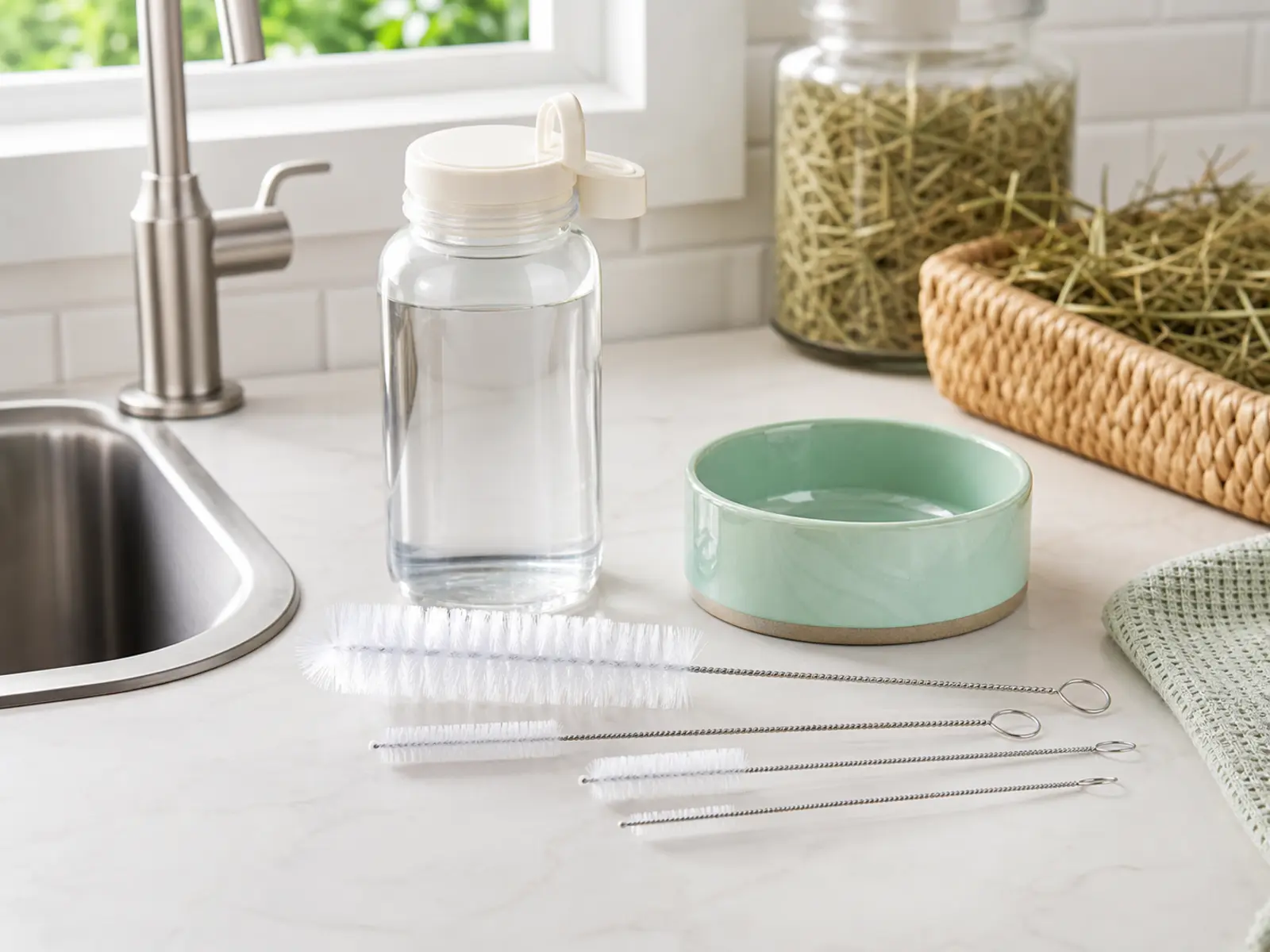
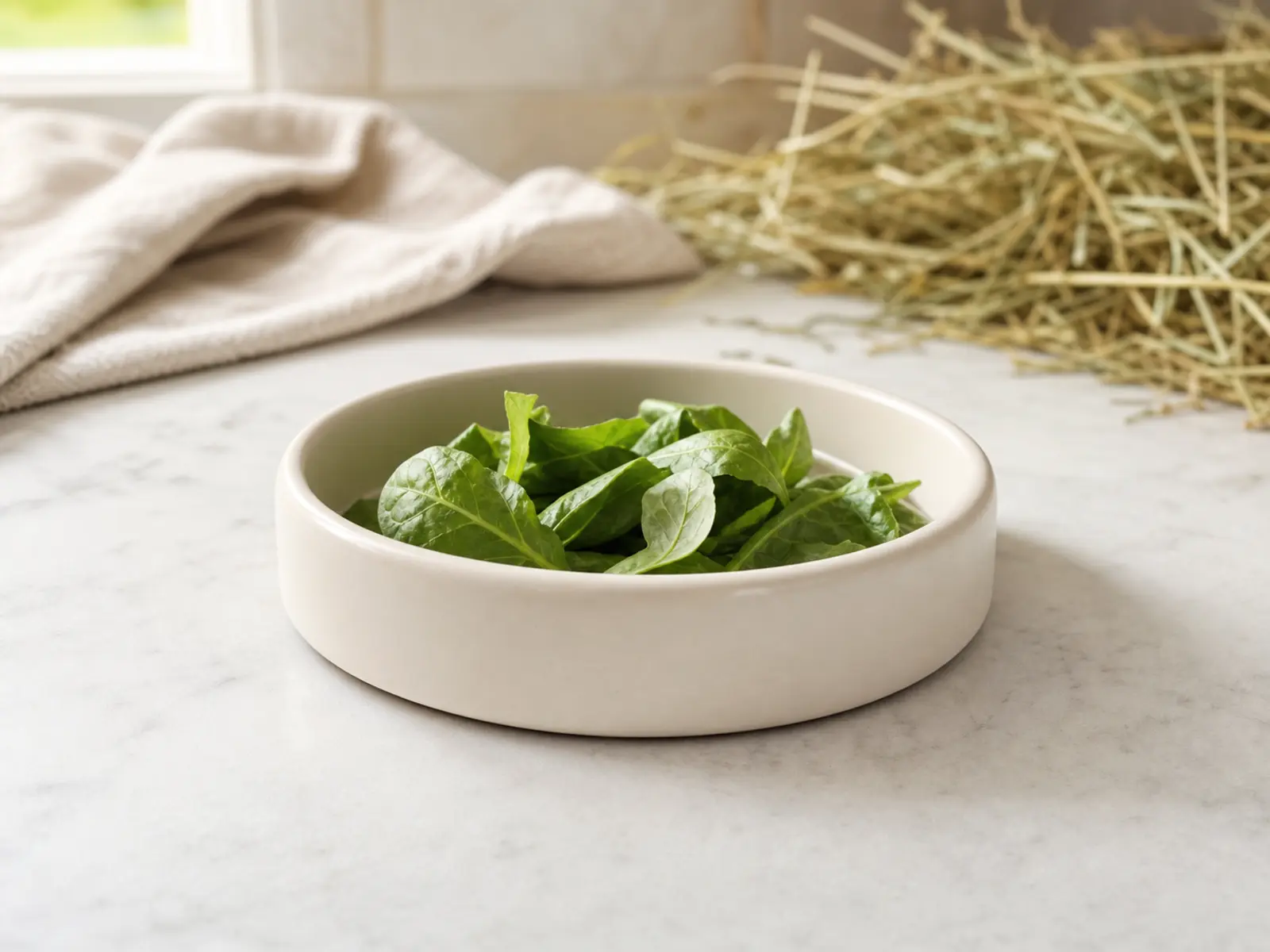
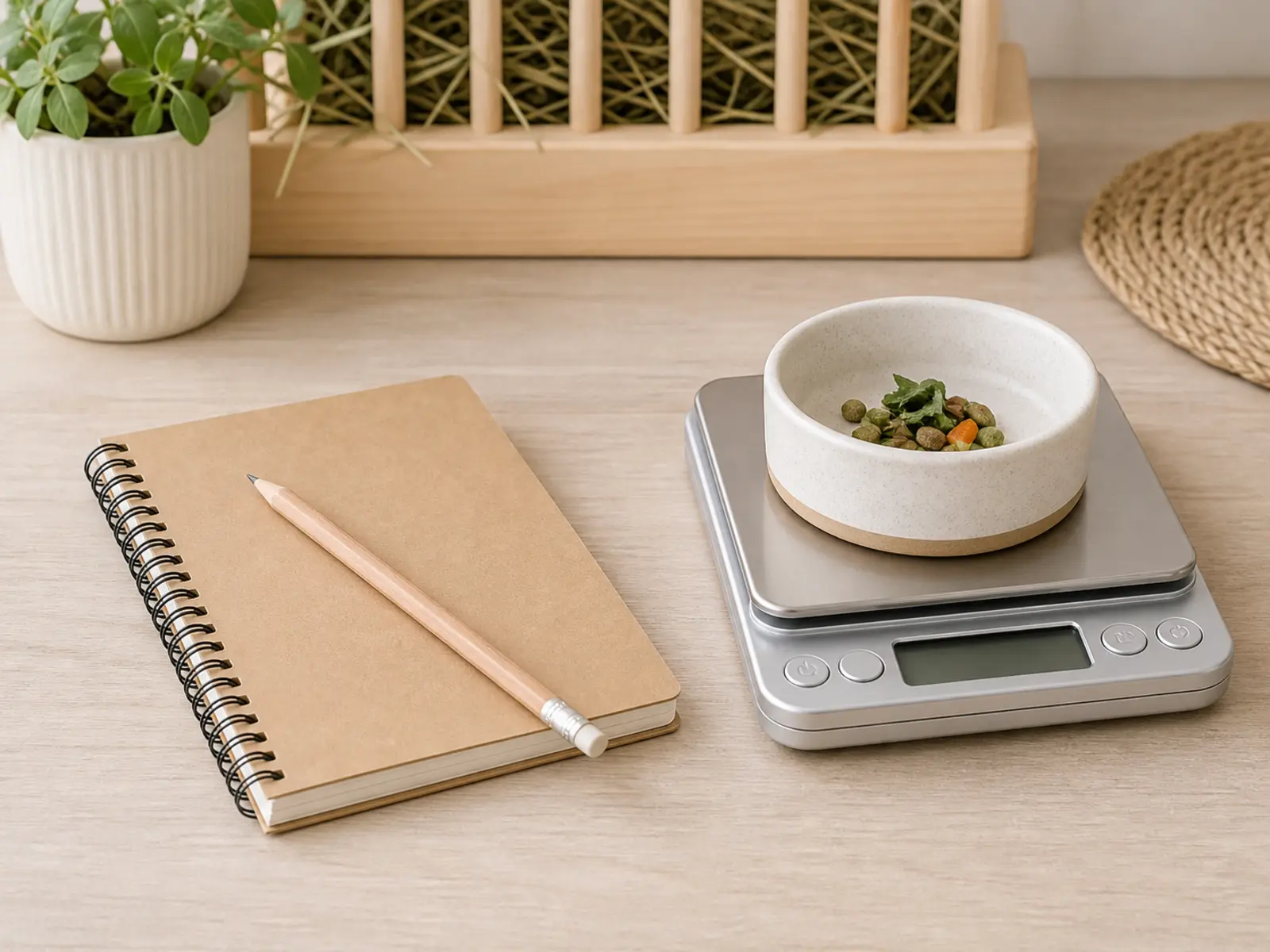
Helpful food-safety supplies
Optional tools for measuring, storing, serving, and cleaning up small portions safely.
Affiliate links: Furball Cove may earn from qualifying purchases at no extra cost to you.