

Updated
Dog training
Puppy Training
A good puppy plan prevents mistakes, rewards the habits you want, and protects sleep.
Start with the daily jobs that matter most: potty, rest, safe exposure, gentle handling, and a few simple skills you can repeat.
Start here
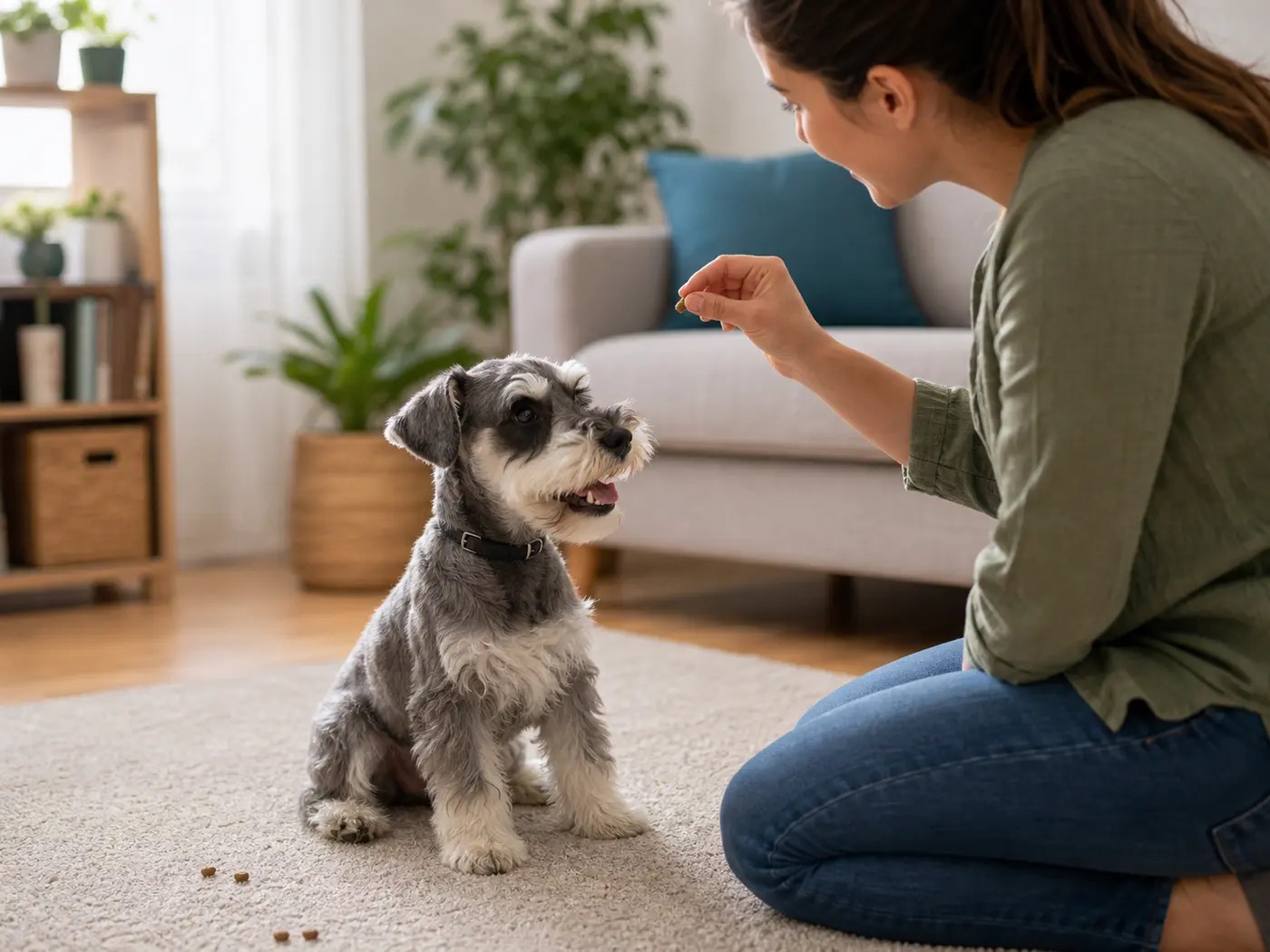 First hourFirst 24 Hours
Set up the puppy's space, potty route, sleep spot, and rules before habits start forming.
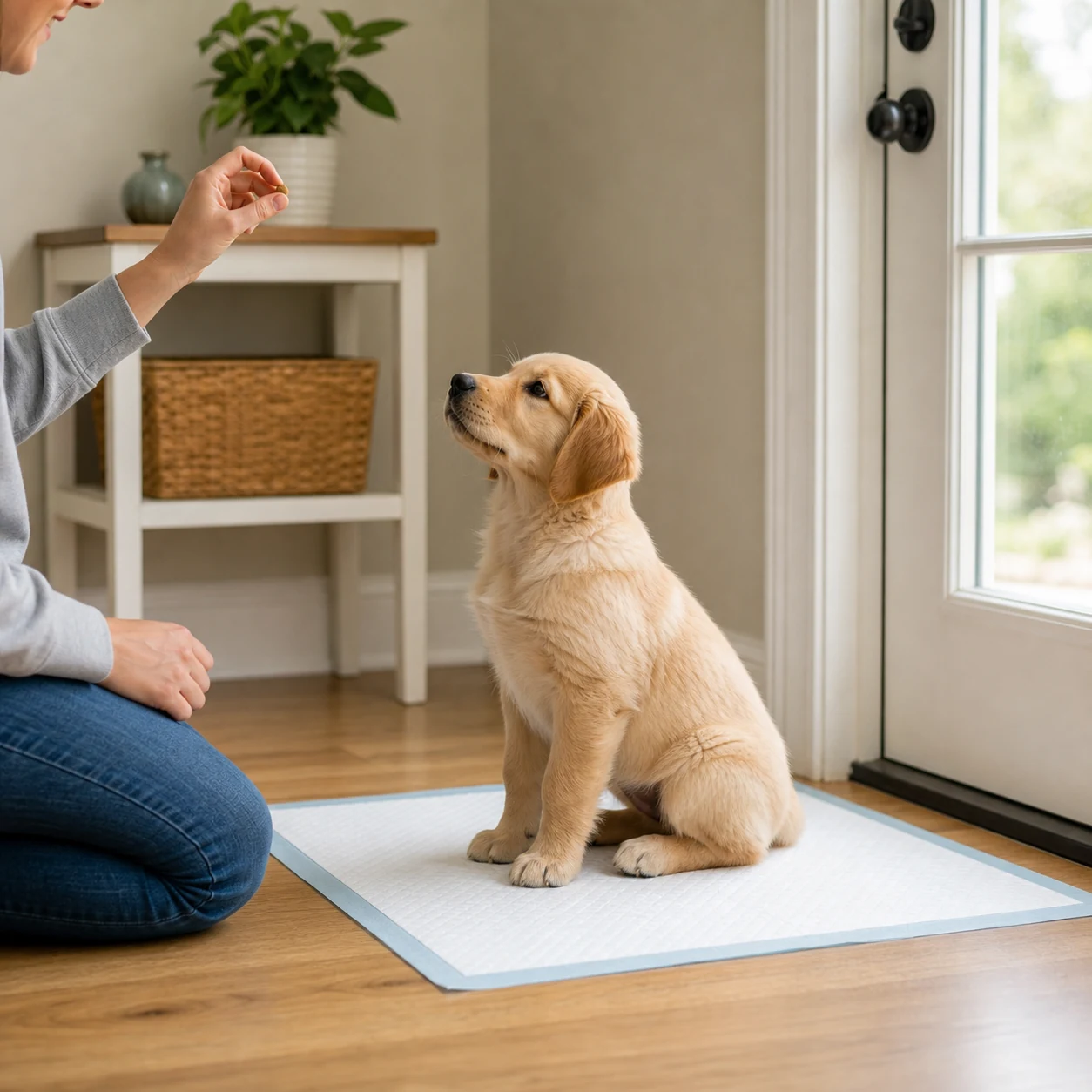 Most urgentPotty Schedule
A clear outside rhythm prevents accidents faster than any correction after the fact.
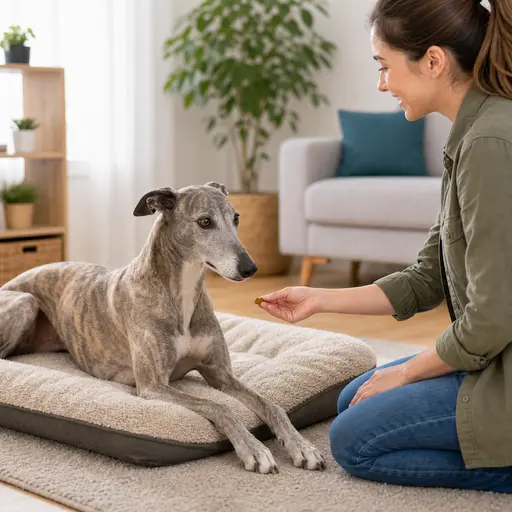 Calm homeNap Rhythm
Overtired puppies bite harder, bark more, and lose the ability to make good choices.
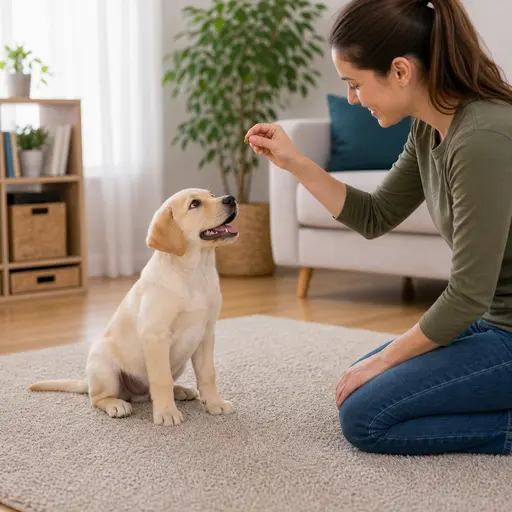 First cueName Game
Name response builds attention without pressure and makes every later skill easier.
First week setup
Build the first week around management, sleep, and tiny wins before expecting obedience.
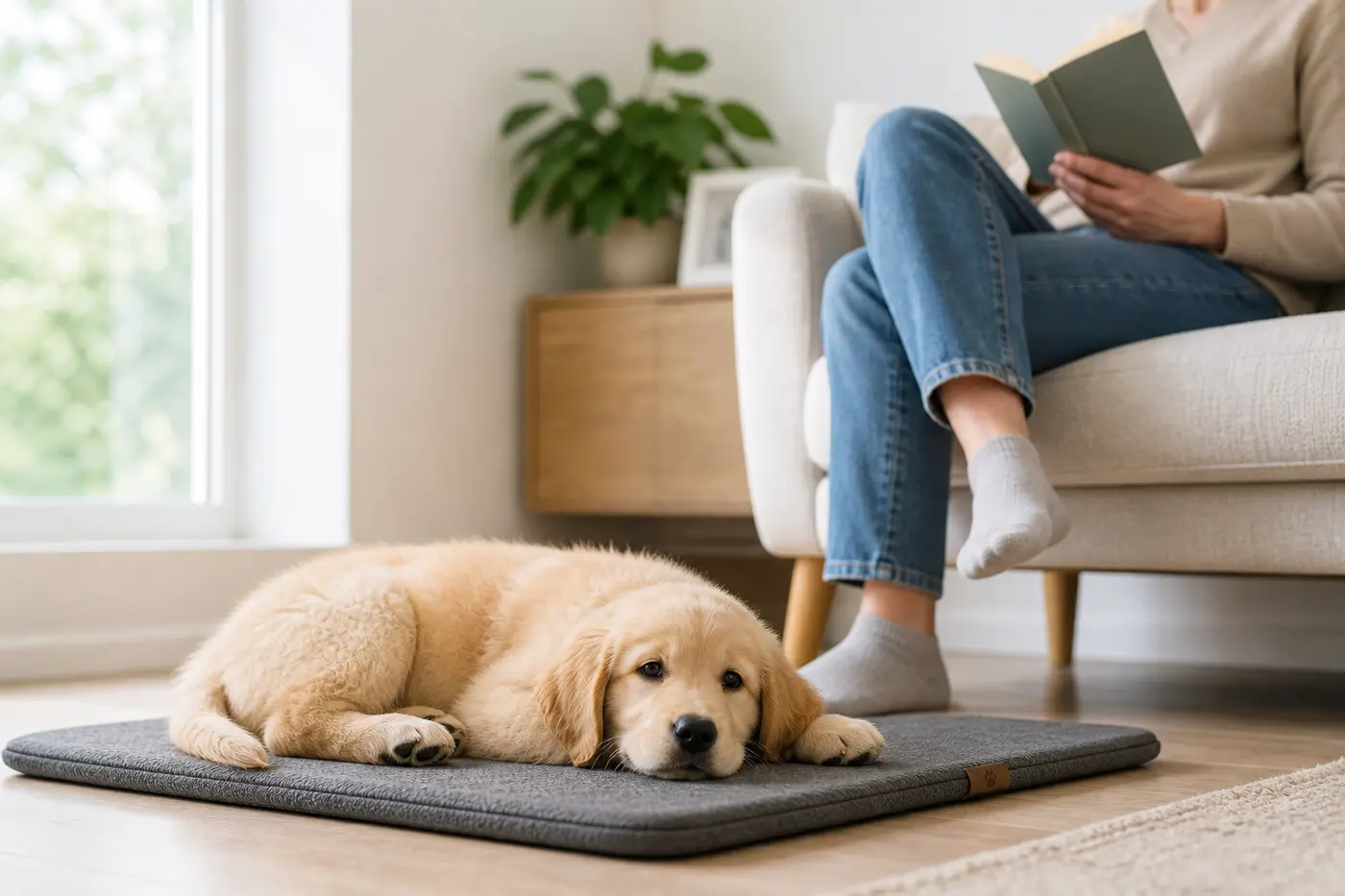
Track wakeups, meals, water, potty trips, play, naps, and accidents so the pattern becomes obvious instead of chaotic.
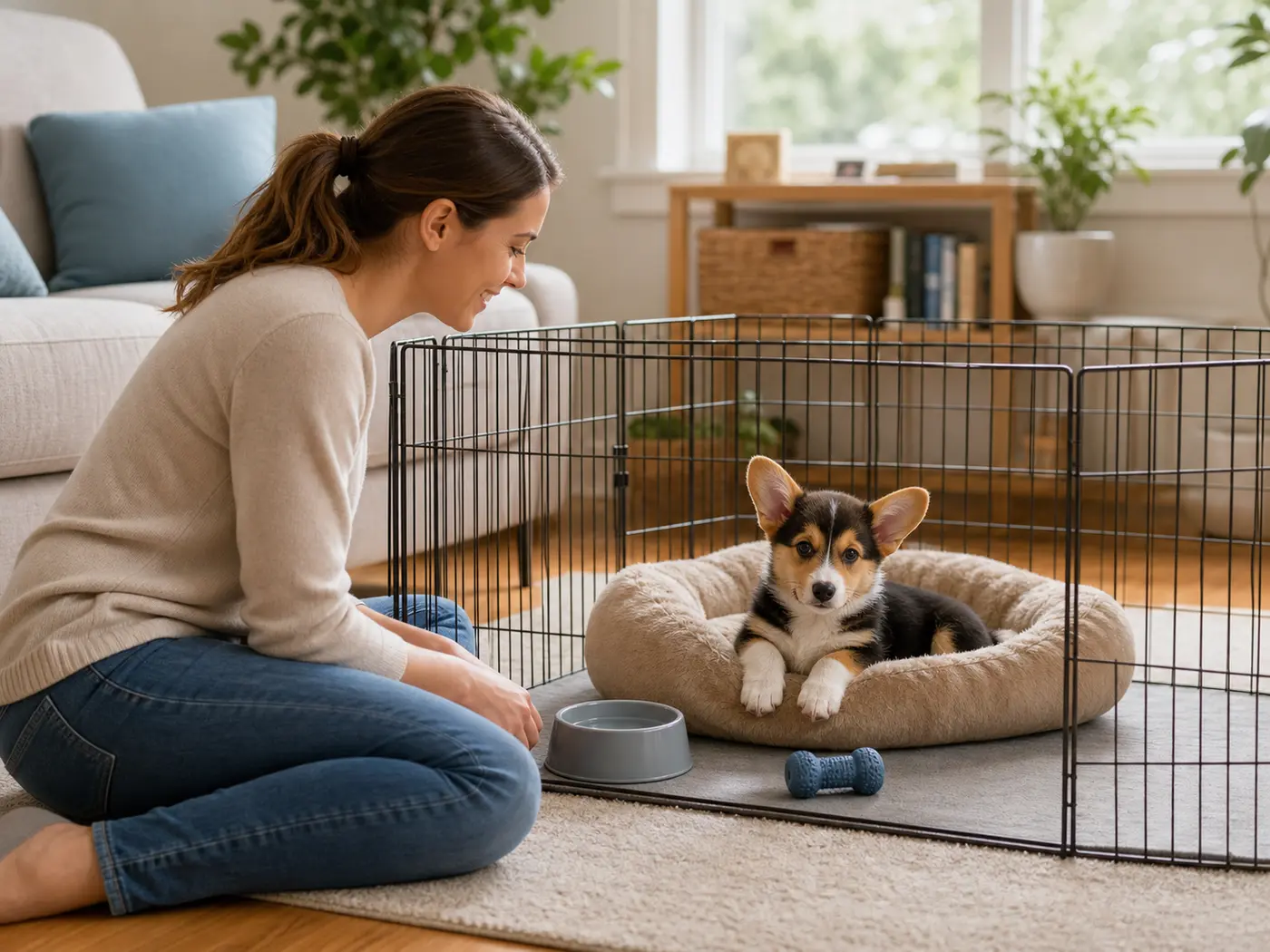
Use a pen, crate, gate, or tethered rest area to stop rehearsing chewing, accidents, and wild laps when nobody can supervise closely.
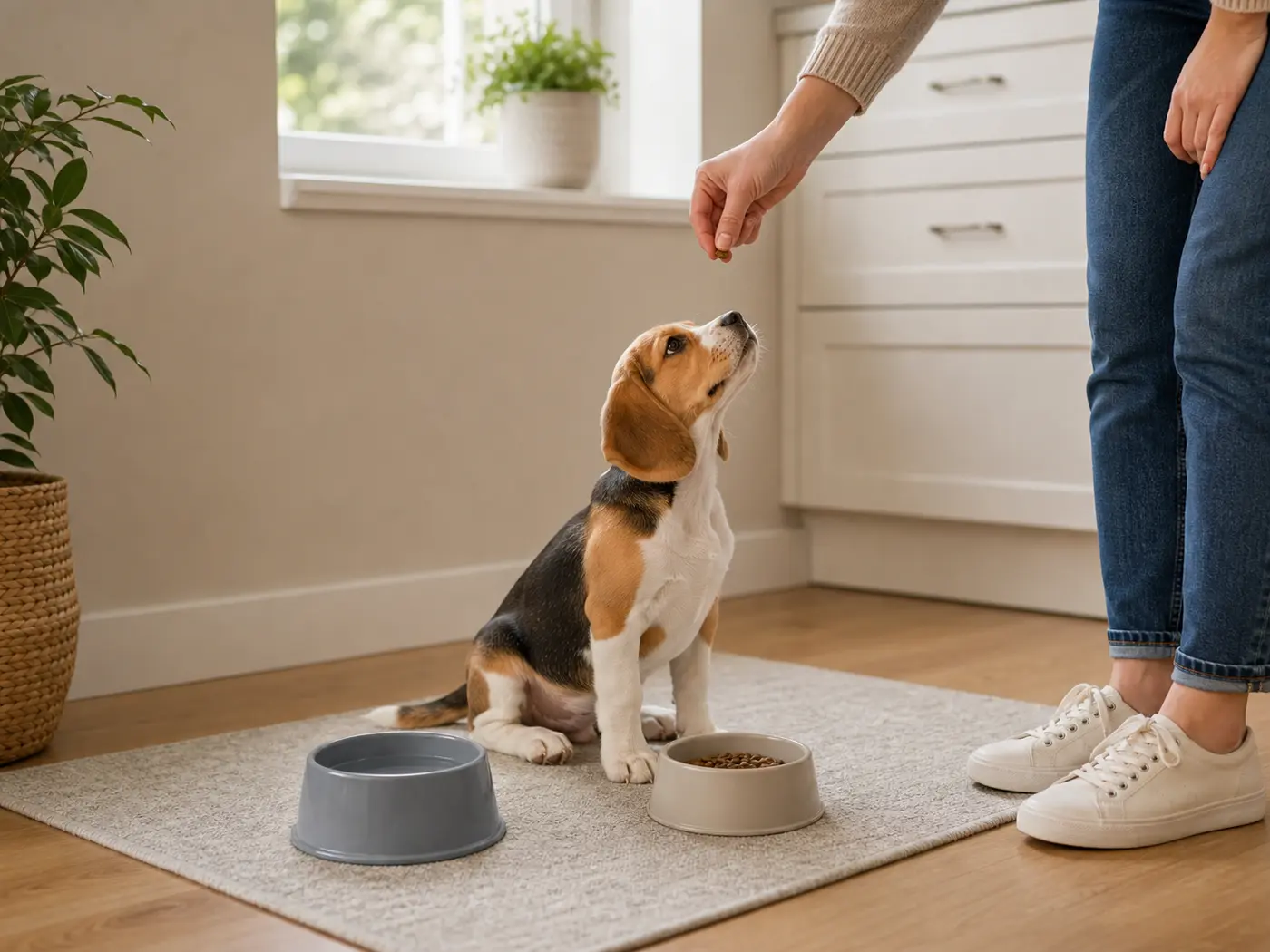
Use predictable meals, water checks, and immediate potty trips so feeding supports training instead of creating surprise accidents.
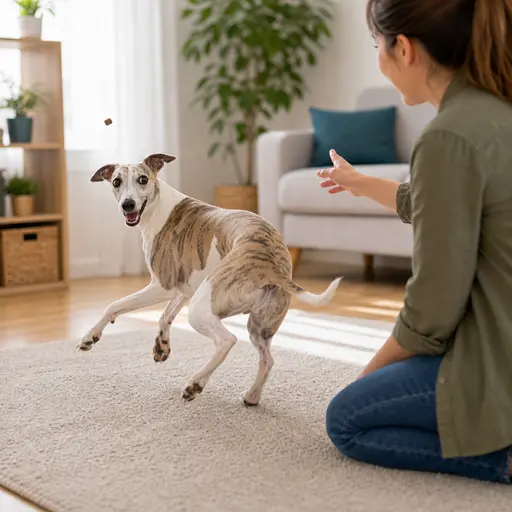
Use a few focused reps with food, play, or praise, then stop while your puppy still wants more.
Potty, crate, and sleep
These are the first stress points in most homes: where to potty, where to rest, and what happens at night.
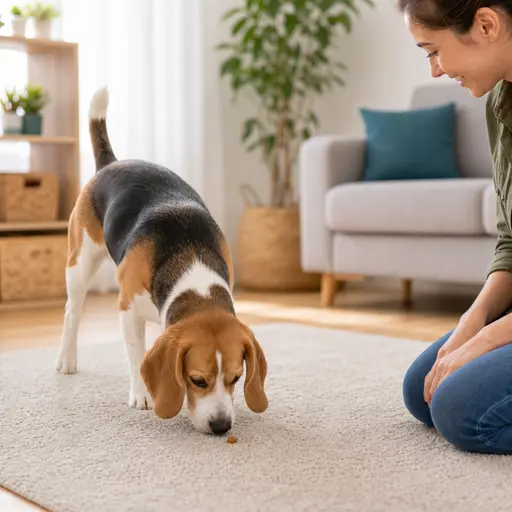
Take your puppy out after waking, eating, drinking, playing, training, and sudden sniffing; reward outside while the success is still happening.
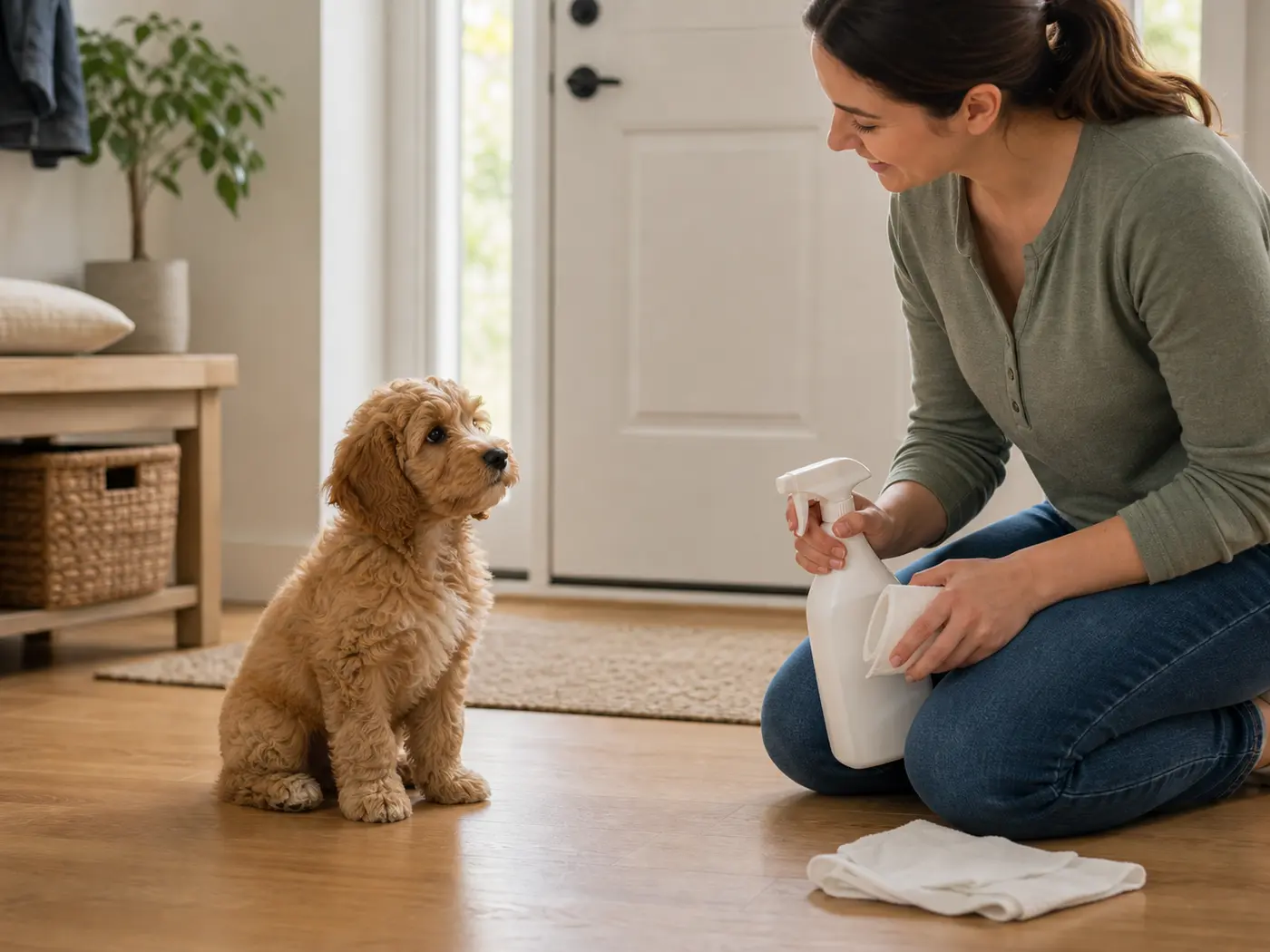
Treat each accident as schedule data: clean with enzyme cleaner, shrink freedom, and change the next hour instead of scolding too late.
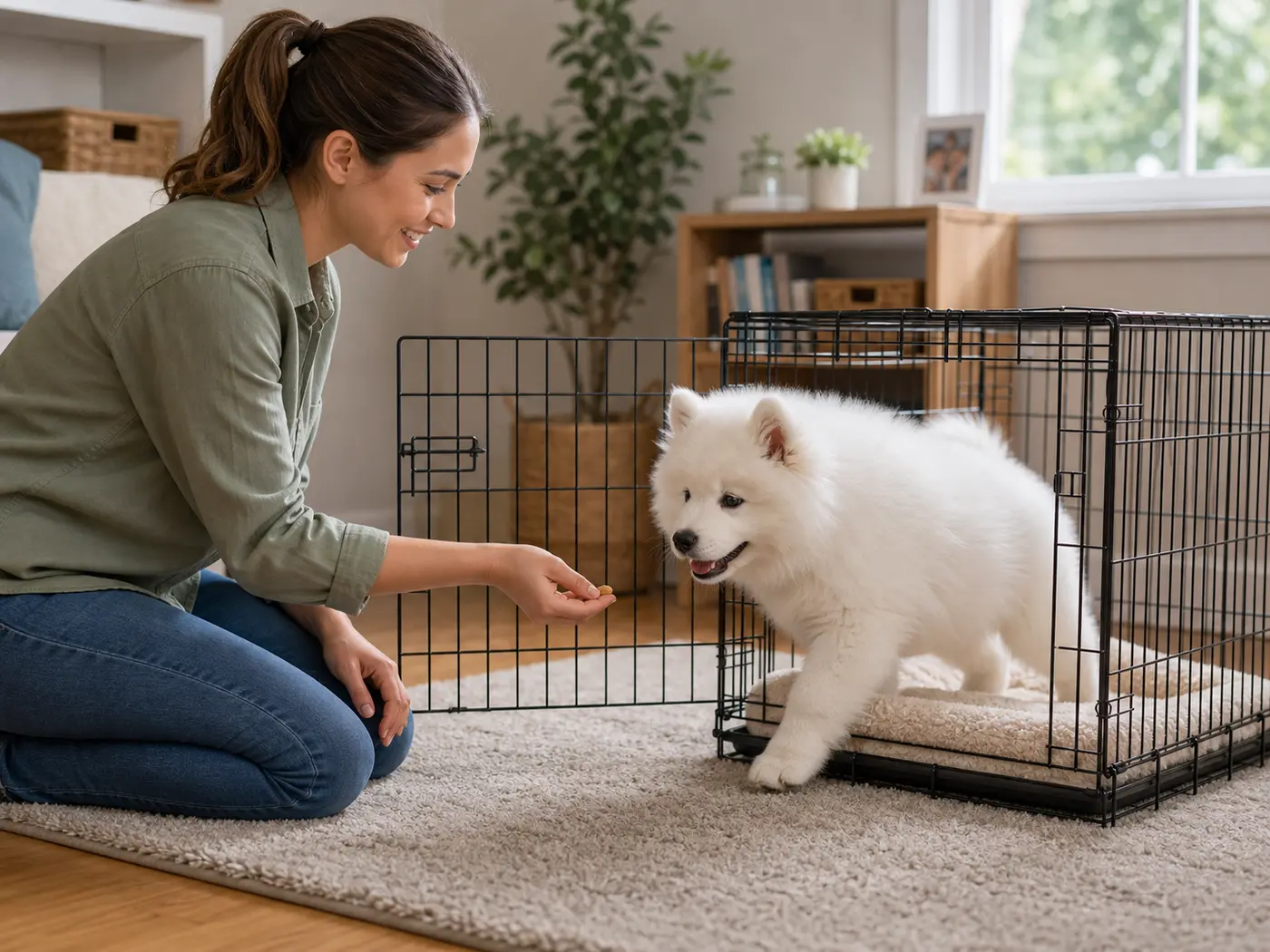
Make the crate predict food, chews, naps, and calm exits so it becomes a safe resting place rather than a place to practice panic.
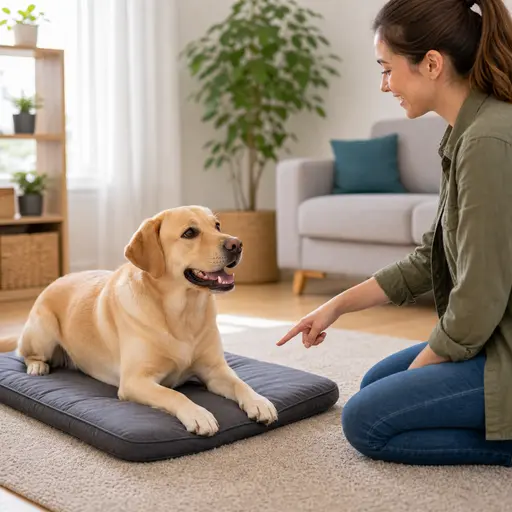
Use a last potty trip, a quiet crate spot, boring overnight outings, and calm returns so night waking does not turn into playtime.
Biting and chewing
Puppies explore with their mouths. The goal is better outlets, shorter awake windows, and clear play rules.
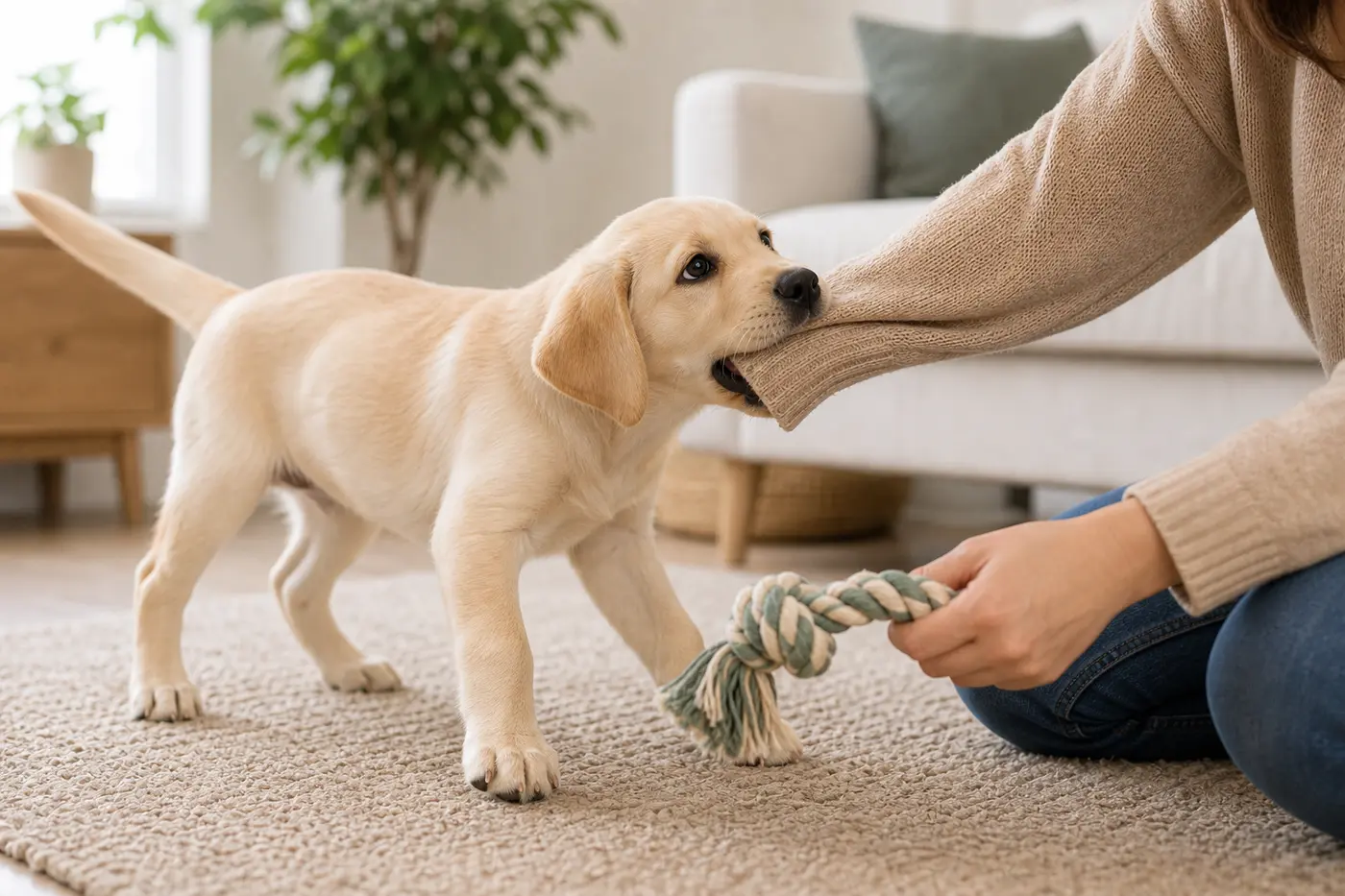
Redirect early, pause play when teeth stay on skin, and watch for the tired-bite window when the real answer is sleep.
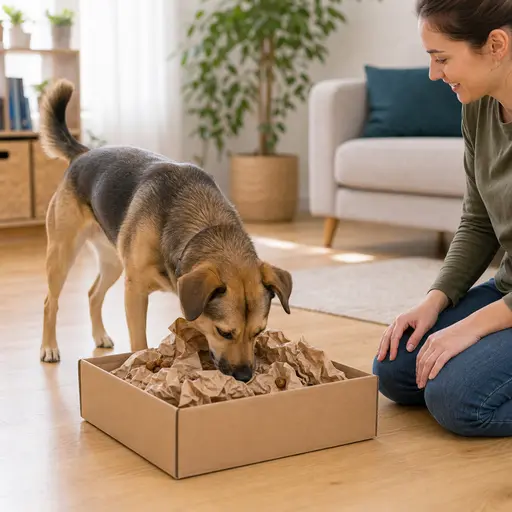
Put legal chews in the places your puppy already gets busy so shoes, chair legs, and rugs are not the easiest option.
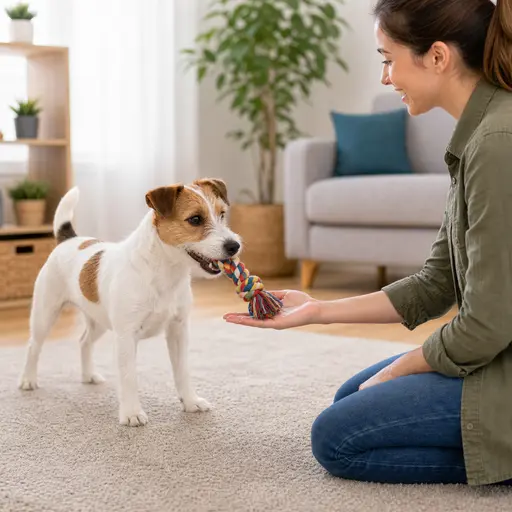
Trade for food before you need the cue in an emergency, so stolen socks and unsafe finds do not become chase games.
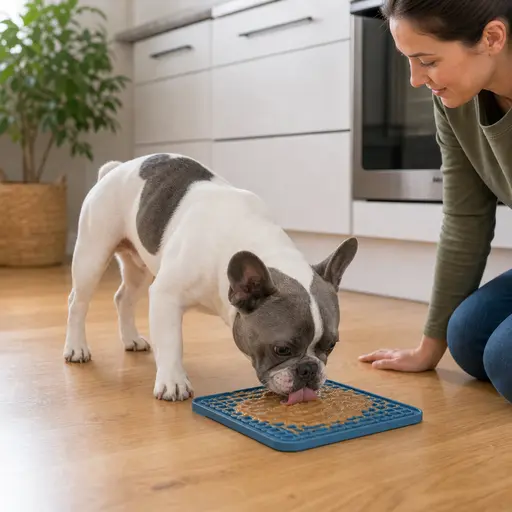
When play turns frantic, lower the room with a scatter, chew, lick mat, or nap instead of adding more excitement.
Core puppy skills
Teach a few useful behaviors that make daily life easier instead of rushing through a long command list.
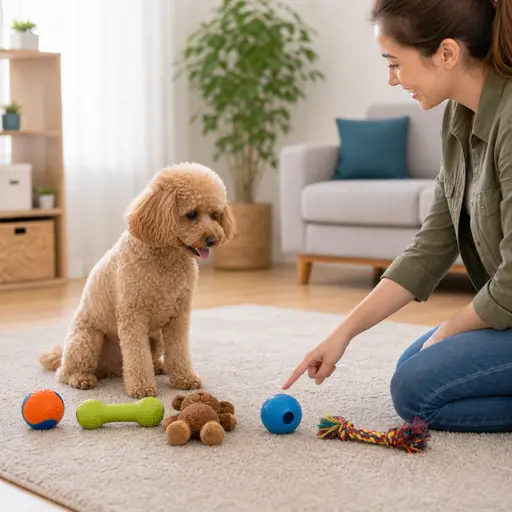
Say the name once, reward the head turn, and release your puppy back to life so the name means check in, not trouble.
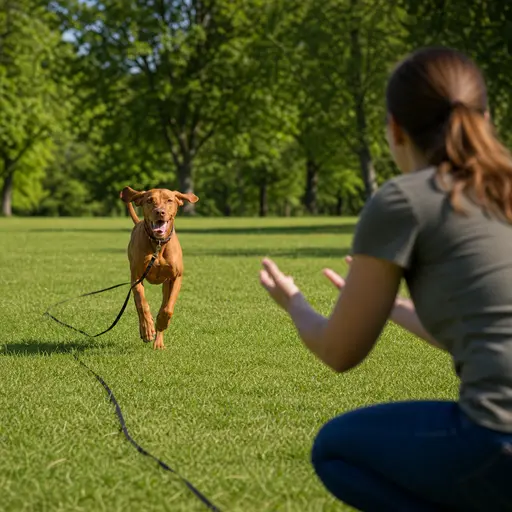
Build come-when-called with short distances, happy movement, and rewards before trying it around dogs, traffic, or open spaces.
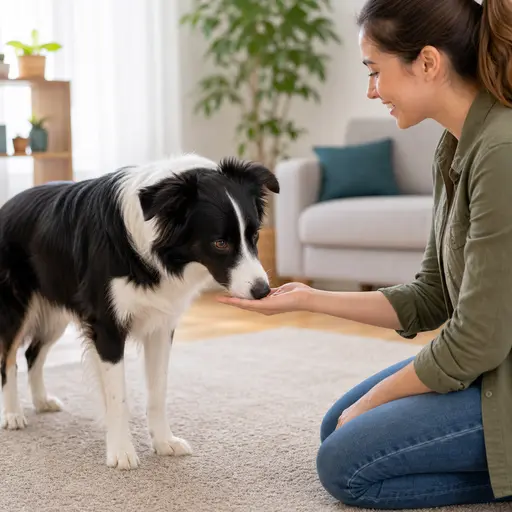
A nose target gives your puppy a simple job for greetings, leash turns, recall practice, vet handling, and busy environments.
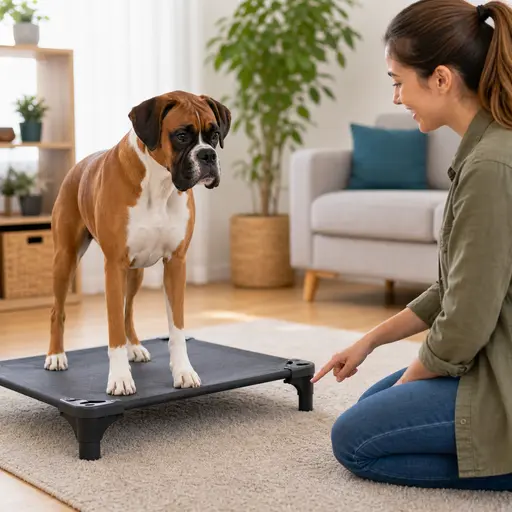
Reward relaxed lying down before your puppy starts demanding attention, climbing furniture, or patrolling the room.
Walks and socialization
The goal is safe exposure and confident recovery, not dragging a puppy into every greeting.
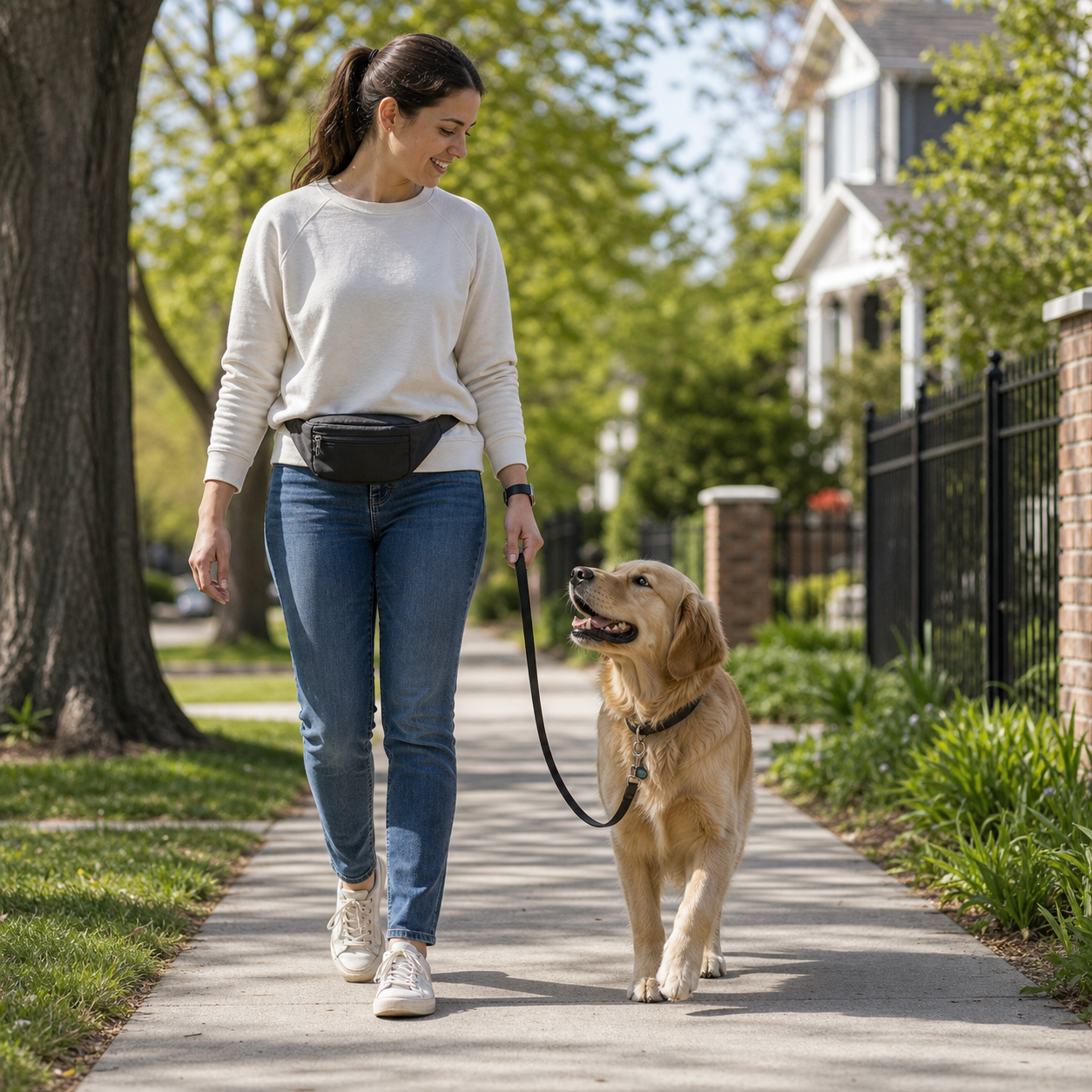
Pair the harness, collar, leash clips, and gentle pressure with food so walks do not start with wrestling at the door.
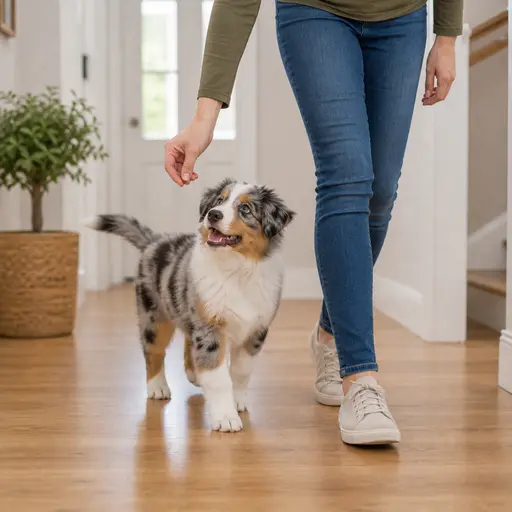
Reward check-ins and movement near your leg on short routes before expecting a polite walk through the whole neighborhood.
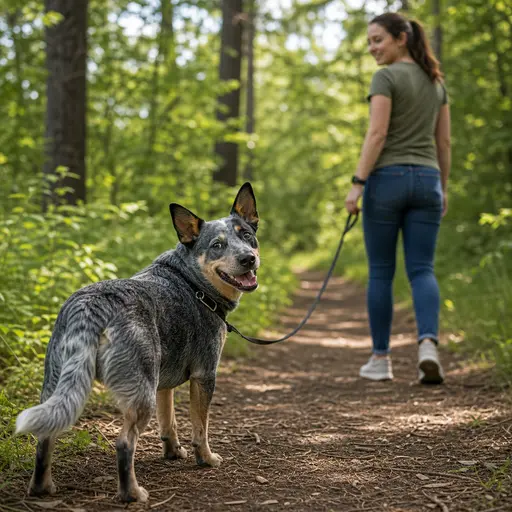
Let your puppy observe people, bikes, dogs, traffic, hats, strollers, and surfaces from a distance where they can still eat and recover.
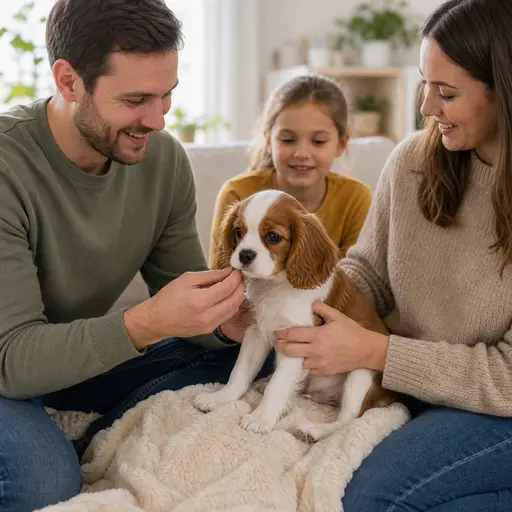
Keep greetings short and calm so children, visitors, and new handlers become predictable instead of overwhelming.
Handling and life skills
Teach the body-care jobs before they are urgent, uncomfortable, or tied to a vet visit.
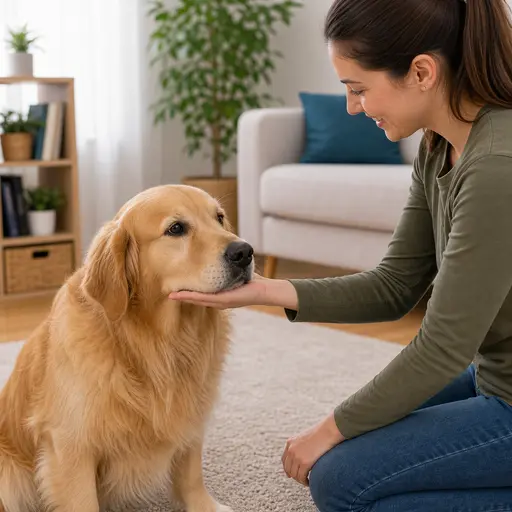
Pair paw touches, ear checks, collar handling, brushing, and mouth looks with tiny rewards so care feels familiar.
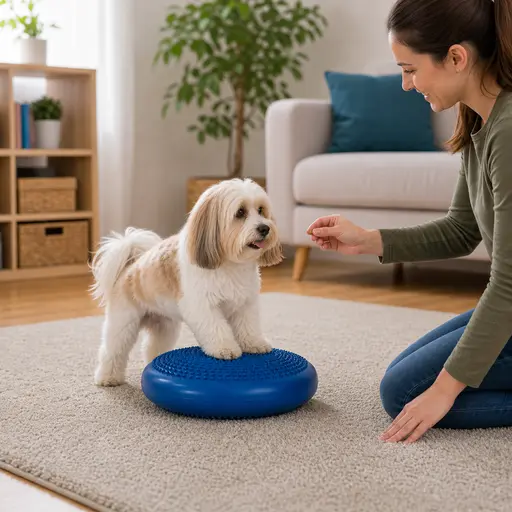
Practice standing still, chin rests, gentle restraint, and treat delivery so exams and grooming are not the first time your puppy feels handled.
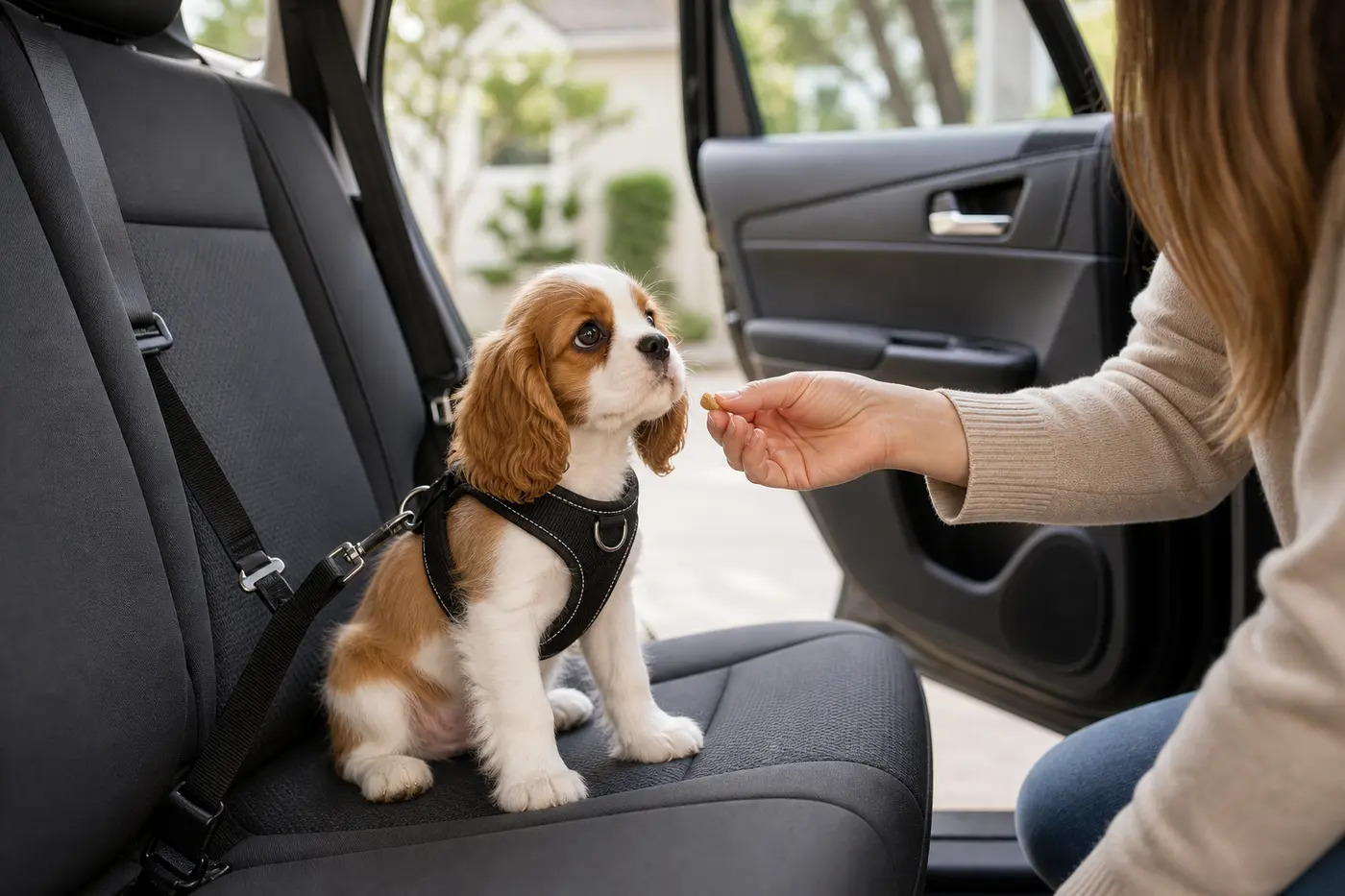
Start with sitting in the parked car, then tiny rides to easy places so the car does not only predict the vet or motion sickness.
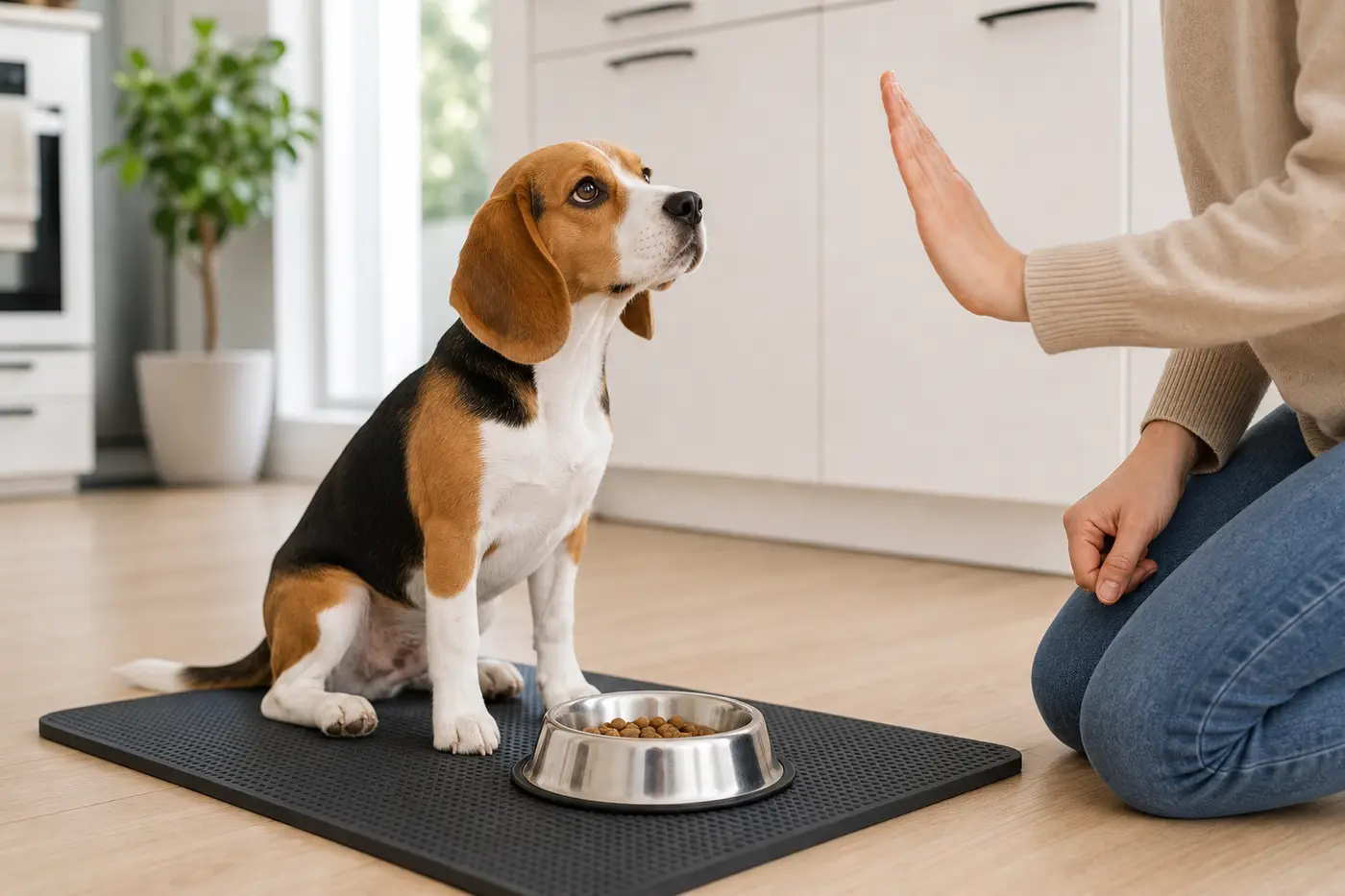
Use meals for calm bowl delivery, waiting, hand-feeding reps, and trade games instead of letting food time become jumping and grabbing.
Prevent problem habits
Most puppy problems are easier to prevent than repair after weeks of rehearsal.
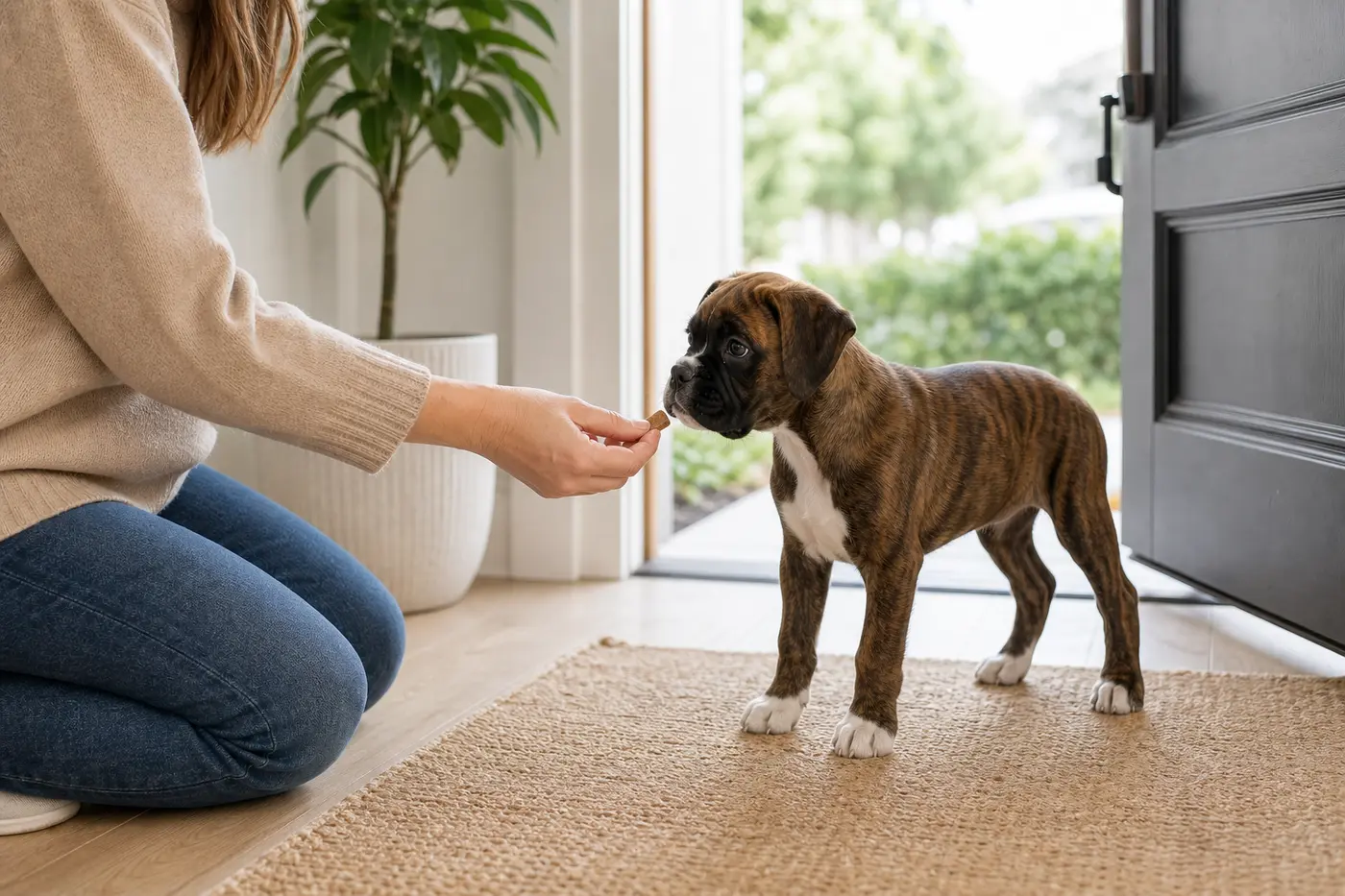
Reward four paws on the floor before attention arrives, so visitors do not accidentally teach jumping and grabbing.
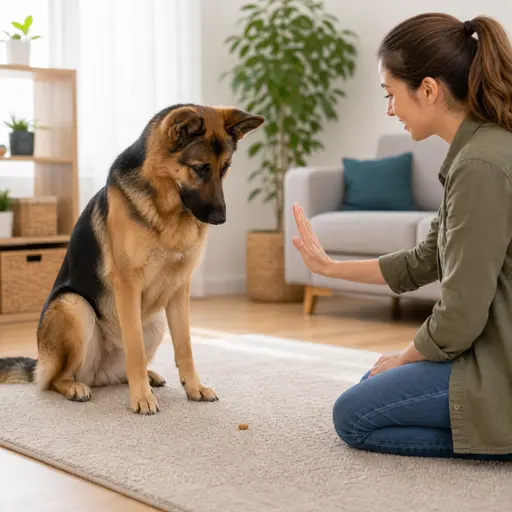
Teach your puppy to turn away from food, trash, plants, wildlife, and sidewalk finds before the item is already in their mouth.
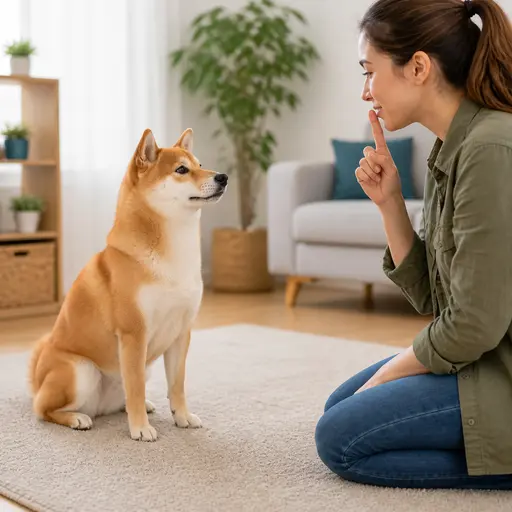
Build seconds of calm separation while your puppy is safe, fed, and tired enough to succeed before trying real absences.
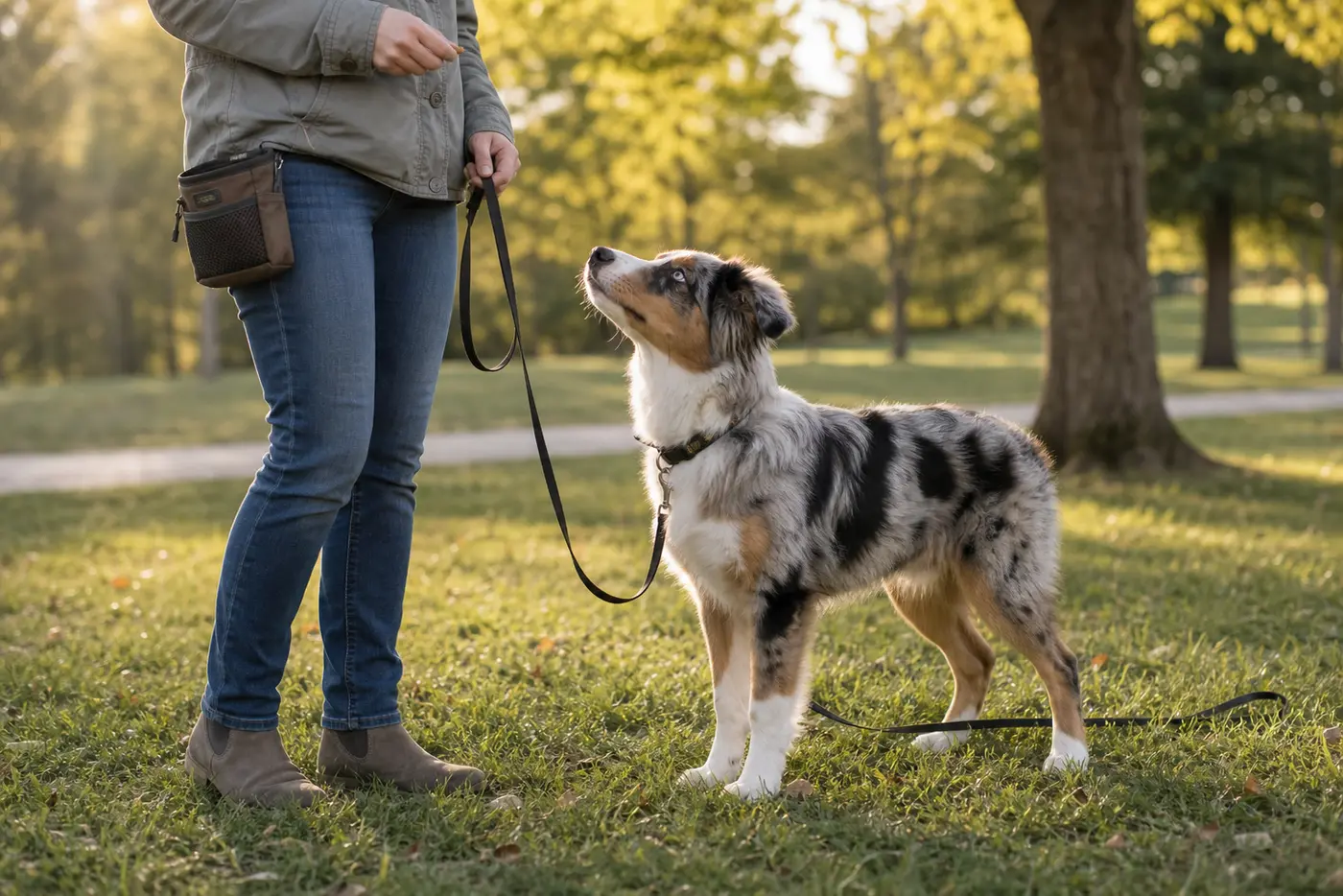
Keep rewards, management, recall practice, and leash rules going as confidence rises and your puppy starts testing old skills in new places.